Loading Admission Guardian content
Loading Admission Guardian content

Selected ranking categories, with the recorded year beside each result. Open all records for the complete history.
31 published records · Lower numeric ranks are stronger
Outlook
Engineering · private
#882020
India Today
Engineering · private
#1652024
The Times Of India
Engineering · private
#782021
Find a program, read its fee details and explore the admission requirements.
Summary of the programs shown below. Fee periods can differ by program. Check the note beside each amount before comparing costs.
| Course | Stream | Fees |
|---|---|---|
| Master of Business Administration [MBA] | Management | 55000 |
| Master of Technology [M.Tech] (Computer Science and Engineering) | Engineering | 66000 |
| Bachelor of Technology [B.Tech] | Engineering | 120000 |
| Bachelor of Technology [B.Tech] {Lateral} | Engineering | 120000 |
Specializations
All accepted exams
Eligibility: Graduation
Specializations
All accepted exams
Eligibility: Graduation
Specializations
All accepted exams
Eligibility: 10+2
Specializations
All accepted exams
Eligibility: Diploma
2 exams with cutoff data available
 Acuvate
 ADP Private Limited
 Airtel
 AkzoNobel India
 Amadeus Labs
 BeeHyv Software Solutions Pvt. Ltd
 Broadridge Financial Solutions
 Byju's
 Coditas
 Cogent E Services
 Cognizant
 Collebera
 CommVault Systems India Pvt. Ltd.
 CSS Corp
 Dark Horse
 DBS Bank
 Dhruvsoft
 Eidiko
 Epam
Epam Genpact
 Hexaware Technologies
 ICICI Bank
 Intellipaat
 JBM Group
 Kamai Elevators
 Keka
Keka Modak Analytics
 Mphasis
 MuSigma Business Solutions Ltd.
 Nalsoft
 Netcon
 OC Tanner Co.
 Pie Infocomm
 PlanetSpark
 Prolifics
 Renault Nissan
 Rythmos
 Seneca Global
 Smart IMS
 Speridian technologies
 Sutherland
 TCS
TCS Tech Mahindra
 TVS Sundaram
 Value Labs
 Verzeo
 Virtusa
 Vodafone
 Yamaha
 Zemoso
 Zen Technologies
Geethanjali College of Engineering and Technology (GCET) Keesara has built a reputation as a solid, no-nonsense private engineering college on the outskirts of Hyderabad. Its biggest selling point? A consistent placement record that, while not spectacular, reliably gets a majority of its graduates into IT and core engineering jobs. That NAAC 'A+' grade and NBA accreditation for its core B.Tech programs aren't just for show—they signal a level of institutional quality that many newer private colleges struggle to match. But this isn't a campus buzzing with endless extracurriculars or cutting-edge research. It's a place where you go to study, follow the rules, and land a job. For a certain kind of student, that's exactly the point.
GCET operates as an autonomous college under JNTUH, which means it has some freedom to design its own curriculum while still granting a JNTUH degree. That's a decent setup. The program mix is heavily tilted towards computer science and its offshoots, which is just smart business given the market. The B.Tech in CSE has the largest intake (anywhere from 240 to 600 seats, depending on the source), followed closely by the newer specializations in AIML (180-300 seats), Data Science (60-180 seats), and Cyber Security (60-180 seats). Core branches like Mechanical, Civil, ECE, and EEE have smaller, more traditional intakes of 60-120 students each.
The college says its curriculum is designed with input from industry experts, and student reviews back up the claim that subjects are taught in some depth. The faculty gets notably high marks. With 263 teachers on roster, the student-faculty ratio seems manageable, and reviews consistently praise them as knowledgeable, qualified, and supportive. A 4.7/5 rating for faculty on review platforms is nothing to sneeze at in the private engineering college scene. The academic calendar runs on a semester system, and a word to the wise: students mention that reevaluation results for exams can sometimes be delayed until right before supplementary exams, so plan accordingly.
This is where most eyes are. The official narrative and the student-ground reality have some gaps, but the overall picture is one of steady, workmanlike placement performance.
Let's start with the headline numbers. The highest package touted is an impressive 51 LPA from ServiceNow, with other peaks like 44 LPA and 41 LPA from Autodesk in 2024. But these are outliers, the kind that every college marketing brochure highlights. The real story is in the average and the spread. The average package is consistently reported in the ₹6-8 LPA range for recent years (2024-2025). For the trendy AIML branch, some data suggests a lower average of ₹3-5 LPA, which might reflect the nascent stage of that program or market saturation.
More telling are the placement percentages, branch-by-branch. Official claims hover "above 90%," but a look at the detailed 2024-2025 data paints a more nuanced picture:
Student reviews generally converge on a 60-80% placement rate across the college. That's a credible, if not stellar, outcome. It suggests that if you're in the top two-thirds of your class and proactive, you have a very good shot at an on-campus offer.
The recruiter list is classic IT and engineering: Amazon, TCS, Infosys, Capgemini, Wipro, IBM, Cognizant, L&T, Tech Mahindra, and a long tail of mid-tier IT firms like Virtusa, Value Labs, and Mphasis. Core sector names like Kia Motors and ISRO also appear. Internships are facilitated from the 3rd year, 2nd semester onwards, which is standard practice.
The verdict on placements? They're reliable for IT roles. Don't bank on the 50 LPA dream, but a solid 6-8 LPA job from a reputable service company is a very plausible outcome. For core branches, the odds are lower, but the companies that do come are good names.
The fee structure is straightforward for a private Telangana engineering college. Annual tuition for B.Tech is around ₹1.2 lakhs for the first year, rising slightly to about ₹1.25 lakhs for subsequent years. Add to that a one-time registration fee of approximately ₹8,000. If you're staying on campus, budget another ₹1.05 - ₹1.2 lakhs per year for hostel and mess charges.
Do the math: for a four-year B.Tech, the all-in cost (tuition + hostel) lands in the ballpark of ₹9-10 lakhs. That's a significant investment, but it's not in the exorbitant league of some top-tier private institutions.
Where GCET gets interesting is with its EAMCET-based scholarships, which are quite generous and directly reduce that financial load:
This is a smart policy. It attracts better-ranked students, improves the overall academic environment, and makes the college a compelling value proposition for anyone scoring a rank within 15,000. If you have that rank, GCET suddenly becomes a very cost-effective choice.
Admissions are primarily channeled through state entrance exams. For B.Tech, the main gateway is the TS EAMCET. JEE Main scores are accepted for the management quota, but the bulk of the seats are filled via EAMCET counseling. The cutoff ranks give you a sense of the college's positioning. For the popular CSE branch, the closing rank for the open category typically sits around 10,823, and can go up to about 16,000. That puts GCET in the mid-tier of private engineering colleges in the Telangana ecosystem—not the first choice for top rankers, but a secure and respected option for a large swath of students.
For M.Tech, the relevant exams are GATE or TS PGECET. For the MBA program, it's the TS ICET.
The process is centralized. You take the exam, participate in the state counseling (like TSCHE for EAMCET), and choose your college based on your rank and seat availability. A full 30% of seats are set aside under the NRI/Management quota. For these, you can apply directly to the college, though the fees are substantially higher—rumored to be around ₹7 lakhs per annum for B.Tech.
Application windows follow the state schedule. For the 2026 cycle, as an example, TG EAPCET (EAMCET) registration was open until mid-April, with exams in May.
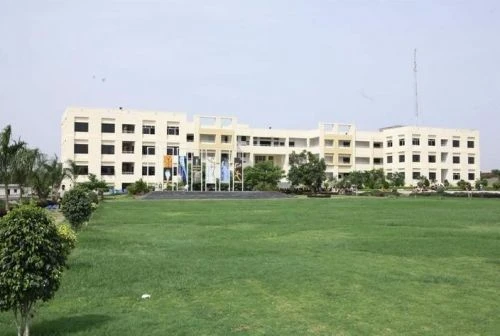
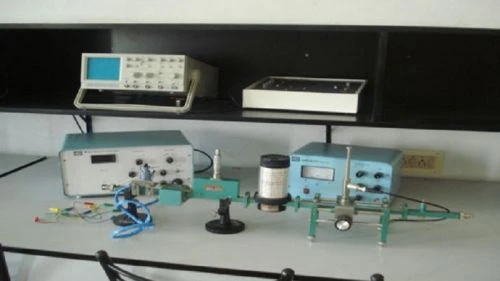
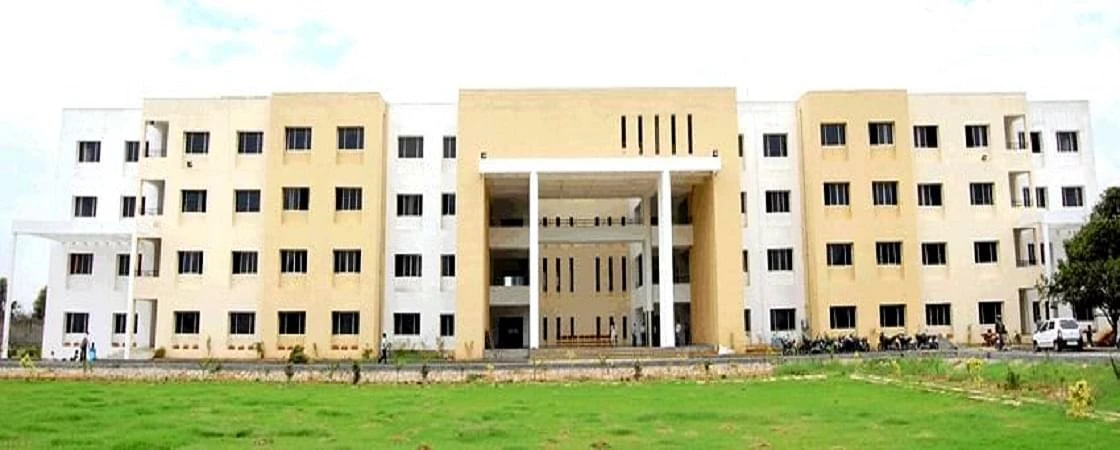
The campus is repeatedly described as "clean and green"—a small but well-maintained space about 5 blocks tall. It's not a sprawling university campus, but it's tidy. The infrastructure is generally praised. The labs for engineering streams are called "sufficient" and "one of the best," and the library, while not massive at 3000 books, is said to have the essential digital and print resources an engineering student needs.
Hostel life is a mixed bag, but leans positive. Rooms are typically shared by 4 students, each with an attached bathroom. Amenities like 24/7 hot water, Wi-Fi, laundry, and wardens are present. The word "strict" comes up often regarding hostel rules and overall college attendance. This isn't a place where bunking classes is easy. The food in the hostels gets a passing grade—"hygienic" and "acceptable" are the common descriptors, with a weekly menu rotation in a spacious dining hall.
Now, for the common complaints. Sports facilities are a notable weak point. Despite listings of a cricket ground, basketball court, and gym, multiple student reviews call them out: "lack of different sports equipment and guidance," "not much encouragement," and even "sports are very bad." If a vibrant sports culture is important to you, look elsewhere. The Wi-Fi is another sore spot; the college claims campus-wide coverage, but students report poor connectivity and dead zones. The canteen is functional but small.
So, student life? It's focused. It's about attending classes (they'll make sure you do), using the decent labs and library, and preparing for placements. It's not a “campus life” powerhouse.
Sifting through student feedback on platforms like CollegeDunia and Shiksha reveals a clear consensus. The positives are strong where it matters most for a professional college: academics and placements. The faculty is consistently the star, rated highly for both knowledge and support. The placement record, while understood to be in the 60-80% range for on-campus jobs, is seen as reliable and the college's primary strength. The clean, green environment and good infrastructure (labs, library) are also frequently appreciated.
The negatives are practical, quality-of-life issues. The strict attendance policy is a recurring theme—this college takes academics seriously and monitors participation. The poor internet connectivity frustrates students trying to study or complete online work. The underwhelming sports facilities and lack of encouragement for athletics disappoint those interested. Some also mention delays in administrative processes, like exam reevaluation results.
The takeaway from reviews is that GCET is viewed as a pragmatic choice. It's for students who prioritize a disciplined academic environment and a direct path to a decent IT job over a vibrant, all-encompassing campus experience. The reviews validate the official claims on faculty and infrastructure but provide a necessary reality check on placement percentages and campus amenities.
Geethanjali College of Engineering and Technology is a clear, focused proposition. It's best for the student who wants a disciplined, no-distractions engineering education with a high probability of landing a stable IT job upon graduation. Its NAAC 'A+' and NBA accreditations add legitimate credibility, and its faculty is a genuine asset. If you have a TS EAMCET rank between 10,000 and 16,000—and especially if that rank qualifies you for a scholarship—GCET represents very good value for money. You'll get a decent JNTUH-affiliated degree, good teaching, and a solid shot at placements with companies like TCS, Infosys, and Wipro.
However, you should probably look elsewhere if your priorities are different. If you crave a dynamic campus life with great sports, clubs, and constant events, GCET's strict, academically-focused environment might feel stifling. If you're passionate about core engineering fields like Mechanical or Civil, be aware that placement rates for these branches are lower, and the college's strengths are firmly in the IT domain. And if unreliable campus Wi-Fi is a deal-breaker for your study habits, take note of the student complaints.
In short, GCET Keesara is a workhorse, not a showhorse. It does the core job of an engineering college reliably and well. For the right student, that's more than enough.
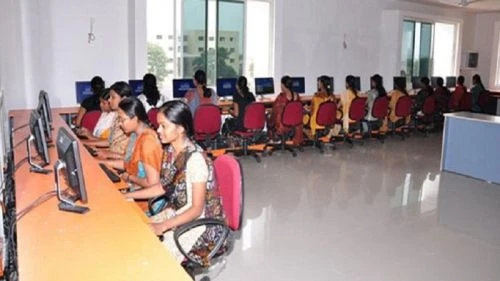
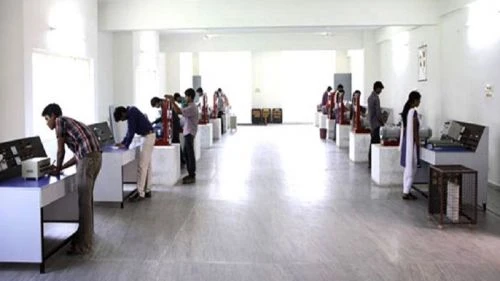
In this preview: 5 photos · 0 videos
The average placement package at GCET Keesara for the 2024-2025 period is consistently reported in the range of ₹6 to 8 lakhs per annum (LPA). This figure is primarily driven by IT sector recruiters like TCS, Infosys, Wipro, and Capgemini. It's important to note that this is an average; highest packages have gone up to 51 LPA (ServiceNow), while some branches or individual offers may be lower.
The annual tuition fee for the B.Tech program at GCET Keesara is approximately ₹1.2 lakhs for the first year and ₹1.25 lakhs for subsequent years. Additionally, there is a one-time registration fee of around ₹8,000. For students opting for hostel accommodation, the annual hostel and mess charges add approximately ₹1.05 to ₹1.2 lakhs to the total cost. Therefore, the estimated total cost for a four-year B.Tech degree, including hostel, is roughly ₹9-10 lakhs.
The closing rank for admission to the B.Tech in Computer Science and Engineering (CSE) at GCET Keesara through TS EAMCET counseling is typically around 10,823 for the open category. Ranks for the general category can go up to approximately 16,000. These cutoffs can vary slightly each year based on applicant pool and seat availability.
Yes, Geethanjali College of Engineering and Technology holds significant accreditations. It has been awarded an 'A+' grade by the National Assessment and Accreditation Council (NAAC), which is a high mark of institutional quality. Additionally, its B.Tech programs in Computer Science & Engineering (CSE), Electronics & Communication (ECE), Electrical & Electronics (EEE), Mechanical (ME), and Civil (CE) are accredited by the National Board of Accreditation (NBA). The college is also approved by the AICTE.
Hostel facilities at GCET Keesara are generally rated as good and safe. Rooms are typically shared by 4 students and come with attached bathrooms, individual beds, study tables, and wardrobes. Amenities include 24/7 hot water, Wi-Fi, on-campus laundry, and 24/7 warden support. The food is described as hygienic and acceptable, with a weekly rotating menu served in a spacious dining hall. Student reviews note that hostel rules are fairly strict, which contributes to a disciplined environment.
Share what future students should know about GCET.
Student voices are not rewritten by colleges. We remove spam and abuse.
Wider admission question? Community PulseWhat should future students know?
Tell us which course you're considering. We'll help you work out the next step.
Get instant Partner access after mobile verification. Your public edits are reviewed before they go live.
Claim this college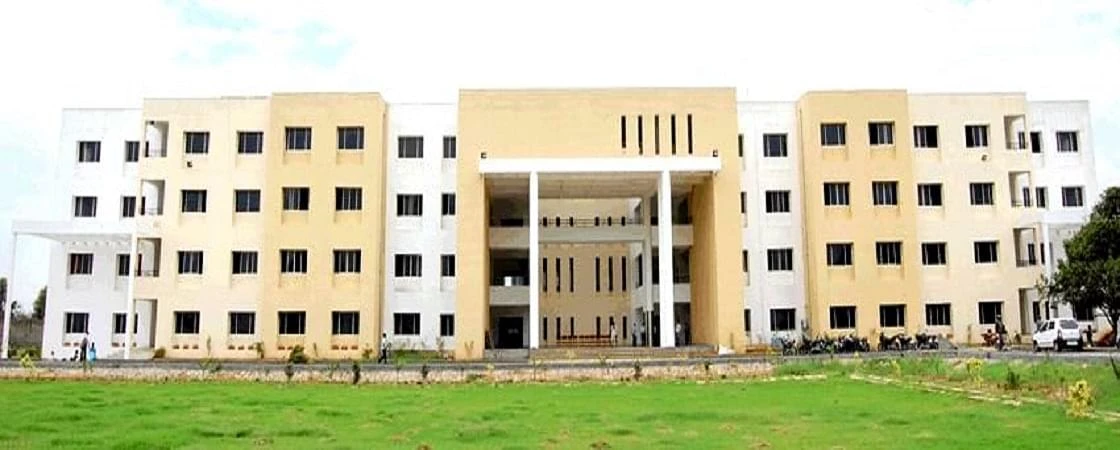
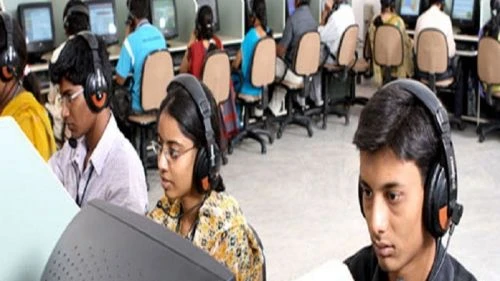
 Auditorium
 Cafeteria
 Campus Security
 Computer Labs
 Gym
Gym Hostel
 Medical
 Science Labs
 Sports Complex
 Study Library