Loading Admission Guardian content
Loading Admission Guardian content

Find a program, read its fee details and explore the admission requirements.
Summary of the programs shown below. Fee periods can differ by program. Check the note beside each amount before comparing costs.
| Course | Stream | Fees |
|---|---|---|
| Bachelor of Technology [B.Tech] | Engineering | 220000 |
| Bachelor of Technology [B.Tech] {Lateral} | Engineering | 220000 |
Specializations
All accepted exams
Eligibility: 10+2 with 75% + JEE Main
Specializations
All accepted exams
Eligibility: 10+3 with 75% + JEE Main
1 exam with cutoff data available
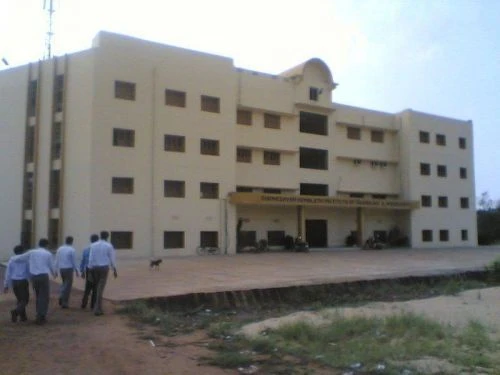
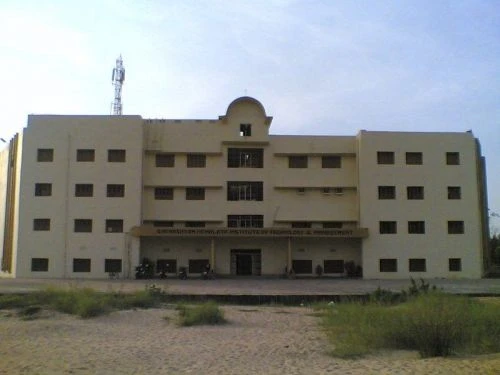
Ghanashyam Hemalata Institute of Technology Management (GHITM) in Puri is a study in contrasts. It sits on a sprawling 122-acre campus, a quiet, green space far from the tourist bustle of the temple town. Affiliated with Biju Patnaik University of Technology (BPUT), it’s a private college that’s been around since 1997, offering a handful of B.Tech programs to a small student body. The official placement numbers tell one story—a highest package of 9 LPA in 2023—but the student reviews you’ll find online tell another, often citing much lower figures and a reliance on off-campus hustle. If you’re looking for a peaceful place to study engineering without the chaos of a big city, GHITM might fit. But you’ll need to manage your expectations, especially when it comes to job outcomes.
GHITM is strictly an undergraduate engineering college. There are no postgraduate or doctoral programs here. The focus is on four core B.Tech streams, each with a modest intake that keeps class sizes relatively small. The total approved intake across all four branches is just 122 students, which is tiny compared to many other private engineering colleges. That can mean more direct access to faculty, or it can feel isolated, depending on your perspective.
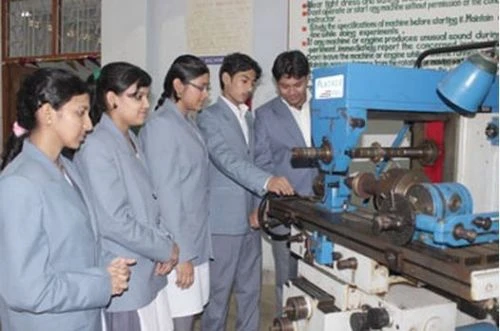
The programs—Computer Science & Engineering (27 seats), Electrical Engineering (45 seats), Electronics & Telecommunication Engineering (23 seats), and Mechanical Engineering (27 seats)—follow the standard BPUT curriculum and semester system. There’s also a lateral entry option for diploma holders into the second year of these programs. Academically, it’s a straightforward, no-frills operation. The college highlights its lab facilities and project work, which is typical boilerplate. The real academic experience hinges on the faculty.
And on that front, the data is mixed. The college claims a teacher-student ratio between 1:19 and 1:30, which is decent. They also mention faculty with backgrounds from IIT and NIIT, like Dr. S. C. Tripathy in Electrical. Student reviews often call the faculty “qualified and experienced.” But there’s no available data on how many hold PhDs, which is a common metric for academic depth. The takeaway? You’ll likely get separate lecturers for each subject and regular, strict exams as per BPUT’s schedule. It’s a functional, affiliated-college academic model. Don’t expect cutting-edge electives or deep specializations; you’re getting the BPUT syllabus delivered in a quiet, rural setting.
This is where you need to read between the lines very carefully. The official line from the college for the 2023 placement cycle cites a highest package of ₹9 LPA and an average package of ₹4.5 LPA. They list recruiters like Wipro, TVS Group, Zycus, SYNTEL, Cummins, and a few smaller IT and engineering firms like Artech and Triple A Solutions. The placement percentage is implied to be high, with a note that around 90 students were placed from 110 offers.
Now, here’s the reality check from student reviews across platforms like CollegeDunia and Shiksha. There’s a significant gap. Alumni consistently report that on-campus placement packages are more commonly in the ₹1.8 LPA to ₹2.8 LPA range, often from lesser-known companies. The phrase “job opportunities were limited” pops up. More damning is the repeated sentiment that “very few got placements from the campus,” with many, many students saying they had to depend entirely on off-campus drives and their own networking to land a job. One review even suggested the college didn’t thoroughly vet recruiting companies.
So, what’s the truth? It’s probably in the middle. A handful of top performers might hit that 9 LPA mark with a company like Wipro. The average might be pulled down by a larger number of offers in the 2-3 LPA range from smaller IT service firms. The “90 from 110” figure might refer to offers extended, not necessarily accepted or for roles students wanted. The core message from alumni is clear: see the campus placement cell as a potential aid, not a guarantee. Your primary job search strategy will need to be self-driven.
The fee structure here is one of its more straightforward aspects. The total tuition fee for the entire 4-year B.Tech program is ₹2.20 Lakhs. That breaks down to roughly ₹55,000 per year, which is notably low for a private engineering college. For the 3-year B.Tech lateral entry program, the total fee is ₹1.65 Lakhs.
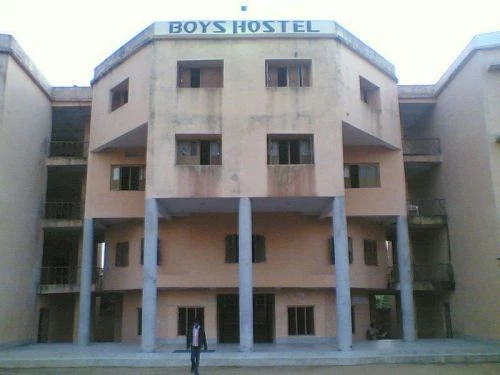
Hostel fees are separate and charged monthly at ₹4,500. This covers accommodation in the separate boys’ and girls’ hostels (there are three total), which students describe as spacious and well-equipped, with both AC and non-AC options. Rooms are usually shared between 2-3 students.
Doing the math for a 4-year stay: Tuition (₹2.20 Lakhs) + Hostel (₹4,500/month * 48 months = ₹2.16 Lakhs) = Approximately ₹4.36 Lakhs for your core degree and living costs over four years. You’ll need to add costs for mess food (which comes out of the hostel fee or separately), books, and any other mandatory university or development fees, which aren’t specified.
On financial aid, the college does participate in government scholarship schemes. They mention support for the National Scholarship Portal (NSP), the PM-USP (which can offer ₹82,000 per year), and UGC PG scholarships. They also have their own merit-cum-means scholarships. If your family income is low, it’s worth investigating these options thoroughly through the college administration.
Admission is controlled by the central counseling process of its affiliating university, BPUT. You need to have passed your 10+2 with Physics, Chemistry, and Mathematics. To get a seat, you must have a valid rank in either JEE Main or the state-level Odisha Joint Entrance Examination (OJEE).
The cutoffs are where you see the college’s demand—or lack thereof. The available data is a bit dated but telling. For the B.Tech Lateral Entry via OJEE in 2022, the closing ranks for the General Home State category were: Computer Science & Engineering (440), Electronics & Telecommunication Engineering (3050), and Mechanical Engineering (22,422). For Electrical Engineering, a 2021 cutoff rank was an extremely high 11,02,880, indicating many vacant seats.
What does this mean? For lateral entry, CSE is moderately competitive. For regular four-year B.Tech admissions via JEE Main/OJEE, the closing ranks are likely to be very high (less competitive), meaning students with moderate scores can often get in. The selection is purely merit-based through the BPUT counseling rounds. There’s no mention of a management or NRI quota, which aligns with its low-tuition model. Your application window is tied to the OJEE or JEE Main exam calendars.
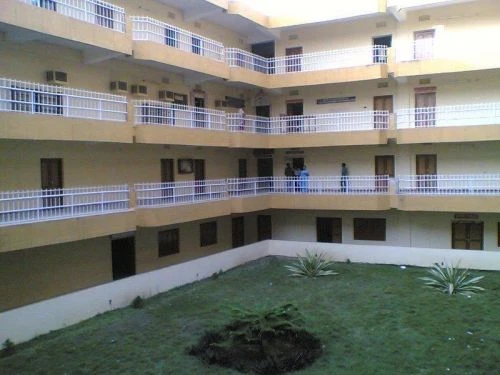
This is the college’s strongest selling point, and students largely agree. The 122-acre campus on Marine Drive (NH 203) is peaceful. It’s 15 km from Puri town and 60 km from Bhubaneswar’s airport, so you’re isolated. That’s good for focus, bad for weekend city trips.
Infrastructure: Reviews consistently praise the “good infrastructure.” Labs for engineering streams are described as well-maintained. The central library has both physical and digital resources, reading areas, and internet stations. There’s an auditorium for events, a cafeteria, and a Punjab National Bank branch with an ATM on campus. Campus-wide Wi-Fi with good signal is a plus.
Hostels: As mentioned, hostels get a thumbs up. “Very good spacious and with all amenities” is a direct quote from a student. With three separate hostels and AC/non-AC options, the accommodation seems to be above average for colleges in this fee bracket.
Food: This is the biggest complaint. Reviews on mess food are sharply divided, from “really good” to “not up to the mark” and “never tasted good.” It’s the most common negative in an otherwise positive infrastructure assessment.
Sports & Social Life: Facilities are decent—outdoor grounds for cricket/football, indoor spaces for badminton/table tennis, and a gym. The college fosters a “vibrant social life” with annual tech fests, cultural programs celebrating regional festivals, and sports tournaments. Clubs like NCC are active. It’s not a dead campus socially, but the remote location defines the social scene.
Other Amenities: There’s a health clinic with a visiting doctor and a pharmacist. Transport services for station/airport pick-up are offered. No history of ragging was found in the available data.
Synthesizing the student sentiment is crucial for an honest picture.
The Good:
The Not-So-Good:
The overall vibe from reviews is that GHITM is a decent place to get an engineering degree if you’re self-motivated and cost-conscious. But you cannot bank on the college for your career launch. That part is on you.
GHITM Puri is a specific choice for a specific type of student. It’s worth considering if: Your JEE Main/OJEE rank is moderate to low and you want an AICTE-approved, BPUT-affiliated B.Tech degree at a very low tuition cost. You prefer a quiet, spacious, green campus over a noisy city environment. You are a self-starter who doesn’t mind relying on your own efforts for internships and final placements, using the college primarily for its academic base and decent infrastructure.
You should probably look elsewhere if: Your primary goal is strong, reliable campus placements with high average packages. You thrive in a vibrant, urban college atmosphere with easy access to city life and industry hubs. You are looking for an institution with strong national rankings (NIRF) or autonomous status that offers a more dynamic curriculum.
In essence, GHITM is a budget-friendly, no-nonsense engineering college in a serene setting. It delivers basic technical education adequately. But it’s not a career launchpad. Your ROI will depend almost entirely on what you do outside the prescribed curriculum to build your skills and network. For the right student, that’s a fair trade-off for the low cost and peaceful environment. For many others, the placement uncertainty will be a dealbreaker.
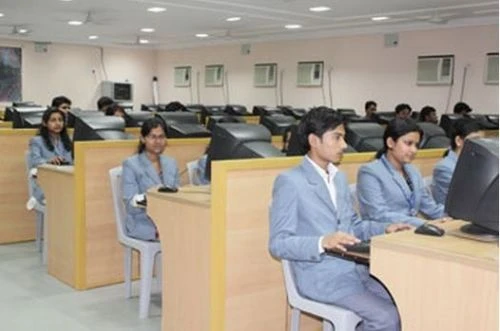
In this preview: 5 photos · 0 videos
The total tuition fee for the 4-year B.Tech program is ₹2.20 Lakhs. With hostel charges of ₹4,500 per month, the estimated total cost for four years of tuition and accommodation is approximately ₹4.36 Lakhs. This figure does not include other potential mandatory fees, mess food costs, or personal expenses.
Admission requires a 10+2 pass with Physics, Chemistry, and Mathematics. Selection is merit-based through the centralized counseling of Biju Patnaik University of Technology (BPUT). The college accepts scores from two entrance exams: the national-level JEE Main and the state-level Odisha JEE (OJEE).
Officially, the college reported a highest package of ₹9 LPA and an average of ₹4.5 LPA for the 2023 cycle, with recruiters like Wipro, TVS Group, Zycus, and Cummins. However, student reviews consistently indicate that actual on-campus packages for many graduates are lower, often in the ₹1.8-2.8 LPA range, and that a significant number of students rely on off-campus job searches.
GHITM provides separate, spacious hostels for boys and girls with both AC and non-AC options, typically accommodating 2-3 students per room. While the hostel infrastructure receives positive reviews, the quality of mess food is a common point of contention, with student opinions ranging from "really good" to "not up to the mark."
Yes, Ghanashyam Hemalata Institute of Technology Management is approved by the All India Council for Technical Education (AICTE). It is affiliated with Biju Patnaik University of Technology (BPUT), Rourkela, which designs the curriculum, conducts exams, and awards the B.Tech degrees.
Share what future students should know about GHITM.
Student voices are not rewritten by colleges. We remove spam and abuse.
Wider admission question? Community PulseWhat should future students know?
Tell us which course you're considering. We'll help you work out the next step.
Get instant Partner access after mobile verification. Your public edits are reviewed before they go live.
Claim this college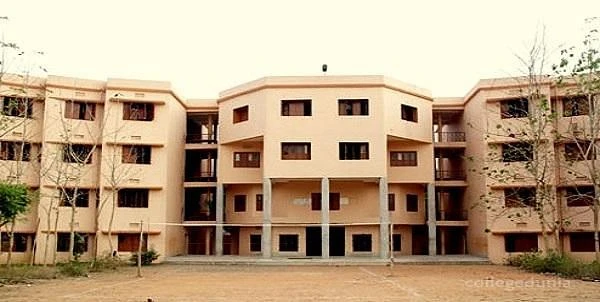
 Auditorium
 Cafeteria
 Computer Labs
 Gym
Gym Hostel
 Medical
 Science Labs
 Sports Complex
 Study Library