Loading Admission Guardian content
Loading Admission Guardian content

Provisional score based on available data. It may change as more information is verified.
Selected ranking categories, with the recorded year beside each result. Open all records for the complete history.
24 published records · Lower numeric ranks are stronger
IIRF
Engineering · private
#1052022
IIRF
B.Tech · private
#1022022
Outlook
B.Tech · private
#802022
Find a program, read its fee details and explore the admission requirements.
Summary of the programs shown below. Programs record different fee periods. Compare the individual amounts and their notes below.
| Course | Stream | Fees |
|---|---|---|
| Master of Business Administration [MBA] | Management | 108000 |
| Bachelor of Engineering [BE] | Engineering | 130000 |
| Master of Science [M.S] | Engineering | |
| Master of Technology [M.Tech] | Engineering | |
| Ph.D | Science |
Specializations
All accepted exams
Eligibility: Graduation with 50% + CAT
Specializations
All accepted exams
Eligibility: 10+2 with 45% + KCET
Specializations
All accepted exams
Eligibility: Pass in Graduation + GATE
Specializations
All accepted exams
Eligibility: Pass in Graduation + GATE
Specializations
Eligibility: Post Graduation
3 exams with cutoff data available - showing recent entries
 Amazon
 Aviva
Aviva Bharti Airtel
 HDFC Bank
 Infosys
 KEANE India Ltd( NTT DATA)
 Mphasis
 Oracle
 Tech Mahindra
 Wipro
WiproGM Institute of Technology in Davanagere is a study in contrasts. You get a sprawling, 54-acre campus with architecture that students call "palace-like," but you also get placement stats that tell a more grounded story. The institute, established in 2001, has just undergone a significant shift—it's no longer just a VTU-affiliated college but is now the flagship constituent of the newly minted GM University. That's a big deal, signaling ambition. But for students, the daily reality is defined by a few key things: a strict 75-85% attendance rule, a noticeable gap between the placement fortunes of CSE and core branches like Mechanical, and a campus life that's decent but not exactly buzzing. If you're looking at colleges in this region, GMIT demands a clear-eyed evaluation. It's not a top-tier metro college, but for many, it's a solid, infrastructure-rich option where your branch choice will heavily dictate your outcome.
GMIT offers a standard spread of engineering programs, with an annual intake of about 720 students. The shift to being part of GM University is the biggest academic story here. For new students, it means the syllabus and degree will come from GMU, not VTU. Whether that's a benefit is still playing out, but it does suggest the institute has more control over its academic direction.
The popular branches are, unsurprisingly, CSE and the newer AI & ML. You've also got ISE, ECE, and the core branches—Mechanical, Civil, and Biotechnology. They've added Robotics & Automation, which is a smart move. Academically, the institute functions as a nodal center for companies like BOSCH and Infosys Campus Connect, which can mean guest lectures and workshop opportunities.
Faculty-wise, they have around 182 members, with about 60% holding or pursuing PhDs. That's a decent ratio for a private institute in this tier. The student-faculty ratio floats between 15:1 and 20:1. Reviews often mention first-year faculty as being particularly approachable, which helps in the transition. The academic culture is described as structured, maybe even rigid, with high attendance mandates. Don't expect a lot of fluff; it's fairly focused on getting you through the curriculum.
This is where you need to separate the brochure from the conversation. The official highest package for 2024 was ₹14.5 LPA. You might hear wilder numbers (30-40 LPA) in rumors, but those are almost certainly off-campus or exceptional cases. The verified, on-campus ceiling is that ₹14.5 LPA figure.
The more telling number is the median package: ₹4.50 LPA, as reported in the NIRF 2025 engineering data. The average tends to sit between ₹3.0 and ₹4.5 LPA. That's a realistic range for the region.
Now, the placement percentage. The college claims 90%+. The NIRF report, which audits this, tells a different story: for 2023-24, 387 out of 592 graduating students were placed, which is about 66.72%. That gap between the official claim and the audited data is notable. It doesn't mean placements are bad, but it does mean they aren't as universal as marketed.
Recruiters are a who's who of mass IT recruiters: TCS, Wipro, Infosys, Accenture, Cognizant, Capgemini, HCL. You also see Bosch and SLK Software, which aligns with their nodal center partnerships. About 80% of roles are in IT/software.
Here's the critical split: if you're in CSE, ISE, or AI/ML, your chances of landing one of those IT roles are good. If you're in Mechanical or Civil, the path is much tougher. Many core branch students end up taking software roles through campus drives anyway, often at the lower end of the salary band. That's the reality check you'll get from alumni on forums.
Your cost depends entirely on how you get in. Through the state KCET quota, you're looking at ₹90,000 to ₹1,00,000 per year in tuition. For the COMEDK quota, it jumps to ₹2,00,000 to ₹2,60,000. Management quota seats can go ₹3,00,000 and above, with CSE being the most expensive.
Add to that hostel and mess fees, which range from ₹65,000 to ₹80,000 annually, depending on room sharing. So, a rough total 4-year cost for a KCET student, including hostel, is ₹5.5 to ₹6.5 lakhs. For COMEDK or management quota students, it's ₹10 to ₹15 lakhs.
That's a significant financial spread. Scholarships are primarily the state and national schemes (SSP/NSP) for KCET students, along with some merit-based aid for top rankers. A word of caution from student reviews: the management is known to be strict on fee deadlines, with some claiming internal exam blocks for pending payments.
For B.E., you need to appear for either KCET (for the Karnataka state quota) or COMEDK UGET. For MBA and M.Tech, it's Karnataka PGCET or KMAT.
The cutoffs give you a sense of the demand. For the 2024/2025 cycle, the General category cutoff ranks in KCET Round 1 were:
For COMEDK, the CSE cutoff rank was around 33,520. The process is centralized: you go through KEA counseling for KCET or COMEDK counseling for those seats. Management quota admissions are handled directly by the institute trust—you apply, and they offer seats based on availability and your 12th-grade/entrance scores.
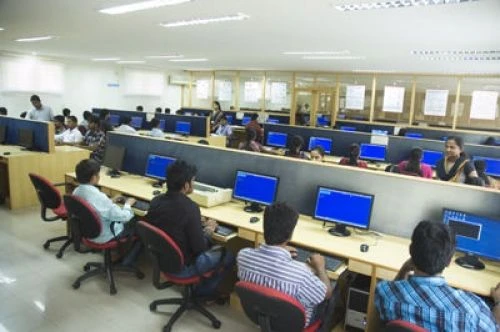
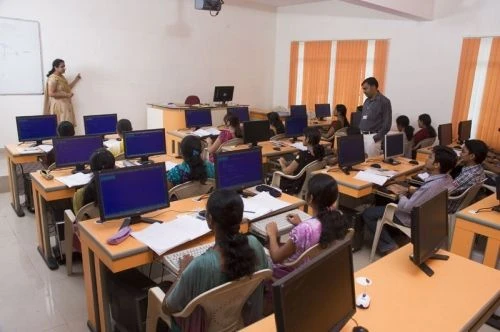
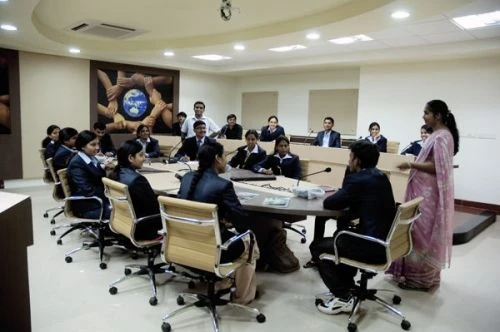
The campus is GMIT's undeniable strength. The 54-acre, green site with monolithic buildings gets rave reviews. Infrastructure is modern. The central library seats 500+, there are high-tech labs for robotics and biotech, and amenities include an on-campus bakery, canteen, ATM, and medical room. They have a fleet of buses for city transport.
Hostels are separate for boys (723 capacity) and girls (798 capacity), with 2-sharing and 3-sharing options. Security, especially for girls' hostels, is highlighted as a positive. The food? Reviews are mixed. One called it "better than most" but admitted it gets repetitive. It's vegetarian and hygienic, which is the baseline most parents want to hear.
Social life revolves around the annual fest "Mallika," which is popular locally but considered average compared to what big city colleges offer. There's a 400m track, basketball courts, indoor games, and gyms. But if you're looking for a vibrant arts or music scene, support is limited. It's an engineering campus, through and through.
Synthesizing the chatter from CollegeDunia, Shiksha, and Quora paints a consistent picture.
The Good: The infrastructure is almost universally praised—it's the first thing anyone mentions. Faculty, especially in the foundational years, are seen as supportive and accessible. The strict anti-ragging policy and high security make it a safe environment, which is a major plus for many families.
The Not-So-Good: The placement disparity between IT and core branches is the biggest gripe. Mechanical and Civil students often feel like an afterthought. The management's strictness on attendance and fee payments is a frequent theme; it can feel regimented. And while the campus is beautiful, the social and cultural scene is described as quiet, even dull at times.
One paraphrased quote sums up the trade-off: "The campus is the best in Davanagere, but don't expect Bangalore-level placements if you are in a core branch." Another warned directly about fee strictness. They're honest assessments.
GMIT is a solid, infrastructure-heavy choice for a certain kind of student. It's worth it if you are a KCET qualifier getting CSE, AI&ML, or ECE at the state quota fee (₹1 lakh/year). At that price point, with a median package of ₹4.5 LPA, the return on investment makes sense. The campus provides a good environment to study, and your placement prospects in IT are fair.
Think twice if you are paying COMEDK or management quota rates (₹2.5+ lakhs/year) for anything other than CSE or AI/ML. The cost versus likely outcome for core branches is harder to justify. Also, if you crave a liberal, unstructured campus life with a booming social scene, this isn't it. The rules are firm.
In the Davanagere region, it's often compared to the older BIET. GMIT wins on infrastructure and modern facilities; BIET might have a stronger legacy network. Your choice depends on what you value more: a newer, cleaner package or established alumni ties. For many, GMIT hits the mark as a reliable, if not spectacular, launchpad into the engineering workforce.
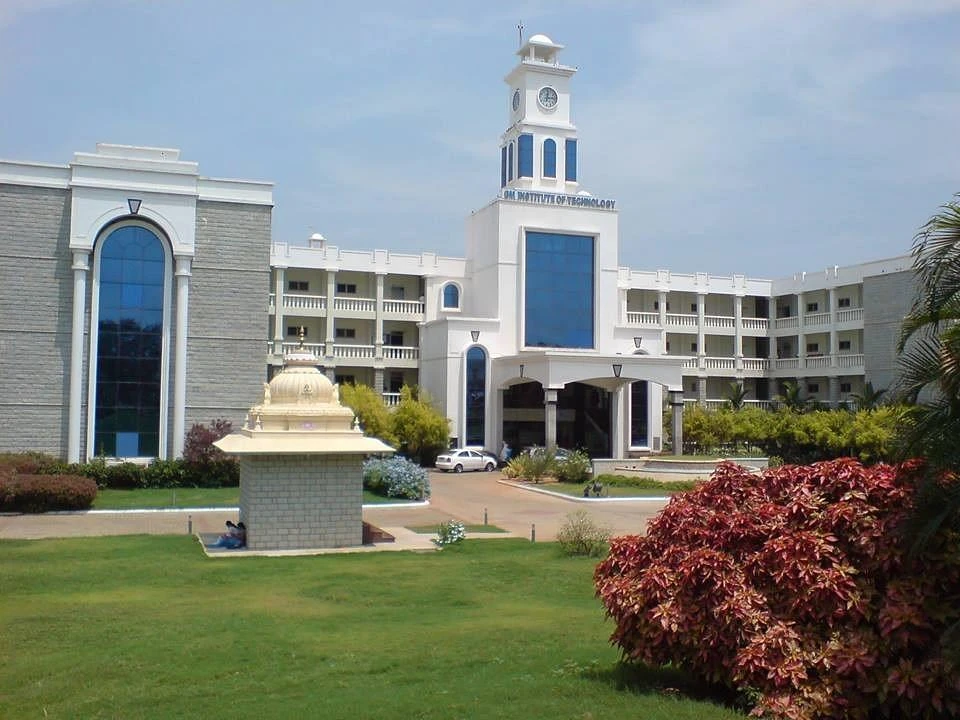
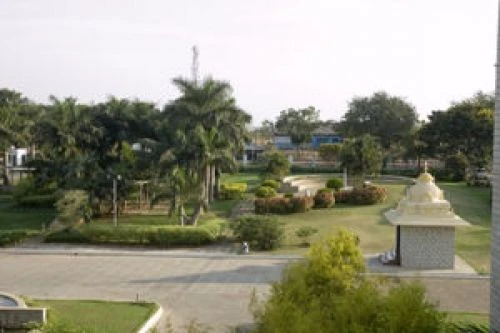
In this preview: 5 photos · 0 videos
BIET Davanagere is an older institution with a stronger legacy and alumni network. In comparison, GMIT Davanagere is noted for its superior modern infrastructure and cleaner campus environment. The choice depends on a student's priority between established reputation and newer facilities.
Yes. As of 2023, GMIT is part of GM University, making it a private university. It's important to note that older student batches remain affiliated with Visvesvaraya Technological University (VTU).
The average placement package for the Computer Science and Engineering (CSE) branch at GMIT is approximately ₹4.0 to ₹4.5 lakhs per annum (LPA).
The hostel food at GMIT is generally considered hygienic and is vegetarian. It receives an average rating of around 3.5 out of 5, with a common feedback being that the menu can become repetitive over time.
Yes, GMIT has a management quota for admissions. Seats are available for all engineering branches through this quota, with Computer Science and Engineering (CSE) and Artificial Intelligence/Machine Learning (AI/ML) typically being the most expensive.
Share what future students should know about GMIT.
Student voices are not rewritten by colleges. We remove spam and abuse.
Wider admission question? Community PulseWhat should future students know?
Tell us which course you're considering. We'll help you work out the next step.
Get instant Partner access after mobile verification. Your public edits are reviewed before they go live.
Claim this college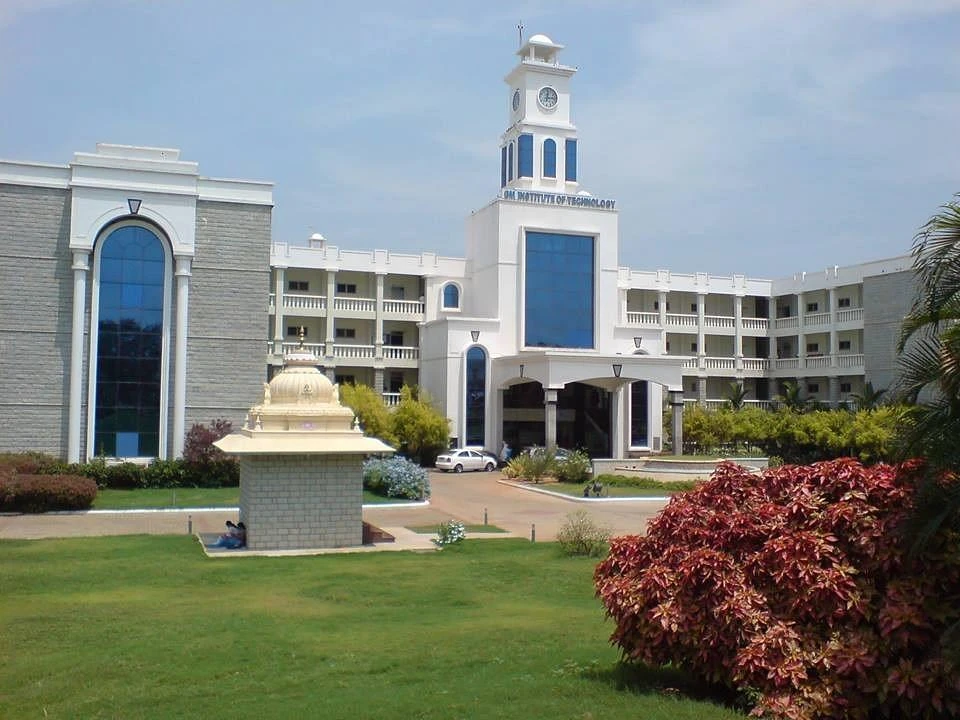

 Auditorium
 Cafeteria
 Computer Labs
 Gym
Gym Hostel
 Medical
 Science Labs
 Sports Complex
 Study Library