Loading Admission Guardian content
Loading Admission Guardian content

Provisional score based on available data. It may change as more information is verified.
Selected ranking categories, with the recorded year beside each result. Open all records for the complete history.
3 published records · Lower numeric ranks are stronger
NIRF
Overall · college
#972021
Find a program, read its fee details and explore the admission requirements.
Summary of the programs shown below. First-year fee. Check the note beside each amount for inclusions and exclusions.
| Course | Stream | Fees |
|---|---|---|
| Bachelor of Arts [BA] | Arts | 1960 |
| Bachelor of Business Administration [BBA] | Management | 1960 |
| Bachelor of Science [B.Sc] | Science | 2540 |
| Bachelor of Commerce [B.Com] (Co-operation) | Commerce | |
| Master of Commerce [M.Com] | Commerce |
Specializations
Eligibility: 10+2
Specializations
Eligibility: 10+2
Specializations
Eligibility: 10+2
Specializations
Eligibility: 10+2
Specializations
Eligibility: Graduation
Government Brennen College Dharmadam isn't just old; it's a piece of Kerala's educational history that's still ticking. Founded in 1862, this state-run college sits on a sprawling, green hillock near Thalassery, offering a classic arts and science education at a price that's almost impossible to beat. With an NAAC 'A+' grade and affiliation to Kannur University, it pulls in students from across the region who are looking for a solid, affordable degree. But the real story here is the trade-off: you get a picturesque campus and renowned faculty for a pittance, but you'll need to be proactive about your career because the on-campus job pipeline isn't the main event.
This is a traditional arts and science powerhouse. The undergraduate slate includes 16 courses, with BA offerings like Malayalam with Sanskrit and Functional English with Fiction and Journalism. On the science side, B.Sc programs in Botany and Mathematics are prominent. At the postgraduate level, there are 9 courses, including an M.Com in Finance. The college also runs PhD programs across a wide range of disciplines from English and Malayalam to Physics and Economics.
The academic culture is what you'd expect from a historic government college—strong on theory and foundational knowledge. They follow a semester system, though a common student gripe is that the university can be slow with exams and results. Where Brennen College shines academically is in its specialized centers. The Centre of Excellence for Environment, established in 2019, boasts a multidisciplinary lab with equipment like HPLC and Real Time PCR machines. The Malayalam department houses the PotheraKunhambu Study Centre for regional culture. The faculty roster of about 100 includes many PhD holders, and its alumni list features legendary figures like O. N. V. Kurup and M. Leelavathy. It's a place for deep, disciplined study, particularly in the humanities and pure sciences.
Let's be direct. Placement is not the primary draw for most students choosing Brennen College. The official data claims a minimum 70% placement rate with an average package of around ₹3.85 lakhs per annum. Recruiters are vaguely listed as "Various MNCs, Top Corporates, Leading Startups."
The student sentiment tells a more nuanced story. Reviews consistently point out that placements are "generally low for an Arts and Science college" and that there's "inadequate placement support." The courses are seen as more academic than professional, leading many graduates to naturally pivot towards higher studies—MAs, M.Sc programs, or preparing for civil service and teaching exams. The college does offer support for internships and research projects, which is where proactive students can build their profiles.
The verdict? Don't come here expecting a streamlined corporate recruitment drive. The average package figure is a decent outcome for a state-run liberal arts college, but it's not the norm for every graduate. View the degree as a high-quality, low-cost launchpad for further specialization or government exams, not a direct ticket to a corporate desk.
This is where the college becomes a no-brainer for many. The tuition fees are astonishingly low, a direct benefit of its government status. For undergraduate courses like BA General or B.Sc Mathematics, the total tuition fee is about ₹3,150. Yes, for the entire program. Annual costs typically range between ₹5,770 and ₹7,200. In many cases, there are no fees at all; a nominal ₹1,500 charge applies only if a student's parents are government employees.
The catch, financially, is the hostel. While tuition is nearly free, campus accommodation is a significant expense. For the 2026 academic year, hostel fees (which include mess charges) range from ₹55,000 for a non-AC four-seater to over ₹1,20,000 for an AC single room. A refundable caution deposit of ₹5,000 is also required.
Scholarships are widely available based on merit, financial need (with income cut-offs typically between ₹1-2 lakhs), and categories like Kerala domicile, minority communities, sports excellence, and more. The total cost of a four-year degree is almost entirely dependent on whether you live in the hostel and what type of room you choose.
Admission is strictly merit-based. There's no mention of specific entrance exams; selection hinges on your qualifying exam (12th standard) marks. The cutoffs are high, reflecting the college's reputation and low fees. For UG science subjects, you're looking at needing around 90% or higher. For postgraduate programs, the bar is around 91%. These can dip slightly during spot allotment rounds, but competition is fierce.
The process is conducted online via the college/university portal and includes standard steps: eligibility check, application submission, document verification, merit list publication, and counseling. Reservation policies for OBC, SC, ST, OEC, sports, and physically handicapped quotas are in place. International students can apply, but there's no noted management or NRI quota, which keeps the playing field level.
The campus is routinely described as its biggest asset—beautiful, wide, and green with views of the sea. A conserved forest patch called "Santivanam," a medicinal herb garden, and a greenhouse add to its charm. Infrastructure is largely good: 71 clean classrooms (some smart), a well-regarded auditorium, and one of the best libraries in Northern Kerala with about 1.3 lakh books and digital resources.
Hostels are separate for genders and described as safe and well-maintained, but the cost variation is huge. They come with high-speed Wi-Fi in every room. The campus has 24/7 internet, and the computer labs are decent, with software like Tally and programming tools. A unique boast is its own synthetic athletic track, making it the only college in Kerala with such a facility. Sports culture is active, with students reaching national levels in archery, swimming, and football.
Daily life is supported by a hygienic canteen, on-campus banking/ATM, a cooperative store, and medical facilities. The main logistical note is that 95% of students use public transport, as the college is about 1 km from the national highway.
The consensus from student feedback is clear and splits neatly into pros and cons.
On the positive side, students love the campus environment and vibe. The low fee is a massive plus. Faculty are repeatedly praised as cooperative, helpful, and qualified. The infrastructure—labs, library, sports facilities—gets high marks. Campus life is called "vibrant and colorful" with plenty of fests, cultural programs, and activities.
But the criticisms are consistent and worth weighing. The most common complaint is that courses are "not professional or job-oriented," heavy on theory without enough practical skill development. This ties directly into the second biggest gripe: "inadequate placement support." Other practical issues include delays in university exams and results, infrequent unit tests, and a noted shortage of gents' toilets on campus.
It paints a picture of a college that excels in providing a traditional, holistic, and affordable educational experience in a great setting, but one that leaves the career strategy largely up to you.
Absolutely—but for a specific type of student. If you are looking for an affordable, high-quality arts or science foundation from a reputable government institution, Brennen College is an excellent choice. The NAAC 'A+' grade, historic faculty, and beautiful campus offer tremendous value for the minuscule tuition fee. It's ideal for students aiming for higher studies (MA, M.Sc, research) or government competitive exams, where a strong theoretical base is key.
However, if your primary goal is immediate, high-paying campus placements in the corporate sector, you might find the support here lacking. The courses are academic, not vocational. You'll need to be self-driven about internships and career planning. Also, be prepared for potential administrative delays typical of a university-affiliated system.
In short, this is a classic liberal arts college. It offers depth, tradition, and opportunity at an unbeatable price, but it's not a shortcut to a placement offer. For the right student, it's not just worth it; it's a small treasure. For others, it might feel like a step back in time. Know which one you are before you apply.
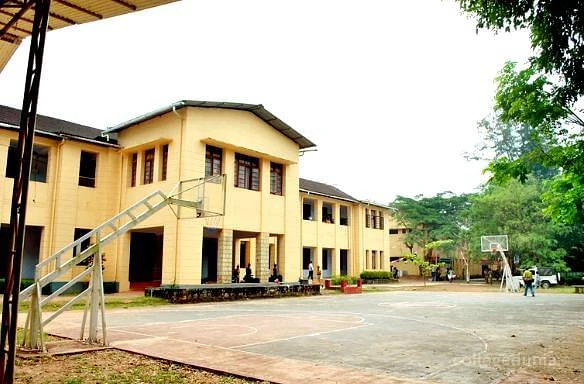
In this preview: 1 photo · 0 videos
The tuition fees are extremely low due to its government status. For undergraduate programs like BA General or B.Sc Mathematics, the total program tuition fee is approximately ₹3,150. Annual fees for most UG courses range between ₹5,770 and ₹7,200. Many students pay no tuition fee at all. However, hostel fees are separate and significantly higher, ranging from about ₹55,000 to over ₹1,20,000 per year depending on the room type (AC/non-AC, single/double/four-seater).
Placements are not the central focus at this traditional arts and science college. The official average package is around ₹3.85 LPA with a claimed placement rate of at least 70%. However, student reviews consistently note that on-campus placement support is limited and many graduates pursue higher studies or government exams. The college provides a strong academic foundation, but students seeking direct corporate job pathways often need to be proactive in seeking internships and opportunities outside the campus recruitment process.
The college offers a range of traditional undergraduate and postgraduate programs. Popular UG courses include BA in specializations like Malayalam with Sanskrit and Functional English with Fiction and Journalism, as well as B.Sc programs in Botany and Mathematics. At the PG level, M.Sc courses and M.Com in Finance are offered. The college is also known for its PhD programs in subjects like English, Malayalam, Physics, and Botany.
Admission is strictly merit-based, relying on your marks in the qualifying examination (12th standard). There are no specific entrance exams mentioned for most programs. The process is conducted online and includes application submission, document verification, and counseling based on a published merit list. Cutoffs are high, often around 90% for UG science programs. The college follows standard government reservation policies for categories like OBC, SC, ST, and others.
Yes, the college has separate hostels for boys and girls on campus. The hostels are described as safe, comfortable, and well-maintained with high-speed Wi-Fi in every room. However, they are a major expense compared to the low tuition. Fees for the 2026 academic year range from ₹55,000 for a non-AC four-seater room to over ₹1,20,000 for an AC single room, with these charges including mess costs. A refundable caution deposit of ₹5,000 is also required at admission.
Share what future students should know about Government Brennen College Dharmadam.
Student voices are not rewritten by colleges. We remove spam and abuse.
Wider admission question? Community PulseWhat should future students know?
Tell us which course you're considering. We'll help you work out the next step.
Get instant Partner access after mobile verification. Your public edits are reviewed before they go live.
Claim this college
 Auditorium
 Cafeteria
 Computer Labs
 Gym
Gym Hostel
 Medical
 Science Labs
 Sports Complex
 Study Library