Loading Admission Guardian content
Loading Admission Guardian content
Find a program, read its fee details and explore the admission requirements.
Summary of the programs shown below. Fee periods can differ by program. Check the note beside each amount before comparing costs.
| Course | Stream | Fees |
|---|---|---|
| Master of Science [M.Sc] | Science | 2265 |
| Bachelor of Arts [BA] | Arts | 4540 |
| Bachelor of Science [B.Sc] | Science | 7165 |
| Bachelor of Commerce [B.Com] | Commerce | 7385 |
| Master of Commerce [M.Com] (Tourism Administration) | Commerce |
Specializations
Eligibility: Graduation
Specializations
Eligibility: 10+2
Specializations
Eligibility: 10+2
Specializations
Eligibility: 10+2
Specializations
Eligibility: Graduation
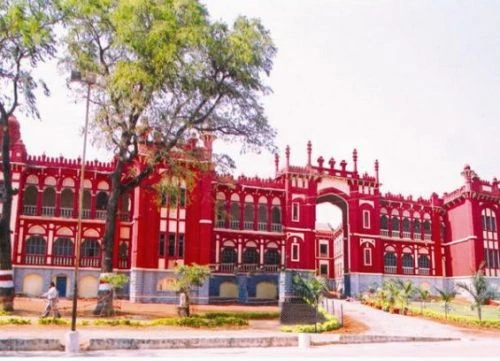
On the banks of the Musi River, a few steps from the Telangana High Court, sits a college that most Hyderabadis drive past without a second glance — but should probably linger on. Government City College (GCC) isn’t just a campus. It’s a 1921-built Indo-Saracenic monument with onion domes, arched entrances, and a central courtyard that’s doubled as a film set more times than anyone’s counted. That same heritage structure now houses a government institution that pulled off a NAAC A++ grade with a 3.67 CGPA in its latest cycle. It’s autonomous, affiliated to Osmania University, and for the price of a few thousand rupees a year, it offers degrees that cost 10x that elsewhere. That last bit might be the only pitch most students need. But the full story is messier — and more interesting — than a brochure would suggest.
GCC runs a standard Osmania-aligned curriculum but layers on its own autonomous tweaks. The Choice Based Credit System (CBCS) has been in place since 2014–15, meaning you’ll pick from core, elective, and skill-based courses across six semesters for a UG degree. The college claims over 50 certificate programs through the Telangana Skills & Knowledge Centre (TSKC), though how many actually run in a given year depends on enrollment and trainer availability.
Undergraduate offerings are the mainstay. You’ve got B.Sc across a dozen specializations — Mathematics, Physics, Chemistry, Botany, Zoology, Biotechnology, Computer Science, Electronics, Biochemistry, Microbiology. B.A. covers Economics, Political Science, Public Administration, History, Mass Communication, and a few interdisciplinary combos like Mathematics-Economics-Computer Applications. B.Com branches out into General, Computer Applications, Foreign Trade, Business Analytics, and Tourism and Travel Management. There’s also a BBA and BCA, though intake numbers for those aren’t broken out publicly.
Postgraduate programs are fewer: M.Sc in Biotechnology, Mathematics, Physics, Commerce, and Computer Science; M.A. in English; M.Com in Tourism Administration and General. The college also serves as a Post Graduate Research Centre, so a handful of PhD scholars are always around. Total sanctioned intake across all courses sits at 850, while enrollment is around 4,519 — a number that suggests a somewhat stretched student-to-teacher ratio, though the official faculty count hovers near 79. Most of them hold doctorates, and student commentary consistently rates the teaching quality highly, particularly in science streams.
One feature that’s genuinely hard to find at this price: GCC runs an IELTS coaching cell (G-CELL) for students with plans to study or work abroad. That’s a surprisingly forward-looking add-on for a century-old government college.
This is the part where the data fractures. The college’s own placement narrative — shared through NIRF submissions and promotional material — puts the median UG package at ₹2.4 LPA and PG median at ₹3 LPA (2023-24). For 2025, student reviews bump the average up to somewhere between ₹4 LPA and ₹5 LPA, with a highest reported offer of ₹8 LPA. Recruiters named include Wipro, TCS, Dell, Amazon, Cognizant, Tech Mahindra, ICICI Bank, Axis Bank, Infosys, and Deloitte. That’s a credible list for a government degree college.
And yet. Talk to enough graduates or read the Shiksha and CollegeDunia threads, and the vibe shifts. Some say over 90% of eligible students get placed. Others peg the number closer to 60% for B.Sc, and a few blunt commenters claim less than 10% see an on-campus offer. The discrepancy may reflect a gap between the college’s training-and-placement machinery and the reality that many students — especially in pure science or humanities — end up pursuing off-campus options or higher studies. Internship stats offer a mixed picture: 56% of B.Sc (MSCS) students reportedly got internship offers, and 30% in TCS Optum. Stipends hover around ₹50,000 to ₹75,000, which is decent for Hyderabad.
What’s clear is that the placement cell exists and tries. But expecting a government college with fees under ₹12,000 a year to deliver IIT-type packages isn’t realistic. The typical roles mentioned include telecaller, data entry, business analyst, and occasionally data scientist. If you’re in B.Sc Computer Science or B.Com with applications, you might land an IT services job. If you’re in Botany, you’ll need a postgraduate degree to make the degree pay. Students who get placed often report that they had to supplement the curriculum with self-taught skills or coaching from the TSKC.
These numbers are almost hard to believe. For the entire three-year duration, a B.A. can cost as little as ₹4,540. A B.Sc runs between ₹11,055 and ₹31,395, depending on specialization. Even the priciest B.Com variant — Tourism and Travel Management — comes in at ₹35,250 for three years. M.Sc for two years? ₹4,525 total. M.A. goes up to ₹43,600, and M.Com to ₹67,600. If you’re coming from a private college background, those are a rounding error.
The government’s fee reimbursement scheme kicks in for economically weaker students: data from the college suggests 91% of UG students and 76% of PG students get some form of reimbursement. TS ePass scholarships and the National Scholarship Scheme add further cushion. Hostel fees aren’t published separately, but external PGs near the campus run from ₹4,000 to ₹7,000 a month — factor that into your budget if you can’t snag a spot in one of the nearby government BC hostels.
Undergraduate admission runs entirely through the Degree Online Services Telangana (DOST) portal. It’s a merit-based game: your 10+2 marks from TSBIE, CBSE, or equivalent decide the seat. No separate entrance exam. For 2026, Phase 1 registration closes May 7, with seat allotment out by May 14. The application fee is a token ₹200 plus ₹100, so the barrier to entry is literally less than a movie ticket.
Postgraduate seats are filled via TS CPGET, conducted by Osmania University. That’s a common entrance for state PG courses, and the application fee runs ₹800. Cutoffs aren’t published for GCC specifically, but a strong undergraduate percentage helps. There’s no NRI or management quota — this is a government institution through and through.
The campus is the star. Designed by British architect Vincent Esch and built between 1915 and 1920, the building is a state-protected heritage monument. It’s laid out around six courtyards, with a grand central archway and parapet domes that scream “colonial Hyderabad.” That also means it’s often rented out as a film shooting location — you might bump into a movie crew between lectures.
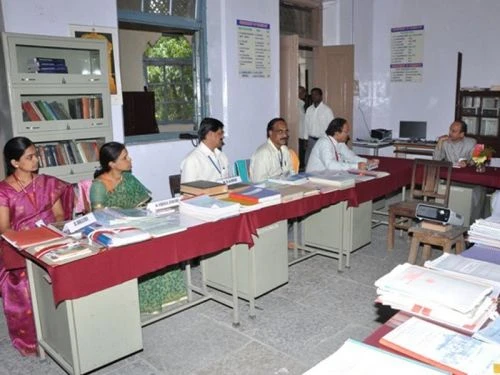
Inside, the library holds over 75,000 books (some sources say 69,000), including rare volumes and a dedicated competitive exams section. It’s fully computerized and gets consistent praise from students — “the best part of our college,” one review notes. Laboratories for Biotechnology, Computer Science, and Chemistry exist, with the Biotech lab described as state-of-the-art. Computer labs number around 10. But several reviews mention that maintenance is patchy: “the labs and classrooms feel old,” one student writes, and another complains about “no proper lighting in classrooms.” The Wi-Fi situation is contradictory, with the college claiming campus-wide access, while students on forums say they can’t log on.
Hostels are similarly fuzzy. Official channels sometimes say there’s no on-campus hostel, but other reviews describe a functional hostel with decent food and a fixed menu. Government BC hostels near the campus serve both boys and girls, so many students end up there or in private PGs. The canteen gets generally positive marks for food quality. Sports facilities include a cricket/football stadium, indoor games, and a gym — though the playground is “not up to the mark,” per student feedback. An auditorium (300 seats) and seminar hall (150 seats) host fests and cultural programs, and student clubs are active enough to keep campus life humming.
Sanitation, however, emerges as a recurring low point. Multiple reviews call out the lack of proper toilets for men and women. For a heritage building, updating plumbing without damaging structure is a challenge, but it’s clearly one the college hasn’t fully solved.
I trawled through forums, CollegeDunia, Shiksha, and a few Quora threads to stitch together a consensus. It’s a mixed bag — not in a damning way, but in the way you’d expect for an institution that charges almost nothing and delivers solid academics but falls short on modern comforts.
The good stuff is consistent: teachers are described as knowledgeable, helpful, and qualified. One biotech student says, “quality of teaching was extremely good with experienced faculty with good enough knowledge regarding to subject. Yeah the curriculum was updated and follows it strictly.” The library gets near-universal praise. Cultural fests, seminars, and workshops keep things lively. And the “value for money” tag appears in nearly every positive comment.
The criticisms are equally consistent. Infrastructure feels dated, maintenance is lagging, and the toilet situation is bad enough to be cited in multiple reviews. Wi-Fi access for students is spotty at best. And placement support, while present, doesn’t meet everyone’s expectations. One review says flatly, “There are no placements in our college. Less than 10% students will get placed.” Another counters: “The placements in my college was extremely good… about 90%... many students are placed in their dream companies.” That gap likely reflects the difference between the B.Com/B.Sc CS crowd and the pure science students, but it’s worth asking about for your specific program.
On hostels, the confusion persists. A student who got a hostel spot says it’s “great” with good food. Many others report having to find private accommodation. If hostel life is make-or-break for you, clarify before enrolling.
If you’re chasing a ₹3,000-a-year degree in a building that’s older than most universities in India, taught by faculty who know their subject cold, and you’re comfortable with infrastructure that looks its age — Government City College makes a compelling case. The NAAC A++ isn’t a gimmick; the academic rigor, at least in sciences and commerce, is real. And the fee structure means you’ll graduate without debt, often with a government reimbursement in hand.
But if your idea of college includes high-speed campus Wi-Fi, spotless restrooms, modern labs, and a placement cell that hand-delivers job offers, you’ll be disappointed. The placement reality depends on your hustle as much as the college’s efforts. For students in arts or pure sciences, the degree is mostly a stepping stone to a master’s program or government exams. For commerce and computer application students willing to skill up on their own, GCC can get you a foothold in the IT or banking sector at a cost that’s almost absurdly low. Choose with your eyes open, and you might end up quite satisfied.
In this preview: 5 photos · 0 videos
Admission to undergraduate courses is merit-based, using 10+2 examination marks, and is conducted through the Degree Online Services Telangana (DOST) portal. For postgraduate courses, admission relies on the candidate’s score in the Telangana State Common Post Graduate Entrance Test (TS CPGET), held by Osmania University.
The hostel situation is conflicting. Some sources indicate no on-campus hostel, leaving students to find private accommodations. Yet student reviews mention a functional hostel with acceptable food and a set routine. Government BC hostels near the college are available for both boys and girls.
NIRF 2024 data reports a median package of ₹2.4 LPA for UG and ₹3 LPA for PG students. Student feedback from 2025 points to an average package of ₹4-5 LPA and a highest of ₹8 LPA. Top recruiters include Wipro, TCS, Dell, Amazon, Cognizant, Tech Mahindra, ICICI Bank, Axis Bank, Infosys, and Deloitte.
For the 2025-2026 session, the total 3-year tuition fee for B.Sc ranges from ₹11,055 to ₹31,395, and for B.Com it ranges from ₹7,385 to ₹35,250. The 2-year M.Sc tuition fee is ₹4,525. Exact fees depend on the specialization and are subject to revision.
The campus occupies an Indo-Saracenic heritage building with a central library housing over 75,000 books, dedicated labs, a cricket/football stadium, and a gym. Student life includes clubs, cultural events, and workshops. However, some students raise concerns about classroom maintenance, sanitation, and inconsistent Wi-Fi access.
Share what future students should know about GCC.
Student voices are not rewritten by colleges. We remove spam and abuse.
Wider admission question? Community PulseWhat should future students know?
Tell us which course you're considering. We'll help you work out the next step.
Get instant Partner access after mobile verification. Your public edits are reviewed before they go live.
Claim this college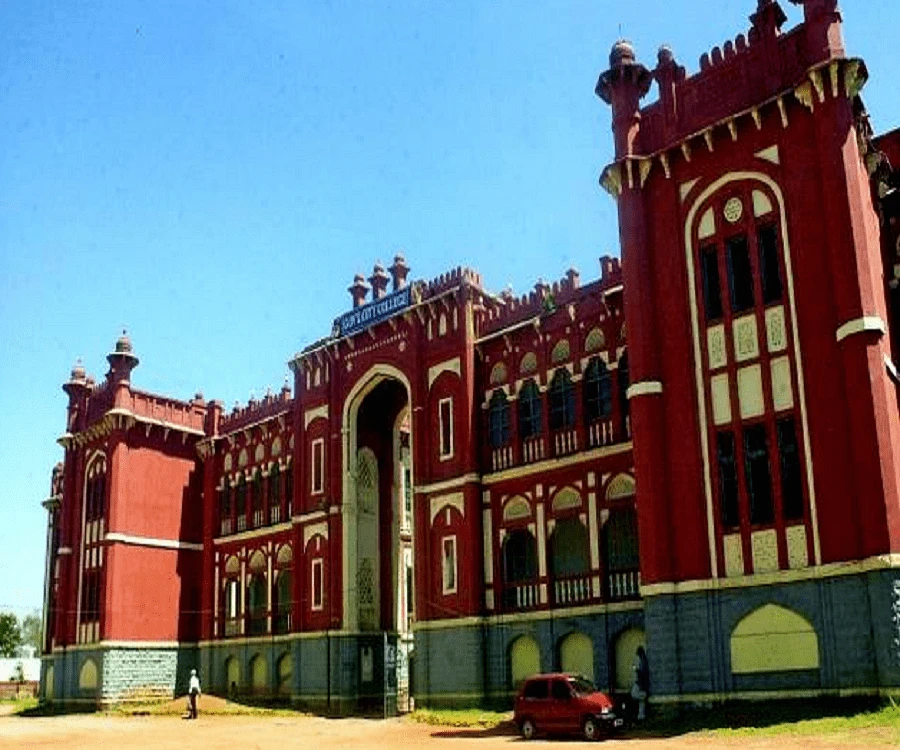
 Auditorium
 Cafeteria
 Computer Labs
 Gym
Gym Hostel
 Medical
 Science Labs
 Sports Complex
 Study Library