Loading Admission Guardian content
Loading Admission Guardian content

Find a program, read its fee details and explore the admission requirements.
Summary of the programs shown below. Fee periods can differ by program. Check the note beside each amount before comparing costs.
| Course | Stream | Fees |
|---|---|---|
| Bachelor of Engineering [BE] | Engineering | 42920 |
| Bachelor of Engineering [BE] {Lateral} | Engineering | 42920 |
| Master of Technology [M.Tech] | Engineering | 61200 |
Specializations
All accepted exams
Eligibility: 10+2 with 50% + JKCET
Specializations
All accepted exams
Eligibility: 10+3 with 50% + JKCET
Specializations
Eligibility: Graduation + GATE
Government College of Engineering and Technology, Jammu, is a story of potential and pragmatism. Established in 1994 and sprawling over 108 acres in Chak Bhalwal, it’s a government institution that offers a low-cost engineering education, but with a placement record that’s become a major point of student concern. It’s NBA-accredited for all five of its core B.Tech programs, which is a solid academic credential. But the conversation around GCET often circles back to one thing: the gap between its official aspirations and the on-ground reality for graduates seeking jobs. If you’re looking at colleges in Jammu and Kashmir, this one demands a clear-eyed evaluation.
GCET offers a focused set of programs. At the undergraduate level, it runs five B.Tech streams: Civil, Computer, Electrical, Electronics & Communication, and Mechanical Engineering. Each has an intake of 60 students. There’s also a lateral entry scheme for diploma holders. For postgraduates, M.Tech programs are offered in Computer Science, ECE, and Mechanical Engineering (Civil and Electrical are listed but unverified).
The college’s official website emphasizes an Outcome Based Education (OBE) model with a focus on experiential learning and soft skills development. They’ve signed a fair number of MoUs—with bodies like the Bureau of Indian Standards (BIS), IIT Kharagpur for events, and various local industries and startups. On paper, that suggests a push towards industry relevance. The faculty strength is listed at 53, though data on PhD holders or notable professors isn’t available. The academic structure seems standard for a university-affiliated college, but the real test is how these frameworks translate in the classroom and, ultimately, in placement cells.
This is the section that requires the most careful reading. The data presents a confusing, and frankly concerning, picture.
For the latest 2025 placement drive, the college reports a highest package of INR 7 LPA and an average package of INR 5 LPA. The median is also listed at INR 5,00,000. Those are the official numbers. But the placement percentage data is wildly inconsistent—sources mention figures as low as 2-5%, others say 20-30%. A more grounded estimate suggests an average of about 30 students get placed annually from a total graduating cohort. If you do the math with 60 students per branch, that’s a placement rate that likely sits in the low double digits, not the 80-90% you might see elsewhere.
The recruiter list is long and includes some reputable names: TCS, Infosys, Wipro, Capgemini, Cognizant, HCL, Power Grid, Mahindra and Mahindra, and Afcons. That’s a decent spread across IT and core engineering. But the frequency and volume of hiring from these giants isn’t clear. Many listed companies are smaller or local firms.
The reality check? A highest package of 7 LPA in 2025 is modest for engineering, even for a government college. The average of 5 LPA is survival-level in many metros. The extremely low and conflicting placement percentages are a red flag. Students should interpret the recruiter list not as a guarantee, but as a list of companies that have visited at some point. Securing an internship is somewhat more structured, with a mandatory 4-week training after the 6th semester. Companies like HCL, BSNL, DRDO, and TCS are noted for offering these slots.
This is where GCET’s government status shines. The fees are exceptionally low, making it one of the most affordable engineering colleges in the region.
For the B.Tech program (2025-26), the semester fees for students from the J&K board start at INR 23,930 for the first semester and range between INR 15,050 to INR 17,670 for subsequent semesters. Students from other boards pay a slightly higher first-semester fee of INR 25,050. Over four years, the total tuition works out to roughly INR 1.4 to 1.86 lakhs—that’s for the entire degree.
Adding hostel and mess costs changes the picture. Hostel fees are INR 3,050 per semester (after the first), and mess fees are about INR 14,490 per semester. Even with these added, the total cost of a B.Tech degree with hostel stays is remarkably low compared to private institutions.
The college offers several scholarship avenues, which is crucial given its student demographic. These include standard SC/ST scholarships, the Pragati Yojana for girls, AICTE scholarships, the PM-YASASVI scheme, and a Tuition Fee Waiver (TFW) category for eligible students based on income. The details for applying are typically handled through the National Scholarship Portal (NSP).
Admission to the B.Tech programs is straightforward and based on entrance exam rank. The college accepts two exams:
The selection is done through the state’s centralized counseling process based on the ranks obtained in these exams. There is no separate college-level entrance test or interview for the B.Tech programs. For M.Tech admissions, a valid GATE score is typically required, followed by university-level counseling.
Cutoffs fluctuate each year based on applicant pool and difficulty of the entrance exams. They tend to be most competitive for Computer Science and Electronics & Communication Engineering branches. While specific 2025 cutoff ranks aren’t provided, securing a seat in these top branches usually requires a very strong JKCET or JEE Main rank within the state quota.
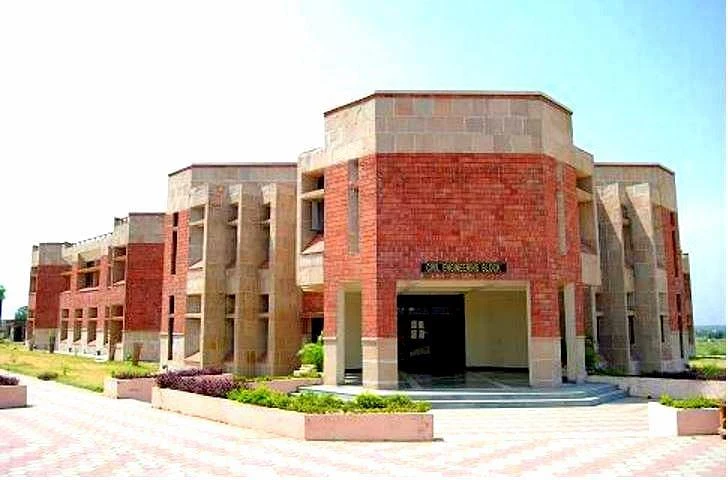
The 108-acre campus in Chak Bhalwal is spacious. That’s a plus. Being about 25 km from Jammu city center, however, means it’s relatively isolated. The college provides its own transport from various city points, which is essential. Public bus connectivity exists to nearby areas, but don’t expect a bustling urban environment right outside the gate.
Hostel facilities are available, and the fees are low as noted. The quality is typical of government hostels—functional but not luxurious. The mess cost is budget-friendly at around INR 2,415 per month. The infrastructure includes standard academic blocks, labs, a library, and workshops. Details on extensive sports facilities, cultural hubs, or a vibrant social scene are sparse in available reviews, which often suggests campus life is academically focused and quiet.
Synthesizing feedback from platforms like CollegeDunia and Shiksha reveals a clear pattern. The overwhelming positive is the low fee structure. Students and parents appreciate the minimal financial burden for an engineering degree.
The overwhelming negative is placements. Reviews frequently express frustration and anxiety about the lack of on-campus recruitment drives and low placement numbers. Many alumni mention that to get a job, you have to rely almost entirely on off-campus efforts. The academic experience gets mixed reviews—some find it satisfactory for the price, while others wish for more updated teaching methods and industry interaction.
The location is seen as a double-edged sword: peaceful for studies, but limiting for internships, part-time opportunities, and exposure. The consensus? GCET is a viable option if your priority is an affordable, accredited engineering degree with the expectation that you will be the primary driver of your career placement. It’s not a college that will hand you a job at the end of four years.
GCET Jammu serves a specific need. It’s worth serious consideration if you are a student from Jammu and Kashmir (or elsewhere) with a tight budget, have secured a good rank in JKCET/JEE Main, and are pursuing engineering primarily for the degree and knowledge at the lowest possible cost. Its NBA accreditation adds academic credibility. If you are a self-motivated learner who plans to crack GATE, pursue higher studies, or aggressively network for off-campus jobs, the low fees can be a strategic advantage.
However, look elsewhere if your primary goal is strong campus placements, a high starting salary, or a vibrant, connected campus life. The placement data, even officially, is not reassuring. The college’s value proposition is almost entirely in its affordability and government accreditation. It’s a pragmatic choice for some, but it demands managed expectations and a proactive career strategy from day one.
In this preview: 1 photo · 0 videos
The average placement package for the 2025 drive at Government College of Engineering and Technology, Jammu, is reported to be INR 5 Lakhs Per Annum (LPA). The highest package offered was INR 7 LPA. It's important to note that placement percentages are reported to be low, and many students secure jobs through off-campus efforts.
The fees for B.Tech at GCET Jammu are very affordable. For the 2025-26 academic year, students from the J&K board pay approximately INR 1.4 to 1.86 lakhs for the entire 4-year degree. Semester fees range from INR 15,050 to INR 23,930. Hostel and mess fees are extra, costing about INR 3,050 per semester for the hostel and INR 14,490 per semester for the mess.
Admissions to the B.Tech programs at GCET Jammu are based on entrance exam ranks. The college accepts scores from the Jammu and Kashmir Common Entrance Test (JKCET) and the national JEE Main. Selection is conducted through the state's centralized counseling process based on these ranks.
Government College of Engineering and Technology, Jammu, is a government institution. It is affiliated with the University of Jammu and is approved by the AICTE. Its status as a government college is the primary reason for its low tuition fee structure.
The primary eligibility criteria for B.Tech at GCET is a valid rank in either the JKCET (Jammu and Kashmir Common Entrance Test) or the JEE Main exam. Candidates must also have passed their 10+2 examination with Physics, Chemistry, and Mathematics as core subjects from a recognized board.
Share what future students should know about GCET.
Student voices are not rewritten by colleges. We remove spam and abuse.
Wider admission question? Community PulseWhat should future students know?
Tell us which course you're considering. We'll help you work out the next step.
Get instant Partner access after mobile verification. Your public edits are reviewed before they go live.
Claim this college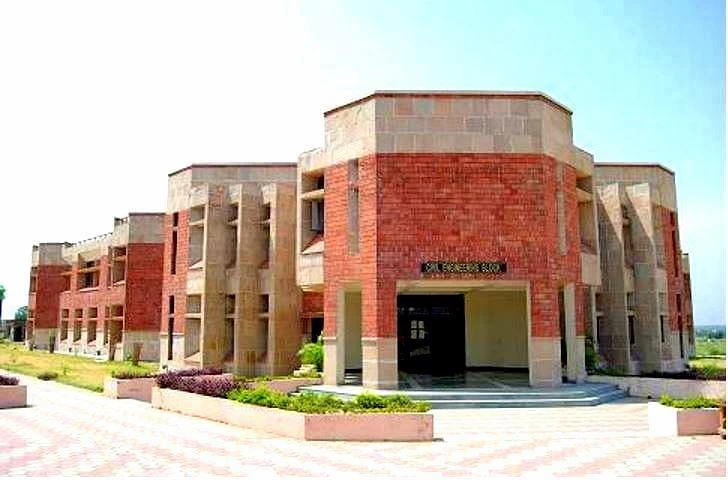
 Auditorium
 Cafeteria
 Computer Labs
 Gym
Gym Hostel
 Medical
 Science Labs
 Sports Complex
 Study Library