Loading Admission Guardian content
Loading Admission Guardian content

Find a program, read its fee details and explore the admission requirements.
Summary of the programs shown below. Fee periods can differ by program. Check the note beside each amount before comparing costs.
| Course | Stream | Fees |
|---|---|---|
| Doctorate of Medicine [MD] | Medical | 25000 |
| Master of Surgey [M.S.] | Medical | 25000 |
| Diplomate National Board [DNB] | Medical | 32500 |
| M.B.B.S. | Medical | 34215 |
| Master of Chirurgiae [M.Ch] (Urology) | Medical | 70000 |
Specializations
All accepted exams
Eligibility: Post Graduation
Specializations
Eligibility: Graduation
Specializations
Eligibility: Post Graduation
All accepted exams
Eligibility: 10+2 with 50% + NEET
Specializations
All accepted exams
Eligibility: Post Graduation
3 exams with cutoff data available
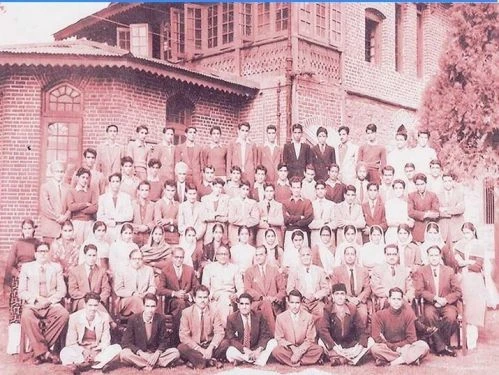
If you want to become a doctor and see medicine in its rawest, most unvarnished form, Government Medical College (GMC) Srinagar is a compelling choice. Forget polished campuses and student fests. This is a 65-year-old institution built on a foundation of immense clinical volume and old-school teaching rigor. With over 3,200 beds across eight major hospitals, the patient exposure here is staggering—often cited as second only to AIIMS Delhi in North India. That’s the trade-off. You get world-class clinical training at a shockingly low cost, but you’ll navigate an aging infrastructure and an academic environment that’s purely functional. Ranked 48th in the NIRF Medical category for 2024, its reputation isn’t built on flash, but on producing capable clinicians who’ve seen it all.
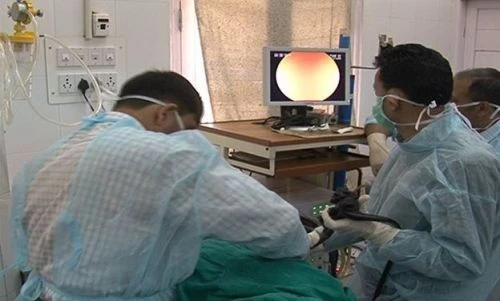
This isn't a college with a sprawling list of unrelated degrees. It’s a focused medical powerhouse. The undergraduate MBBS program, with an intake now increased to 200 seats, is the core. The curriculum follows the NMC's Competency-Based Medical Education (CBME) model, but the real syllabus is the wards. Postgraduate studies are where GMC Srinagar truly flexes its muscle, offering 277 MD/MS seats across a wide spectrum—from 27 seats in General Medicine to 35 in Anesthesiology. They’ve also added 10 new super-specialty (DM/M.Ch) seats in fields like Cardiology and Urology for 2026.
The faculty, around 250 strong, are repeatedly described in student reviews as "old school but brilliant." The teaching is traditional, heavy on clinical bedside manner, and less about PowerPoint presentations. The college also houses a Multidisciplinary Research Unit (MRU) recognized by the Department of Health Research as one of the best in the country. The academic calendar is annual, with professional exams, not a semester-based CGPA system. It’s a grind, but one that prepares you for the reality of medical practice.
Let’s be clear: medical colleges don’t have "placement cells" like engineering schools. Your career is built through postgraduate seats, government service, or private practice. The first step for every MBBS graduate is the compulsory one-year rotatory internship. Here, there’s a notable point of contention. The current stipend for MBBS interns is around ₹12,300 per month, a figure that has sparked protests. There are government recommendations to hike it to ₹25,000, but that’s pending. It’s a significant gap compared to many other states.
For those taking up Medical Officer (MO) posts after internship, median salaries are typically in the ₹4.8 to ₹6 LPA range. The real financial leap comes with a postgraduate degree. MD/MS graduates working as Senior Residents or Consultants can expect median packages between ₹10 and ₹15 LPA. Top recruiters are naturally the Directorate of Health Services J&K, SKIMS, and the National Health Mission. The "GMC Srinagar" tag holds substantial weight for employment within the union territory and for those seeking opportunities in major private hospital chains like Apollo or Max elsewhere in India.
This is arguably the college’s most powerful advantage. As a state-run institution, fees are heavily subsidized. The annual tuition for the MBBS program is a mere ₹26,000 to ₹30,000. Over the entire 5.5-year course (including internship), the total tuition cost is estimated at just ₹1.71 lakhs. Postgraduate fees are similarly low, ranging from ₹25,000 to ₹35,000 per year.
Hostel fees add another ₹28,000-₹30,000 annually, and mess charges run about ₹3,500-₹4,500 per month. Even with these, the total cost of education is a fraction of what a private medical college charges for a single year. Financial aid is available through standard government channels: Post-Matric Scholarships for SC/ST/OBC students, and specific scholarships for Pahari Speaking People (PSP) and other minority groups administered by the J&K Social Welfare Department.
Admission is a straightforward, merit-based battle through national entrance exams. For MBBS, you need a qualifying score in NEET-UG. For MD/MS, it’s NEET-PG, and for super-specialties, NEET-SS. The seat matrix is split: 15% of seats fall under the All India Quota (AIQ), managed by the Medical Counseling Committee (MCC). The remaining 85% are for the State Quota, managed by the Jammu & Kashmir Board of Professional Entrance Examinations (JKBOPEE).
The competition is fierce. For the 2024 session, the closing rank for the General category in the AIQ rounds went up to around 7,755. For the State Quota, the competition is even tighter, with cutoff scores for the Open Merit (OM) category hovering in the 511-600 range (NEET score). A crucial point for applicants: there is no Management or NRI quota for government seats here. It’s all based on your rank and counseling performance.
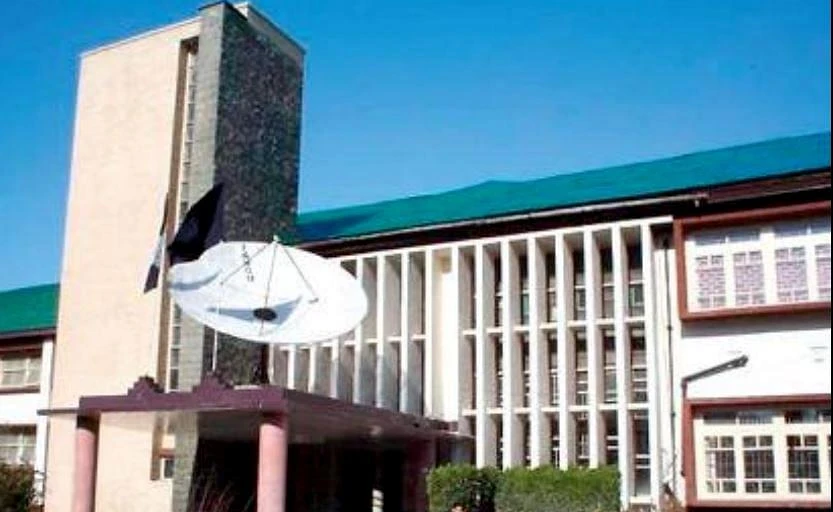
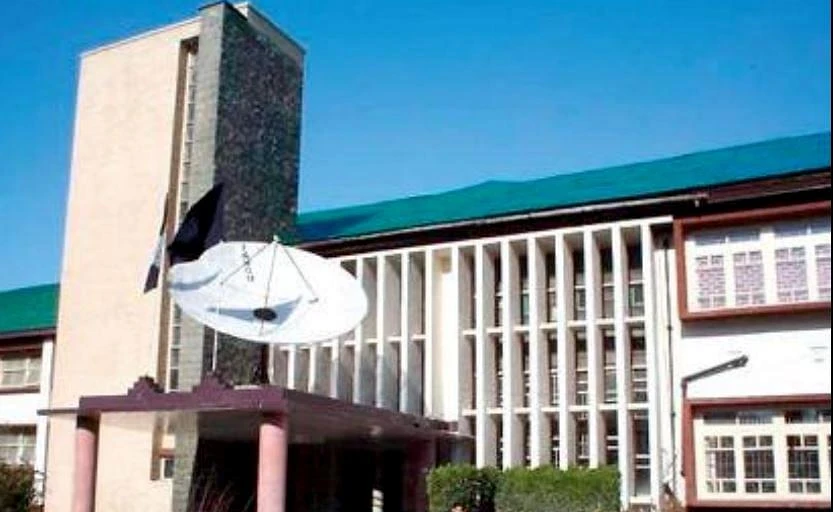
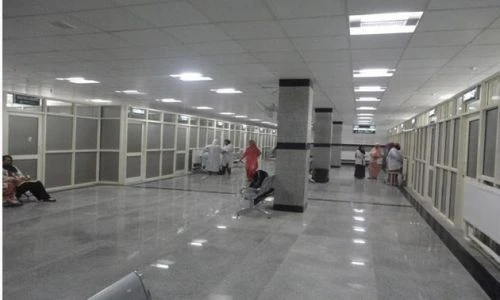
Manage your expectations. The campus at Karan Nagar is about 50 acres, but the buildings are functional and dated. The college’s true infrastructure isn’t the lecture halls—it’s the eight affiliated hospitals spread across Srinagar, including the major SMHS and Lalla Ded hospitals. This network provides the insane clinical exposure. The central library is well-stocked with over 25,000 books and 270+ journals, with a 24/7 reading room.
Hostel life is a mixed bag. The girls' hostel is on the main campus and is generally considered adequate. The boys' hostel, however, is located in Bemina, about 3 kilometers away. Students report congestion (often three to a room), basic amenities, and a lack of Wi-Fi in older wings. The commute, especially during night duties, is a consistent grievance. Sports facilities include a large playground for cricket and football, and spaces for indoor games. But as one student put it, this isn’t a place you come for the campus life.
The student sentiment, pieced together from forums like r/IndianMedSchool, Quora, and Shiksha, paints a very consistent picture.
The Good is exceptional: The clinical teaching and exposure are unanimously praised. "You see textbook cases every single day," is a common refrain. The quality of senior faculty is highly respected, and the prestige of the degree in the region is undeniable. And of course, the ultra-low fee is a massive relief.
The Bad is logistical: The infrastructure is old. Administrative processes are slow, leading to delays in results or stipend releases. The social and cultural life is virtually non-existent—no annual fests, no freshers' parties. Attendance is strictly enforced at 75-80%. There are also occasional reports of scuffles between doctors and patient attendants in the hospitals, highlighting the high-pressure environment.
Safety in the region is a common parental concern, but students from outside J&K in the AIQ quota report feeling generally secure on campus. The community is growing.
GMC Srinagar is not for everyone. If you’re looking for a vibrant, holistic "college experience" with modern amenities and a buzzing social calendar, you will be disappointed. This is a professional training ground, not a traditional campus.
But if your primary goal is to become a clinically superb, resilient doctor without incurring lifelong debt, it’s an outstanding option. The value proposition is stark: for less than ₹2 lakhs in total tuition, you get access to a patient load and variety that rivals the best institutions in India. You’ll graduate having managed cases many of your peers will only read about. It’s a tough, no-frills environment that demands self-motivation. For the pragmatist focused solely on medical training, GMC Srinagar is a steal. For someone who wants the complete package of academics and campus life, the compromises might feel too significant. The choice is that clear.
In this preview: 5 photos · 0 videos
The annual tuition fee for the MBBS program at Government Medical College Srinagar is approximately ₹30,000, making it a highly affordable option for medical education in India.
Postgraduate residents at Government Medical College Srinagar receive a monthly stipend ranging from ₹50,000 to ₹65,000, with the amount depending on their specific year of residency.
Government Medical College Srinagar offers 200 seats for its MBBS program each academic year, as per the latest available data.
Yes, the campus is generally considered safe. With the 15% All India Quota (AIQ) in place, there is a growing and supportive community of students from across the country.
While a compulsory one-year internship is standard, the specifics of any state-mandated rural service bond can vary annually. Prospective students must check the latest official notification from the Jammu & Kashmir Board of Professional Entrance Examinations (JKBOPEE) for current and binding details.
Share what future students should know about Government Medical College.
Student voices are not rewritten by colleges. We remove spam and abuse.
Wider admission question? Community PulseWhat should future students know?
Tell us which course you're considering. We'll help you work out the next step.
Get instant Partner access after mobile verification. Your public edits are reviewed before they go live.
Claim this college