Loading Admission Guardian content
Loading Admission Guardian content
Selected ranking categories, with the recorded year beside each result. Open all records for the complete history.
1 published record · Lower numeric ranks are stronger
Find a program, read its fee details and explore the admission requirements.
Summary of the programs shown below. Fee periods can differ by program. Check the note beside each amount before comparing costs.
| Course | Stream | Fees |
|---|---|---|
| General Nursing and Midwifery [GNM] | Paramedical | 4790 |
| Diploma | Paramedical | 6570 |
| Bachelor of Science [B.Sc] | Medical | 19960 |
| M.B.B.S. | Medical | 33570 |
| Master of Pharmacy [M.Pharm] | Pharmacy | 34750 |
Specializations
Specializations
Eligibility: 10+2
All accepted exams
Eligibility: 10+2 with 50% + NEET
Specializations
Eligibility: B.Pharm.
4 exams with cutoff data available - showing recent entries
Government Medical College, Kozhikode isn't just a college; it's a healthcare ecosystem. Established in 1957, this sprawling 270-acre campus is the apex tertiary referral center for North Kerala, handling over 5,000 outpatients daily. That patient load is the single most defining feature for any student considering it. You don't just learn medicine here—you're immersed in it from day one, navigating crowded hallways that double as classrooms. It’s one of the oldest and largest government medical colleges in the state, consistently battling for the top spot in Kerala. If you want textbook-perfect, sterile corridors, look elsewhere. But if you want to see, diagnose, and treat a staggering variety of cases before you even graduate, this is where you come. The clinical exposure is, by all accounts, unmatched.
The academic structure here is comprehensive, covering the full spectrum from undergraduate to super-specialty levels. The MBBS program, with an annual intake of 250 students, is the cornerstone. But the college goes far beyond that. Postgraduate MD/MS programs are offered in 26 specializations, from Anesthesia to Transfusion Medicine, with a total of 215 seats. For those aiming higher, DM and M.Ch super-specialty courses are available in 10 areas, including Cardiology.
What sets the curriculum apart isn't just the syllabus—it's the context. The college was a pioneer in establishing dedicated departments for Family Medicine and Emergency Medicine within the government college system in Kerala. That forward-thinking approach translates to training that's relevant to community healthcare needs. The research focus is tangible, with facilities like a Level-2 Virology Lab and the publication of the Calicut Medical Journal. You won't find flashy industry MoUs listed prominently; the tie-up is with the real world, through the hospital's doors. Faculty are described by students as supportive, leveraging the immense case load to teach. The academic culture is intense, driven by the sheer volume of work, but it’s considered a fair trade for the hands-on experience you gain.
Let's be clear: "placements" in a top government medical college don't work like an engineering campus. There's no day-zero or dream package. Your career is built on the foundation laid here. The official data from the NIRF 2025 report shows a median salary of ₹15,00,000 for undergraduate students, with 2000 UG students placed. That number likely reflects the starting stipends and salaries for house surgeons and junior residents post-internship.
The real placement guarantee is the compulsory one-year rotating internship within the college's own hospital. You're paid a stipend of ₹26,000 per month during this period, gaining supervised experience across all major departments. This isn't observational duty; it's hands-on work with the high patient load. Alumni networks and the college's formidable reputation across South India do the rest. Graduates typically flow into government service, prestigious PG seats, or reputed private hospitals. Top corporate hospital chains actively recruit from such institutions. The placement percentage is high because the degree itself, coupled with this clinical experience, is the ticket. You won't find a list of "top recruiters," but you will find its alumni in leading hospitals across the country.
This is where the government tag delivers immense value. The fee structure is a fraction of what private medical colleges charge. Pinpointing the exact annual MBBS tuition is tricky from public data—one source cites a total 5-year course fee of around ₹1,25,000, while another mentions ₹1.48 lakhs for the program. For context, other Kerala government medical colleges charge about ₹27,580 per year for MBBS, which is a reasonable ballpark to expect.
Fees for other programs are clearer: B.Sc courses range from ₹66,255 to ₹69,705, MD is around ₹2.01 lakhs, and B.Pharm is ₹81,650. Super-specialty DM programs are higher, like Cardiology at ₹4.56 lakhs. Hostel and mess fees aren't detailed in the brief, but they are invariably subsidized and affordable. The college does offer scholarships, though specific eligibility criteria and types aren't listed. The overall financial model makes a quality medical education accessible, which is arguably its greatest social contribution. The total cost for an MBBS degree here is less than a single year's fee at many private institutions.
Admission is a pure meritocracy, and it's fiercely competitive. For the flagship MBBS program, the only gateway is the NEET-UG score. Seats are allocated through centralized counseling—the All India Quota via the Medical Counselling Committee (MCC) and the State Quota via Kerala's Commissioner for Entrance Examinations (CEE). A full 50% of seats are reserved for the state-level merit list, emphasizing access for Kerala students.
The cutoffs are consistently among the highest in the state. While specific 2025 NEET-UG ranks for MBBS aren't in the brief, historical data shows the closing ranks are exceptionally high, requiring a top-tier score. For postgraduates, NEET-PG is mandatory for MD/MS, and NEET-SS for DM/M.Ch super-specialties. The 2025 NEET-SS Round 1 cutoffs give a sense of the caliber: for General Category, M.Ch ranks ranged from 547 to 2420, and DM from 66 to 357. For B.Pharm and B.Sc, the KEAM (Kerala Engineering Architecture Medical) exam is the key. The process is transparent but demanding: clear the national/state exam, secure a top rank, and complete document verification. There's no management or NRI quota in the traditional sense, keeping the process focused on academic merit.
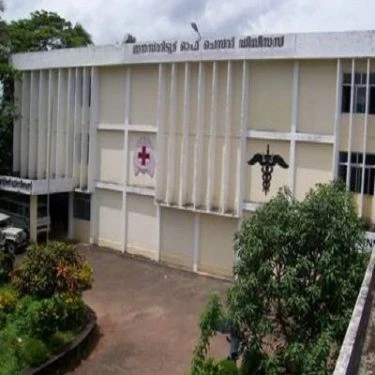
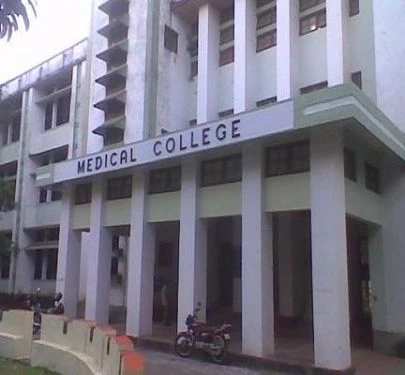
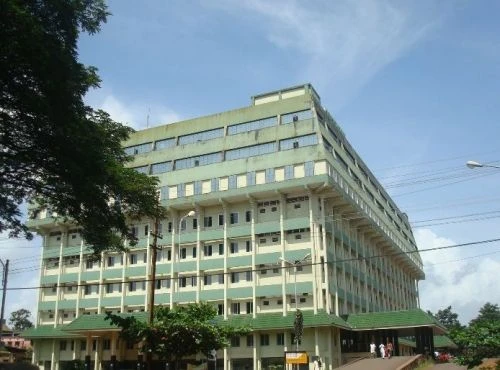
The 270-acre campus feels like a small, self-sufficient town. Academically, the facilities are robust. The Central Library is a major asset, with a vast collection and a 24/7 reading room during exams. Departmental labs and skill labs are well-equipped to handle the curriculum. But the infrastructure crown jewels are the hospitals: the main hospital (1183 beds), the Institute of Maternal and Child Health (1100 beds), the Cancer Institute, and the Chest Hospital. This complex is your primary classroom.
Hostels are separate for men and women. Student-made tours on YouTube suggest the facilities are functional and lived-in. As with most government hostels, opinions on food quality and specific amenities vary from student to student—it's wise to expect adequacy, not luxury. The campus has banks, ATMs, canteens, and college-run bus transport to the city. Where the college truly shines outside academics is in its "top-notch" sports and arts culture, as noted in student reviews. The large campus supports this vibrant extracurricular life, with facilities for indoor and outdoor games. Social life is active, fueled by fests and the energy of a massive student community. It’s a complete, if sometimes chaotic, ecosystem.
Synthesizing student sentiment reveals a clear, consistent picture. The praise is overwhelmingly focused on one thing: clinical exposure. "Everyday there use to be a huge number of patients... we get the chance to work in lab and get real life experience," as one student put it. This hands-on, high-volume experience is considered invaluable and the college's biggest strength. Faculty are generally praised for being supportive of both academic and non-academic pursuits. The sports and arts scene gets specific shout-outs for being excellent.
But the flip side of that strength is the primary complaint: overcrowding. "Owing to the overabundance of patients, the hallways and floors are typically full." This can mean chaotic working conditions. Some students also hint at the bureaucratic delays common to large government institutions. Hostel food, as in many colleges, is a typical point of contention, though not detailed in reviews. Notably, no recent ragging history is reported, which is a significant positive. The consensus? You trade comfort and smooth logistics for an education that throws you into the deep end of real-world medicine from the start. Most alumni believe it's a trade worth making.
For the right student, absolutely. Government Medical College, Kozhikode is a powerhouse of practical medical training. If your goal is to become a clinician who isn't fazed by high-pressure, high-volume environments, this college will hardwire that capability into you. The affordable fees and stellar reputation make it a premier choice in South India. You should consider it if you have a top NEET rank, want immense hands-on experience, and thrive in a bustling, sometimes chaotic, academic setting.
However, you might want to look elsewhere if you prioritize a more structured, less crowded learning environment or require the polished amenities of some newer private institutions. This is a workhorse college, not a showhorse. Its value is in the grit and grind of real hospital wards. For generations of doctors, that grind has been the foundation of exceptional careers. It continues to be so today.



In this preview: 5 photos · 0 videos
Admission to the MBBS program at Government Medical College, Kozhikode is highly competitive, with selection based entirely on NEET UG scores. The specific cutoff ranks vary each year based on factors like the number of applicants and seat matrix, but they consistently reflect the college's high standing and demand among medical aspirants.
As a government institution, Government Medical College, Kozhikode offers a subsidized fee structure for its MBBS program, making it a financially accessible option for many students. The exact fee details for MBBS and other courses are set by the state authorities and are subject to periodic revision.
A key strength of Government Medical College, Kozhikode is the extensive clinical training provided through its attached hospitals. The college is known for its significant patient load, which offers medical students robust, hands-on clinical exposure essential for comprehensive medical education.
Government Medical College, Kozhikode provides hostel accommodations for its out-of-station students. The facilities and overall student life on campus are important considerations for those relocating for their studies, contributing to the complete educational experience.
Prospective students often evaluate Government Medical College, Kozhikode based on its performance in national rankings like NIRF (National Institutional Ranking Framework). Its ranking is a common point of comparison with other top medical colleges in Kerala.
Share what future students should know about Government Medical College.
Student voices are not rewritten by colleges. We remove spam and abuse.
Wider admission question? Community PulseWhat should future students know?
Tell us which course you're considering. We'll help you work out the next step.
Get instant Partner access after mobile verification. Your public edits are reviewed before they go live.
Claim this college
 Auditorium
 Cafeteria
 Computer Labs
 Hostel
 Medical
 Science Labs
 Study Library