Loading Admission Guardian content
Loading Admission Guardian content

Find a program, read its fee details and explore the admission requirements.
Summary of the programs shown below. Fee periods can differ by program. Check the note beside each amount before comparing costs.
| Course | Stream | Fees |
|---|---|---|
| Doctorate of Medicine [MD] | Medical | 25000 |
| Master of Surgery [MS] | Medical | 25000 |
| Master of Surgery [MS] (General Surgery) | Medical | 25000 |
| M.B.B.S. | Medical | 26250 |
| Diploma | Paramedical |
Specializations
All accepted exams
Eligibility: Post Graduation
Specializations
Eligibility: Graduation
Specializations
Eligibility: Graduation
All accepted exams
Eligibility: 10+2 with 50% + NEET
Specializations
Eligibility: MBBS
3 exams with cutoff data available - showing recent entries
If you're looking for a medical education where the textbook cases walk through the door by the hundreds every single day, Government Medical College (GMC) Jammu is a serious contender. Established in 1973, this government-run institution is the workhorse of healthcare in the region, offering an MBBS degree at a cost that's almost unbelievably low. Forget fancy brochures; the draw here is raw, unfiltered clinical exposure across eight associated hospitals. That's the trade-off. You get a front-row seat to a vast and varied patient population, but you'll navigate it within aging infrastructure and a famously demanding work culture. For students who secure a seat through NEET, it represents one of the highest returns on investment in Indian medical education, provided you're ready for the grind.
GMC Jammu runs a traditional, annual-exam based curriculum for its MBBS program, not a semester system. The 180 seats are a recent increase from 150, making it a sizable batch. The academic structure is classic and rigorous, with strict attendance mandates—75% for theory and 80% for practicals. The faculty, numbering around 350, recently transitioned to a standardized three-tier system (Assistant, Associate, Professor) per NMC guidelines.
Beyond the flagship MBBS, the college offers B.Sc. Nursing (~60 seats), various B.Sc. Paramedical courses, and a large GNM program. The postgraduate landscape is where GMC Jammu has significantly expanded. It now offers 214 MD/MS seats across specialties like Medicine, Surgery, Pediatrics, and Orthopedics. A notable 2024 addition is the MD in Biochemistry, the first such program in Jammu & Kashmir. The college also runs DNB and super-specialty (DM/MCh) programs in fields like Cardiology and Urology. Recent MoUs, like the one with ICMR-NIV Pune for viral research, signal a growing focus on academic collaboration beyond pure clinical training.
Let's be clear: medical colleges don't have "placements" like engineering schools. Your career path is built on the mandatory one-year internship and subsequent postgraduate entrance exams. On that front, GMC Jammu guarantees a 100% internship placement for its MBBS graduates within its own vast hospital network.
The internship stipend for 2024-25 sits at around ₹12,300 to ₹12,500 per month. There's talk of a potential hike to ₹25,000, but that's still a proposal for 2024-25. The real financial upside comes during PG residency, where stipends range from ₹50,000 to ₹1,00,000 per month depending on the year. The workload, however, is intense. Student reviews consistently describe "toxic" schedules with 24-36 hour shifts being a common reality in major departments like Surgery and Medicine. It's a brutal but effective baptism by fire.
Top career trajectories for graduates typically involve joining as Medical Officers under the J&K government, moving to major private hospital chains like Apollo or Medanta, or—most commonly—pursuing further specialization via MD/MS or DNB. The clinical volume you handle here is a solid foundation for competitive PG entrance exams.
This is arguably GMC Jammu's most compelling advantage. The affordability is staggering. For the General category, the annual MBBS tuition fee is approximately ₹26,250. Hostel fees add another ₹3,500 per year. Mess charges are extra, running about ₹3,000 to ₹3,500 per month on a pay-as-you-eat basis.
Do the math. The total estimated cost for the entire 5.5-year MBBS course, including basic hostel and mess expenses, falls between ₹1.5 to ₹2 lakhs. That's less than a single month's fee at many private medical colleges. Scholarships for SC/ST/OBC and EWS categories are available through the National Scholarship Portal (NSP) and state schemes, making it accessible for a wide socioeconomic range. The return on investment is virtually unmatched in Indian medical education.
Admission is 100% merit-based through the National Eligibility cum Entrance Test (NEET). There is no management or NRI quota.
The 180 MBBS seats are split: 85% are filled under the Jammu & Kashmir state quota through the JKBOPEE counseling, and 15% are part of the All India Quota (AIQ) managed by the Medical Counseling Committee (MCC).
Cutoffs fluctuate each year based on exam difficulty and applicant numbers. For the 2024/2024 cycle, a General category student needed an All India Rank (AIR) roughly between 7,500 and 10,000 to secure an AIQ seat in the first round. For the state quota, the cutoff is better understood by marks, which hovered around 600+ for General candidates. These numbers are a guide, not a guarantee—always check the latest official counseling data. For MD/MS admissions, the gateway is the NEET PG exam.
The GMC Jammu "campus" is really an integrated urban healthcare complex. Its greatest asset is its eight associated hospitals, including the main Medical College Hospital, the Super Speciality Hospital, SMGS Hospital, and dedicated facilities for cancer, psychiatry, and maternity care. This network provides the immense clinical exposure students talk about. The central library is a plus, reportedly open 24/7 with digital access.
Infrastructure is the mixed bag. Labs and academic blocks are functional, but student reviews point to significant decay in the older buildings—complaints about non-functional lifts and poor washroom maintenance are frequent. High-speed Wi-Fi is available in academic areas but is spotty or absent in older hostel wings.
Hostels are separate for UG boys, girls, and PG residents. Rooms are typically shared (2 per room). The newer blocks are decent, but the older ones show their age. Hostel food gets a mediocre rating from students (around 2.5/5), leading many to opt for the college canteen or local tiffin services. Social life revolves around the annual fest "Euphoria" and student-driven clubs. On a positive note, the college administration has shown a recent shift towards a stricter anti-ragging stance, with a 2024 incident leading to immediate student suspensions.
Synthesizing opinions from forums like Quora and Reddit paints a consistent picture. The praise is almost universal for two things: clinical exposure and affordability. Students report seeing a sheer volume and variety of cases that provides an unparalleled learning experience. The cost-benefit analysis is a no-brainer for many.
But the criticisms are just as consistent. Infrastructure maintenance is the biggest gripe, with particular frustration aimed at basic amenities. The administrative process is described as slow and bureaucratic, with some recent reports highlighting delays in addressing serious grievances. The internship workload is acknowledged as brutally heavy, a rite of passage that's both respected and dreaded. For students from outside J&K, the consensus is that Jammu city is safe and welcoming, with a significant contingent of AIQ students from North India forming a community.
GMC Jammu is a classic, no-frills government medical college that delivers on the core promise of medical education: massive clinical exposure at a minimal cost. It's best for the pragmatic, resilient student who prioritizes hands-on learning and financial sense over campus luxury. If your goal is to build a strong foundation for a clinical career without a crushing debt burden, and you can handle a demanding, sometimes chaotic environment, this college is an excellent choice.
However, if you require modern, well-maintained infrastructure, a more balanced workload, or a highly administrative-responsive system, you might find it frustrating. Compared to the newer AIIMS Jammu, GMC currently offers far greater patient footfall and established departments, but likely lags in facilities. It's a trade-off. For the right student—one who values substance over shine—GMC Jammu remains one of the most solid and valuable medical education options in North India.
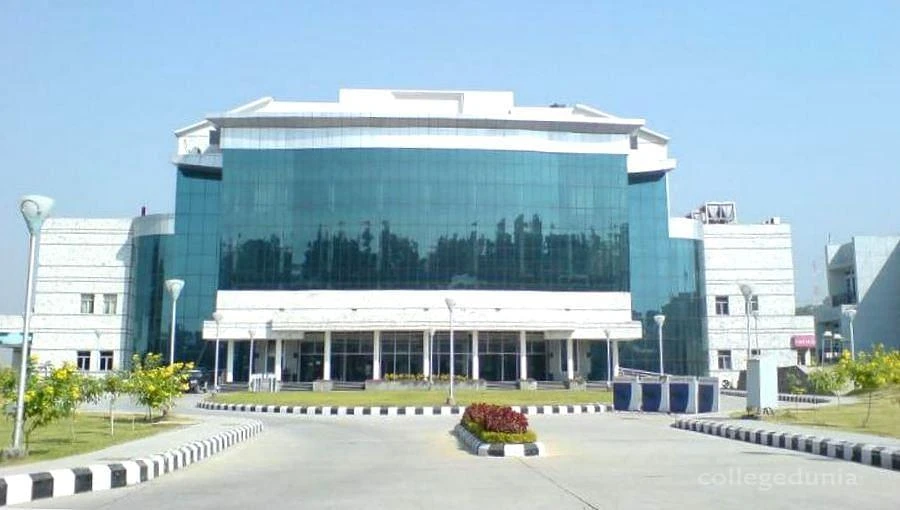
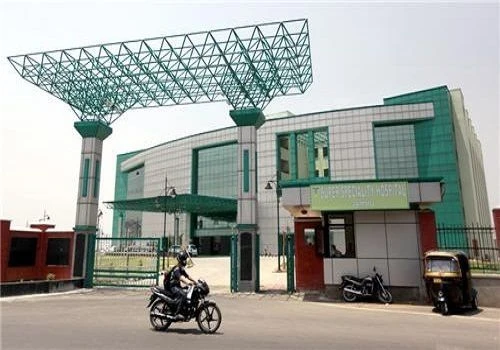
In this preview: 2 photos · 0 videos
Yes, Jammu is widely considered a peaceful city. Students from other states, including Delhi, Punjab, and Rajasthan, regularly join through the All India Quota (AIQ) and form a significant part of the student community.
As of 2024, there is a mandatory 2-year service bond for postgraduate (MD/MS) students. For the MBBS program, the bond policy is currently under review by the government, and its status is unverified.
Government Medical College Jammu currently offers greater clinical exposure, with a much higher patient footfall and more established clinical departments compared to the newer AIIMS Jammu campus.
No, hostel accommodation is not mandatory. However, most students prefer to stay in the college hostels due to their close proximity to the associated hospital, which is convenient for night duties and clinical postings.
For a General category student to secure a seat safely in the first round of counseling, a NEET rank under 10,000 is typically required for the MBBS program at GMC Jammu under the All India Quota.
Share what future students should know about GMC.
Student voices are not rewritten by colleges. We remove spam and abuse.
Wider admission question? Community PulseWhat should future students know?
Tell us which course you're considering. We'll help you work out the next step.
Get instant Partner access after mobile verification. Your public edits are reviewed before they go live.
Claim this college
 Auditorium
 Cafeteria
 Hostel
 Medical
 Science Labs
 Sports Complex
 Study Library