Loading Admission Guardian content
Loading Admission Guardian content

Provisional score based on available data. It may change as more information is verified.
Find a program, read its fee details and explore the admission requirements.
Summary of the programs shown below. Programs record different fee periods. Compare the individual amounts and their notes below.
| Course | Stream | Fees |
|---|---|---|
| Master of Computer Applications [M.C.A] | Computer Applications | 27000 |
| Master of Computer Applications [M.C.A] {Lateral} | Computer Applications | 27000 |
| Master of Business Administration [MBA] | Management | 27000 |
| Bachelor of Technology [B.Tech] | Engineering | 35000 |
| Master of Technology [M.Tech] | Engineering | 35000 |
All accepted exams
Eligibility: Graduation
All accepted exams
Eligibility: Graduation
Specializations
All accepted exams
Eligibility: Graduation
Specializations
All accepted exams
Eligibility: 10 +2
Specializations
All accepted exams
Eligibility: Graduation
3 exams with cutoff data available - showing recent entries
 Apex Encon Projects
 Capgemini
 Cognizant
 Dell
Dell Genpact
 Hindustan Copper Limited (HCL)
 IBM
IBM Infosys
 Ocwen Financial Services
 Polaris
 SAP
SAP Syntel
 TCS
TCS Wipro
WiproIf you're looking for a solid, no-frills engineering education in Andhra Pradesh without breaking the bank, Amrita Sai Institute of Science and Technology (ASIST) is a name that consistently pops up. It’s not the flashiest college, but its permanent affiliation with JNTUK, autonomous status, and an 'A' grade from NAAC give it a credibility that many private institutes struggle to match. For students who clear the AP EAPCET and get a convener quota seat, the value proposition is hard to ignore—decent academics at a fraction of the cost of a metro city college. But you should know the trade-offs: a campus life that leans more towards discipline than festivity, and placement stats that require a heavy dose of reality-checking against the official brochures.
ASIST operates as an autonomous college under JNTUK, which is a significant advantage. It means they design their own syllabus and conduct their own exams, often leading to a more updated curriculum and a smoother academic schedule than the typical JNTUK-affiliated college grind.
The B.Tech program is the main draw, with an intake of over 1,000 students. Computer Science is undeniably the king here, with 360 seats for the regular program and another 240 split between trendy specializations like AI & ML, Data Science, and IoT & Cyber Security. That’s a clear signal of where the institute is investing its resources. The core branches—ECE, EEE, Civil, and Mechanical—have smaller intakes, typically 30-120 seats each.
Postgraduate options include an MBA, MCA, and M.Tech in a few specializations. They also run a polytechnic diploma program. The faculty count is around 197, and a decent chunk—maybe 30-40% in key departments—hold PhDs. Students often describe professors as approachable and exam-focused, which is what you’d expect at a college with a disciplined reputation. Industry tie-ups with names like CISCO and SAP exist on paper, primarily facilitating workshops and entry-level certifications.
This is where you need to read between the lines. The official placement cell claims a 75-85% placement rate. Talking to students and scanning reviews on platforms like CollegeDunia and Shiksha paints a more nuanced picture. The realistic on-campus placement rate seems closer to 60-70% for CSE/IT branches, and can dip to 40-50% for core branches like Mechanical or Civil.
The highest package touted for the 2024 cycle is around 12 LPA, but that’s an outlier. The consistent average package for a graduating student sits in the ₹3.5 to ₹4.2 LPA range. The median package was ₹3.5 LPA for 2022-23. That’s a decent starting point for the region, but don’t confuse it with the NIT or top private college averages.
Recruiters are predominantly the IT mass recruiters: TCS, Wipro, Infosys, HCL, Capgemini, and Tech Mahindra. You’ll also see some core companies like MRF, Schneider Electric, and Hyundai. About 70% of offers are in IT services. A recurring and unverified complaint in student reviews is a alleged "pay after placement" policy, where the college supposedly takes a cut of the first salary. It’s a serious claim that prospective students should directly ask the administration about.
The affordability of ASIST is its biggest weapon. For a B.Tech student securing a seat through the state convener quota (AP EAPCET), the annual tuition is remarkably low, between ₹43,000 and ₹53,000. The management quota fee is a different story, ranging from ₹1.2 to ₹1.6 lakhs per year.
Add to that hostel and mess charges, which run from ₹40,000 to ₹65,000 annually for a non-AC room. AC rooms are pricier, around ₹85,000. Factor in one-time and annual miscellaneous fees (placement training, library, etc.), and the total 4-year cost for a convener quota student staying in hostel can be between ₹4.5 to ₹6 lakhs. That’s a fraction of the cost of most private engineering colleges.
Eligible students can avail of Andhra Pradesh government scholarships like Jagananna Vidya Deevena (for tuition) and Vasathi Deevena (for hostel fees), which significantly ease the financial burden for local students.
Admissions are straightforward and channeled through the state counseling processes. For B.Tech, you must appear for the AP EAPCET. For MBA/MCA, it’s the AP ICET. Diploma admissions go through AP POLYCET, and M.Tech requires a GATE or AP PGECET score.
Seats are split: 70% are filled through the state counseling (Category-A) based on your AP EAPCET rank, and the remaining 30% are management quota (Category-B). The 2024 cutoff ranks for general category students give a clear hierarchy: CSE is the most competitive (ranks 38,000-54,000), followed by the new-age CSE specializations (48,000-75,000). ECE cuts off around 81,000-98,000, while Civil and Mechanical often accept ranks upwards of 1,20,000. These cutoffs make it an accessible option for a wide range of rank-holders. The official admission portal is on their website: Amrita Sai Institute of Science and Technology.
The 10-acre campus is consistently praised for being lush, green, and peaceful. Infrastructure is adequate. There are over 40 labs—CSE labs are reportedly well-equipped, while some core engineering labs are described as functional but could use updates. The library has a decent collection and digital journal access. Wi-Fi is available but students say it’s restricted (social media blocks) and speeds are just okay.
Hostels have separate blocks for genders and can house about 500 students. Reviews rate them around 3.2/5—clean and secure, but with strict rules. The biggest gripe? The mess food. It’s a frequent complaint, called monotonous and average. The college has a fleet of buses for commuting students.
Now, the campus culture. If you’re looking for a vibrant, fest-filled college life, this isn’t it. ASIST has a reputation for discipline. Mobile phones are officially not allowed in academic areas, and the 75% attendance rule is enforced. There are very few major fests or cultural events. As one Quora reviewer put it, life here feels more like an extension of school. That environment works for some students who want minimal distractions, but it’s a deal-breaker for others.
The student consensus positions ASIST as a disciplined, mid-tier, value-for-money option. The positives are clear: an affordable autonomous degree, a clean and green campus, and generally supportive faculty. For a student from a middle-class background in Andhra who gets a convener quota seat, it’s seen as a smart, pragmatic choice.
But the negatives are just as consistently voiced. The strict rules (especially the mobile policy) are a major pain point. The gap between the claimed and actual placement rates leads to cynicism. The alleged "placement tax" rumor, whether true or not, damages trust. Social life is considered dull, and the hostel food is a perennial complaint. It’s a trade-off—you exchange a lively college experience for a focused, budget-friendly education.
It depends entirely on your priorities and your budget. If you are a student from Andhra Pradesh with a moderate AP EAPCET rank (say, 30,000 to 1,00,000) seeking an accredited, autonomous B.Tech degree at the lowest possible cost, ASIST is a compelling, sensible choice. Its NAAC 'A' grade and NBA accreditations add real weight to your degree. For CSE and ECE students, the placement opportunity, while modest, is tangible.
However, if you’re looking for a vibrant campus life, cutting-edge research opportunities, or are aiming for top-tier multinational placements with high packages, you should set your sights higher. The strict environment and limited social scene won’t suit everyone. Also, if you’re considering a core branch like Mechanical or Civil, be extra cautious and research the recent placement records for those specific departments. For the right student—one who is cost-conscious, focused on academics, and comfortable with a regulated environment—ASIST delivers exactly what it promises: a respectable engineering degree without the daunting debt.
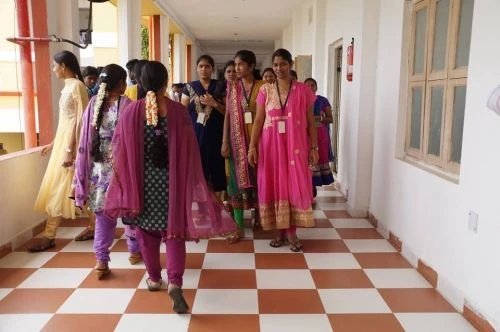
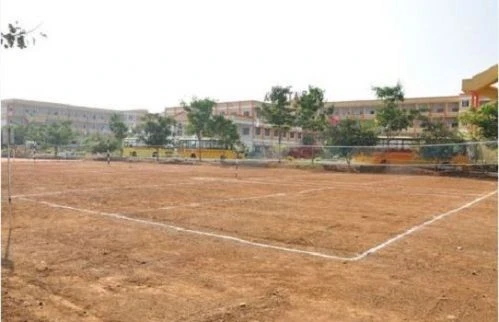
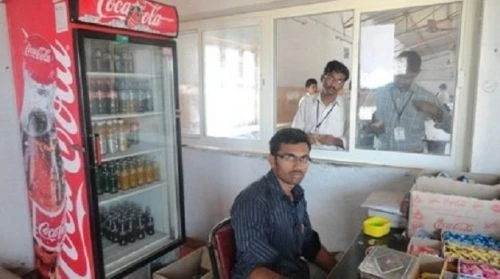
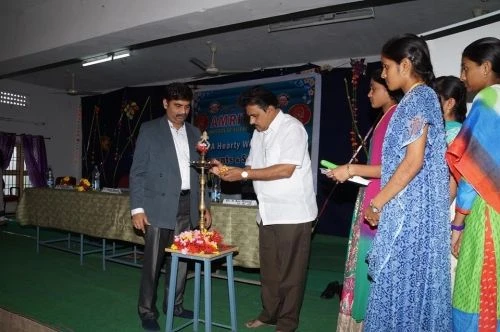
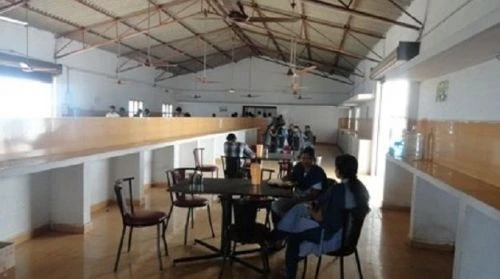
In this preview: 5 photos · 0 videos
No, they are separate institutions. Amrita Sai Institute of Science and Technology (ASIST) is a private autonomous college located in Krishna, Andhra Pradesh. Amrita Vishwa Vidyapeetham is a Deemed University based in Coimbatore, Tamil Nadu.
Officially, mobile phones are not allowed. Student reports indicate that mobile use is restricted during class hours and devices can be confiscated if the policy is violated.
No, hostel stay is not mandatory. Many students from distant districts choose to stay in the hostel, while local students typically use the college bus service for commuting.
Some student reviews claim the college has a policy where a fee, such as a student's first month's salary, is charged for successful campus placements. This information is noted as unverified in available reports.
Yes, CSE is considered the flagship branch at ASIST. It is reported to have the best laboratory facilities and receives the highest priority for campus placements.
Share what future students should know about ASIST.
Student voices are not rewritten by colleges. We remove spam and abuse.
Wider admission question? Community PulseWhat should future students know?
Tell us which course you're considering. We'll help you work out the next step.
Get instant Partner access after mobile verification. Your public edits are reviewed before they go live.
Claim this college
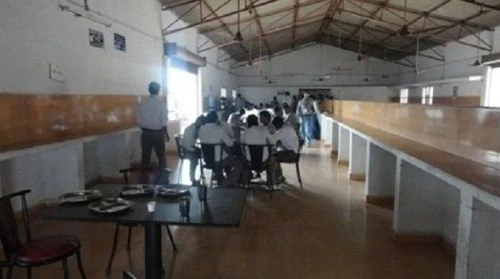
 Auditorium
 Cafeteria
 Computer Labs
 Gym
Gym Hostel
 Medical
 Science Labs
 Sports Complex
 Study Library