Loading Admission Guardian content
Loading Admission Guardian content
Find a program, read its fee details and explore the admission requirements.
Summary of the programs shown below. Fee amounts are not listed. Contact the college for its current fee schedule.
| Course | Stream | Fees |
|---|---|---|
| Bachelor of Science [B.Sc] (Interior Design) | Design | |
| Bachelor of Business Administration [BBA] | Management | |
| Bachelor of Business Administration [BBA] + Master of Business Administration [MBA] | Management | |
| Bachelor of Science [B.Sc] | Science | |
| Master of Science [M.Sc] | Science |
Specializations
Eligibility: 10+2
Specializations
Eligibility: 10+2
Specializations
Eligibility: 10+2
Specializations
Eligibility: 10+2
Specializations
Eligibility: Graduation
Gurukul Institute of Management and Technology in Rohini, Delhi, isn't your typical college. It's a degree facilitation center, a private study hub that partners with various universities to offer programs primarily to working professionals. If you're looking for sprawling lawns, a vibrant campus life, and on-campus recruitment drives with top-tier companies, you'll be disappointed. But if you need an affordable, flexible degree to check a box for a promotion or career shift while holding down a job, GIMT has carved out a specific, if controversial, niche. The experience here is transactional—you pay for administrative support and a pathway to a degree from a UGC-recognized partner university. That's the core offer, and it's crucial to understand that before anything else.
GIMT's academic portfolio is vast on paper, but the delivery model is what defines it. They don't run their own degree programs. Instead, they act as an admission and coordination partner for a roster of state private and open universities. You'll enroll for, say, an MBA, but your degree will be issued by Shobhit University or Sunrise University. The course list includes B.Tech in standard streams, BBA, BCA, BA, B.Sc, and a wide array of postgraduate options like MBA, M.Tech, and MCA.
The academic culture is built for flexibility, not rigor. Lectures are often described as irregular or supplemental; the primary mode is self-study using provided materials. For working professionals, that's a feature, not a bug. But for a fresh 12th-grade graduate expecting a structured, immersive learning environment, it's a significant drawback. They also heavily market "Fast Track" and "Direct Examination" options, which promise accelerated completion—like a 2-year MBA in 6 months to 2 years. You should be extremely cautious here. While the partner university may issue the degree, such fast-track credentials are frequently flagged or rejected during government job verifications or international credential assessments like WES for Canada.
This is where the marketing meets a stark reality. The institute claims "100% placement assistance," which is a very different thing from 100% placement. The highest package touted in materials is around 4.5 to 6 LPA, with an average hovering between 2.5 and 3.5 LPA. Recruiters listed include names like HCL, IBM, and TCS, but also many local SMEs in the Delhi NCR region.
Student reviews paint a clearer picture. The "placement assistance" often translates to an email list of job openings or occasional referral calls, not organized on-campus recruitment drives. Many students are already employed and are there for the degree, so they aren't actively seeking campus placements. If you are a fresh graduate relying solely on GIMT to land you a job, you might find the support lacking. The placement numbers are decent for a low-cost, flexible study center but are not comparable to a full-time residential college's dedicated training and recruitment cell.
Affordability is one of GIMT's strongest selling points. The fees are significantly lower than most mainstream private universities in Delhi. Estimates for the 2025-2027 period put annual tuition between ₹25,000 and ₹55,000, depending on your chosen program and the awarding university. A full B.Tech might cost ₹1.4 to ₹1.8 lakhs total, while a two-year MBA could range from ₹70,000 to ₹1.1 lakhs. There are no on-campus hostels, as the Rohini center is an office building. Students typically arrange for private PGs or rentals in nearby areas like Rohini or Pitampura, which adds to the overall cost of living but offers flexibility. The institute does not prominently advertise any substantial scholarship or financial aid programs; the low fee structure itself is the primary financial incentive.
The admission process at GIMT is straightforward and merit-based, which essentially means direct. There's no intense competition or high cutoffs to worry about. For undergraduate programs, you need to have passed your 10+2. For postgraduate courses, a bachelor's degree is the basic requirement. While their materials mention accepting scores from exams like CAT, MAT, or JEE, the overwhelming majority of admissions are direct, based on your previous academic records.
You apply, likely pay an application fee of around ₹500 to ₹1,000, and undergo a counseling session. There's no traditional "management quota" system because the entire operation functions on a direct-admission model. It's an accessible process by design, removing the barrier of competitive entrance exams for those who just need the degree credential.
Manage your expectations. The GIMT New Delhi experience is devoid of a traditional campus. Their address in Rohini Sector-7 is a commercial building with classrooms and offices. There are no sports grounds, no central library, no hostels, and no sprawling student commons. Infrastructure is basic: some classrooms and computer labs for IT-related courses. The library is a small in-house collection focused on providing study material for distance learning modules.
Consequently, campus life—in the sense of fests, clubs, sports tournaments, or a vibrant social scene—is virtually non-existent. One reviewer summed it up perfectly: "It's just a building with classrooms." This setup is ideal for the working professional who comes for classes or to submit assignments and then leaves. It's a severe downside for any student seeking the holistic, formative "college experience."
The online sentiment is polarized, which is telling. Glowing 5-star reviews often praise the supportive counseling staff and the flexibility. The critical 1-star reviews, however, consistently warn that GIMT is more of a "consultancy" than a "real college."
The consensus highlights a few key points. On the positive side, working professionals appreciate the affordability and the hassle-free process. The staff is generally helpful with admission paperwork and navigating the partner university's requirements. That's the value proposition working as intended.
On the negative side, anxieties about degree validity for government jobs or overseas education are a recurring theme. The lack of any campus life is a frequent complaint among younger students. Teaching quality is described as average at best, with a heavy emphasis on self-study. And the placement promises, as discussed, don't always match the on-ground reality for those seeking employment. It's a classic case of getting what you pay for, but you need to be absolutely sure what it is you're actually paying for.
GIMT New Delhi serves a very specific audience, and judging it by conventional college standards would be a mistake. It's not "worth it" for a typical 18-year-old high school graduate looking for campus life, peer learning, and high-growth career launchpad. They would likely feel short-changed and should look at more traditional affiliated colleges or universities.
However, for a specific demographic, it can be a pragmatic choice. If you are a working professional in your late 20s or 30s, already employed, and you need a bachelor's or master's degree primarily for an internal promotion, a salary increment, or to meet a job requirement, GIMT offers a low-cost, low-friction path. The flexibility to study at your own pace and the minimal time commitment are its real assets. Just go in with eyes wide open: you are paying for degree facilitation and administrative support, not for transformative education or a collegiate experience. Always double-check the current UGC recognition status of your chosen partner university, and be deeply skeptical of any "fast-track" promises if you have future plans for government service or immigration.
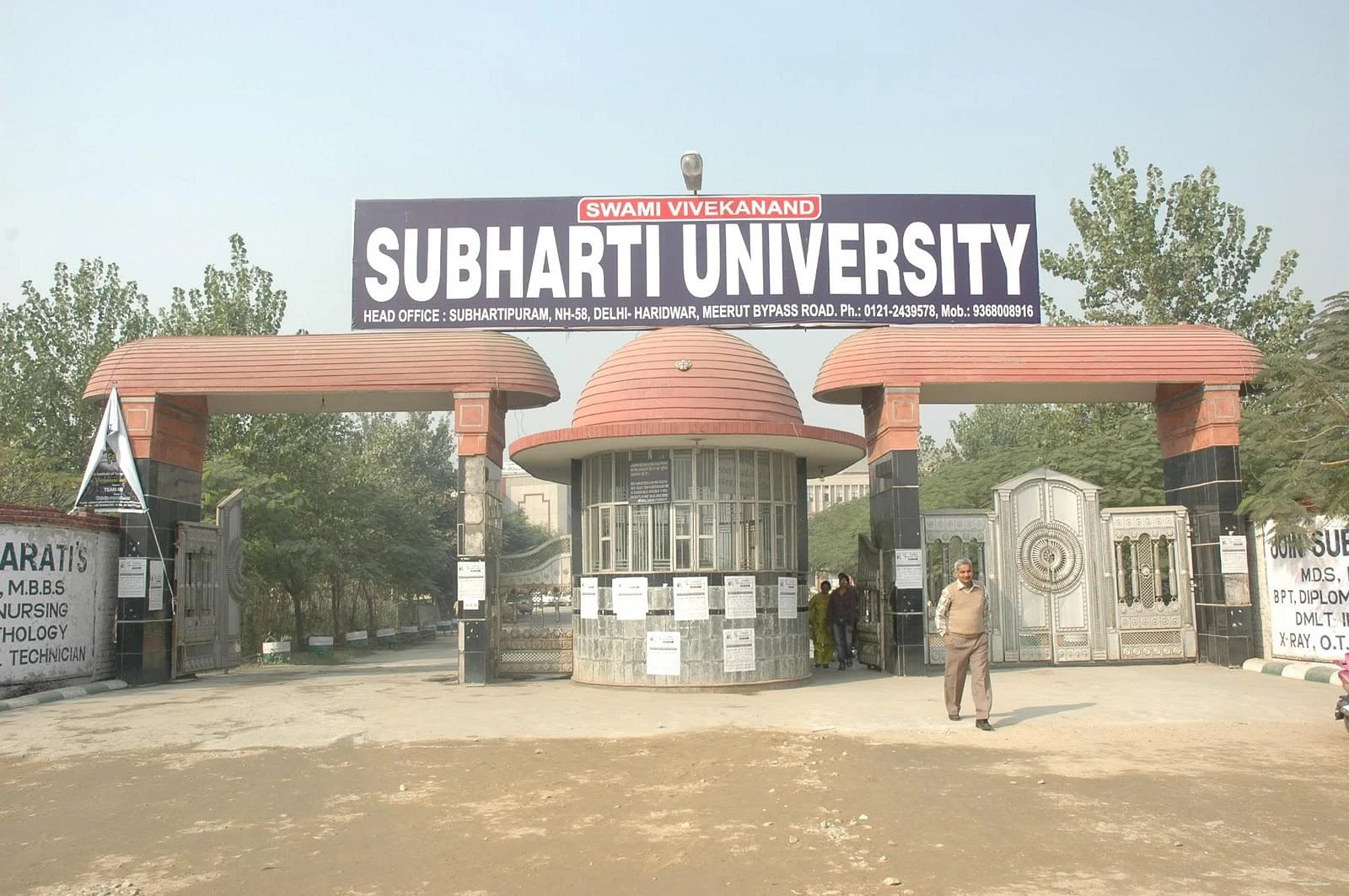
In this preview: 1 photo · 0 videos
GIMT New Delhi itself is a trust or facilitator. The technical degrees it offers are usually affiliated with universities that claim to have AICTE or UGC approval. Prospective students should verify the specific approval status of the awarding university and program directly with the relevant authorities.
No, GIMT New Delhi does not have a traditional campus. It operates from an institutional building located in Rohini Sector-7 and does not feature the typical grounds, hostels, or extensive facilities associated with a conventional college campus.
GIMT New Delhi offers "Fast Track" programs, including options for a one-year MBA. However, students are strongly advised to check the latest UGC guidelines, as one-year MBAs are generally not recognized as equivalent to standard two-year MBA degrees in India, which can impact future employment and higher education opportunities.
The validity for government jobs depends on the university awarding the degree (e.g., Shobhit, Sunrise). If the university is UGC-DEB approved for that specific academic year, the degree is technically valid. However, it is important to note that "Fast Track" degrees are often rejected by government verification boards during the recruitment process.
GIMT New Delhi and GIMT Nadia are entirely different institutions. GIMT Nadia is a regular engineering college in West Bengal affiliated with MAKAUT (Maulana Abul Kalam Azad University of Technology). GIMT New Delhi is a private institute or study center in Rohini, Delhi, functioning primarily as a degree facilitation center for distance and fast-track education.
Share what future students should know about GIMT.
Student voices are not rewritten by colleges. We remove spam and abuse.
Wider admission question? Community PulseWhat should future students know?
Tell us which course you're considering. We'll help you work out the next step.
Get instant Partner access after mobile verification. Your public edits are reviewed before they go live.
Claim this college
 Auditorium
 Cafeteria
 Campus Security
 Computer Labs
 Medical
 Science Labs
 Sports Complex
 Study Library