Loading Admission Guardian content
Loading Admission Guardian content

Selected ranking categories, with the recorded year beside each result. Open all records for the complete history.
1 published record · Lower numeric ranks are stronger
Find a program, read its fee details and explore the admission requirements.
Summary of the programs shown below. Fee periods can differ by program. Check the note beside each amount before comparing costs.
| Course | Stream | Fees |
|---|---|---|
| Master of Computer Applications [M.C.A] | Computer Applications | 45600 |
| Master of Business Administration [MBA] | Management | 55000 |
| Master of Technology [M.Tech] | Engineering | 60000 |
| Bachelor of Technology [B.Tech] | Engineering | 70000 |
| Diploma in Engineering (Polytechnic) | Engineering |
Eligibility: Graduation
Specializations
All accepted exams
Eligibility: Graduation
Specializations
All accepted exams
Eligibility: Graduation
Specializations
All accepted exams
Eligibility: 10+2 + JEE
Specializations
All accepted exams
Eligibility: 10th
2 exams with cutoff data available - showing recent entries
 Amdocs
 Birlasoft
 Cognizant
 DLF
DLF EPIC Systems
 GTL
GTL IBM
IBM ICICI Prudential
 Microsoft
 Microsoft(IT)
 Mphasis
 Nasscom
 Oracle
 Persistent Ltd
 Quick Heal
 SAP
SAP Syntel
 TCS
TCS Tech Mahindra
 Wipro
Wipro Wipro Technologies
 Zensar
Gyan Ganga College of Technology (GGCT) in Jabalpur is a private engineering college that operates with a simple, pragmatic pitch. If you're a student from central Madhya Pradesh looking for a decent B.Tech degree without leaving the region, and you can't crack the cutoffs for the top-tier government colleges, GGCT is often the default answer. Established in 2006 and affiliated with RGPV Bhopal, it's part of the larger Gyan Ganga Group, sharing a campus and a placement cell with its more established sibling, GGITS. That connection is a double-edged sword—it provides a brand name but also means living in the shadow of the older institute. The reality here is one of managed expectations: you get a functional education, a shot at campus placements with mass recruiters, and a degree that holds value locally. But you also trade away some typical college freedoms for a regimented, almost school-like environment. It's a trade-off many students in the region make every year.
GGCT offers the standard RGPV curriculum across a range of engineering disciplines, with a clear tilt towards computer-related fields. The total B.Tech intake is around 600-700 seats, with CSE, AI&DS, and AI&ML accounting for the bulk of them—over 400 seats combined. That tells you where the demand, and the college's focus, lies. The other branches—IT, Electronics & Communication, Mechanical, and Civil—have smaller intakes of 30-60 seats each.
Academically, it's a mixed bag. The college follows the RGPV semester schedule and the standard 10-point CGPA system. They've established MoUs with Oracle Academy, AWS Academy, and Cisco Networking Academy, which theoretically adds industry-relevant modules to the syllabus. In practice, faculty quality is inconsistent. While there are some experienced senior professors like Dr. Neeraj Shukla (CSE), student reviews frequently point out that a significant portion of the teaching is handled by junior or guest faculty who are recent graduates themselves. The academic culture is strict, with a heavy emphasis on discipline and attendance—more on that later.
For postgraduate studies, GGCT offers M.Tech in a few specializations, an MBA program, and an MCA. The MBA, with specializations in Marketing, Finance, HR, and IT, draws a local crowd, and the placement dynamics are similar to the engineering side.
This is where the official narrative and student-reported experiences require careful separation. The college's placement cell, shared with GGITS, is active and works to bring companies to campus. The top-line numbers you'll see in brochures are eye-catching: a highest package of 51-53 LPA and even an unverified claim of 1.11 Crore for 2025. It's crucial to understand these are almost certainly off-campus or group-wide pool drive achievements of exceptional students. They are not representative of the on-campus experience.
The working numbers for the average student are more grounded. The average package for the 2024-25 cycle hovered between ₹3.5 and ₹4.5 Lakhs Per Annum (LPA), with a median around ₹3.2 LPA. That's a decent starting point for the region. Top recruiters are the familiar names in mass IT recruitment: TCS, Infosys, Wipro, Cognizant, HCL, and Persistent Systems. Occasionally, companies like Amazon, Cisco, or Reliance Jio visit for the top performers.
The biggest caveat is the placement percentage and the branch disparity. The college claims 85-90% placement for CSE/IT streams. Across student reviews on portals like Shiksha and CollegeDunia, the consensus suggests the overall placement rate is closer to 60-70%. For core branches like Mechanical and Civil, it drops sharply—alumni cite rates as low as 20-30%. The placement cell does allow students from all branches to sit for IT company tests, which is a lifeline for many. But the message is clear: if you're not in a computer-related branch, you need to be proactive about building skills and seeking opportunities off-campus.
The fee structure at GGCT is one of its competitive advantages in the private college space. B.Tech tuition is estimated at ₹65,000 to ₹75,000 per annum for the 2025-27 period, making the total four-year cost around ₹2.8 to ₹3 lakhs. That's significantly lower than many private engineering colleges in metro cities. MBA and MCA fees are in a similar range of ₹50,000-₹60,000 per year.
However, the hostel situation adds complexity and cost. The college does not have sufficient on-campus hostel facilities for all. Most students rely on private paying guest accommodations (PGs) in nearby areas like Medical or Tilwara, or use the "Gyan Ganga Hostel" located about 1.5 km away. The cost for a PG, including food, typically ranges from ₹5,000 to ₹9,000 per month. Additional costs include exam fees payable to RGPV, bus transport (around ₹12,000/year), and a one-time refundable caution deposit.
Financial aid is primarily through state government schemes. Students can apply for the Post-Metric Scholarship for OBC/SC/ST categories and the Gaon Ki Beti Yojana for rural female students. The college also offers merit-based waivers for students who top the university rankings.
Admission to the B.Tech programs is primarily through the state counseling process conducted by the Directorate of Technical Education (DTE), Madhya Pradesh. JEE Main scores are the key. Given the seat volume, the closing ranks are not exceptionally high, making it an accessible option for many. For the 2024/25 session, the closing ranks for the General Home State category were around 1,200,000 – 1,400,000 for CSE and 1,300,000 – 1,450,000 for AI & Data Science.
The process is straightforward: qualify in JEE Main, register for MP DTE counseling, and choose GGCT in your preference list based on your rank. For MBA admissions, scores from CMAT or the state-level MPMET are accepted. The college also has a management quota, accounting for roughly 15% of seats, which involves direct contact with the college administration and typically comes with a higher fee.
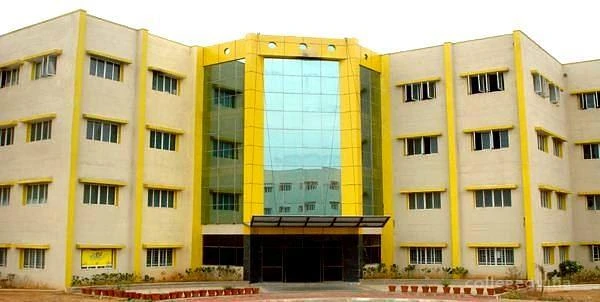
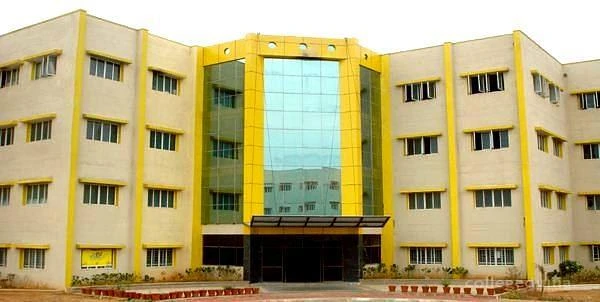
The campus, spread over 10-12 acres as part of the larger group, has clear strengths and a famous weakness. On the plus side, the labs are well-regarded, especially the dedicated centers for AI/ML and the Cisco lab. The library is a strong asset with a collection of over 50,000 books and digital access. The canteen, surprisingly, is consistently rated as a highlight—multiple outlets serving affordable, good-quality food, with a Nescafé booth being a popular hangout.
Then there's the Wi-Fi, or rather, the lack of it. This is the most consistent complaint across all student forums. The college uses signal jammers in academic blocks, and the student Wi-Fi is either restricted or non-functional. It's a major point of frustration for students who rely on online resources.
Hostel life is not a central feature. With limited official capacity, most students live off-campus in PGs. This disperses the student community but also offers more freedom than the college's strict on-campus rules allow. The college provides a large fleet of buses for transportation across Jabalpur.
Social life revolves around annual festivals like Gyan Utsav and Spandan, which include technical events, cultural performances, and celebrity shows. These events are well-organized and provide a break from the routine.
Synthesizing feedback from CollegeDunia, Shiksha, Reddit, and Quora paints a consistent picture. The most common descriptor is that GGCT has a "school vibe." Mandatory uniforms and a strictly enforced 75% attendance policy—with fines and exam debarment for defaulters—create a controlled environment. Many chafe under these rules, with one Reddit user noting, "The canteen is the only place where you feel like a college student; the rest of the time, you're just following rules."
Positives always include its standing as the best private engineering option in Jabalpur after the government-run Jabalpur Engineering College (JEC). The placement cell's effort in bringing companies is acknowledged, even if the outcomes are uneven. The supportive peer group among local students is another plus.
Negatives beyond the Wi-Fi issue often focus on management behavior, described in several threads as "money-minded" or "rude." The disparity in placement attention between computer science and core branches is a recurring theme of frustration. There's also a skepticism about inflated placement stats, summarized by a Shiksha review: "Placement numbers are inflated by including off-campus achievements of the top 1%."
GGCT is a college of specific context. It's not a national-level institution, and it doesn't pretend to be. Its value proposition is entirely regional. If you are a student from Madhya Pradesh, particularly the Mahakaushal region, with a JEE Main rank that places you outside the top government colleges, and you want to study engineering without the cost and distance of a big-city private institute, then GGCT is a logical, practical choice. You'll get a recognized degree, a shot at campus placements with IT service giants, and a low tuition fee.
But you must go in with eyes open. Choose your branch wisely—prioritize CSE, IT, AI&ML, or AI&DS for significantly better placement odds. Be prepared for a disciplined, sometimes restrictive campus atmosphere. And understand that your success will depend heavily on your own initiative beyond the classroom, especially given the limited digital connectivity on campus. For an ambitious student aiming for top-tier product companies or cutting-edge research, there are better avenues. For a student seeking a solid, affordable launchpad for a stable career in the Indian IT sector, GGCT gets the job done. It's a workmanlike college for practical goals.
For the most current data, always cross-check with the official GGCT website and the MP DTE counseling portal.
In this preview: 1 photo · 0 videos
GGITS is the older, "flagship" campus with slightly better perception and NBA accreditation for more branches. GGCT is the second choice but shares the same placement cell.
Yes, the college is very strict about this. Fines and exam debarment are common consequences for not maintaining the mandatory 75% attendance.
Yes, mass recruiters like TCS and Infosys allow students from all branches to sit for their placement exams, provided the students have basic coding skills.
No, the college does not provide laptops. However, there are ample computer labs available for student use during college hours.
The core subjects for these programs are approximately 80% identical. The specializations differ primarily in the final two years of study, and placement opportunities are currently equal for all three branches.
Share what future students should know about GGCT.
Student voices are not rewritten by colleges. We remove spam and abuse.
Wider admission question? Community PulseWhat should future students know?
Tell us which course you're considering. We'll help you work out the next step.
Get instant Partner access after mobile verification. Your public edits are reviewed before they go live.
Claim this college
 Auditorium
 Cafeteria
 Computer Labs
 Medical
 Science Labs
 Sports Complex
 Study Library