Loading Admission Guardian content
Loading Admission Guardian content
Provisional score based on available data. It may change as more information is verified.
Find a program, read its fee details and explore the admission requirements.
Summary of the programs shown below. First-year fee. Check the note beside each amount for inclusions and exclusions.
| Course | Stream | Fees |
|---|---|---|
| Diploma in Engineering (Polytechnic) | Engineering | 30000 |
| Bachelor of Engineering [BE] | Engineering | 45600 |
Specializations
All accepted exams
Eligibility: 10th with 35% + MP PPT
Specializations
All accepted exams
Eligibility: 10+2 with 75% + JEE Main
2 exams with cutoff data available - showing recent entries
 Accenture
 Avaya
Avaya Bajaj Allianz
 Cognizant
 CSC India
 Dell
Dell Ericsson India Pvt Ltd
 HCL Technologies
 HDFC Bank
 Honeywell
 Housing Development Finance Corporation (HDFC)
 I-Flex
 IBM
IBM ICICI Bank
 ICICI Prudential
 Impetus
 Infosys
 KPIT Cummins
 L&T Infotech
 Maruti
 Maruti Suzuki
 Mphasis
 Persistent Ltd
 Persistent Systems Limited
 Reliance
 Sasken Communications
 Syntel
 Tata Motors
 TCS
TCS Tech Mahindra
 Toyo Engineering Corporation
 Wipro
Wipro Wipro Technologies
Gyan Sagar College of Engineering (GSCE) is a private institution that's been part of the Sagar educational landscape since 2009. Affiliated with Rajiv Gandhi Proudyogiki Vishwavidyalaya (RGPV) in Bhopal, it operates on a 10-acre campus located about 8 kilometers from the city center on the Narsinghpur Road. For students in and around the Sagar region looking for an AICTE-approved engineering or science degree without the high costs of metro city colleges, GSCE presents a straightforward, budget-conscious option. Its placement claims, especially a highest package of 21 LPA, are ambitious for a college of its profile and location, which makes a closer look at the student-reported reality essential.
GSCE offers a mix of undergraduate programs, with B.Tech being the central offering. The academic structure follows the RGPV curriculum and calendar, which runs from July to June. They've got a Continuous Evaluation and Student Assessment System in place, which is pretty standard.
The B.Tech program has an intake of 60 seats per specialization. The available branches are Computer Science & Engineering (CSE), CSE with a focus on Artificial Intelligence, Civil Engineering, and Mechanical Engineering. The inclusion of CSE-AI is a nod to current trends, though the depth of specialization at the undergraduate level in a newer college can vary. Beyond engineering, the college runs Diploma (Polytechnic) courses, a 4-year integrated B.Sc + B.Ed program, and standalone B.Sc degrees in PCM, CBZ, and Computer Science. The postgraduate offering is limited to an MBA.
Faculty strength is listed at over 75 members. You'll find a handful of PhD holders among them, like Dr. Nidhi Rajak in CSE-AI and Dr. S.K. Jain. The college mentions fostering industry collaboration through visits, workshops, and seminars. It's a standard claim, but for a college in this location, active effort in this area is more critical than for institutes in tech hubs. The official website, gsce.edu.in, is the primary source for detailed syllabi and academic notices.
This is where you need to read between the lines. The college's official claim is a highest package of 21 LPA and an average of 5 LPA. They also state that "all eligible students are placed in various multinational companies" and cite a 70% placement rate. The recruiter list is extensive on paper, featuring names like TCS, Wipro, L&T Infotech, Persistent, Zensar, and Hexaware.
But student reviews paint a more tempered picture. Alumni talking online frequently mention average packages hovering around 3 to 3.5 LPA, with the highest offers they've seen being in the 10-15 LPA range. That 21 LPA figure is often treated as an outlier, if it exists at all. The gap between the official claim and the alumni-reported number is notable, and it's something prospective students should factor in.
The 70% placement rate seems plausible for a college where a significant portion of the cohort might be from the local region and open to a wider range of opportunities. Placements are heavily skewed towards the IT services sector, with some core engineering companies like HMT and Asahi India appearing for mechanical and civil roles. The college also highlights an "All India Rank 92 for Students Internship in 2022," which is an interesting data point, though the methodology behind that ranking isn't clarified. Their self-reported internship rating is a 6 out of 10.
So, what's the real placement story? It's likely that for a dedicated student from the CSE stream, landing a 3-5 LPA job with a mid-tier IT firm is a reasonable expectation. For core branches and non-engineering programs, opportunities will be fewer and more localized. You shouldn't bank on the 21 LPA dream, but as a launchpad for a first job in the industry, especially for students constrained by budget, it can serve a purpose.
Affordability is GSCE's strongest card. The annual tuition fee for the B.Tech program is just ₹45,600, making the total four-year course cost approximately ₹1,82,400. That's exceptionally low for a private engineering college. The MBA program is around ₹40,000 per year, the B.Sc + B.Ed integrated program is ₹23,000 annually, and the Polytechnic diploma is ₹28,000 per year.
Hostel fees add a significant amount. The standard hostel with mess charges is ₹42,000 per year. There are also AC single-seater options that cost between ₹1.20 to ₹1.25 lakhs annually. A refundable caution deposit of ₹5,000 is extra at admission.
Scholarship support is available and seems actively utilized. The college mentions schemes for merit, students with 75% attendance, and those from BPL families. Post-matric scholarships for SC/ST students are processed here, and OBC students with family income under ₹3 lakhs can avail of a half-scholarship. Some students have reported receiving scholarships of about ₹30,000, which on a ₹45,600 fee, is substantial. This financial ecosystem makes GSCE accessible to a wide socioeconomic range in the region.
Admissions to the B.Tech program are primarily through state counseling. The college accepts scores from JEE Main and the MP BE entrance exam. You'll need to register for the MP state counseling process (often referred to as MP DTE counseling) and choose GSCE during the choice-filling rounds. There's no separate college-level entrance exam for the engineering programs.
For the Diploma (Polytechnic) courses, admission is through the MP PPT (Pre-Polytechnic Test) and subsequent state counseling. Admissions to the B.Sc, B.Sc+B.Ed, and MBA programs are likely based on merit in the qualifying examination, though checking the specific guidelines on the RGPV website during admission season is crucial.
Given the fee structure and location, the cutoff ranks for B.Tech at GSCE are not fiercely competitive. It typically falls within the later rounds of MP counseling, catering to students with moderate JEE Main scores or those who have taken the MP BE exam. The intake is 60 per branch, so seats do fill up, but it's not a high-pressure admission scenario like top-tier NITs or private institutes.
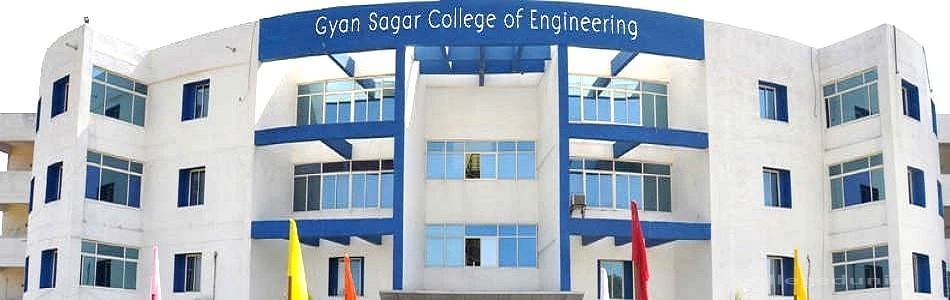
The campus is spread over 10 acres on the outskirts of Sagar. It's a self-contained setup but relatively isolated from the city's hustle, which can be a pro or con depending on your preferences. Infrastructure includes the standard academic blocks, labs, a library, and workshops. Don't expect ultra-modern, flashy facilities, but from student accounts, the basics for academic work are in place.
Hostel life is a big part of the experience for out-of-town students. The hostels are separate for boys and girls. The fee includes mess charges, and while you shouldn't expect gourmet food, it's described as adequate. The availability of AC single rooms (at a premium) is a plus for those who want it. The social life revolves around the campus and hostels. The college has a "Social Media Cell," indicating some effort towards student engagement and online presence. Extracurricular activities and tech fests are organized, but their scale and frequency are typical of a regional college, not a national-level event magnet.
Scouring through student reviews on platforms like CollegeDunia and Shiksha gives you a consistent, ground-level view. The positives almost always start with the low fee structure and the availability of scholarships. Students appreciate that the college provides a degree opportunity without financial strain. Some also mention supportive faculty members, particularly in the CSE department.
The criticisms are equally consistent. The remote location is frequently cited as a downside, limiting access to city amenities and off-campus interactions. Placement realities, as discussed earlier, are a common point of contention, with many feeling the advertised packages are overstated. Infrastructure, while functional, is often described as needing maintenance and upgrades. There's also feedback about administrative processes being slow at times.
The overall sentiment isn't one of glowing praise or severe disappointment. It's largely pragmatic. Students who came in with clear, moderate expectations—a low-cost degree from an AICTE-approved college—feel they got what they paid for. Those who arrived dreaming of high-flying metro-style campus placements leave disillusioned.
Gyan Sagar College of Engineering is a specific solution for a specific need. It's not a destination for nationally competitive ranks or those seeking a vibrant, metropolitan campus life. Its value proposition is almost entirely centered on cost.
It's worth serious consideration if you are a student from Madhya Pradesh, particularly the surrounding region, with a limited budget and a score that places you in the middle-to-lower tiers of the MP state counseling. If your goal is to obtain an accredited B.Tech or B.Sc degree with the lowest possible financial investment, and you're a self-motivated learner who won't rely solely on campus placements, GSCE makes logical sense. The scholarship ecosystem further strengthens this case for eligible students.
You should probably look elsewhere if you have a high rank and can secure a seat in a government college (like an IIIT or a well-established state engineering college), if you prioritize a robust, corporate-driven placement cell with a track record of higher packages, or if you thrive in a socially and culturally active urban campus environment. For those students, the low fee won't compensate for the other gaps.
In short, GSCE is a budget-friendly launchpad. It provides the formal qualification. The trajectory after that depends heavily on the individual student's drive and initiative.
In this preview: 1 photo · 0 videos
The college officially cites an average package of 5 LPA. However, based on multiple student reviews and alumni reports on platforms like CollegeDunia and Shiksha, the working average package for on-campus placements is typically between 3 to 3.5 LPA, primarily in IT services companies.
The annual tuition fee for the B.Tech program at Gyan Sagar College of Engineering is approximately ₹45,600. The total course fee for four years is about ₹1,82,400, excluding hostel charges. Hostel with mess facilities costs an additional ₹42,000 per year.
Admissions to the B.Tech program are conducted through the Madhya Pradesh state counseling process (MP DTE counseling). The college accepts scores from JEE Main and the MP BE entrance exam. Candidates must register for the state counseling and select GSCE during the choice-filling rounds.
Yes, Gyan Sagar College of Engineering is approved by the All India Council for Technical Education (AICTE). It is also affiliated with Rajiv Gandhi Proudyogiki Vishwavidyalaya (RGPV), Bhopal.
The college claims a highest package of 21 LPA. Student reviews and alumni testimonials often mention the highest offers they are aware of being in the range of 10 to 15 LPA, suggesting the 21 LPA figure is an exceptional outlier, if it occurs.
Share what future students should know about GSCE.
Student voices are not rewritten by colleges. We remove spam and abuse.
Wider admission question? Community PulseWhat should future students know?
Tell us which course you're considering. We'll help you work out the next step.
Get instant Partner access after mobile verification. Your public edits are reviewed before they go live.
Claim this college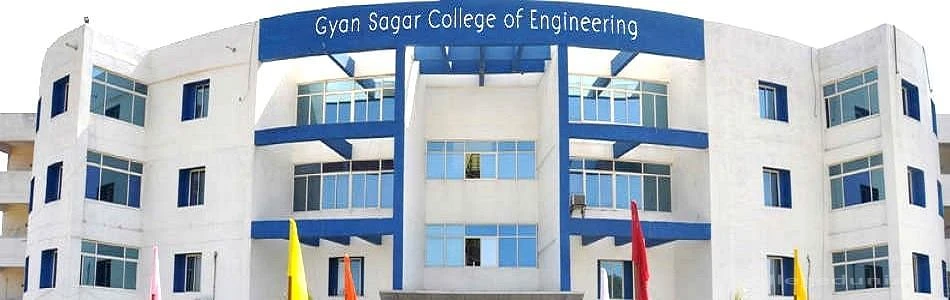
 Auditorium
 Cafeteria
 Campus Shuttle
 Campus Wi-Fi
 Computer Labs
 Hostel
 Medical
 Science Labs
 Smart Classrooms
 Sports Complex
 Study Library