Loading Admission Guardian content
Loading Admission Guardian content
Find a program, read its fee details and explore the admission requirements.
Summary of the programs shown below. Fee periods can differ by program. Check the note beside each amount before comparing costs.
| Course | Stream | Fees |
|---|---|---|
| Certification | Medical | 15000 |
| Auxiliary Nursing Midwifery [ANM] (Nursing) | Paramedical | 20000 |
| General Nursing and Midwifery [GNM] | Paramedical | 41450 |
| Post Basic Bachelor of Science [P.B.B.Sc] (Nursing) | Paramedical | 50750 |
| Bachelor of Science [B.Sc] (Nursing) | Paramedical |
Specializations
Eligibility: 10th
Specializations
Specializations
Eligibility: 10+2
Specializations
Eligibility: 10+2
For students in Punjab's Firozpur-Faridkot belt looking at nursing, HKL College of Nursing is a name that comes up. Established in 2009 under the older HKL Group, it’s a private institute that banks heavily on one major advantage: its own multi-specialty parent hospital for clinical training. That’s a significant draw in a field where hands-on experience is everything. Affiliated with Baba Farid University of Health Sciences (BFUHS) and approved by the Indian Nursing Council, it offers a standard path into the profession. But its location in Guru Harsahai, about 35-40 km from Firozpur city, means it’s a world away from the hustle of a metro. This profile is for the student who values practical exposure over urban campus life and is okay with a disciplined, somewhat remote environment.
The college runs the standard nursing curriculum mandated by the INC. You won't find niche specializations here at the undergraduate level—it’s the core B.Sc. Nursing, Post Basic B.Sc., GNM, and ANM programs. The annual intake is modest, with 50-60 seats for B.Sc. Nursing and 60-90 for GNM. That keeps batch sizes manageable. The academic rhythm is set by BFUHS, with a grading split of 25% internal assessment and 75% external university exams. Attendance isn't a suggestion; it's a hard rule. You'll need 75-80% to be eligible to sit for finals.
The real academic differentiator is clinical training. Having HKL Hospital Pvt. Ltd. on the same campus is a legitimate advantage. It’s where students get their primary, day-to-day practical exposure. The college also has tie-ups with Government Civil Hospitals in Firozpur and Faridkot for broader experience. Faculty strength is around 34, leading to a decent student-teacher ratio between 10:1 and 15:1. Don’t expect a flood of PhDs; the senior faculty typically hold M.Sc. Nursing degrees with experience. The labs—Foundation, Anatomy, MCH—are described as adequate for the curriculum, equipped with the necessary manikins and models.
Let's be clear: nursing college 'placements' don't work like engineering campus drives. It's more about job assistance and leveraging the institute's network. The college claims a 90-100% placement rate for eligible students. That figure should be viewed as aspirational. The reality, pieced together from reviews and reports, is that a majority of graduates do find work, but the journey and packages vary widely.
You'll see a headline figure of 12 LPA floating on some portals. That’s almost certainly an outlier, possibly referencing an international placement or a figure from another HKL group institute. For a fresh B.Sc. Nursing graduate in the domestic market, a more realistic starting range is ₹3.0 to ₹3.5 LPA. The reported average of ₹4.5 LPA likely factors in experienced hires from the Post Basic program or those securing roles in metro city private chains.
The top recruiter is, unsurprisingly, the group's own HKL Hospital. After that, the college has connections with major hospital chains like Fortis, Max Healthcare, and Apollo for their regional branches. A notable path for alumni is overseas placement. There's a visible trend of graduates working as Registered Nurses in the UK, Canada, and the Middle East, often facilitated by agencies the college has links with. For government jobs, you're on your own to clear the required competitive exams, though the curriculum prepares you for them.
For the 2024-25 session, the B.Sc. Nursing program has an annual tuition fee of ₹1,12,500. That’s just the start. Adding hostel accommodation (₹30,000 - ₹60,000), mess charges (₹30,000), and other exam/library fees (₹10,000 - ₹15,000) brings the total annual cost to roughly ₹1.8 to ₹2.1 lakhs. Over four years, you're looking at an investment of ₹7.5 to ₹8.5 lakhs all-in.
The GNM program is less expensive, with annual tuition around ₹40,650 and a total yearly cost of ₹1.1 to ₹1.3 lakhs. Students often mention "hidden costs" for uniforms, specific books, and occasional transport for external clinical postings, so it's wise to budget a buffer.
Financial aid is available through standard Punjab government schemes. This includes the Post-Matric Scholarship for SC/ST/OBC students. The college also offers merit-based scholarships for top performers in the university exams. It’s not a huge range of options, but the key state-backed support is there.
Admission is centralized through the affiliating university. For the flagship B.Sc. Nursing program, the gateway is the PPMET (Punjab Para Medical Entrance Test) conducted by BFUHS. You can't bypass it. Eligibility requires 10+2 with Physics, Chemistry, Biology, and English, with a minimum aggregate of 45-50% (varies slightly by category).
The process is straightforward: register on the BFUHS portal when applications open (typically May-July), take the PPMET, and then participate in the centralized counseling based on your rank. There’s also a document verification and medical fitness test. For GNM and ANM programs, admission is more often merit-based on your 10+2 marks, though it can also go through PNRC counseling.
Like most private colleges, HKL has a management quota for a limited percentage of seats, as per state norms. These seats naturally come at a higher fee. If you're considering this route, direct contact with the college administration is necessary to understand the current availability and cost.
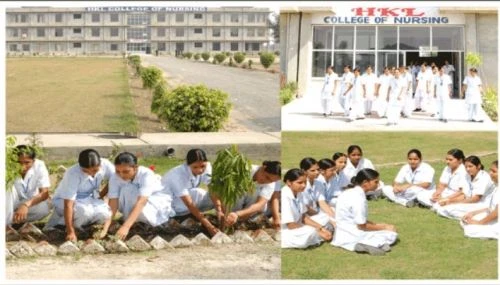
The campus spans about 3.2 acres as part of the larger HKL Group setup. It’s a functional, no-frills environment. The infrastructure centers around what nursing students need: specialized labs, a library with over 4,200 books and journals, and a computer lab for digital access.
Hostels are separate for boys and girls and are consistently described as secure—a major plus for parents. The rooms themselves are basic but functional. Reviews on hostel life are mixed. The positives are 24/7 security, power backup, and common rooms. The negatives? Strict rules. Outing permissions and mobile phone usage can be tightly controlled. And then there's the mess food. It’s a universal campus grievance, and HKL is no exception. Opinions range from "homely" to complaints about a repetitive menu.
Social life is quiet. The location sees to that. The annual Sports Meet and Cultural Fest are the big events, and religious festivals are celebrated on campus. If you're looking for a vibrant city social scene, this isn't the place. The college provides bus transport for day scholars from surrounding villages. For anything else, you're relying on auto-rickshaws or the railway station about 3 km away for trips to Firozpur.
Synthesizing feedback from platforms like CollegeDunia and Shiksha gives a consistent picture. The praise is usually focused on the practical training advantage of HKL Hospital and the supportive, approachable faculty. Many feel the library resources are solid for exam prep. The safe, secure environment for female students is a recurring positive note from parents and students alike.
But the criticisms are just as consistent. The remote location tops the list—being far from the city limits casual outings and can feel isolating. The strict hostel rules grate on some students. And several reviews point to administrative slowness and a bureaucratic grievance redressal system that requires patience to navigate.
There’s a clear trade-off presented. You gain direct clinical access and a focused environment but sacrifice the freedom and connectivity of a city-based college.
HKL College of Nursing makes a specific case. Its biggest strength is undeniable: integrated, immediate clinical training at its own hospital. For a student dead-set on a nursing career who learns best by doing, that’s a compelling reason to choose it over a college without such a facility. The affiliation with BFUHS is legitimate, and the approvals are in order.
But it comes with caveats. The location in Guru Harsahai is genuinely rural. If you thrive on urban energy and independence, the strict, remote campus life will feel restrictive. The reported placement outcomes are decent for the region, but manage your salary expectations—the 12 LPA claim is misleading for a fresh graduate.
So, who is it for? It’s a solid fit for students from Punjab and surrounding regions who prioritize hands-on clinical learning in a disciplined, secure setting and are comfortable in a quieter, rule-oriented environment. Who should look elsewhere? Students seeking a cosmopolitan college experience, heavy on extracurriculars and city life, or those with ambitions tied to metros might find better options in larger towns or cities, even if the direct hospital link isn't as strong.
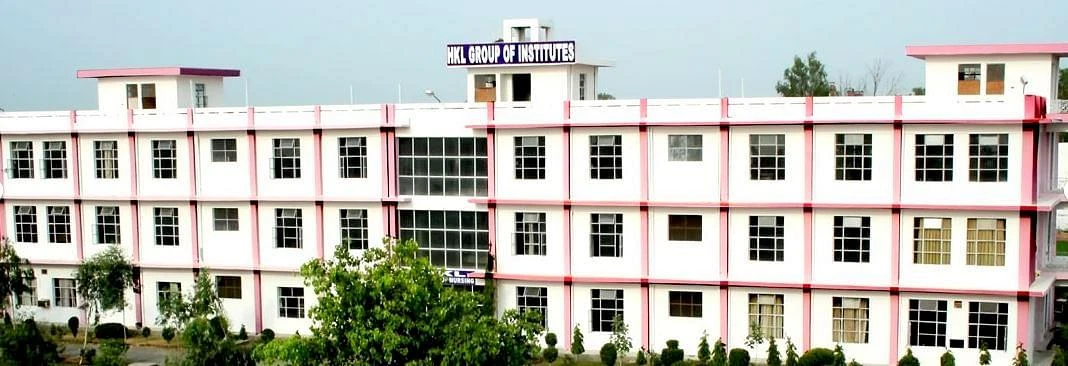
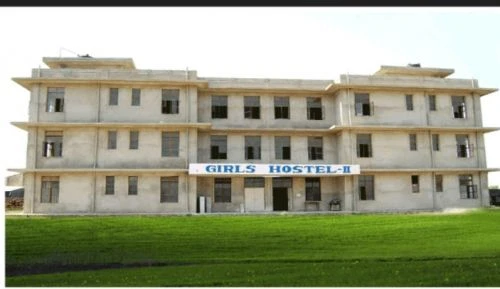
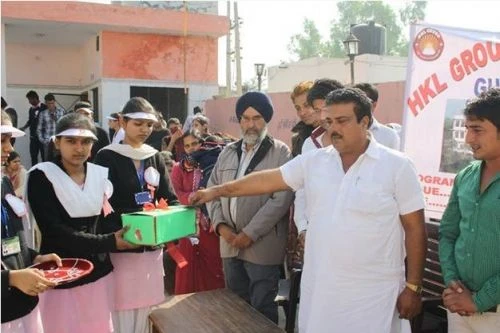
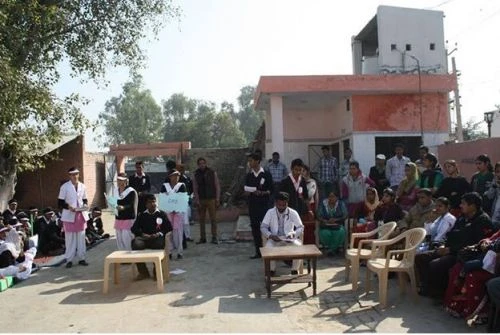
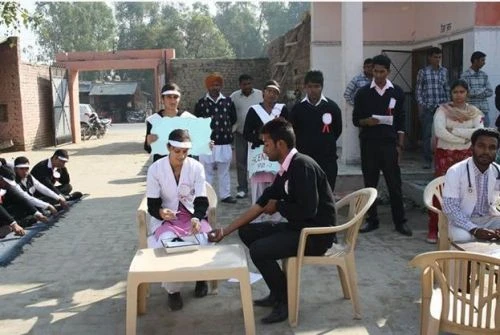
In this preview: 5 photos · 0 videos
Yes, HKL College of Nursing is officially approved by the Indian Nursing Council (INC) and is also recognized by the Punjab Nurses Registration Council (PNRC).
The annual tuition fee for the B.Sc. Nursing program is approximately ₹1.12 Lakhs. The total annual cost, including hostel accommodation, typically ranges between ₹1.8 Lakhs to ₹2.1 Lakhs.
Yes, students gain practical clinical training at the parent institution, HKL Hospital Pvt. Ltd., located in Guru Harsahai.
Admission to the B.Sc. Nursing program requires candidates to qualify for the PPMET entrance examination, which is conducted by Baba Farid University of Health Sciences (BFUHS).
Yes, the college provides separate and secure on-campus hostel facilities for both male and female students.
Share what future students should know about HKL College of Nursing.
Student voices are not rewritten by colleges. We remove spam and abuse.
Wider admission question? Community PulseWhat should future students know?
Tell us which course you're considering. We'll help you work out the next step.
Get instant Partner access after mobile verification. Your public edits are reviewed before they go live.
Claim this college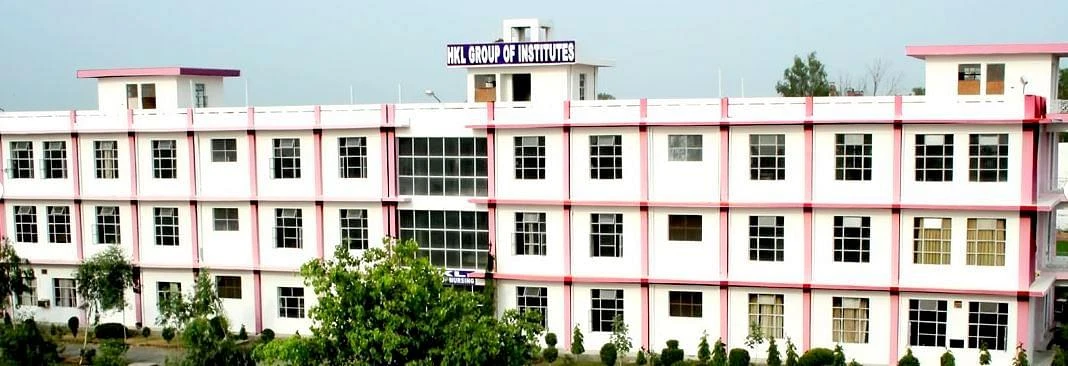
 Auditorium
 Cafeteria
 Computer Labs
 Science Labs
 Sports Complex
 Study Library