Loading Admission Guardian content
Loading Admission Guardian content

Provisional score based on available data. It may change as more information is verified.
Selected ranking categories, with the recorded year beside each result. Open all records for the complete history.
2 published records · Lower numeric ranks are stronger
IIRF
Nursing
#1392022
Find a program, read its fee details and explore the admission requirements.
Summary of the programs shown below. First-year fee. Check the note beside each amount for inclusions and exclusions.
| Course | Stream | Fees |
|---|---|---|
| General Nursing and Midwifery [GNM] | Paramedical | 65000 |
| Post Basic Bachelor of Science [P.B.B.Sc] (Nursing) | Paramedical | 65000 |
| Bachelor of Science [B.Sc] (Nursing) | Paramedical | 90000 |
Eligibility: 10 +2
Specializations
Eligibility: Graduation
Specializations
Eligibility: 10+2
If you're looking for a nursing college in Mumbai where clinical training isn't just a box to tick but the entire curriculum, Holy Family Institute of Nursing Education (HFINE) demands attention. Established in 1978 and affiliated with the Maharashtra University of Health Sciences (MUHS), this private, minority institution operates with a singular, old-school focus: turning out highly skilled, disciplined nurses. Forget sprawling campuses and vibrant fests. Here, the draw is direct, daily access to the NABH-accredited Holy Family Hospital in Bandra, a major tertiary care center. It's a trade-off students have been making for decades—a strict, almost monastic academic life for a reputation that opens doors in Mumbai's competitive healthcare sector. The institute's official claim of 100% placement isn't just brochure talk; it's a reality shaped by decades of feeding graduates into its own hospital network and beyond.
HFINE isn't trying to be a multidisciplinary university. Its entire ecosystem is built around nursing, and that focus shows in a streamlined program portfolio. The B.Sc. Nursing program is the cornerstone, with an annual intake of 60 students. Alongside it, the institute offers a three-year General Nursing and Midwifery (GNM) diploma and a two-year Post Basic B.Sc. for GNM holders looking to upgrade. While a sister campus in Delhi offers M.Sc. Nursing, its active status at the Mumbai campus for the 2025 intake is unverified; the institute is, however, a recognized MUHS research center for Ph.D. in Nursing.
The academic culture is where HFINE's character is most defined. It's intensely practical. The institute's proudest boast is "100% clinical exposure," and that's not an exaggeration. From the first year, students are regularly shuttled to the parent Holy Family Hospital in Bandra. This isn't observational shadowing; it's hands-on work in a busy, NABH-accredited facility. They also get rotations at major civic hospitals like KEM and Sion for specialized postings in psychiatry and infectious diseases. The faculty, led by Principal Sr. Nives D’souza, includes many dedicated nuns (Sisters) who are noted in student reviews for being deeply invested and approachable. The teaching philosophy emphasizes what alumni call "immaculate concepts" and bedside manners over pure theory. It's rigorous, with a reported expectation of 90-100% attendance, and the schedule follows the MUHS calendar, typically starting in August or September.
Placement discussions at HFINE are refreshingly straightforward, especially compared to the often-inflated claims of engineering colleges. The official 100% placement figure is broadly corroborated by student sentiment. Why? Because the placement model is inherently integrated. The primary recruiter is the institute's own Holy Family Hospital, Bandra, which absorbs a significant number of graduates directly. This creates a reliable pipeline.
The packages are modest but realistic for the nursing field in India. The highest packages reported hover around ₹3.5 to ₹4.0 LPA, usually for roles in premium private hospitals or specialized units. The average starting salary clusters between ₹2.4 and ₹3.0 LPA, which translates to a monthly take-home of roughly ₹20,000 to ₹25,000. It's not glamorous, but it's a solid, immediate entry into the profession. Top recruiters beyond the parent hospital include big names in Mumbai's healthcare landscape: Lilavati Hospital, Nanavati Max Super Speciality Hospital, Fortis Healthcare, and even government postings at institutions like KEM Hospital. The respect for an HFINE degree in the local job market is a tangible asset. The mandatory 6-month internship in the final year, though stipends are reportedly low (₹2,000 - ₹5,000), often serves as a prolonged audition for a full-time role.
For a private institution in Mumbai, HFINE's fee structure is relatively accessible, though all fees are subject to approval by the state's Fee Regulating Authority (FRA). For the flagship B.Sc. Nursing program, annual tuition ranges from ₹90,000 to ₹1,05,000. Adding on-campus hostel and mess charges (approx. ₹30,000 - ₹40,000 per year) brings the total annual cost to around ₹1.2 - ₹1.45 lakhs. Over four years, the all-in cost is estimated to be between ₹5.5 and ₹6.5 lakhs. The GNM and Post Basic B.Sc. programs are slightly less expensive, with tuition in the ₹65,000 - ₹80,000 range.
The institute facilitates several scholarship avenues to ease this burden. Students can apply for standard Government of Maharashtra scholarships via the MahaDBT portal for SC/ST/OBC/EWS categories. Given its minority status, state and central minority scholarships are also applicable. Additionally, HFINE has specific endowed scholarships: the Godrej Scholarship for B.Sc. Nursing students and the Bhojraj Scholarship for those in the GNM program. It's advisable to check the official institute website for the latest application details and deadlines.
Admission to HFINE's nursing programs is governed by the state's centralized system. For B.Sc. Nursing, the mandatory gateway is the MH-B.Sc.Nursing-CET conducted by the State CET Cell, Maharashtra. While NEET-UG scores were considered in the past, the state nursing CET is now primary. Eligibility requires 10+2 with Physics, Chemistry, Biology, and English, with a minimum of 45% aggregate for the Open category and 40% for Reserved categories.
The competition is reflected in the cutoff ranks. In the 2024 CAP Round 2, the closing rank for the Open category was 10052. For OBC it was 9382, and for EWS it was 5919. These numbers give a clear benchmark—you need a solid rank within the top ~10,000 in the state to have a serious shot. The application window typically opens in March, with the CET and counseling rounds extending through May and June. Like most private colleges, HFINE likely reserves a 15% institutional or management quota, but the majority of seats are filled through the transparent CAP process.
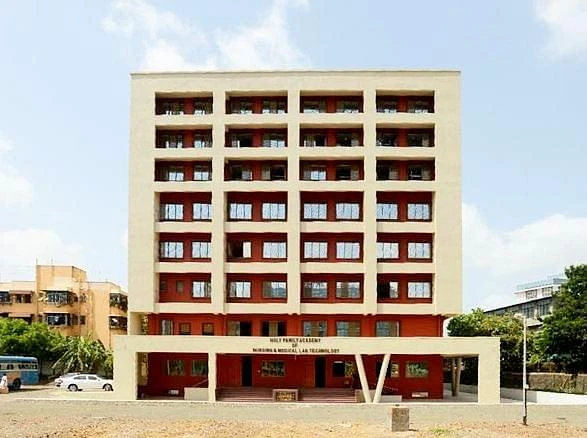
Let's be clear: if you're dreaming of a typical, vibrant college campus life, HFINE will feel like a different world. The campus in Kurla is compact (just over 2 acres) and functional. Its greatest feature isn't on-site—it's the hospital in Bandra. The infrastructure that is present is tailored to the vocation: well-equipped Nursing Foundation labs that simulate hospital wards, Anatomy and Physiology labs, and a Nutrition lab. The library provides digital access to the MUHS repository and key international journals.
The hostel is a central, and strict, part of the experience. With a capacity for 250-300 students, it is primarily for female students, reflecting the gender ratio of the institute. Male students typically need to arrange private accommodation (PGs) nearby. Reviews consistently describe the hostel as clean, safe, and secure, with 24/7 security—a major plus for parents. The flip side is a regimented environment with early curfews, limited outing permissions, and rigid rules. Social life is minimal; annual events tend to be academic or religious in nature, and the sports meet is held at external grounds. This isn't a place for extracurricular exploration; it's a focused training ground.
Synthesizing feedback from alumni networks and education forums paints a consistent, two-sided picture. The overwhelming positive is the clinical training. Graduates repeatedly state that the exposure at Holy Family Hospital, Bandra, is unmatched by other private colleges, allowing them to handle complex cases from early on. They praise the dedication of the faculty, many of whom are nuns, for being truly invested in their learning. The 100% placement record and the strong brand value in Mumbai's hospital network are also consistently validated.
But the negatives are just as consistent and significant for the right candidate. The words "strict," "disciplined," and "like a school" appear relentlessly. The expectation of near-perfect attendance, early hostel curfews, and a general lack of social or cultural events can be a major adjustment. The campus life is described as austere. One recurring piece of advice from alumni is simple: if you are coming here solely for a top-tier nursing education and are prepared for a no-frills, disciplined life, you will excel. If you want a "college experience" in the broader sense, you'll likely find it stifling.
Holy Family Institute of Nursing Education is a specialist's choice. It's not a generic "good college"; it's a very specific fit. For a student dead-set on a nursing career in Mumbai, who values deep, hands-on clinical proficiency above all else, and who can thrive in a structured, disciplined, and somewhat insular environment, HFINE is arguably one of the best private options available. The direct pipeline to Holy Family Hospital and the institute's sterling reputation among local employers provide a career certainty that is rare. However, that certainty comes at the cost of a conventional college social life. The strict rules and focused atmosphere can feel oppressive if you're not fully committed to the nursing path. In short, choose HFINE for its unmatched clinical training and strong job placement. Look elsewhere if you prioritize campus vibrancy, flexibility, or a more balanced student experience. It's a trade-off, and for the right student, it's a trade-off that pays professional dividends for years to come.
In this preview: 1 photo · 0 videos
Holy Family Institute of Nursing Education (HFINE) is located in Kurla (West), Mumbai. It is often categorized under the broader Thane region in some educational databases and directories.
Yes, hostel accommodation is strongly preferred and effectively mandatory for students in the B.Sc Nursing and General Nursing and Midwifery (GNM) programs. This policy is in place due to the requirements of clinical shifts and training schedules.
Yes, Holy Family Institute of Nursing Education is a co-educational institution and accepts male applicants for its B.Sc Nursing program. It is noted, however, that the majority of the student body is female.
For the 2024 admissions cycle, the MH-CET nursing cutoff for the Open category at Holy Family Institute of Nursing Education was approximately rank 10,000 in the state merit list.
Yes, the nursing degrees from HFINE are valid for working abroad. As the institute is recognized by the Indian Nursing Council (INC) and Maharashtra University of Health Sciences (MUHS), graduates are eligible to sit for international qualifying exams like the NCLEX for the USA and the OSCE for the UK.
Share what future students should know about HFINE.
Student voices are not rewritten by colleges. We remove spam and abuse.
Wider admission question? Community PulseWhat should future students know?
Tell us which course you're considering. We'll help you work out the next step.
Get instant Partner access after mobile verification. Your public edits are reviewed before they go live.
Claim this college
 Auditorium
 Cafeteria
 Computer Labs
 Medical
 Science Labs
 Sports Complex
 Study Library