Loading Admission Guardian content
Loading Admission Guardian content

Provisional score based on available data. It may change as more information is verified.
Find a program, read its fee details and explore the admission requirements.
Summary of the programs shown below. First-year fee. Check the note beside each amount for inclusions and exclusions.
| Course | Stream | Fees |
|---|---|---|
| Bachelor of Technology [B.Tech] | Engineering | 84500 |
| Diploma in Engineering (Polytechnic) | Engineering |
Specializations
All accepted exams
Eligibility: 10+2 with 75% + JEE Main
Specializations
Indic Institute of Design and Research sits on a 50-acre campus just outside Bhubaneswar, a private engineering college that's been quietly operating since 2008. It's affiliated with Biju Patnaik University of Technology (BPUT), which means your degree comes from a state university, not the institute itself. That's a common setup in Odisha. The college is AICTE-approved and NAAC-accredited, though the specific grade isn't publicly highlighted. What stands out initially is the fee structure—it's positioned as a mid-range private option, not the most expensive in the region but certainly not the cheapest. The campus is described as "lush green" and "compact," which, given the acreage, suggests plenty of open space rather than dense academic blocks. For students looking at engineering colleges around Bhubaneswar, IIDR represents one of many choices. It doesn't have the brand recognition of some older institutions, but it's trying to carve a niche with its infrastructure and claimed focus on practical learning.
IIDR's academic portfolio is straightforward: undergraduate engineering and after-10th diploma programs. There's no mention of postgraduate or doctoral courses, which keeps the institute's focus narrow.
The B.Tech program is the main draw, with specializations in Civil, Computer Science, Electrical, Electronics & Communication, Mechanical, Applied Electronics and Instrumentation, and Information Technology. The Computer Science and Engineering stream has an intake of 60 seats. As a BPUT-affiliated college, the academic calendar, exam patterns, and grading system are dictated by the university. BPUT follows a seven-point CGPA system where the equivalent percentage is calculated as (CGPA - 0.50) × 10. You don't get marks or a class/division on your degree—just the CGPA.
The institute claims to place equal importance on theoretical and practical learning. They also say they offer "comprehensive support" for internships and research projects, though the specifics of that support aren't detailed. The faculty list provided in the brief names several professors across departments like Ms. Anita Das (Electrical), Mr. Deepak Sahoo (CSE), and Mr. Abhilash Panda (Electronics). However, a total teaching faculty count of just 8 is noted, which seems improbably low for an institute offering seven engineering disciplines and diploma courses. This might be an outdated or incomplete figure, but it's a data point that prospective students should seek clarity on during campus visits.
For those looking at a polytechnic route, IIDR offers three-year Diploma programs in Mechanical, Electrical, and Civil Engineering, each with an approved intake of 60 students.
This is the section with the most significant data gaps. The research brief contains no concrete placement statistics—no highest, average, or median package figures, no list of top recruiters, and no official placement percentage. One review platform gives the placements a rating of 3.3 out of 5, which is a middling, non-committal score.
The institute's official stance, as per the brief, is that it provides "comprehensive support for internships." But without named company partners or verifiable outcome data, it's difficult to assess the strength of the placement cell. For a college established in 2008, you'd expect to see some track record by now.
This lack of transparency is a red flag that students need to address directly. If you're considering IIDR, you must ask the placement office for their latest placement report during counseling. Ask for the names of companies that visited, the number of students who received offers, and the salary ranges. The absence of this data in the public domain suggests placement may not be a consistently strong suit, or the data isn't being aggressively marketed. In the context of its fees, the placement reality becomes a critical factor in determining value for money.
The fee structure is one of the clearer aspects of IIDR's profile. For the B.Tech program, the annual tuition fee is approximately ₹64,000. Over four years, the total program cost is estimated to be between ₹2.56 lakhs and ₹2.98 lakhs. That puts it in a specific bracket—more expensive than government colleges but less than the premium private institutes in major cities.
The three-year Diploma in Engineering program has a total fee of about ₹79,500.
It's important to note that these figures are for tuition only. Hostel and mess fees are additional and are "subject to revision each academic year." The brief doesn't provide those numbers, so you'll need to budget extra for accommodation. One student review pointedly mentioned that the fees are "quite expensive and cannot easily be afforded by everyone."
On the positive side, IIDR does advertise scholarship opportunities. They offer merit-based and need-based scholarships, with claims of up to 100% fee coverage for eligible candidates. Eligibility is based on academic excellence, extracurricular achievements, and scores in national/state-level exams like JEE Main or OJEE, or college-level tests. If your scores are good, it's worth investigating this thoroughly during the admission process.
Admission to the B.Tech programs at IIDR is contingent on state-level entrance exams. The institute accepts scores from JEE Main and the Odisha-specific OJEE (Odisha Joint Entrance Examination).
The process is standard for BPUT-affiliated colleges: you take the exam, and then your rank is used during the centralized counseling process. The brief explicitly states "No Ranking Found" and that specific cutoff ranks for IIDR are not available. This isn't unusual for colleges that aren't in the highest demand tiers; cutoffs can vary significantly year-to-year based on applicant numbers and are often not published prominently. Admission is ultimately based on the merit of your qualifying exam (10+2 marks) or your entrance exam score.
For the Diploma (Polytechnic) programs, admission is based directly on your 10th standard marks.
The application windows are tied to the entrance exams. For example, OJEE 2026 registration opened in January 2026, with exams in May and counseling likely in June-July. You can find official details and apply via the Biju Patnaik University of Technology (BPUT) or OJEE websites. There's no mention of a separate, hefty management or NRI quota, which suggests admissions are primarily channeled through the state counseling system.
The 50-acre campus in Khorda seems to be IIDR's tangible strength. Described as a "lush green compact campus," it houses modern infrastructure, smart classrooms, an auditorium, and a sports complex. Academic labs are described as "well-equipped," and the library reportedly holds over 10,000 books, journals, and magazines. Wi-Fi is available across the campus.
Hostel life gets positive mentions in the limited reviews available. The institute provides separate hostels for boys and girls, with both AC and non-AC options. Reviews describe the rooms as "spacious, clean, and well-equipped." The mess food also receives a thumbs up, called "hygienic and tasty" with both vegetarian and non-vegetarian options available. Basic amenities like a canteen, medical support systems, a sick room, and college bus services are present.
On the extracurricular front, the college hosts an annual sports event called "Indic Sports." The list of activities is extensive—outdoor options include cricket, football, basketball, and athletics, while indoor facilities cater to chess, carrom, table tennis, badminton, and even yoga. It paints a picture of a campus that has invested in physical infrastructure and student amenities. Whether the student community actively engages with all these facilities is harder to gauge from the available data.
Here's the catch: there's very little to go on. Only two reviews for IIDR were found on major platforms, both rating the college 3.5 out of 5. You can't form a reliable, median consensus from such a small sample. It also indicates that the institute either has a small alumni base or one that isn't highly active in posting reviews online.
The recurring positives from these scant reviews align with the infrastructure claims: good hostel life, clean rooms, tasty mess food, and a sense that the college amenities justify the fees to some extent.
The sole recurring negative is about cost—the fees being perceived as expensive for what's offered.
Massive gaps exist in student sentiment on core issues: teaching quality, the rigor of the curriculum, the effectiveness of the placement cell, management behavior, and the overall social life on campus. This lack of crowd-sourced information means that a campus visit and direct conversation with current students become non-negotiable steps in your research process. Don't rely on the brochure alone.
IIDR presents a mixed bag. Its strengths are physical: a spacious, green campus, reportedly good hostels, and decent infrastructure. For a student who prioritizes a comfortable campus life over metropolitan hustle, that could be appealing. The fee, while noted as expensive by some, is in a mid-range bracket for private engineering education.
However, the gaps in data are concerning. The absence of transparent placement records is the biggest question mark. Engineering education is a significant investment, and the return hinges on employability. The very low faculty count mentioned and the lack of student reviews make it hard to assess academic depth and student satisfaction.
So, who is it for? IIDR could be a viable backup option for students with mid-level JEE Main or OJEE ranks who are seeking a BPUT-affiliated college with a decent campus and are comfortable with a fee structure that isn't at the very top end. It's probably not the first choice for someone solely driven by placement records or academic prestige.
Your next steps should be concrete: visit the campus, ask for the placement report, talk to 2nd and 3rd-year students about their internship experiences, and clarify the faculty strength. In the absence of strong public data, due diligence is your most important tool.
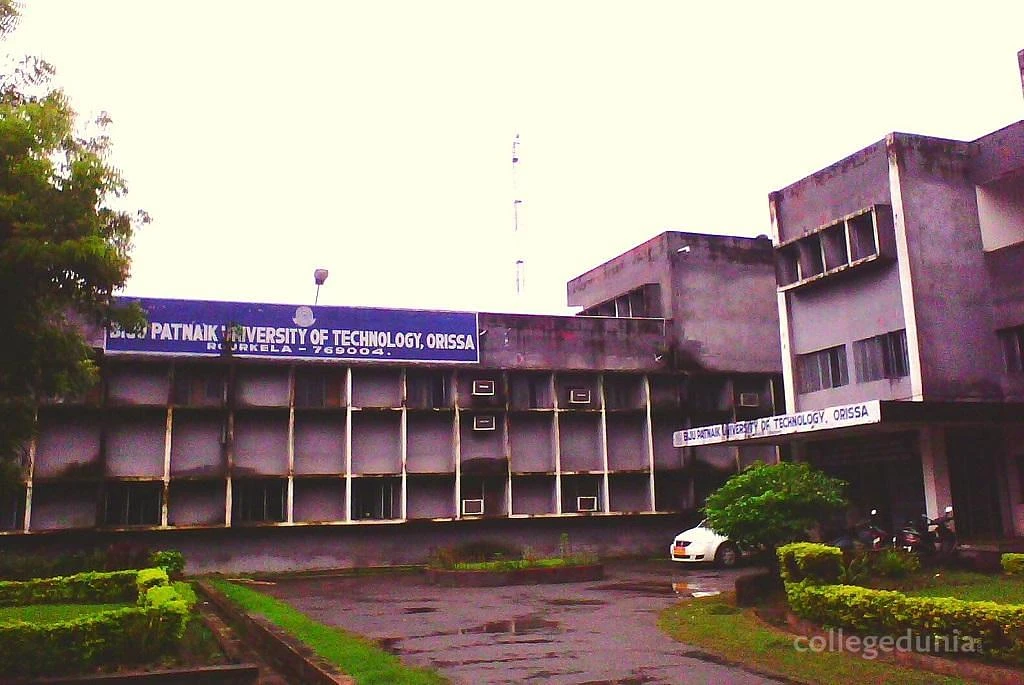
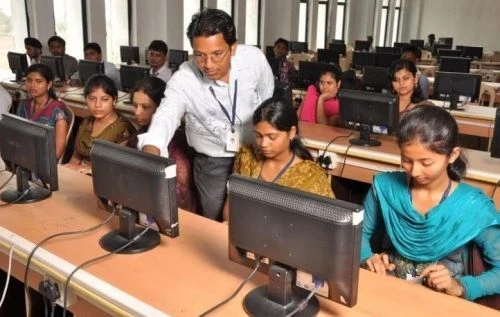
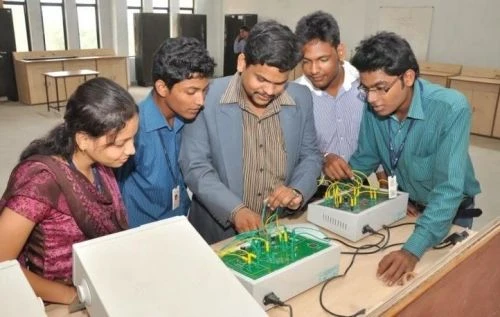
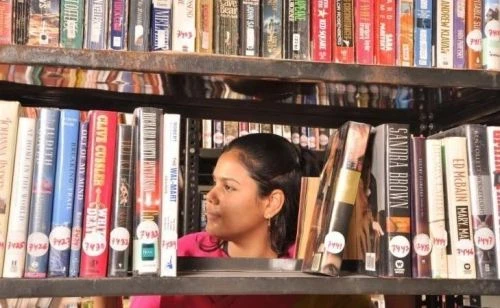
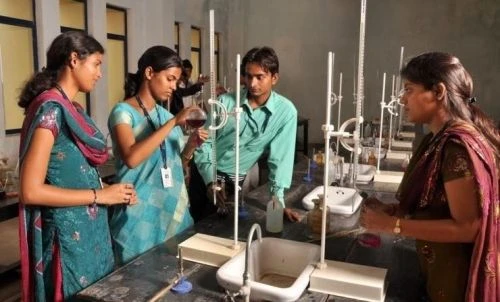
In this preview: 5 photos · 0 videos
IIDR offers Bachelor of Technology (B.Tech) and Diploma in Engineering (Polytechnic) programs. The B.Tech specializations include Civil, Computer Science, Electrical, Electronics & Communication, Mechanical, Applied Electronics and Instrumentation, and Information Technology.
For the 2025-2026 and 2026-2027 sessions, the annual tuition fee for the B.Tech program is approximately INR 64,000. The total program fee for four years ranges from ₹2.56 Lakhs to ₹2.98 Lakhs. The total fee for the three-year Diploma program is ₹79,500.
Admission to the B.Tech programs requires a valid score from either JEE Main or the state-level OJEE (Odisha Joint Entrance Examination). Admission to the Diploma (Polytechnic) programs is based on the candidate's 10th standard marks.
Yes, IIDR provides both merit-based and need-based scholarships. Eligible candidates can receive scholarships covering up to 100% of fees based on academic excellence, extracurricular achievements, or performance in national/state level competitive exams like JEE Main/OJEE or college-level tests.
IIDR has separate hostels for boys and girls offering both AC and Non-AC accommodations. The rooms are described as spacious, clean, and well-equipped. The mess provides hygienic and tasty vegetarian and non-vegetarian food options for residents.
Share what future students should know about IIDR.
Student voices are not rewritten by colleges. We remove spam and abuse.
Wider admission question? Community PulseWhat should future students know?
Tell us which course you're considering. We'll help you work out the next step.
Get instant Partner access after mobile verification. Your public edits are reviewed before they go live.
Claim this college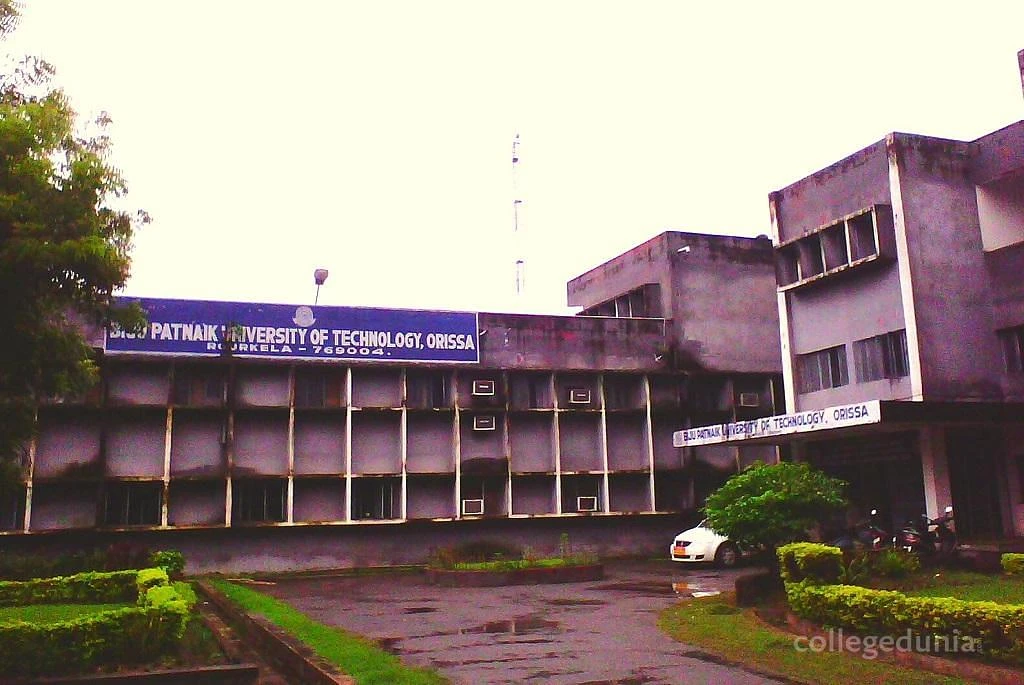
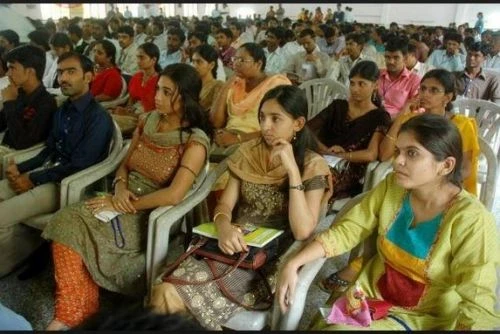
 Auditorium
 Cafeteria
 Computer Labs
 Gym
Gym Hostel
 Medical
 Science Labs
 Sports Complex