Loading Admission Guardian content
Loading Admission Guardian content

Provisional score based on available data. It may change as more information is verified.
Find a program, read its fee details and explore the admission requirements.
Summary of the programs shown below. First-year fee. Check the note beside each amount for inclusions and exclusions.
| Course | Stream | Fees |
|---|---|---|
| Doctorate of Medicine [MD] (Paediatrics) | Medical | 117600 |
| Fellowship | Medical | 150000 |
Specializations
All accepted exams
Eligibility: MBBS
Specializations
Eligibility: MD/MS
2 exams with cutoff data available
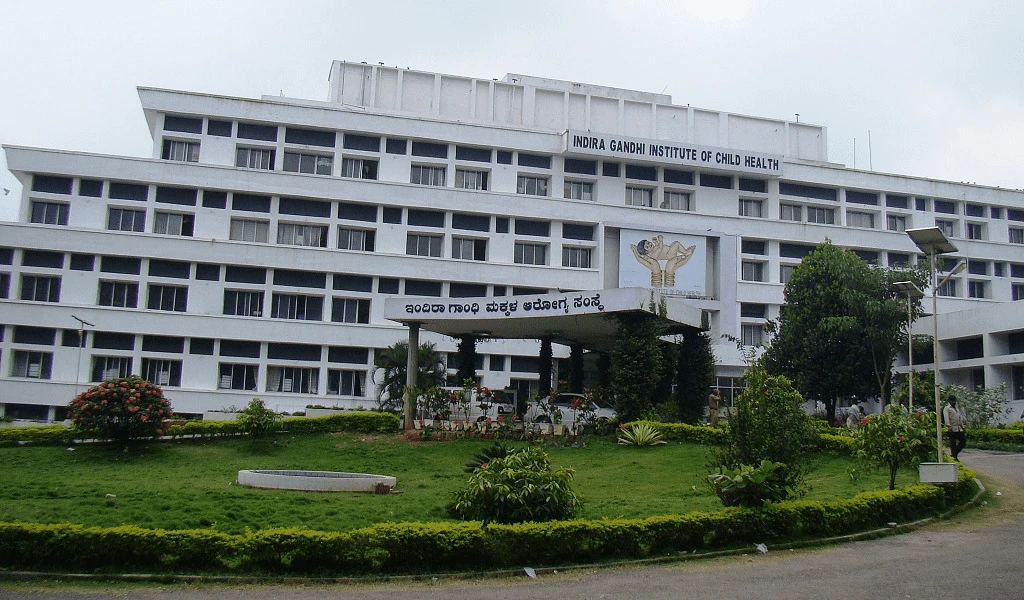
If you want to become a pediatrician who can handle anything, you come here. That's the reputation, and it's earned. The Indira Gandhi Institute of Child Health in Bangalore isn't a typical medical college. It's a 500-bed tertiary-care fortress dedicated entirely to children, a government-run powerhouse where the clinical exposure is so intense it's almost legendary. Forget rankings—this place doesn't even appear in the NIRF Top 50 for medical colleges. Its ranking is in the wards, where it's consistently seen as Karnataka's #1 pediatric referral center. For an aspiring pediatric specialist, an MD seat here is a golden ticket, but one that demands payment in sweat, sleepless nights, and a complete surrender of your social life for three years. It's not for the faint of heart. But if you want to learn, there are few places better.
First, a critical clarification: IGICH does not offer an MBBS. You need that degree from elsewhere. This is a pure postgraduate and super-specialty training ground. The academic engine is its MD in Pediatrics, with 22 seats that are among the most coveted in the country. Then there's the M.Ch in Pediatric Surgery (8 seats) and a PG Diploma in Child Health. The institute is also a hub for DM super-specialties like Pediatric Gastroenterology and a wide array of RGUHS-affiliated Fellowship programs—think Pediatric Critical Care, Neonatology, Neurology, Endocrinology. These 12-18 month fellowships are where sub-specialization happens, and IGICH's reputation in areas like its NICU and PICU makes these highly sought after.
For undergraduates, options are limited to paramedical streams: a B.Sc in Nursing and B.Sc in Medical Laboratory Technology (MLT). The faculty, around 30-35 core teaching staff, includes heavyweights like Dr. G. V. Basavaraja, the 2024 National President of the Indian Academy of Pediatrics (IAP). The academic calendar follows RGUHS, but the real syllabus is the hospital itself. Collaborations with the Centre for Human Genetics and its designation as a NACO Centre of Excellence for Pediatric HIV add layers to the research and rare disease exposure. You don't just study pediatrics here; you live inside a fully operational pediatric ecosystem.
In a medical institute like this, "placements" means something different. There's no campus recruitment drive. Your career path is built on the institute's brand and your grueling residency. The immediate financial support is the government stipend. As of the August 2024 revision, MD residents start at ₹56,250 per month, going up to ₹68,750 in the third year. M.Ch residents start higher, at ₹68,750. It's a decent living wage for Bangalore, especially considering the microscopic tuition fees.
Now, the post-graduation reality. The institute's claim of 100% employment for graduates is probably not far off. The demand for well-trained pediatricians is immense. An IGICH tag on your CV is a significant weight. Alumni frequently move into top private hospital chains—Apollo, Rainbow Children’s Hospital, Cloudnine, Manipal—or join government health services. For an MD Pediatrics graduate, starting salaries in the private sector are often cited in the range of ₹12 to ₹18 LPA, though this is an unverified market estimate. The real "package" is the confidence to handle complex cases, which sets you up for a robust career. You won't be unemployed. But you will have earned that security.
This is where government institutes shine. The fees are a fraction of what private medical colleges charge. For the flagship MD Pediatrics program, the total tuition for three years is roughly between ₹3.22 and ₹3.7 lakhs. Yes, total. M.Ch Pediatric Surgery totals about ₹4.5 lakhs for three years. Fellowship programs cost around ₹1.5 lakhs. The B.Sc Nursing program is even more affordable, at ₹15,000 to ₹25,000 per year.
Add in hostel fees (a very reasonable ₹10,000–₹15,000 per year for government accommodation) and mess charges (about ₹3,000 per month), and the total cost for a three-year MD, including living expenses, lands around ₹4.5 lakhs. Compare that to crores elsewhere. There aren't specific institutional scholarships mentioned, but the low fee structure itself is the financial aid. Students also earn the monthly stipend during residency, which effectively offsets most living costs. The main additional costs are RGUHS registration, library, and exam fees, which might add another ₹10,000–₹20,000 over the course.
Getting in is the hard part. It's a purely merit-based, government seat process—no management or NRI quota. The gateway is the national entrance exams. For MD Pediatrics, you need to clear NEET PG. For M.Ch and DM super-specialties, it's NEET SS. For B.Sc Nursing, the exam is Karnataka's KCET.
The cutoffs tell the story of demand. For the 2024 admission cycle, the All India Quota closing rank for MD Pediatrics at IGICH was around 3,605 in the final round. The first round closed at a fiercely competitive rank of ~1,417. For the State Quota (Karnataka), the first-round cutoff was around 1,519. Simply put, you need a NEET PG rank well under 4,000 to have a serious shot at a General category seat. Selection happens through centralized counseling: the Medical Counseling Committee (MCC) for All India Quota seats and the Karnataka Examination Authority (KEA) for state quota seats. And remember, admission comes with a one-year compulsory rural service bond as per Karnataka state policy.
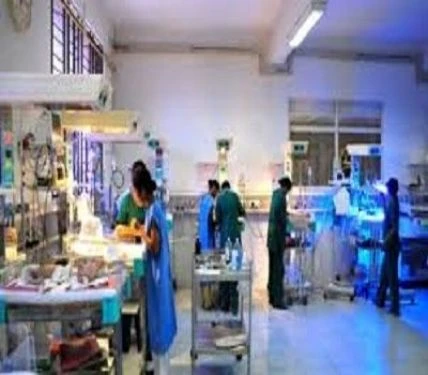
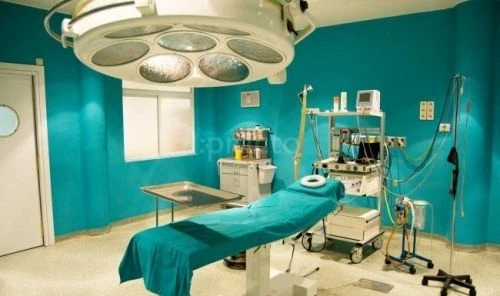
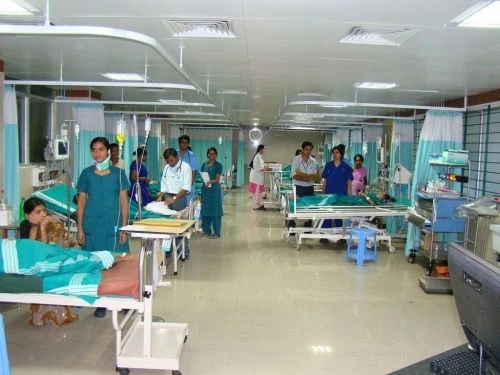
Let's be honest: you're not coming here for the campus life. You're coming for the hospital. The institute is spread over about 6 acres in the dense South Bangalore hospital complex of Jayanagar. The Lalbagh Metro Station on the Green Line is about 1.5 km away, which is a lifeline. The hospital itself is a 475-500 bed behemoth, and the infrastructure is a mix. Some departments are modern and high-tech, especially the labs, the genetics facility, and the massive NICU/PICU complexes. Other parts of the building are old, and the patient token system is famously chaotic—a source of daily stress.
The hostels are separate for boys and girls. They're standard government fare. Reviews typically rate them a 3.5 out of 5: clean, functional, but not luxurious. Wi-Fi is patchy in the hostels but available in academic blocks. The library is a specialized pediatric resource with digital access to RGUHS journals. There's a 24/7 blood bank, cafeteria, and the hospital canteen. Sports and extracurriculars? They exist, but in the background. Your social life will be your batchmates and seniors, bonding over shared exhaustion. The nearest decent hangout spots are in the bustling Jayanagar and JP Nagar areas, a short auto-ride away.
The student sentiment is a study in extremes, and it's remarkably consistent across platforms like Reddit's r/indianmedschool and Quora.
The praise is unanimous for clinical exposure. "Unmatched patient load" is the constant refrain. You see rare, textbook cases daily. The PICU is described as a "40-60 bedded beast." The learning curve is vertical. The faculty and senior residents are often cited as being more supportive and less toxic than in other major government hospitals, which is a significant plus in a high-pressure environment. And the brand value is real: "Being an IGICH alumnus carries significant weight."
But the negatives are just as stark. The workload is brutal. Thirty-six-hour shifts are not uncommon. The phrase "there is no social life during residency" appears verbatim in multiple reviews. The physical and administrative infrastructure shows its age—slow paperwork, bureaucratic delays in stipend releases, and that chaotic outpatient department. As one blunt Reddit review put it: “If you want to be a pediatrician who can handle anything, come to IGICH. If you want a 9-to-5 life, stay away.” That's the trade-off, perfectly summarized.
For the right person, IGICH isn't just worth it—it's a top-tier destination. If your goal is to become a supremely competent, unflappable pediatrician or pediatric surgeon, and you're willing to sacrifice three years of your life to relentless work, this is one of the best places in India to do it. The cost-to-value ratio is incredible: world-class training at almost nominal fees, plus a stipend. The institute's reputation opens doors.
But it's a terrible fit for someone seeking a balanced postgraduate life, modern amenities, or a less intense academic culture. The workload is inhuman by normal standards. The infrastructure can be frustrating. You have to want the grind.
So, who is it for? The relentlessly ambitious, clinically-minded medical graduate with a NEET PG rank under 4000, a passion for pediatrics, and a high tolerance for sustained pressure. For that candidate, IGICH is an outstanding, career-defining choice. For everyone else, the very factors that make it great are the reasons to look at other, less intense programs. The choice is that clear.
In this preview: 5 photos · 0 videos
No, the Indira Gandhi Institute of Child Health (IGICH) does not offer an MBBS program. It is a dedicated postgraduate and super-specialty institute. To apply for its MD Pediatrics course, candidates must first complete their MBBS degree from another recognized medical college.
As of 2024, the stipend for MD students at IGICH is structured by year. First-year residents receive ₹56,250 per month. This stipend increases, reaching ₹68,750 per month in the third and final year of the program.
The Indira Gandhi Institute of Child Health (IGICH) is an autonomous government institute. It operates under the administrative control of the Government of Karnataka.
Admission to the MD Pediatrics program at IGICH is extremely competitive and difficult. It is considered one of the most sought-after pediatric seats in India. For the General category, securing a seat typically requires a very high NEET PG rank, usually under 4,000.
Yes, there is a compulsory service bond for postgraduate students at IGICH. As per the prevailing Karnataka state policy, students who complete their MD or other PG programs must undertake a one-year compulsory rural service bond.
Share what future students should know about IGICH.
Student voices are not rewritten by colleges. We remove spam and abuse.
Wider admission question? Community PulseWhat should future students know?
Tell us which course you're considering. We'll help you work out the next step.
Get instant Partner access after mobile verification. Your public edits are reviewed before they go live.
Claim this college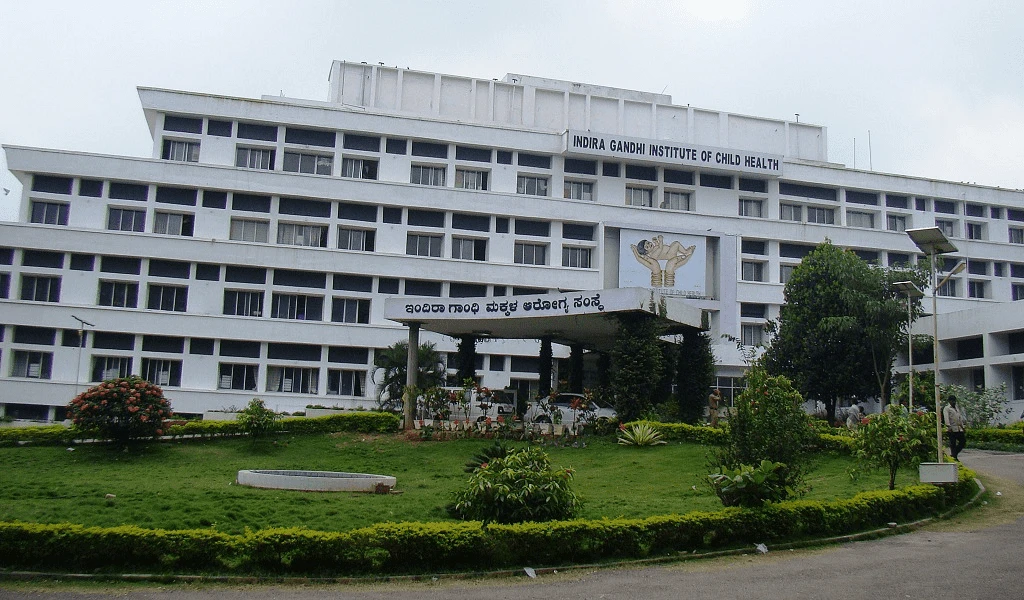
 Computer Labs
 Science Labs
 Study Library