Loading Admission Guardian content
Loading Admission Guardian content

Find a program, read its fee details and explore the admission requirements.
Summary of the programs shown below. Fee periods can differ by program. Check the note beside each amount before comparing costs.
| Course | Stream | Fees |
|---|---|---|
| Bachelor of Science [B.Sc] | Paramedical | 13000 |
| Post Basic Bachelor of Science [P.B.B.Sc] (Nursing) | Paramedical | 19000 |
| Master of Science [M.Sc] (Nursing) | Paramedical | 29000 |
| Doctorate of Medicine [MD] | Medical | 39000 |
| M.B.B.S. | Medical | 60000 |
Specializations
Eligibility: 10+2
Specializations
Eligibility: 10+2
Specializations
Eligibility: Graduation
Specializations
All accepted exams
Eligibility: Post Graduation
All accepted exams
Eligibility: 10+2 with 50% + NEET
2 exams with cutoff data available - showing recent entries
Indira Gandhi Medical College (IGMC) in Shimla isn't just another government medical college. It's the undisputed clinical powerhouse of Himachal Pradesh, a place where the sheer volume and variety of patients—from the hills and beyond—provides an education that textbooks can't match. Ranked 22nd in India by NIRF in 2023 and consistently the state's top medical institution, IGMC trades flashy infrastructure for raw, hands-on experience. But that trade-off comes with a reality: steep climbs, a relentless workload, and a campus that feels its age. For a student who wants to learn medicine by doing it, surrounded by the Himalayas, there are few better choices in North India.
IGMC operates on the classic, high-volume government medical college model. The academic calendar follows an annual system for MBBS, which some students find grueling but others appreciate for the deep, uninterrupted study blocks. The faculty, around 429 strong, is described as old-school and serious. You'll find notable professors like Dr. Laxmi Nand in Medicine and Dr. Anmol Gupta heading Community Medicine. The teacher-student ratio is about 100:1 for theory lectures, but that number becomes far more personal—around 25:1—during the crucial clinical postings in the attached hospital.
The MBBS program, with 120 seats, is the core. But the college offers a full spectrum. There's B.Sc Nursing and various B.Sc Paramedical Technology specializations. At the postgraduate level, it's robust: about 124 MD/MS seats across 19+ departments, and even super-specialty DM/MCh courses in Cardiology, Neurosurgery, and more. They also run DNB programs. Collaborations exist, like an MoU with the Indian Army for research, and the institution is active in National Health Mission and ICMR projects. The academic culture is no-nonsense, geared towards producing clinicians who can handle pressure.
Let's be clear: medical colleges don't have "placements" like engineering schools. Success here is measured by postgraduate selection and the stipends you earn while training. On that front, IGMC has a strong track record. About 85-95% of graduates go on to pursue an MD/MS or join the Himachal Pradesh Health Services as Medical Officers. The clinical exposure here is a significant advantage for cracking PG entrance exams.
The financials during training are decent for a government setup. The mandatory internship stipend is around ₹20,000 per month. For postgraduates, the state government announced a significant hike recently. As of 2025, PG resident stipends range from ₹50,000 in the first year to ₹65,000 in the third. Senior Residents can earn between ₹1,00,000 and ₹1,30,000 monthly. These are solid numbers that make staying in the state system more attractive. The career path is well-trodden: grind through internship, secure a PG seat (often here at IGMC itself), and then specialize further or settle into a government or private practice role. The official website sometimes posts notices about these stipend revisions, but student union pages are often more current.
This is where government colleges like IGMC shine. The affordability is a major draw. For the MBBS program under the government quota, you're looking at annual tuition of roughly ₹60,000. Over the 5.5-year course, the total cost, including hostel, is estimated between ₹2.6 to ₹3 lakhs. That's almost unheard of in private education. The NRI quota is a different universe, with fees around $20,000 USD annually.
Postgraduate fees are also low, ranging from ₹37,000 to about ₹1.17 lakhs per year depending on the specialty. Hostel fees are around ₹24,200 per year for MBBS students, with mess costs adding another ₹3,000-₹4,000 monthly on a pay-as-you-eat basis. Financial aid is available through standard state-level merit scholarships and post-matric scholarships for SC/ST/OBC students from Himachal Pradesh. The bottom line? If you secure a seat through the state quota, the financial barrier to a medical education is remarkably low.
It all boils down to one exam: NEET. NEET UG for MBBS and B.Sc Nursing, NEET PG for MD/MS, and NEET SS for super-specialties. The counseling for all Himachal Pradesh medical seats is conducted by the Atal Medical and Research University (AMRU).
The cutoffs are competitive, reflecting IGMC's stature. For the 2024 All India Quota (15% of seats), Round 1 closing ranks for MBBS were between 2,400 and 5,000 for the General category. For the coveted 85% state quota, the bar is high for Himachali candidates—typically requiring a NEET UG score of 625 or above for the General category. SC/ST category cutoffs for the AIQ were in the 34,000-75,000 rank range. These numbers shift each year based on exam difficulty and applicant pool, but they consistently place IGMC among the more sought-after government colleges outside the premier AIIMS and a few others. The process is centralized and transparent, run through the official AMRU counseling portal.
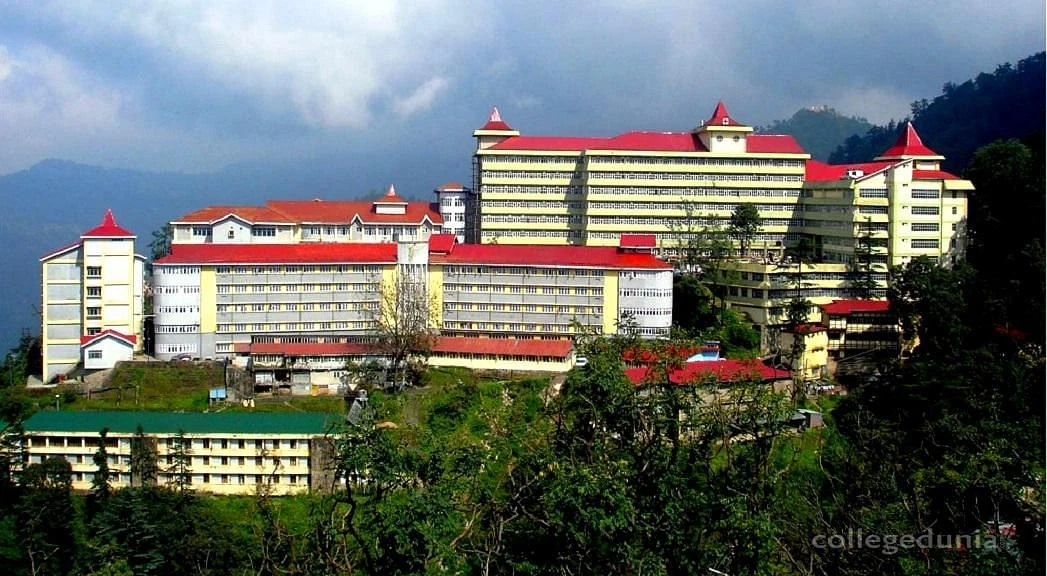
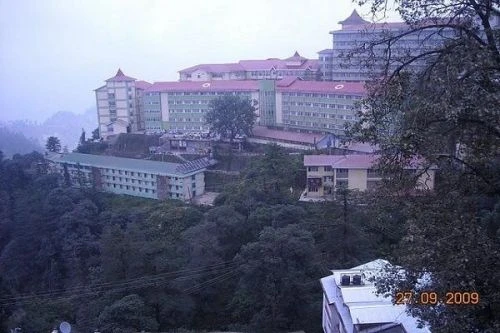
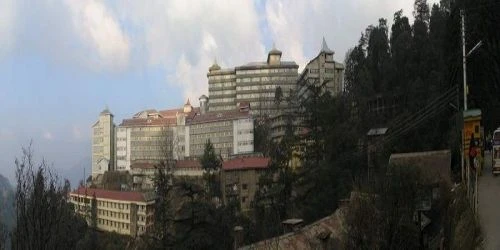
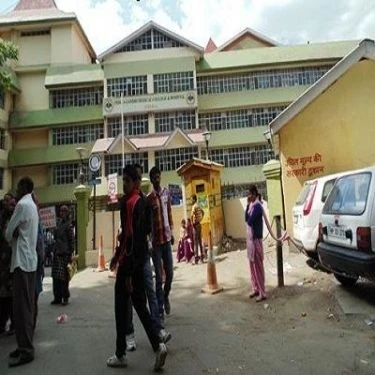
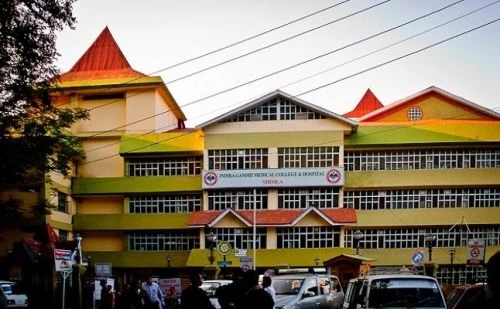
You have to picture a campus built on a hillside. The location in Snowdown, near Shimla's famous Ridge, is stunning but physically demanding. The infrastructure is a mix. The hospital is a massive, 1000+ bed tertiary care facility—it got a new OPD block and a 3-Tesla MRI in 2024. The academic and hostel blocks, however, are older. Students describe parts as cramped and dilapidated. Walking between the college, hospital, and hostels involves navigating steep climbs. That's just part of daily life.
Hostels (Raman for boys, JBT for girls) are reported as strict but safe. Rooms are often shared in the early years, opening up to singles for interns and final-years. The food in the mess is average, so many students head to the local eateries in Lakkar Bazar. Sports facilities are limited by the terrain—think small basketball or badminton courts, not sprawling fields. The library is well-stocked with over 20,000 books and digital access to major journals. Wi-Fi is available in spots, but don't expect blazing speeds. It's a functional, no-frills campus where the hospital is the real center of gravity.
Talking to students and scanning forums like Quora and Reddit reveals a clear, nuanced consensus. The positives are powerful. The clinical exposure is unmatched in the region. You see everything. The location provides the "Shimla vibe"—proximity to Mall Road and the Himalayan scenery is a genuine mental health boost for many. Academically, the faculty is respected for building strong foundations.
But the negatives are real and recurring. The workload is brutal. 24 to 36-hour shifts for interns and residents aren't folklore; they're routine. The infrastructure fatigue is palpable—old buildings, constant walking, and a sense of being overcrowded. A significant and recent concern, highlighted by incidents in late 2025, is security. Cases of doctor-patient violence and subsequent strikes have left many students and residents feeling vulnerable and questioning administrative support. On a positive note, the campus is widely reported as strictly anti-ragging, with a safe environment for freshers. Hostel life is Spartan but focused.
IGMC Shimla is a classic trade-off. It offers arguably the best clinical medical education in North India outside the elite AIIMS chain, all at a fraction of the cost. If your goal is to become a competent, unflappable doctor with experience drawn from a huge and varied patient pool, this college is an excellent choice. The PG stipends are now attractive, and the alumni network, including figures like former AIIMS Director Dr. Randeep Guleria, is prestigious.
But you must be honest about what you're signing up for. The workload is extreme. The terrain is punishing. The infrastructure is dated, and recent safety concerns for staff are troubling. If you prioritize modern facilities, a cushy campus life, or a gentler work-life balance, you might find IGMC overwhelming. It's best for resilient, academically driven students who see medicine as a calling, not just a degree, and who aren't afraid of a little—or a lot of—hard work in the hills. For them, it's absolutely worth it.
In this preview: 5 photos · 0 videos
Based on current consensus, IGMC Shimla is often preferred for its superior clinical exposure and well-established postgraduate departments due to its high patient load. AIIMS Bilaspur, while offering newer and better infrastructure, currently has a lower patient flow, which can impact practical training.
MBBS candidates admitted to IGMC Shimla are required to sign a bond agreeing to serve the state of Himachal Pradesh for a specified period, typically around 2 years. If a graduate chooses not to fulfill this service obligation, they must pay a financial penalty, which is approximately ₹5 to 10 Lakhs.
No, IGMC Shimla maintains a strictly anti-ragging campus. Recent student reviews indicate that the college provides a very safe and secure environment for freshers, with strong measures in place to prevent any ragging incidents.
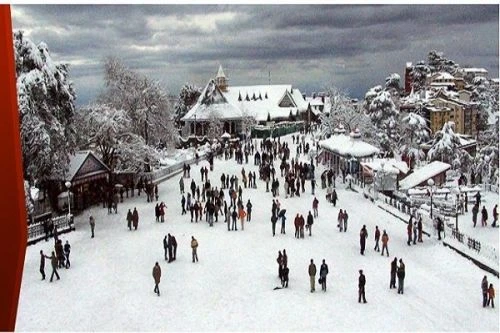
Students from South India should prepare for a significant climate change. Winters in Shimla are harsh, with sub-zero temperatures and snowfall. It is strongly advised to carry heavy woolens. Student hostels at IGMC are equipped with heaters to help manage the cold.
As of the latest information for 2025, the monthly stipend for postgraduate residents at Indira Gandhi Medical College ranges from approximately ₹50,000 to ₹65,000 per month.
Share what future students should know about IGMC.
Student voices are not rewritten by colleges. We remove spam and abuse.
Wider admission question? Community PulseWhat should future students know?
Tell us which course you're considering. We'll help you work out the next step.
Get instant Partner access after mobile verification. Your public edits are reviewed before they go live.
Claim this college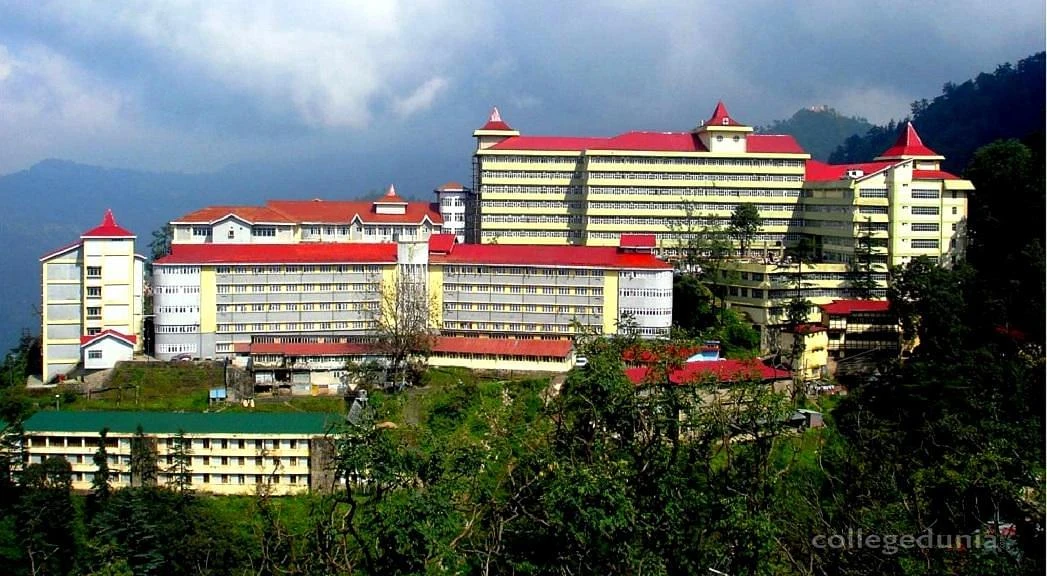
 Auditorium
 Cafeteria
 Computer Labs
 Hostel
 Medical
 Science Labs
 Study Library