Loading Admission Guardian content
Loading Admission Guardian content

Selected ranking categories, with the recorded year beside each result. Open all records for the complete history.
2 published records · Lower numeric ranks are stronger
IIRF
Nursing
#882022
Find a program, read its fee details and explore the admission requirements.
Summary of the programs shown below. Fee periods can differ by program. Check the note beside each amount before comparing costs.
| Course | Stream | Fees |
|---|---|---|
| General Nursing and Midwifery [GNM] | Paramedical | 67600 |
| Bachelor of Science [B.Sc] (Nursing) | Paramedical | 94600 |
| P.B.Bachelor of Science [B.Sc] (Nursing) | Paramedical | 97500 |
| Master of Science [M.Sc] | Paramedical | 177500 |
Eligibility: 10+2
Specializations
Eligibility: 10+2 (PCB)
Specializations
Eligibility: 10+2
Specializations
Eligibility: B.Sc (Nursing)
Indore Nursing College sits on the Rau-Pithampur Road, its modern glass-fronted building looking more like a corporate headquarters than a traditional campus. That's by design—it won an award for it. But the real story here isn't the architecture; it's the clinical access. With training partnerships at hospitals like Medanta and Apollo, students get thrown into real healthcare environments from the start. It’s a disciplined, no-nonsense institution run by the ICON Education Society, and it’s built a reputation as one of the more serious private nursing colleges in central India. If you're looking for a party, you won't find it. If you're looking for a pathway into a hospital, you might.
INC offers the standard ladder of nursing qualifications: a 3-year GNM diploma, the 4-year B.Sc. Nursing, a 2-year Post Basic B.Sc. for working nurses, and M.Sc. Nursing programs. The M.Sc. specializations—Medical-Surgical, Obstetric & Gynecological, and Psychiatric Nursing—are where the college focuses its postgraduate efforts. Annual intakes are decent-sized, typically between 50 and 100 students per program, though the exact B.Sc. seat count seems to fluctuate a bit year to year.
The academic approach leans heavily on simulation. They use high-fidelity mannequins and scenario-based training to mimic real clinical situations before students ever set foot in a partner hospital. It’s a practical move that makes the transition less jarring. You’ll also find modules on soft skills and computer literacy woven into the curriculum, which is a smart addition for a field that’s becoming more technologically driven.
Faculty strength is around 50, led by Principal Dr. Achamma Varghese. The college mentions several PhD holders among the senior staff, which is a positive signal for the M.Sc. programs especially. But the real academic asset isn’t on campus—it’s in the city’s hospitals. The college’s official website highlights its MoUs with NABH-accredited giants like Medanta and Apollo, which form the backbone of the clinical training. That’s the trade: you get a modern classroom theory base, but your practical education happens in some of the region’s best healthcare facilities.
Let’s be clear about nursing placements: they aren’t like engineering drive-ins. Hiring is decentralized, often based on performance during those mandatory clinical rotations. The college officially claims a 90-100% placement rate for eligible students. Talking to alumni and scanning reviews on Shiksha and CollegeDunia paints a slightly more nuanced picture. The working number seems closer to 75-80% receiving direct offers from campus recruitment drives. The rest typically secure positions through the references and networks they build during internships.
Packages reflect the nursing industry’s starting scales in central India. The highest package cited for the 2023-24 period was around ₹5 LPA, likely for a role in a private super-specialty hospital. The average clusters between ₹2.4 and ₹3.2 LPA. That’s a realistic, if not spectacular, starting point for a fresh B.Sc. Nursing graduate in this region.
The recruiter list is essentially a who’s who of Indore’s healthcare scene: Medanta, Apollo Hospitals, Choithram Hospital, Bombay Hospital, and Greater Kailash Max Hospital. These aren’t just names on a brochure; they’re the same institutions where students complete their clinical hours. The path from trainee to employee is direct for those who make a good impression. Every student completes a hospital internship—it’s non-negotiable in the INC curriculum—and that’s where most jobs are actually won.
For a private institution, INC’s fees are positioned in the mid-range. The total four-year cost for a B.Sc. Nursing student, including a basic hostel and mess, is estimated between ₹6.5 and ₹7.2 lakhs. Breaking it down, annual tuition is about ₹90,000-₹94,600, with a one-time registration fee on top. The M.Sc. program is more expensive, with tuition alone around ₹1.78 lakhs per year.
Hostel costs are a major variable. A non-AC triple-sharing room with mess will run you about ₹65,000-₹80,000 annually. But if you want an AC double room, the price can jump significantly—reports indicate a total cost upwards of ₹2.39 lakhs for some boys' hostel options. It’s worth checking the latest fee structure on their site before budgeting.
Financial aid is primarily through government schemes. The college facilitates the Madhya Pradesh State Government’s Post-Matric Scholarship for SC/ST/OBC candidates. Don’t expect a wide array of private merit scholarships from the college itself; the main fee reduction avenue is through those state-administered programs.
Admission revolves around two tracks: the state quota and the management quota. For the state seats, you need to appear for the MP PNST (Pre-Nursing Selection Test). Eligibility is standard: 10+2 with Physics, Chemistry, Biology, and English, and a minimum of 45% aggregate (40% for reserved categories). Selection then goes through a centralized merit-based counseling process.
The other route, and a common one for private colleges, is direct admission under the management quota. This typically bypasses the PNST and relies on your 10+2 PCB marks, often followed by a direct interview with the college administration. It’s how a significant portion of the seats are filled. The application window is usually open from June to August, with a nominal application fee of ₹1,000-₹1,500.
Cutoffs for the state counseling aren’t published by the college in the way engineering colleges are. They vary annually based on PNST difficulty and applicant pool. For management quota, the academic bar is generally just clearing the minimum eligibility, though competition can push the effective cutoff higher.
The campus is part of a larger educational complex shared with other ICON institutions. The standout feature is the building itself—awarded "Best Educational Building of Central India"—which gives the place a modern, professional feel. Inside, the labs for Anatomy, Physiology, Nutrition, and Community Health are reported to be well-equipped and maintained, a consistent positive in student reviews.
The hostels are separate for boys and girls. Feedback on quality is a mixed bag. Rooms are generally described as clean, but rules are strict. Curfews and uniform policies even for non-academic events are frequently mentioned. The mess provides standard vegetarian fare: two meals plus breakfast and tea. It’s functional, not a culinary highlight. The library has a decent collection of over 5,000 books and journal subscriptions, and the campus is Wi-Fi enabled, though students note the speed in hostels can be average at best.
This brings us to student life. And it’s sparse. The college has a pronounced focus on discipline and academics. There are very few cultural fests or large social events. One alumni review put it bluntly: "It feels more like a school than a college sometimes." If you’re seeking a vibrant campus social scene, this isn’t it. The life here is structured around classes, labs, and hospital duties.
Synthesizing opinions from CollegeDunia, Shiksha, and Quora reveals a clear, consistent consensus. The college is respected for its professional rigor and clinical opportunities, but criticized for its rigid environment.
The praise is almost universally for the clinical exposure. Students value the direct access to top-tier hospitals like Medanta and Apollo. They feel it gives them a practical edge. The modern infrastructure and generally supportive faculty during practical training are also highlighted as major positives.
The complaints are just as consistent. Strictness tops the list—mandatory uniforms, tight schedules, and administrative hassles like slow document processing or caution money refunds are recurring themes. The lack of a social life is the other big one. The college makes no pretenses about being a ‘fun’ campus.
One verbatim quote from a 2023 alumni review sums up the median view perfectly: "If you want a serious career in nursing and can handle a bit of strictness, INC is great. But don't expect a 'campus life' like you see in movies." That’s the trade-off, laid bare.
Indore Nursing College is a specific institution for a specific type of student. It’s worth it if your primary goal is to become a clinically competent nurse through a structured, no-distractions program. The access to hospitals like Medanta is a legitimate advantage that many colleges can’t match. The infrastructure is modern, and the placement support, while not guaranteeing a job, connects you to the right employers.
But you have to be okay with the environment. It’s disciplined to a fault, with minimal social or extracurricular outlets. The administrative side can be bureaucratic. If you thrive in a more autonomous, vibrant campus culture, you’ll likely find INC stifling.
So, who is it for? A focused student from Madhya Pradesh or central India who wants strong hospital ties, can handle strict rules, and is aiming for a solid start in the regional healthcare sector. Who should look elsewhere? Someone prioritizing a holistic college experience with balance between academics and social life. INC is a career launchpad, not a traditional college experience. Decide which one you need more.


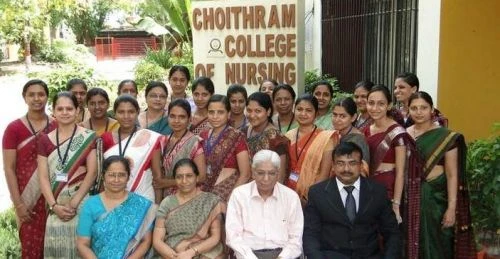
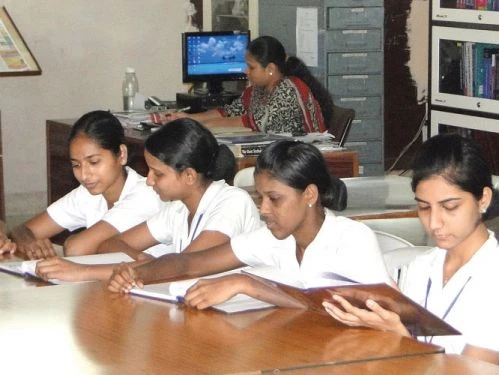
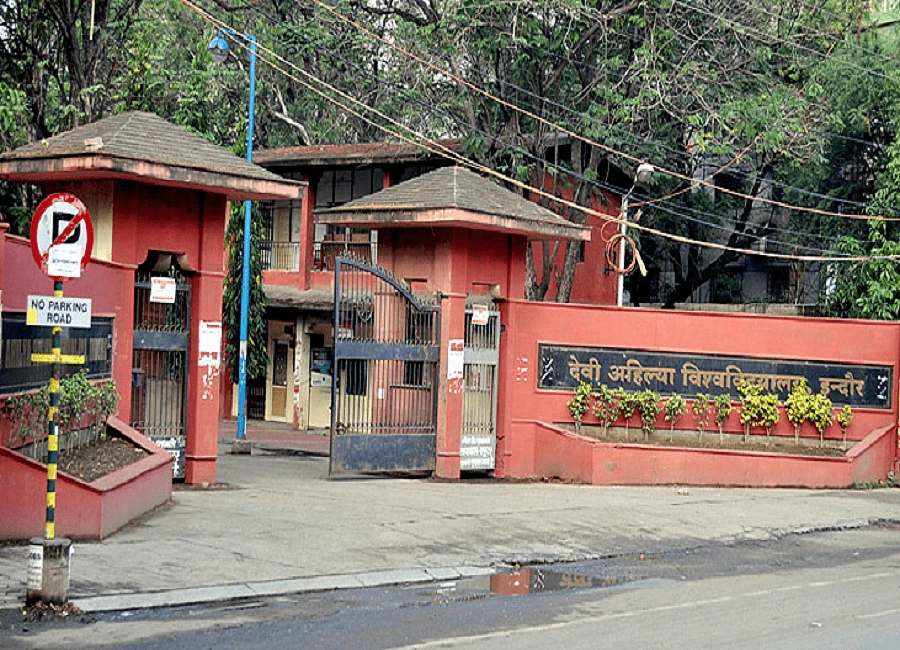
In this preview: 5 photos · 0 videos
Indore Nursing College is a private institution. It is run by the ICON Education Society.
The total approximate cost for the 4-year B.Sc. Nursing program at Indore Nursing College, including hostel and mess charges, ranges from ₹6.8 Lakhs to ₹7.5 Lakhs.
No, Indore Nursing College does not have its own parent hospital. However, it has formal tie-ups with leading hospitals such as Medanta and Apollo for providing clinical training to its students.
Yes, direct admission is possible at Indore Nursing College without the PNST exam. Admissions are available under the Management Quota for students who meet the required 10+2 (PCB) merit criteria.
Yes, the degree is valid for pursuing nursing jobs abroad. As the college is recognized by the Indian Nursing Council (INC), graduates can appear for international exams like the NCLEX (USA) or OSCE (UK) after registering with the State Nursing Council.
Share what future students should know about Indore Nursing College.
Student voices are not rewritten by colleges. We remove spam and abuse.
Wider admission question? Community PulseWhat should future students know?
Tell us which course you're considering. We'll help you work out the next step.
Get instant Partner access after mobile verification. Your public edits are reviewed before they go live.
Claim this college
 Cafeteria
 Campus Security
 Campus Shuttle
 Campus Wi-Fi
 Communication Centre
 Medical
 Science Labs
 Smart Classrooms
 Study Library