Loading Admission Guardian content
Loading Admission Guardian content
Selected ranking categories, with the recorded year beside each result. Open all records for the complete history.
51 published records · Lower numeric ranks are stronger
NIRF
MBA
#512019
Outlook
Management · private
#162023
IIRF
Management · private
#182025
IIRF
MBA · private
#212023
Outlook
MBA · private
#172020
TOI
MBA
#82024
Find a program, read its fee details and explore the admission requirements.
Summary of the programs shown below. Fee periods can differ by program. Check the note beside each amount before comparing costs.
| Course | Stream | Fees |
|---|---|---|
| Executive Post Graduate Diploma in Management (Rural Management) | Management | 1010000 |
| Post Graduate Diploma in Rural Management [PGDRM] | Management | 1615452 |
| Fellow Programme in Management (Rural Management) | Management |
Specializations
Eligibility: Graduation with 50%
Specializations
All accepted exams
Eligibility: Graduation with 50% + CAT/XAT
Specializations
Eligibility: Post Graduation
2 exams with cutoff data available
 Adani Wilmar Limited
 ADM Agro
 Airtel
 Amul
Amul Axis Bank
 Bayer Crop Sciences
 Big Basket
 Brillio
 Coca-Cola
 Crompton
 DBS Bank
 DCM Shriram Ltd.
 Emami Limited
 Federal bank
 Fincare Business Services
 Flipkart
 Friends of Women's World Banking (FWWB)
 GODREJ Pvt. Ltd
 Grant Thornton India Private Limited
 Grofers
 HDFC Ergo
 Hero Group
 ICICI Bank
 ICICI Prudential AMC
 IDFC First Bank
 ITC INFOTECH
 Jeevika
 Kaleidofin Private Limited
 Larsen & Toubro Limited
 Licious
 More
More Mother Dairy
 Naandi Foundation
 NBHC
NBHC Nestle India
 Ninja Cart
 Pidilite Industries
 RBL Finserve
 Reliance
 Stellapps Technologies Private Limited
 Tata Steel
 TVS Motors
 Ujjivan
 UNICEF
 Vedanta
 Yes Bank
The Institute of Rural Management Anand (IRMA) isn't just another B-school. It's a legacy institution, born from the White Revolution and now navigating its biggest change yet. As of early 2025, IRMA has been transitioned into the Tribhuvan Sahkari University (TSU), a Central University declared an Institute of National Importance. That's a monumental shift from its 1979 roots. For students eyeing a career in rural management, agribusiness, or cooperative sectors, this move could mean a more powerful degree. But it also brings a wave of uncertainty about the future of its iconic brand. The core promise, however, remains: an education built around an immersive 8-week village stay, a tight-knit cooperative campus culture, and a near-guaranteed job in a very specific, high-impact niche.
With the TSU transition, the big change is nomenclature: students now get an MBA degree, not a diploma. The academic soul, though, is unchanged. The flagship MBA in Rural Management (intake ~240) is still the main draw. Its structure is unique: one-third classroom learning, one-third summer internship, and one-third the legendary Village Fieldwork Segment (VFS). That's 8-9 weeks living in a village, which alumni consistently call life-altering. It's the program's differentiator.
Under TSU, IRMA has launched three new specialized MBAs: in Agribusiness Management, Cooperative Management, and Cooperative Banking & Finance (each with ~60 seats). These are more focused than the broad-based RM program. There's also a 15-month executive PGDM and a fully-funded doctoral FPM.
The faculty strength is around 40 core members, with over 90% holding PhDs from top institutes. The trimester system is fast-paced, and surprise quizzes are a known feature. You don't come here for a relaxed two years. You come for a rigorous, ground-up understanding of rural India.
IRMA publishes a 100% placement record, and the 2024 batch maintained it. But the numbers tell a nuanced story. The average CTC dipped to ₹14.14 LPA from ₹15.5 LPA the previous year, reflecting broader market trends. The median package held steadier at ₹15.00 LPA. The highest package was ₹31.16 LPA, while the lowest recorded was ₹9 LPA.
That range is important. Sector-wise, BFSI (Banks) was the largest recruiter at 39%, with ICICI, HDFC, and Axis Bank being regulars. FMCG/Agribusiness (Amul, Dabur, Godrej Agrovet) took 26%, and consulting firms like Deloitte and PwC accounted for 15%. The rest go into NGOs, CSR, and rural livelihood missions.
Here's the reality check students talk about. There's a visible divide. If you land a role with Amul or a major bank, your starting point is strong. If you take a role with an NGO or a state rural mission—which aligns perfectly with IRMA's ethos—the starting salary can be in that ₹9-12 LPA range. The placement is guaranteed, but the trajectory depends heavily on the sector you choose. The internship scene is robust, with a 100% placement rate and an average stipend of around ₹60,000 for two months.
The total cost for the two-year MBA-RM program is estimated between ₹18.6 to ₹19.78 lakhs. That breaks down to roughly ₹8.22 lakhs per year in tuition, plus about ₹70,000 for a single-occupancy hostel and ₹50,000 for the student-managed mess. A refundable caution deposit of ₹20,000 is also required.
It's not cheap, but financial aid is available. IRMA offers about 20 merit-based scholarships covering up to 50% of tuition. The Mirae Asset Foundation provides six scholarships of ₹5 lakhs each. For SC/ST/OBC students, central government schemes like PM-YASASVI can cover the full program fee. Given the median salary of ₹15 LPA, the ROI is generally viewed as solid, especially compared to private B-schools with similar fees but less distinctive outcomes.
Getting in requires clearing a national entrance exam. IRMA accepts CAT, XAT, and CMAT scores. The cutoff isn't a single number; it's more holistic. For a straight merit-based call, you'd want 85+ percentile. However, IRMA is known for its profile-based shortlisting. With a strong academic record or relevant work experience in the social sector, you might get a call with an 80+ percentile score.
The selection process is where IRMA really tests your fit. After shortlisting, there's the IRMAWAT – a 30-minute written ability test on a social or rural issue. Then comes the Personal Interview (PI), which heavily probes your 'rural aptitude' and awareness of socio-economic issues. They're not just checking your corporate knowledge; they're seeing if you understand why IRMA exists. The application fee is ₹2,000, but it's waived for BPL candidates.
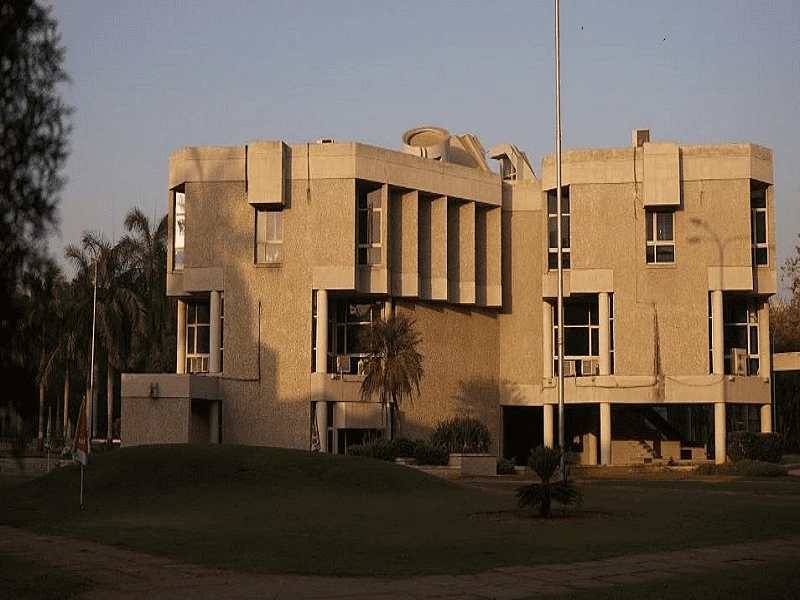
The 60-acre campus, designed by renowned architect Achyut Kanvinde, is lush and self-contained. A major perk: every MBA-RM student gets a single occupancy room in one of the 15 hostel blocks. The rooms are furnished and come with a balcony. It's a significant quality-of-life advantage over the double-occupancy norm at many other institutes.
The Ravi J. Matthai Library is a standout, considered one of Asia's best collections on rural management. Campus-wide high-speed Wi-Fi is standard. The Student Activity Centre (SAC) houses a gym and indoor sports facilities.
The heart of student life, though, is the cooperative model. The mess is student-run, and the food has a genuinely good reputation. Clubs and committees operate on cooperative principles, fostering a collaborative, less cut-throat atmosphere than you might find at a typical MBA college. It's a unique culture that alumni cherish.
Talk to students and alumni, and a clear consensus emerges. The pride in the 'Rural Harvard' brand is immense. The VFS is universally praised as transformative. The cooperative culture and single rooms are huge positives. The median package provides a decent return on the investment.
But the concerns are just as vocal, especially recently. The transition to Tribhuvan Sahkari University (TSU) is the biggest source of anxiety. On forums like Reddit's r/CATpreparation, prospective students openly worry that adding new, non-RM programs might dilute the powerful, niche IRMA brand. It's a valid uncertainty.
Other critiques are long-standing. Some feel the 'Rural' tag on the degree can be a pigeonhole for those wanting to pivot later to mainstream corporate roles like pure-play finance or consulting. The academic workload is notoriously heavy, with the trimester system and VFS leaving little downtime. And as noted in placements, the salary gap between corporate and development sector roles is a tangible on-campus reality.
IRMA is a specialist institution, and its value is crystal clear for a specific type of student. If you are genuinely passionate about rural development, agribusiness, cooperatives, or banking with a rural focus, it is arguably the best place in the country to be. The brand equity, the alumni network (think Amul, NDDB), and the ground-level learning are unparalleled. The INI status and shift to an MBA degree only add formal weight.
But if you're looking for a generic MBA to get into high-finance, tech product management, or mainstream strategy consulting, you'll likely feel out of place. The curriculum, the placements, and the peer group are all oriented toward a specific mission. The current anxiety around the TSU transition is a real factor to weigh; the long-term brand impact is still unknown. Ultimately, IRMA isn't for everyone. But for those it is for, it's not just a college—it's a career-defining choice.
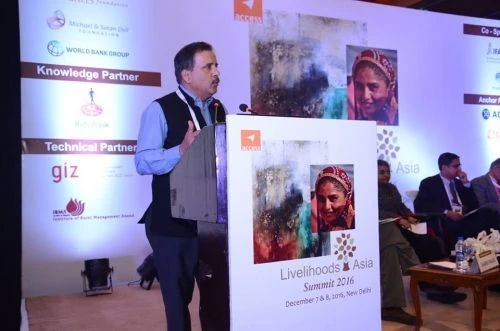
In this preview: 5 photos · 0 videos
No. While the Institute of Rural Management (IRMA) has a rural focus, most graduates work in Tier-1 and Tier-2 cities for major FMCG companies like Amul and Dabur or banks like ICICI and HDFC, typically in roles focused on rural markets and development.
IRMA's MBA in Rural Management (MBA-RM) is a broader program covering rural livelihoods, cooperatives, and the social sector. An MBA in Agribusiness is more narrowly focused on the commercial and managerial aspects of the agricultural value chain.
Yes, the Institute of Rural Management (IRMA) has started accepting CMAT scores for admission to its flagship program in recent admission cycles.
Yes, all academic programs at the Institute of Rural Management (IRMA) are fully residential, making hostel stay mandatory for students.
This status means students now receive an MBA degree instead of a PGDM. It also provides higher prestige, which is particularly beneficial for securing government jobs and applying for international PhD programs.
Share what future students should know about IRMA.
Student voices are not rewritten by colleges. We remove spam and abuse.
Wider admission question? Community PulseWhat should future students know?
Tell us which course you're considering. We'll help you work out the next step.
Get instant Partner access after mobile verification. Your public edits are reviewed before they go live.
Claim this college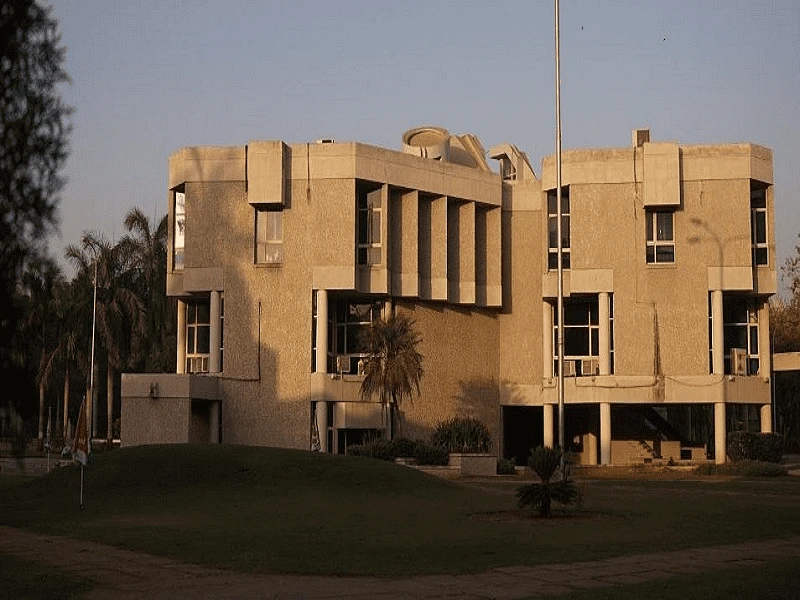
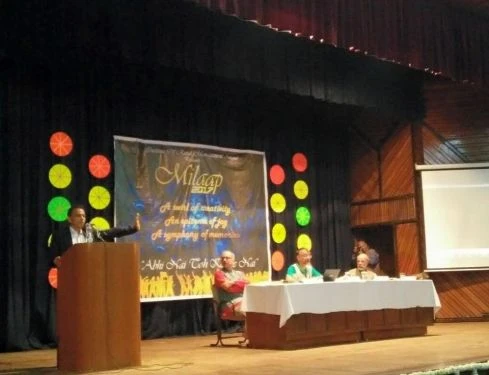
 Auditorium
 Cafeteria
 Computer Labs
 Gym
Gym Hostel
 Medical
 Sports Complex
 Study Library