Loading Admission Guardian content
Loading Admission Guardian content
Provisional score based on available data. It may change as more information is verified.
Find a program, read its fee details and explore the admission requirements.
Summary of the programs shown below. Fee amounts are not listed. Contact the college for its current fee schedule.
| Course | Stream | Fees |
|---|---|---|
| Bachelor of Occupational Therapy | Medical | |
| Master in Occupational Therapy [MOT] (Neurology) | Medical | |
| Master of Occupational Therapy [MOT] | Medical |
Eligibility: 10+2
Specializations
Eligibility: B.O.T
Specializations
Eligibility: B.O.T
If you're looking for a direct, no-frills path to a career in occupational therapy—especially one that opens doors to the US, UK, or Australia—the JKK Muniraja Medical Research Foundation College of Occupational Therapy is a name that comes up consistently. Established in 1998 and launching its academic program in 2001, this private college in Tamil Nadu's Namakkal district has built a reputation on one powerful credential: its recognition by the World Federation of Occupational Therapists (WFOT). That's the golden ticket for international practice, and it's the core reason many students choose its campus in Komarapalayam over flashier city colleges. You won't find a bustling metropolitan social scene here. What you will find is a focused, clinical environment where the primary goal is turning out competent therapists, a significant portion of whom are now practicing abroad.
This institution specializes exclusively in occupational therapy, offering a focused curriculum rather than a broad paramedical portfolio. The undergraduate program is the main draw: a 4.5-year Bachelor of Occupational Therapy (BOT) that includes a six-month compulsory rotatory internship. The annual intake is 50 students. At the postgraduate level, the college offers a 2-year Master of Occupational Therapy (MOT) with specializations in Neurology, Pediatrics, and Psychiatry, with limited seats (typically 3–5 per specialty).
The academic rhythm follows the schedule of its affiliating university, The Tamil Nadu Dr. M.G.R. Medical University. With a faculty count of 14, the teaching is hands-on and clinically oriented from the start. A notable strength is the clinical tie-up network. Students don't just train in the JKKM group's own multi-specialty hospital; they also get postings at premier external institutions like NIMHANS in Bangalore for psychiatric training. That's a level of exposure many newer colleges struggle to match.
Placement in occupational therapy isn't about campus drives with tech giants. It's a clinical field, and outcomes here are measured by hospital appointments, rehabilitation center roles, and international licensing success. The college claims 100% placement for eligible students, which, for a specialized program with a capped intake, is plausible. The reported median package for the 2023-24 cycle was ₹3.5 LPA. The highest domestic packages for graduates landing roles in premium private hospitals are estimated to be in the ₹5–7 LPA range.
But the real story is the international pathway. Thanks to the WFOT recognition, graduates can sit for licensing exams like the NBCOT in the USA or the HCPC registration in the UK. Alumni estimates suggest salaries for those who clear these exams can start in the range of 80,000 annually. Top recruiters for domestic roles include Apollo Hospitals and various rehabilitation centers in Chennai, Bangalore, and Coimbatore. The college's own alumni network is a significant recruiter for international opportunities. So, the placement data isn't just about the median LPA; it's about the global mobility the degree enables.
The cost structure here has a stark divide based on how you secure a seat. For the BOT program, students admitted under the Government Quota (through state counseling) pay a very affordable ₹40,000 – ₹60,000 per year. For those entering via the Management Quota, the annual tuition jumps to approximately ₹1.5 to ₹2 lakhs. Over the 4-year academic period, the total tuition cost can range from about ₹3.2 lakhs to ₹8 lakhs. The MOT program fees are around ₹1 to ₹1.5 lakhs per year.
On top of tuition, hostel fees are around ₹34,500 per year for a shared room (typically 4 students), with separate mess charges running ₹3,000–₹4,000 per month. Financial aid is available through Tamil Nadu government schemes for First Graduate students and SC/ST/SCC categories, along with some merit-based institutional waivers. Compared to private OT colleges in major metros, the total cost of education here, even for management quota students, is often seen as more reasonable.
The admission process is refreshingly straightforward, especially for the BOT program. There is no specific entrance exam. Selection is based purely on your 12th Standard (HSC) marks in the Science stream with Physics, Chemistry, and Biology (or Botany & Zoology). You need a minimum of 50% aggregate. That's it.
The process splits into two channels. For the coveted and low-cost Government Quota seats, you must apply through the TN Medical Selection Committee counseling after your 12th results are out. The cutoffs vary yearly but are based on your board exam percentage. For the Management Quota, you apply directly to the college, and selection is based on merit (your 12th marks) and seat availability. The application window typically opens in May or June. For the MOT program, you simply need a recognized BOT degree.
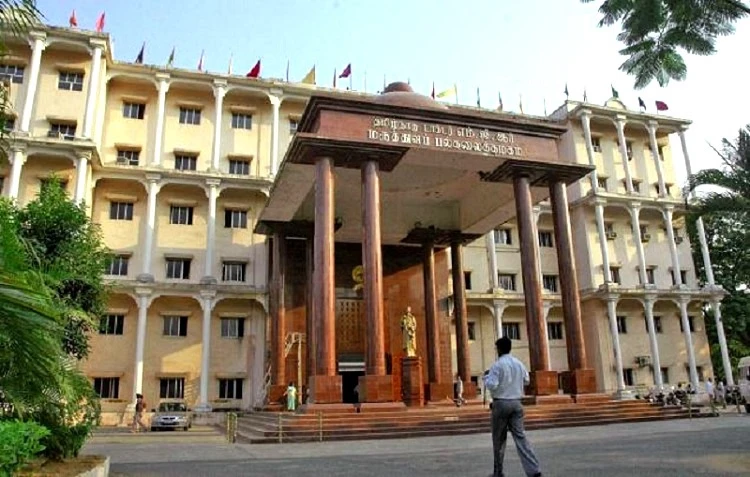
Let's be direct: this isn't a typical "college life" campus. The infrastructure is functional and geared towards professional training. The 8.42-acre campus houses specialized labs for Sensory Integration, Orthotics & Prosthetics, and ADL training. The library provides digital access and OT-specific resources. A major plus is immediate access to the attached multi-specialty hospital for both learning and personal medical care.
Hostels are separate for boys and girls, secure, but basic. Rooms are usually shared between four students. Facilities include a water cooler, gym, and indoor play area. The college provides transport via buses and vans covering a 50km radius. Wi-Fi is available, but mainly in academic zones like the library and labs.
The social life is quiet. Komarapalayam is a small industrial town, not a student city. Reviews consistently mention a "strict" environment with limited fests or large-scale cultural events. If you're seeking a vibrant, metropolitan campus experience, you'll be disappointed. The lifestyle here is more akin to a professional training school.
Synthesizing feedback from platforms like CollegeDunia and Shiksha paints a consistent picture. The overwhelming positive is the clinical exposure and the WFOT recognition. Students feel the hands-on training from year one, facilitated by the on-campus hospital, is invaluable. The WFOT stamp is repeatedly cited as the primary reason for choosing JKKM, as it validates the degree globally.
The negatives revolve around campus life and some aging infrastructure. The environment is described as disciplined to the point of being restrictive, with limited extracurricular activities. Some students note that while a new building exists, parts of the hostels and older labs could use modernization. The location is seen as a pro for focused study but a con for socializing.
The alumni consensus, best summarized by one review, is: "If you want to go abroad, this is the best place because of WFOT. But don't expect a high-fi campus life. It's more like a school for therapists." That pretty much nails it.
It depends entirely on your career goals. If your aim is to become a practicing occupational therapist with a strong clinical foundation and, critically, if you have aspirations to work in the United States, United Kingdom, Canada, or Australia, then JKKM is an excellent and cost-effective choice. Its WFOT recognition is a legitimate, powerful asset that outweighs its rustic location and modest social scene. The early patient interaction and tie-ups with institutions like NIMHANS provide a practical edge.
However, if you prioritize a traditional, vibrant college experience with a wide range of campus activities and a city lifestyle, you will likely find Komarapalayam stifling. Also, if you're seeking high-paying corporate placements immediately after your BOT within India, temper your expectations—the field typically offers steady, meaningful clinical work rather than high corporate starting salaries. For the pragmatist focused on a global therapy career, this college delivers where it counts.
Yes, the college is recognized by the World Federation of Occupational Therapists (WFOT). This international recognition is essential for graduates seeking to work as occupational therapists in countries like the USA, UK, and Canada.
The Bachelor of Occupational Therapy (BOT) program focuses on improving functional independence and mental health through therapeutic activities. The Bachelor of Physiotherapy (BPT) program focuses on physical movement, rehabilitation, and exercise therapy. Both undergraduate programs are offered on the same campus.
Yes, the college provides separate and secure hostel accommodations for both male and female outstation students. These hostels include mess facilities for meals.
For graduates working in India, starting salaries typically range from ₹25,000 to ₹40,000 per month. For those who work abroad, the salary potential is significantly higher and can exceed ₹4,00,000 per month.
Admission to the Bachelor of Occupational Therapy (BOT) program is not based on an entrance exam. Instead, selections are made based on the marks obtained by applicants in the Biology group of their 12th-grade (or equivalent) examinations.
Share what future students should know about JKK Muniraja Medical Research Foundation College of Occupational Therapy.
Student voices are not rewritten by colleges. We remove spam and abuse.
Wider admission question? Community PulseWhat should future students know?
Tell us which course you're considering. We'll help you work out the next step.
Get instant Partner access after mobile verification. Your public edits are reviewed before they go live.
Claim this college Cafeteria
 Campus Shuttle
 Computer Labs
 Gym
Gym Hostel
 Medical
 Science Labs
 Sports Complex
 Study Library