Loading Admission Guardian content
Loading Admission Guardian content
Provisional score based on available data. It may change as more information is verified.
Find a program, read its fee details and explore the admission requirements.
Summary of the programs shown below. First-year fee. Check the note beside each amount for inclusions and exclusions.
| Course | Stream | Fees |
|---|---|---|
| Bachelor of Science [B.Sc] (Nursing) | Paramedical | 6250 |
| Post Graduate Diploma | Medical | 20000 |
| M.B.B.S. | Medical | 64040 |
| Doctorate of Medicine [MD] | Medical | 118610 |
| Master of Surgery [MS] | Medical | 118610 |
Specializations
Eligibility: 10+2
Specializations
All accepted exams
Eligibility: 10+2 with 50% + NEET
Specializations
All accepted exams
Eligibility: MBBS
Specializations
All accepted exams
Eligibility: Graduation
2 exams with cutoff data available - showing recent entries
If you're looking for a government medical college where you'll learn medicine by doing it, not just reading about it, Karnataka Institute of Medical Sciences (KIMS) Hubballi is a name that comes up fast. Officially renamed Karnataka Medical College and Research Institute (KMCRI) in 2024, this 1957-vintage institution is a workhorse of the public healthcare system in North Karnataka. Forget fancy buildings. The draw here is a relentless, 1500-patient-a-day OPD and a 600-bed teaching hospital that throws you into the deep end of clinical practice from day one. It's a place where the fees are a fraction of a private college's, but the workload is multiplied. For a student who wants to become a clinician, not just pass exams, KIMS offers a raw, unfiltered, and profoundly effective medical education.
The academic structure is classic, rigorous, and follows the RGUHS calendar. The undergraduate cornerstone is the MBBS program with 200 seats. Alongside, there are B.Sc programs in Nursing (100 seats) and various Allied Health Sciences specializations. Where KIMS truly shines is in its postgraduate offerings. They run about 165 MD/MS seats across 19 disciplines, with a particularly strong legacy in Pediatrics—they were the first in India to start a full-fledged PG program in the subject. Super-specialty courses like DM Cardiology and M.Ch Urology (2 seats each) add to the depth. The faculty, around 334 strong, is a point of pride; many are alumni who've returned to teach, creating a culture of mentorship. The teaching style is traditional and lecture-heavy, with strict 75-80% attendance mandates. But the real classroom is the hospital. Recent collaborations, like the MoU with Intuitive for robotic surgery training and another with AIMIT for AI in healthcare, signal an effort to modernize the curriculum beyond the bedrock of clinical rigor.
Medical colleges don't have placements in the corporate sense. Your career is built on the foundation of your internship and your performance in national PG entrance exams. On that front, KIMS is considered a powerhouse. The one-year compulsory internship pays a government-stipulated stipend of ₹30,000 to ₹33,000 per month. It's famously hectic, but that's the point. The massive patient load means interns get hands-on experience with minor surgeries, deliveries, and emergency procedures that students in cushier private colleges might only observe. This gritty, practical training is why a high percentage of KIMS graduates crack highly competitive PG seats at top national institutes like AIIMS, PGI, and JIPMER. Post-MBBS, a typical starting salary as a Junior Resident in Karnataka government service ranges from ₹60,000 to ₹80,000 per month. The path is clear: work hard here, and you build a clinical acumen that sets you up for advanced specializations.
This is where the value proposition of a government college hits home. The annual tuition fee for MBBS under the government quota is approximately ₹65,100. For the 15% All India Quota seats, it's slightly higher, around ₹70,000-₹75,000. Over the entire 5.5-year course (including internship), the total institutional cost is estimated at a remarkably low ₹3.5 to ₹4 lakhs. Hostel fees add about ₹15,000-₹20,000 per year, with mess charges running ₹3,500-₹4,500 monthly. PG fees vary by specialization, from ₹1.2 lakhs to ₹3.7 lakhs per annum. To support students, various state and central scholarships are accessible through the Karnataka State Scholarship Portal (SSP), Vidyasiri, e-Pass, and MHRD schemes. The financial accessibility is, without doubt, KIMS's greatest democratizing force.
Admission is strictly through national and state entrance exams. For MBBS, you need a qualifying NEET-UG score. Selection is via centralized counseling: 85% of seats are filled through the Karnataka Examination Authority (KEA) for state quota candidates, and 15% through the Medical Counselling Committee (MCC) for the All India Quota. The 2024/2024 NEET-UG cutoff ranks give a sense of the competition: the All India Quota ranks hovered between 8,500 and 14,700, while the State Quota closed between 13,000 and 16,700 in the first round. A critical condition for all government seat admits in Karnataka is a mandatory one-year rural service bond after completing the course. For B.Sc Nursing, KCET scores are considered. PG admissions require NEET-PG scores, and super-specialties need NEET-SS.
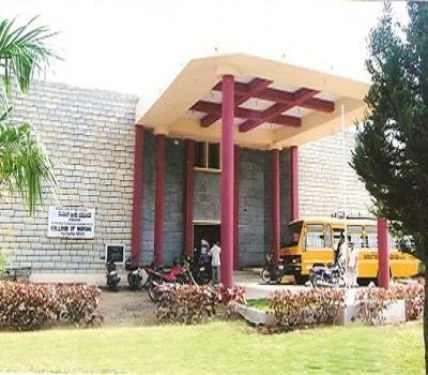
Spread over 100 acres, the campus is a mix of the historic and the emerging. The main college building is old—students call it ancient—and some labs are in need of an upgrade. The hostels are a tale of two realities: older blocks are described as dilapidated, while newer ones like the Charaka block are well-maintained. Accommodation is typically twin-sharing. The crown jewel is the attached hospital, one of the largest in the region, which is constantly evolving. New projects like a 50-bed ICU building and a massive ₹236 crore Jayadeva Regional Cardiovascular Centre are underway. There's a sports complex with standard facilities and a large field. Social life is described as "calm and chill"; Hubballi is not a metropolitan party hub. The annual cultural fest, "Kalaspanana," is the major highlight. But there's a notable caveat: hostel rules, especially for female students, are reported to be very strict, with rigid curfews.
The consensus from student forums is strikingly consistent. The overwhelming positive is the clinical exposure. Students call the patient load a "goldmine" for learning, providing experience with rare textbook cases. The faculty, particularly in Surgery and Pediatrics, is revered as legendary and approachable. The phrase "best education at the lowest possible cost" is a repeated mantra. On the flip side, the infrastructure of the academic blocks is the most common gripe. The language barrier is a serious practical hurdle; not knowing Kannada makes patient interaction in the early months very difficult. The strict hostel rules for women are frequently cited as a negative. The teaching style is old-school, and the city's social scene is quiet. It's a trade-off everyone here makes knowingly.
KIMS Hubballi is not for everyone. If you prioritize pristine infrastructure, a cosmopolitan campus life, and a relaxed academic schedule, look elsewhere. But if your primary goal is to become a competent, unflappable clinician, this college is arguably one of the best value-for-money investments in Indian medical education. It's a boot camp. You'll work exhausting hours, navigate language challenges, and study in dated classrooms. In return, you'll graduate with a depth of hands-on clinical experience that rivals far more expensive institutions, a strong foundation to crack PG entrances, and a degree that carries significant respect in medical circles across South India. It's best for resilient, pragmatically-minded students who see medicine as a skill honed on the ward, not just in the library. Just start learning Kannada on the train ride there.
KIMS Hubli offers superior clinical exposure compared to many private colleges in Bangalore. However, private colleges in Bangalore typically have more advanced infrastructure and campus amenities.
Graduates of KIMS Hubli must complete one year of mandatory service in a government rural healthcare setup. Failure to fulfill this bond may result in a significant financial penalty.
The hostel food at KIMS Hubli is generally considered good and hygienic, often rated highly by students. The menu includes both North Indian and South Indian options, though it can become repetitive over time.
Academically, non-Karnataka students adjust well. The primary challenge is clinical work, as learning basic Kannada is considered essential for effective patient interaction and history-taking.
There is no operational difference. The institution formerly known as Karnataka Institute of Medical Sciences (KIMS) Hubli was officially renamed the Karnataka Medical College and Research Institute (KMCRI) in 2024 to better reflect its enhanced research focus.
Share what future students should know about KIMS.
Student voices are not rewritten by colleges. We remove spam and abuse.
Wider admission question? Community PulseWhat should future students know?
Tell us which course you're considering. We'll help you work out the next step.
Get instant Partner access after mobile verification. Your public edits are reviewed before they go live.
Claim this college Auditorium
 Cafeteria
 Computer Labs
 Hostel
 Medical
 Science Labs
 Sports Complex