Loading Admission Guardian content
Loading Admission Guardian content
Based on incomplete college records.
Find a program, read its fee details and explore the admission requirements.
Summary of the programs shown below. First-year fee
| Course | Stream | Fees |
|---|---|---|
| M.B.B.S. | Medical | 435000 |
| Doctorate of Medicine [MD] | Medical | |
| Master of Surgery [MS] | Medical | |
| Master of Surgey [M.S.] | Medical | |
| Bachelor of Science [B.Sc] | Science |
All accepted exams
Eligibility: 10+2
Specializations
Eligibility: MBBS pass
Specializations
Eligibility: MBBS pass
Specializations
Eligibility: MBBS pass
Specializations
Eligibility: 10+2
1 exam with cutoff data available
If you're looking at private medical colleges in Tamil Nadu and have a NEET rank that's decent but not sky-high, Karpaga Vinayaga Institute of Medical Sciences and Research Center (KIMS & RC) will almost certainly come up. It's a name that splits opinion. For some, it's a disciplined, clinically strong institution that gets the job done. For others, the rules feel stifling. Established in 2009 and affiliated with the Tamil Nadu Dr. M.G.R. Medical University, its biggest selling point is its 650-bed NABH-accredited hospital, sitting right on the busy Chennai-Trichy highway. That location guarantees a steady, often intense, flow of patients—something every medical student craves. But you trade city life for that clinical exposure. It's a trade-off you need to weigh carefully.
The academic structure here is straightforward and follows the university mandate to the letter. The MBBS program, with an annual intake of 150 students, is the core. The 4.5-year course plus one-year compulsory rotatory internship is standard. Where KIMS & RC expands its offering is in postgraduate studies. They have approximately 60-70 PG seats across a wide range of MD and MS specializations. The intake is decent in high-demand clinical fields: 9 seats for MD General Medicine, 8 for MS General Surgery, and 6 for sought-after streams like MD Radio-Diagnosis and Anaesthesiology. They also offer the standard pre and para-clinical MD seats (Anatomy, Pharmacology, etc.) and a suite of B.Sc Allied Health Sciences programs in tech-focused areas like Radiology and Operation Theatre.
Faculty strength is reported at around 171, and student reviews consistently rate teaching quality as a high point—often giving it a 4 out of 5. Professors are described as knowledgeable and, importantly, approachable. The academic calendar is rigid, with frequent internal assessments. It’s a system designed for preparation, not flexibility. They have an internal MoU with the adjacent Karpaga Vinayaga Institute of Dental Sciences for research, and collaborations with local Primary Health Centers for community medicine postings. The grading is percentage-based, as per the university.
Let's be clear: medical colleges don't have "placements" like engineering schools. Your career is built through internships, post-graduation (PG) seats, and then joining practice. The financial metrics here are the stipends and the earning potential after specialization.
The internship stipend is a direct income. For UG interns, it's between ₹22,000 to ₹25,000 per month. For PG residents, it's a solid ₹47,000 per month (2024-25 data). After completing an MD/MS, the reported median package for alumni is ₹8.46 LPA. The highest packages, typically for specialists joining large private hospital chains, range from ₹10 to ₹15 LPA. The college cites an 80-85% "placement" rate, which broadly includes graduates who pursue higher studies, secure government service, or enter private practice.
Top recruiters for post-PG roles include major hospital groups like Apollo and MIOT International. But the real "recruitment" is you cracking NEET PG. The college's clinical training is geared towards that goal. The patient flow from the highway-connected hospital provides the case variety that forms the bedrock of PG exam preparation.
The fee structure is a classic three-tier system for private medical colleges in Tamil Nadu, and costs are significant. For the MBBS program in the 2024-25 cycle:
And that's just tuition. You must add hostel and mess fees, which run another ₹1.2 to ₹1.5 lakhs annually. Then there are the other mandatory charges: a one-time refundable caution deposit of ₹40,000, a development fee that can be between ₹65,000 to ₹1 lakh, and annual lab/library/exam fees of around ₹50,000.
Do the math. The total estimated cost for the 5.5-year MBBS journey is roughly ₹35-40 lakhs for the government quota student. For the management quota candidate, it balloons to an eye-watering ₹85-95 lakhs. Financial aid exists mainly through state government scholarships for SC/ST, BC/MBC, and First-Graduate students, which can provide a reduction of about ₹1.25 lakhs for eligible candidates.
Admission is 100% based on the National Eligibility-cum-Entrance Test (NEET). For MBBS, you need a qualifying NEET UG score. For MD/MS, it's NEET PG. There is no separate college-level test.
The selection is entirely through the centralized, state-run counseling conducted by the Directorate of Medical Education (DME), Tamil Nadu. Your NEET rank and category determine everything. For the 2024 cycle, the Round 1 cutoff for the General All India category seat at KIMS & RC was a rank of 1483. For the State Quota, the cutoffs hovered around 502 marks for the Open Category and 499 for the Backward Class (BC) category. These numbers shift every year based on applicant pool and seat matrix, but they give you a ballpark. The application window typically opens in June/July after NEET results are declared.
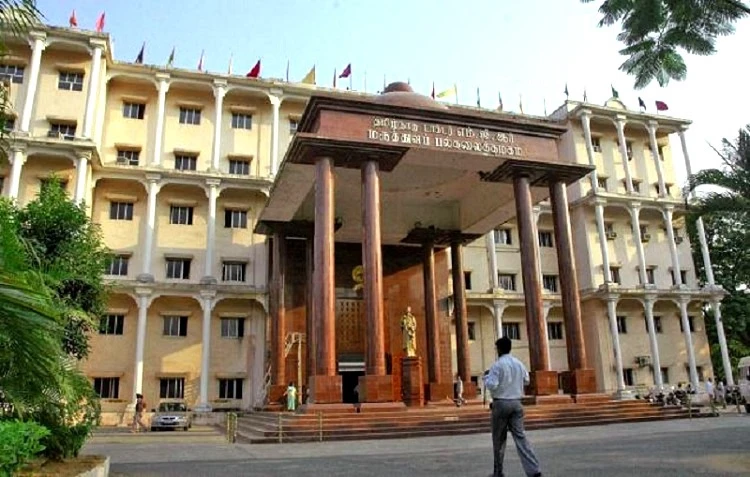
The 30-acre campus is part of a larger 63-acre educational complex. Infrastructure for academics is generally praised—modern, air-conditioned lecture halls and well-equipped labs. The central library has a solid collection of over 24,800 books and 1,700+ journals, with digital access available within the block.
But student life reviews are mixed, often focusing on the hostels. The separate blocks for boys and girls are described as "okay" in terms of rooms, but a major pain point is the lack of Wi-Fi in living areas. This is a significant drawback for students relying on online resources like Marrow or Prepladder for NEET PG prep. The mess food is a frequent complaint, with ratings around 2.5/5 for repetitive menus and quality.
Sports facilities are present for football, basketball, volleyball, and tennis, and there's a modern gym. The social highlight is the annual inter-medical cultural fest, "Affinity," which students rave about for its scale. However, the location is isolated. You're on a highway, about 60 km from Chennai. Life is largely contained within the campus perimeter.
Synthesizing feedback from platforms like CollegeDunia and Shiksha gives you a very consistent picture. The consensus isn't lukewarm; it's sharply defined.
The Good: Clinical exposure is the undisputed champion. Students say the patient flow is "decent" to "high," especially in surgery and obstetrics, because of the highway hospital. Teaching faculty get high marks for being supportive and competent. The "Affinity" fest is a major positive event. The academic infrastructure is seen as more than sufficient.
The Not-So-Good: Discipline is the defining characteristic. It's repeatedly called "school-like." Rules include strict dress codes (full uniform), clean-shaven mandates for male students, and biometric attendance that ruthlessly enforces the 75-80% minimum. Fall below, and you're barred from exams. Hostel food and the lack of in-room Wi-Fi are daily grievances. Students also mention occasional "hidden costs" or requests for funds for events. First-years report restrictions on canteen use initially. The location is quiet, which can feel remote.
On ragging, the campus is officially declared ragging-free, and recent reviews don't report severe incidents, though some mention formal "introduction" sessions.
KIMS & RC is a specific kind of institution for a specific kind of student. If your primary goal is to become a competent doctor through rigorous academic and clinical training, and you're willing to adhere to a strict, disciplined environment to get there, this college delivers good value—especially if you secure a Government Quota seat. The clinical exposure is genuine and a significant advantage for your future. However, if you prioritize a liberal campus life, strong hostel amenities, in-room internet access, and proximity to a metropolitan social scene, you will likely find it frustrating. The high cost of the Management Quota also demands serious consideration; at nearly a crore rupees, you should compare what other private colleges at that price point offer. In essence, it's a trade-off: proven clinical training and academic focus in exchange for a highly regulated, somewhat isolated campus experience. Choose accordingly.
Yes, KIMS & RC is considered good for MBBS in terms of academics and clinical exposure. However, it may not be ideal for students who prefer a more relaxed or liberal campus life.
The total fee for the Management Quota MBBS program is approximately ₹13.5 lakhs to ₹15 lakhs per year. This amount does not include hostel fees or other deposits.
The campus is officially designated as "Ragging Free." Recent student reviews from the 2023-24 cycle suggest minor introductory interactions occur, but no severe ragging incidents have been reported.
The patient flow at the attached hospital is moderate to high. Its location on the GST Road ensures a steady stream of trauma and general medical cases, providing good clinical exposure.
According to student reviews, there are some restrictions for first-year students regarding canteen use during the initial few months, primarily to limit interaction with seniors.
Share what future students should know about KIMS & RC.
Student voices are not rewritten by colleges. We remove spam and abuse.
Wider admission question? Community PulseWhat should future students know?
Tell us which course you're considering. We'll help you work out the next step.
Get instant Partner access after mobile verification. Your public edits are reviewed before they go live.
Claim this college Auditorium
 Cafeteria
 Medical
 Science Labs
 Sports Complex
 Study Library