Loading Admission Guardian content
Loading Admission Guardian content
Find a program, read its fee details and explore the admission requirements.
Summary of the programs shown below. Fee periods can differ by program. Check the note beside each amount before comparing costs.
| Course | Stream | Fees |
|---|---|---|
| Diploma | Paramedical | 25000 |
| M.B.B.S. | Medical | 198746 |
| Post Graduate Diploma | Medical | 343930 |
| Doctorate of Medicine [MD] | Medical | 714030 |
| Master of Surgery [MS] | Medical | 714030 |
Specializations
Eligibility: 10+2
All accepted exams
Eligibility: 10+2 with 50% + NEET
Specializations
Eligibility: 10+2
Specializations
Eligibility: Post Graduation
Specializations
Eligibility: Graduation
1 exam with cutoff data available
Kempegowda Institute of Medical Sciences (KIMS) in Bangalore is a study in contrasts. It’s a private college with a massive, public hospital-level patient load. You’ll find students complaining about the ₹5,000 monthly internship stipend in one breath, and in the next, praising the sheer volume of clinical cases they get to handle—exposure that’s hard to match elsewhere. Established in 1980 and run by the Rajya Vokkaligara Sangha, KIMS operates on a unique two-campus model, splitting its academic life between Banashankari and the bustling heart of V.V. Puram. It’s not the flashiest institution, but for many aspiring doctors, its core strength—real-world medical training in a major city—makes it a compelling, if pragmatic, choice.
KIMS is, first and foremost, a medical college. Its academic portfolio is focused and deep, anchored by a massive MBBS program that’s expanding to 250 seats. Postgraduate offerings are extensive, with around 191 MD/MS seats across specializations like General Medicine (18 seats), Paediatrics (20), Anaesthesiology (22), and Orthopaedics (17). You can find the full list of sanctioned seats on the KIMS official website.
The academic rhythm follows the RGUHS calendar, but KIMS has tried to inject some modern pedagogy. Their Early Clinical Exposure (ECE) program for first-years is a genuine attempt to connect textbook anatomy with living, breathing patients early on. And that’s a smart move, because the college’s biggest asset is its attached 1,000+ bed hospital. Before the final year, students must complete two months of elective postings, and there’s even a 3-week international elective option for fourth-years. With a faculty pool of over 500, the teaching is generally described as solid, especially in the pre-clinical years where professors are noted to be approachable.
Let’s be clear: medical colleges don’t have "placement cells" in the engineering sense. Career outcomes here are a different game, measured by internship stipends, PG seat acquisition, and hospital hiring.
The internship stipend at KIMS is a major, repeated point of contention. At ₹4,000 to ₹5,000 per month, it’s a fraction of the ~₹30,000 offered at Karnataka government colleges. Students aren’t shy about calling this unfair. During this internship year, 70-80% of students are intensely preparing for NEET-PG, aiming for specialization.
For those who enter the workforce after MBBS, either as Junior Residents or in private practice, starting packages typically range between ₹7 and ₹15 LPA, heavily dependent on the hospital and specialty. The KIMS Hospital itself is a top recruiter, along with other major healthcare chains like Apollo, Fortis, and Manipal. The college’s real "placement" advantage is that its rigorous clinical training produces graduates who are immediately useful in a hospital setting. They’re employable because they’ve seen and done a lot.
The fee structure at KIMS is a perfect illustration of India’s multi-quota medical education system. Your cost is entirely determined by the seat category you secure through KEA counseling.
For the MBBS program, Government Quota (CET) seats are a relative bargain at about ₹1.5 to ₹2.1 lakhs per year. The full 4.5-year course totals around ₹8.5 lakhs. Private Quota (GMP/OPN) seats, however, run ₹11.5 to ₹12.5 lakhs annually, pushing the total cost to around ₹55 lakhs. NRI/Management seats are in another stratosphere, costing ₹35 to ₹42 lakhs per year, with a total course cost nearing ₹2 crores.
On top of tuition, budget for hostel and mess fees of about ₹1.1 lakhs per annum, a refundable deposit of ₹15,000, and first-year extras like university registration (another ₹20,000-30,000). Many students, especially in the clinical years, opt out of the hostels for private PGs. Scholarship information isn’t prominently advertised; financial aid seems limited, placing the burden of these steep fees squarely on families.
The gate is NEET. There are no side doors. Admission to every single MBBS and MD/MS seat at KIMS is managed by the Karnataka Examination Authority (KEA) based solely on your NEET-UG or NEET-PG rank. The college does not conduct any separate interviews or offer direct admission.
Cutoffs fluctuate each year, but the 2024 round gives a solid benchmark. For the General category in Round 1, the Government Quota cutoff was around a state rank of 15,053. For the Private Quota, the All India Rank ranged from about 32,000 to 50,000. The process is transparent but intensely competitive—you’re vying for a limited number of seats in each fee bracket. You must stay glued to the KEA website for counseling schedules and updates.
Life at KIMS is defined by its split personality. Your first year and a half are spent at the quieter, residential Banashankari campus for pre-clinical studies. Then, you shift to the clinical campus at V.V. Puram, a stone’s throw from the National College Metro Station. The daily commute between them, via college buses, is a universal student gripe—it eats into your day.
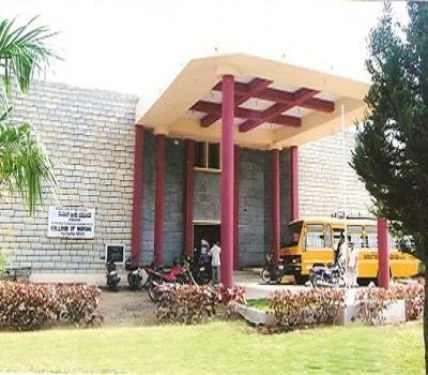
Infrastructure is the other big complaint. The main college building is old. Students frequently mention non-functional lifts and power cuts on the upper floors, which is a pain when the library is on the 5th floor. The library itself, though, is well-stocked and air-conditioned.
Hostels (separate for genders, ~200 capacity each) are primarily at the Banashankari campus. Rooms are usually triple-sharing. Reviews of the hostel food range from "average" to "tasteless," which is why many senior students move out. On the plus side, the V.V. Puram location is unbeatable for city access—coaching centers for NEET-PG, restaurants, and transport are all right there. Sports facilities exist (basketball, volleyball, a new gym), but they aren’t a major draw.
The student sentiment online is a balanced, honest mix. On platforms like Quora and Reddit, the praise is consistently directed at the clinical exposure. The high patient load at KIMS Hospital is considered its golden ticket. You learn by doing, and that’s invaluable.
Faculty in the early years get good marks for being supportive. And the central Bangalore location is a huge logistical win for both academics and social life.
But the negatives are just as consistent. The low internship stipend is a raw nerve. The two-campus system is called annoying. Infrastructure issues (maintenance, lifts, power) are regularly flagged. And the hostel food doesn’t get many fans. It’s not a cushy, plush campus experience. It’s a workmanlike one where the work—the medicine—is what shines.
KIMS is a trade-off. It’s not the college for someone seeking pristine infrastructure, high stipends, or a unified, serene campus. If those are your priorities, look elsewhere.
But if your primary goal is to become a clinically competent doctor, and you value hands-on experience over fancy facilities, KIMS presents a strong argument. The patient exposure here is legitimately elite for a private college. For a student who secures a Government Quota seat, it can be one of the best value-for-money medical educations in Karnataka. For those paying the full private or NRI quota fees, the calculation is tougher—you’re paying a premium for that clinical training, not for luxury.
It’s best for resilient, city-savvy students who are self-motivated and can navigate the institution’s logistical quirks. You come to KIMS for the hospital, not the hostel. And for many aspiring physicians, that’s exactly the right focus.
The consensus is that MS Ramaiah Medical College has better infrastructure, while Kempegowda Institute of Medical Sciences (KIMS) is often preferred for its higher patient load and central location in Bangalore.
The stipend for MBBS interns at Kempegowda Institute of Medical Sciences (KIMS) is between ₹4,000 and ₹5,000 per month.
Kempegowda Institute of Medical Sciences (KIMS) has two campuses: one in Banashankari for pre-clinical studies and one in V.V. Puram for clinical studies and the main hospital.
No, direct admission is not possible. All seats at Kempegowda Institute of Medical Sciences (KIMS), including Management and NRI quotas, are filled through Karnataka Examination Authority (KEA) counseling based on NEET scores.
No, hostel accommodation is not mandatory at Kempegowda Institute of Medical Sciences (KIMS). Many students opt for private paying guest (PG) accommodations in the Banashankari or V.V. Puram areas.
Share what future students should know about Kempegowda Institute of Medical Sciences.
Student voices are not rewritten by colleges. We remove spam and abuse.
Wider admission question? Community PulseWhat should future students know?
Tell us which course you're considering. We'll help you work out the next step.
Get instant Partner access after mobile verification. Your public edits are reviewed before they go live.
Claim this college Auditorium
 Cafeteria
 Computer Labs
 Gym
Gym Hostel
 Medical
 Science Labs
 Sports Complex
 Study Library