Loading Admission Guardian content
Loading Admission Guardian content

Provisional score based on available data. It may change as more information is verified.
Find a program, read its fee details and explore the admission requirements.
Summary of the programs shown below. Total course fee. Check the note beside each amount for inclusions and exclusions.
| Course | Stream | Fees |
|---|---|---|
| Diploma in Engineering (Polytechnic) | Engineering | 4080 |
Specializations
Eligibility: 10th with 35% + JEXPO
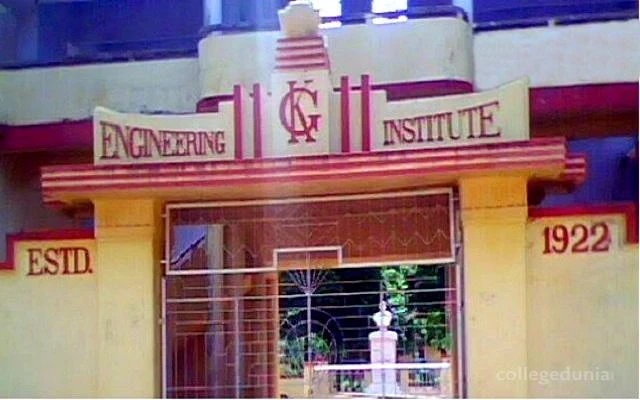
If you're looking for a government polytechnic in West Bengal that delivers solid technical education at a cost that's almost negligible, KG Engineering Institute in Bishnupur is a name that comes up. Established in 1922 and renamed in 1951, it's one of the older technical institutes in the state, operating on a sprawling 22-acre campus in the heart of Bankura's temple town. It's an AICTE-approved institute affiliated with the West Bengal State Council of Technical and Vocational Education and Skill Development (WBSCTVE&SD). The vibe here is straightforward: no frills, a focus on core diploma engineering, and a fee structure that makes it accessible to almost anyone. The recent Utkarsha Bangla Excellence Award (December 2024) suggests the state government recognizes its role. But the real story is in the balance between its century-old legacy and its push to stay relevant with modern labs and claimed 100% placement rates.
This is a pure-play diploma institute. There are no undergraduate degrees, postgraduate courses, or doctoral programs here. The entire academic offering is built around five, three-year, full-time Diploma in Engineering programs, each with an intake of 60 students. That's it. The focus is intensely practical, aimed at producing job-ready technicians and supervisors for core industries.
The curriculum is standard for the WBSCTVE&SD system, with two semester exams and four internal assessments per year. Where KG Engineering Institute tries to differentiate is in its project work. The administration emphasizes hands-on national-level projects in areas like Robotics and Artificial Intelligence. It's a decent attempt to inject modern tech into traditional trades like Mechanical or Civil engineering. The faculty strength is modest, with 17 lecturers as of late 2025. While the institute notes that some lecturers hold PhDs, student reviews are more pragmatic—they consistently describe the teachers as "helpful," "sincere," and good at covering the full syllabus before exams. That's often what matters most at this level.
Labs are a point of emphasis. The institute has specialized labs for Computer Science and Electronics, housing 127 computers across its labs, and a state-of-the-art, air-conditioned language lab. There are also seven workshops kitted out with industry-relevant machines. The library is surprisingly well-stocked for a polytechnic, claiming over 27,953 books in a 301 sq.m. space. Industry links are claimed to be "strong," with contacts maintained for campus recruitment, though the depth of these MoUs isn't detailed.
This is where the official narrative and ground-level reports require some careful parsing. The institute's official claim is a 100% placement rate for the 2024 batch. That's a bold statement. Student reviews offer a more nuanced picture: some say about 98% of students who want jobs get placed, while a review for the Electrical Engineering 2023 batch mentions a placement rate closer to 40%. The truth likely sits somewhere in the middle, varying significantly by branch. Computer Science & Technology (CST) tends to fare better.
Package figures follow a similar pattern. The highest package touted is 4.8 LPA for 2024. Average packages are reported in a band: 2.5 to 3 LPA for CST, and as low as 1.8 LPA for Electrical. For a government diploma with fees under five thousand rupees total, even the lower end of that scale represents a strong return on investment. The recruiter list is impressive on paper—TCS, HCL, Tata Steel, Tech Mahindra, Maruti Suzuki, L&T, Wipro, and even Google and IBM get a mention. It's plausible that these companies recruit from the institute, though likely for specific technician or IT-support roles.
Internship support seems robust, with a claim that 95% of students received internship offers in 2024. The consensus from alumni is that placements are "good," but there's a recurring note in reviews about a "need for improvement." So, while the 100% figure should be taken as an aspirational target, the placement support is clearly active and yields tangible, if modest, results for most students.
This is the institute's knockout punch. The cost of education here is almost symbolic. The total fee for the entire three-year diploma program is between INR 1,800 and INR 4,080. Break that down: it's roughly INR 800 per semester, which includes an exam form fee of about INR 400. We're talking annual tuition in the range of INR 1,600. It's hard to find any form of higher technical education at a lower price.
This makes the available scholarships critical for students from economically weaker backgrounds. The institute facilitates several: the Merit & West Bengal Government Scholarship, OBC scholarships, and the SVM scholarship. With fees this low, a scholarship often covers the full cost and can provide a maintenance stipend, effectively making education free. Hostel and mess fees are not specified in the data, but as government-aided hostels, they are expected to be highly subsidized as well.
Admission is a centralized, rank-based game with zero management quota—it's a government institute. For the first year of the diploma, you must appear for JEXPO (Joint Entrance Examination for Polytechnics). For lateral entry into the second year (for ITI or 10+2 Vocational pass candidates), the exam is VOCLET. Both are conducted by the West Bengal State Council of Technical Education. The basic eligibility is passing the 10th standard with at least 35% marks in Science and Mathematics.
The selection is brutally transparent: your state rank in JEXPO/VOCLET determines everything. Counseling is done online based on this rank. Cutoffs are discussed in terms of rank and percentage. A General Merit Rank (GMR) between 0-2000 is considered competitive. For sought-after branches like Electrical or Mechanical Engineering, a rank between 500-1000 is a safer bet. In terms of marks, the expected cutoff for general candidates is around 75%. The application window usually opens around May-June, with a fee of INR 500 (as per 2024 data).
The 22-acre campus houses three academic blocks, 20 classrooms (two of them "smart" with AV facilities), a 900-seat auditorium, and a seminar hall. The infrastructure is a mix. Labs and the library are described as well-equipped and modern, but some buildings, particularly for Civil Engineering, are acknowledged to be old. It's a government campus—functional, with areas of upgrade and areas that show their age.
Hostel life is a significant plus. There are separate government-aided hostels: three for boys (two with 96 capacity each) and one for girls. Total capacity is around 322 students. Reviews consistently label hostel facilities as "very good" and a "comfortable habitat." The wardens are described as generally well-mannered, though students note they can be harsh if provoked. A dedicated anti-ragging squad is active, which freshers appreciate. The canteen serves affordable, hygienic, and reportedly "nutritious" meals.
For recreation, there's a playground, a well-equipped gym, and facilities for both indoor (chess, carrom) and outdoor (cricket, football, basketball) sports. A health center provides first aid. Bus services are available. The social scene, however, is quiet. Students openly say the college is "backward in the Fest," with cultural fests not being frequent or grand affairs. The atmosphere is peaceful and focused on studies, not a bustling college social life.
Synthesizing feedback from platforms like CollegeDunia and Shiksha reveals a clear, consistent profile.
The Good:
The Not-So-Good:
KG Engineering Institute is an exceptionally clear-cut proposition. It is an outstanding, arguably unbeatable, choice for a student from West Bengal (or elsewhere) seeking a low-cost, government-recognized diploma in core engineering. If your priority is to gain a technical qualification with minimal financial burden and decent placement support into companies like TCS or Tata Steel, this institute delivers that precisely. The faculty care, the hostels are good, and the return on a sub-INR 5,000 investment is phenomenal.
However, you have to want what it offers. Don't come here expecting a vibrant, modern university campus with endless clubs, fests, and a brand name. The social life is subdued, some infrastructure is dated, and while placements are real, the packages are modest. It's a trade-off. For a student focused on skill-building, job placement, and financial practicality, KG Engineering Institute is not just worth it—it's a smart, conservative bet. For someone prioritizing campus lifestyle, brand prestige, or very high starting salaries, this isn't the right fit. It knows its role and fulfills it honestly.
Admission to the 3-year Diploma programs is strictly through state-level entrance exams. For first-year entry, you must take JEXPO. For lateral entry into the second year (after ITI or 10+2 Vocational), you need to appear for VOCLET. Both exams are conducted by the West Bengal State Council of Technical Education. Eligibility requires passing the 10th standard with a minimum of 35% marks in Science and Mathematics. Selection is purely based on your rank in these exams, followed by an online counseling process.
The total fee for the entire three-year Diploma program is remarkably low, ranging from approximately INR 1,800 to INR 4,080. Students pay about INR 800 per semester, which includes an exam form fee of roughly INR 400. The institute offers several scholarships for eligible students, including the Merit & West Bengal Government Scholarship, OBC scholarship, and SVM scholarship. These can significantly offset the already minimal cost.
The institute reports high placement rates, with an official claim of 100% for the 2024 batch. Student reviews suggest a high percentage of job-seeking students get placed, though figures vary by branch. The highest package reported recently is 4.8 LPA (2024), with average packages typically between 1.8 LPA and 3 LPA. Top recruiters include major names like TCS, HCL, Tata Steel, Tech Mahindra, Maruti Suzuki, L&T, and Wipro, primarily for core engineering and IT support roles.
The institute operates from a 22-acre campus in Bishnupur. Facilities include three academic buildings, well-equipped modern laboratories and workshops, a library with over 27,000 books, and separate hostels for boys and girls. It also features smart classrooms, a 900-seat auditorium, a canteen, a health center, sports grounds, a gymnasium, and provides bus services. While labs are modern, some older buildings exist on campus.
Students consistently praise the faculty for being helpful, qualified, and sincere in their teaching approach, providing good theoretical and practical knowledge. On the flip side, social life is noted to be relatively quiet. The college does not host frequent fests or cultural events compared to larger institutions, leading some students to describe the social scene as limited. The overall atmosphere is considered peaceful and focused on academics.
Share what future students should know about KG Engineering Institute.
Student voices are not rewritten by colleges. We remove spam and abuse.
Wider admission question? Community PulseWhat should future students know?
Tell us which course you're considering. We'll help you work out the next step.
Get instant Partner access after mobile verification. Your public edits are reviewed before they go live.
Claim this college Auditorium
 Cafeteria
 Computer Labs
 Science Labs
 Sports Complex
 Study Library