Loading Admission Guardian content
Loading Admission Guardian content

Provisional score based on available data. It may change as more information is verified.
Find a program, read its fee details and explore the admission requirements.
Summary of the programs shown below. First-year fee. Check the note beside each amount for inclusions and exclusions.
| Course | Stream | Fees |
|---|---|---|
| Master of Science [M.Sc] (Physics) | Science | 45000 |
| Bachelor of Arts [BA] | Arts | |
| Bachelor of Commerce [B.Com] | Commerce | |
| Bachelor of Business Administration [BBA] | Management | |
| Bachelor of Science [B.Sc] | Science |
Specializations
Eligibility: Graduation
Specializations
Eligibility: 10+2
Specializations
Eligibility: 10+2
Specializations
Eligibility: 10+2
Specializations
Eligibility: 10+2
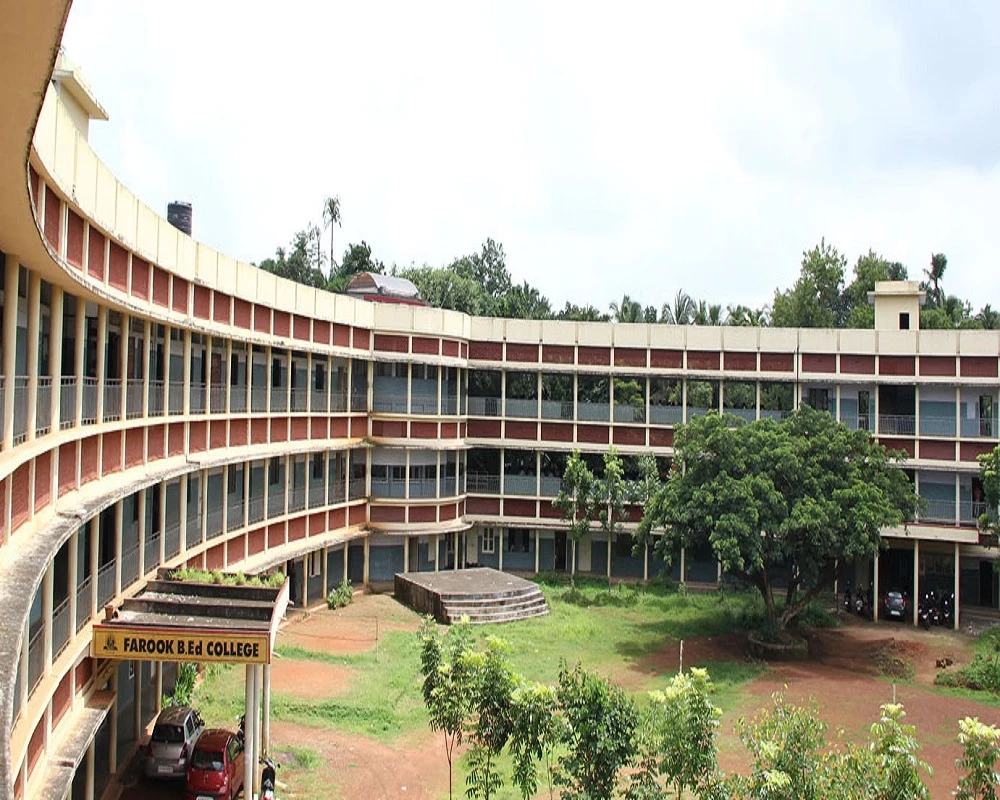
Kottakkal Farook Arts & Science College (KFASC) sits on a 12-acre green campus in Parappur, a quiet spot in Kerala's Malappuram district. Established in 2005, it’s a private, self-financing college affiliated with the University of Calicut, and it’s carved out a specific niche. It’s not the NIRF-ranked Farook College in Kozhikode—that’s a common point of confusion. What KFASC offers is a low-cost, accessible arts and science education with a recent NAAC 'A' grade accreditation. For students in the region looking for a decent degree from a recognized Calicut University college without the high fees of newer private universities, it’s a practical choice. But you have to be clear-eyed about what you’re getting: a campus for learning, not a launchpad for corporate careers. The placement numbers tell that story plainly.
The academic structure here is dictated by its parent university. KFASC has fully adopted the University of Calicut's Four-Year Undergraduate Programme (FYUGP) framework. That means the standard three-year BA, B.Com, B.Sc, and BBA degrees, with options for a fourth-year honours or research track. The course list is conventional but covers solid ground for a district-level college. B.Com splits into Finance, Computer Application, and the less common Travel & Tourism specialisation. B.A. offerings include English, Economics, Political Science, and Journalism & Mass Communication. On the science side, you have Physics, Mathematics, Botany, and Psychology.
With about 61 teaching staff, the faculty-to-student ratio is manageable. Student reviews consistently highlight the approachability and support of the professors—several hold PhDs, and there’s a sense they’re invested. The academic calendar runs from June to March, with internal exams each semester. Where the college tries to add practical value is through its tie-ups with the state's ASAP (Additional Skill Acquisition Programme) and KELTRON for skill development workshops. It’s not a radical industry-integrated curriculum, but it’s an effort. The library is a genuine asset, being fully automated and providing access to the N-LIST (INFLIBNET) database with thousands of e-journals and e-books.
This is where you need to separate the brochure from the ground report. The college’s Career Advising and Placement Cell (CAPC) exists and will quote a placement percentage around 75%. That number, however, broadly includes students who opt for higher studies like MBA or M.Com. The reality, as echoed across student reviews on platforms like Shiksha and CollegeDunia, is different. The actual rate for direct, on-campus job offers is estimated by alumni to be much lower, in the 15-20% range.
The roles that do come are primarily from local and regional employers. You’ll see names from the banking sector like ESAF and local cooperative banks, some small-scale IT/ITES firms from nearby tech parks like KINFRA, and companies in retail management, logistics, and education. Packages reflect this local market. The highest packages discussed by students are in the ₹3.5–4.5 LPA range for the luckiest few in service-sector roles. The working average, based on consistent feedback, sits between ₹2.2 and ₹2.8 LPA. Internships aren’t uniformly mandatory, leaving students to seek their own opportunities in the final year.
The verdict? Treat KFASC as a degree-granting institution, not a placement gateway. Most students here plan for competitive exams, government jobs, or further studies. The college provides a low-stress environment to prepare for those paths. If your primary goal is a high-paying corporate job straight out of undergrad, you’ll likely be disappointed and should look at colleges with stronger corporate recruitment records.
The fee structure is one of KFASC’s strongest selling points, especially compared to other private options in the region. It’s governed by University of Calicut self-financing regulations, which keeps it relatively affordable.
For a standard three-year UG course, total tuition fees range from about ₹60,480 for B.A. or B.Com (Finance) to ₹75,600 for B.Sc or B.Com (Computer Application). That breaks down to a per-semester tuition of ₹10,080 or ₹12,600 respectively. You need to add university affiliation, sports, and union fees at admission (around ₹2,000–₹5,000), plus exam fees each semester. Postgraduate courses are pricier, with an M.Sc in Physics totaling around ₹1,00,800 in tuition over two years.
A major cost factor is accommodation, as there is no on-campus hostel. Students rely on private hostels and PGs in Kottakkal town, which cost approximately ₹4,000–₹6,000 per month including food. This is a significant monthly outlay and a common point of student grievance.
Financial aid is available through standard state channels. Eligible SC/ST/OEC students can apply for the E-Grantz scholarship. Minority scholarships (MCM) and University of Calicut merit scholarships are also applicable. The college office can guide students through the application processes for these.
Admission for undergraduate programs is straightforward and centralized. There’s no separate entrance exam. All admissions flow through the University of Calicut Centralised Admission Process (CAP). Eligibility is based purely on your 10+2 marks from a recognized board.
The seats are split 50-50. Half are merit seats allotted by the university based on your CAP ranking. The other half are management seats, where you apply directly to the college office. Even for management seats, merit is a key factor—it’s not purely donation-based. There’s also an NRI quota under the management category.
Cutoffs vary by course popularity. For in-demand programs like B.Com (Finance), the merit cutoff is consistently high, often requiring 85-90% or more in your 12th grade. Less crowded courses have lower thresholds. The application window typically opens in May-June, right after the 12th-grade results are announced. You can find the official application link and details on the college website.
The 12-acre campus is frequently praised for its greenery and peaceful atmosphere, particularly the tree-lined walkways. It’s a self-contained space with the essentials. Infrastructure is functional: well-equipped labs for Physics, Botany, and Computers (with 110+ desktops), a modern gym and health wellness centre, and a large playground for football and cricket. The campus is partially powered by a 70 KV solar system, which is a nice eco-friendly touch. Wi-Fi is available, but mainly in specific zones like the library and labs.
Student life revolves around academics and campus-led activities. There’s a strong focus on traditional events like Arts Day and food festivals, and the NSS (National Service Scheme) is active. The canteen, ‘Cafe Munchies,’ is noted for being affordable. However, the social environment is often described as conservative, especially regarding gender interactions—some students on forums call it “regressive,” while others see it as typical for the region. It’s something to be aware of.
The biggest practical issue for outstation students is the lack of on-campus hostels. The college only maintains a list of approved private hostels for girls. Boys are entirely on their own to find rentals in town. This adds complexity, cost, and commute time to the daily routine.
Synthesizing feedback from CollegeDunia, Shiksha, and other forums paints a consistent picture. The positives are clear and repeated: great faculty. Students overwhelmingly say teachers are friendly, approachable, and supportive, which creates a positive learning environment. The green, peaceful campus and the excellent value for money (low fees) are the other two big wins.
But the negatives are just as consistent. The placement gap is the foremost complaint. “Don’t expect a job offer at the end” is a common sentiment. The absence of hostels is a major logistical and financial headache. Some feel the infrastructure, while adequate, is “average” compared to flashier new colleges. And the conservative social atmosphere is a point of friction for a segment of the student body.
The alumni network, through FOSA (Farook Old Students Association), is active locally. A verified trend is that a good number of graduates find work in the Middle East (UAE, Qatar) in accounting and management, often through personal networks rather than college placement.
It depends entirely on your goals and budget. Kottakkal Farook Arts & Science College is worth serious consideration if you are a cost-conscious student from the Malappuram/Kozhikode region seeking a reputable, NAAC 'A' grade degree from the University of Calicut. It’s ideal if your plan is to build a strong academic foundation and then pursue competitive exams (like for government jobs), an MBA, or other postgraduate studies. The low fees and supportive faculty make it a sensible platform for that path.
However, you should probably look elsewhere if your primary aim is robust campus placements into corporate roles, or if you require on-campus hostel facilities as an outstation student. The college’s recruitment record is modest, and managing private accommodation is an added burden. It’s also not the right fit if you’re seeking a highly progressive, metropolitan campus social life. Think of KFASC as a practical, no-frills academic institution that delivers solid value within its specific lane. It does that job decently well.
No, Kottakkal Farook Arts & Science College does not provide official on-campus hostel facilities. Students typically arrange accommodation in private hostels or paying guest (PG) accommodations available in the nearby area.
No, they are separate institutions. Kottakkal Farook Arts & Science College is a distinct self-financing college established in 2005. Farook College (Autonomous) in Kozhikode is the parent or sister institution.
The tuition fee for the B.Com program is approximately ₹10,080 per semester. The total tuition fee for the three-year course amounts to around ₹60,000, excluding additional university and examination fees.
Placement opportunities at the college are limited. While a placement cell exists, most students secure employment through off-campus recruitment drives or opt to pursue higher studies such as an MBA or M.Com.
To apply for a Management Quota seat, you must contact the college office directly with your 10+2 marksheet. These seats are typically filled on a first-come, first-served basis or according to a separate merit list determined by the college.
Share what future students should know about Kottakkal Farook Arts & Science College.
Student voices are not rewritten by colleges. We remove spam and abuse.
Wider admission question? Community PulseWhat should future students know?
Tell us which course you're considering. We'll help you work out the next step.
Get instant Partner access after mobile verification. Your public edits are reviewed before they go live.
Claim this college Computer Labs
 Science Labs
 Sports Complex
 Study Library