Loading Admission Guardian content
Loading Admission Guardian content

Selected ranking categories, with the recorded year beside each result. Open all records for the complete history.
3 published records · Lower numeric ranks are stronger
Outlook
MBA · private
#1202024
Find a program, read its fee details and explore the admission requirements.
Summary of the programs shown below. Fee periods can differ by program. Check the note beside each amount before comparing costs.
| Course | Stream | Fees |
|---|---|---|
| Bachelor of Technology [B.Tech] | Engineering | 55000 |
| Master of Business Administration [MBA] | Management | 59700 |
| Master of Business Administration [MBA] (Finance) | Management | 59700 |
| Bachelor of Technology [B.Tech] {Lateral} | Engineering |
Specializations
All accepted exams
Eligibility: 10+2 with 75% + UPTAC
Specializations
All accepted exams
Eligibility: Graduation
Specializations
All accepted exams
Eligibility: Graduation
Specializations
All accepted exams
Eligibility: Diploma in Engg.
3 exams with cutoff data available
 Panasonic India
 Reliance ADA Group
If you're looking at private engineering colleges in Lucknow with fees that don't break the bank, Lucknow Model Institute of Technology and Management (LMITM) will likely show up. Established in 2009 and affiliated with Dr. A.P.J. Abdul Kalam Technical University (AKTU), it's a straightforward option for students who clear the JEE Main or UPSEE cutoffs but might not have the rank for a top-tier government institute. The pitch is simple: a 10-acre campus, AICTE approval, and a claimed 85% placement rate. But talk to the students who've been there, and you'll hear a different story—one about spotty Wi-Fi, infrequent campus recruiters, and a social calendar that's mostly blank. This is the reality check for a mid-tier private college trying to find its footing.
LMITM's academic portfolio is standard for an AKTU-affiliated private institute. The B.Tech program is the main draw, with an annual intake of 210 students split across six branches. Mechanical Engineering gets the largest chunk at 60 seats, followed by Computer Science, IT, Civil, ECE, and Electrical, each with 30. The MBA program offers the usual specializations—Finance, HR, Marketing, International Business.
They follow the AKTU curriculum and calendar, which is neither an advantage nor a disadvantage. It's just the system. Where LMITM tries to add value is through its "Professional Development Groups"—clubs focused on exam prep for GATE, MBA entrances, and civil services. It's a pragmatic approach. If the campus placement scene is weak, which students say it is, then focusing on competitive exams is a logical student-led strategy. The faculty count is 53, though the brief doesn't specify how many hold PhDs. Reviews are mixed; some praise experienced teachers, others note high turnover with only a core group being permanent.
The infrastructure for academics gets decent marks. Labs for core engineering departments like Mechanical and Electrical are reportedly well-equipped. The library houses over 20,000 books and offers digital access through DELNET. It's functional. You can find the official course details on the LMITM website.
This is where the gap between brochure and ground truth is most apparent. The institute's official stance, as of early 2025, cites an 85%+ placement assistance rate, a highest package of ₹6.8 LPA, and an average between ₹3.2 and ₹4.5 LPA. They mention sectors like IT, government jobs, and core industries.
Now, listen to the students. The consistent feedback across reviews is far less rosy. The term "not much good" comes up a lot. The average package alumni reference is closer to ₹3.4 LPA. More critically, the recruiter profile is a major point of contention. Students report that campus visits are dominated by BPOs and that multi-national companies (MNCs) in the tech or core engineering space are rare. The sentiment is clear: you cannot depend on the college's placement cell. You'll need to hustle for off-campus opportunities or bank on those GATE/MBA prep clubs.
That's a crucial distinction. The college may provide "assistance," but the outcomes aren't competitive with even mid-level NITs or better-known private colleges. If your primary goal is a guaranteed on-campus job with a brand-name recruiter, LMITM likely isn't the place. It's more of a degree-granting institution where the onus for career launch is largely on you.
The fee structure is one of LMITM's more transparent and arguably stronger points. For a four-year B.Tech, total tuition ranges from ₹2.2 to ₹2.45 lakhs. That breaks down to about ₹55,000 for the first year. The MBA total cost is between ₹1.33 and ₹1.5 lakhs. Compared to many private engineering colleges, these are manageable numbers.
Where they do better than some peers is in scholarship options. They offer a range based on merit and need. Good scores in JEE Main, UPSEE rank, or your 10+2 PCM percentage can fetch you between ₹25,000 and ₹40,000 per year. There are also need-based scholarships for BPL/EWS categories, and specific ones for single girl children, sports achievers, and wards of defense personnel. It's a decent effort to improve accessibility.
Hostel and mess fees aren't explicitly detailed in the brief, but facilities exist. Reviews on food are generally positive—called nutritious, hygienic, and satisfactory, with a special Sunday meal. So, while the academic ROI is questionable, the outright cost of attendance isn't exorbitant.
Admissions run through the standard state and national channels. For B.Tech, they accept JEE Main, JEECUP, UPTAC, and UPSEE scores. The cutoffs aren't sky-high. For the 2024 cycle, the closing rank for B.Tech CSE (General AI) via JEE Main was 615,824, which corresponds to a percentile in the 85-92 range. Through UPSEE, ranks up to 50,000 might get a look. That tells you the cohort you'll be studying with.
For MBA, it's CUET PG, UPTAC, or national tests like CAT, MAT, XAT, and CMAT, with typical percentiles between 60 and 75. The process is merit-based, followed by counseling (like JEECUP or UPTAC) and document verification. Some programs might include a GD/PI. Application fees vary by exam, from ₹100 for JEE to ₹1,200 for UPSEE.
There's no mention of an NRI or management quota, which suggests admissions are largely centralized through these counseling bodies. Your path in is straightforward: get a decent rank in one of these exams and apply during the counseling rounds. You can track official cutoff trends on the UPTAC website.
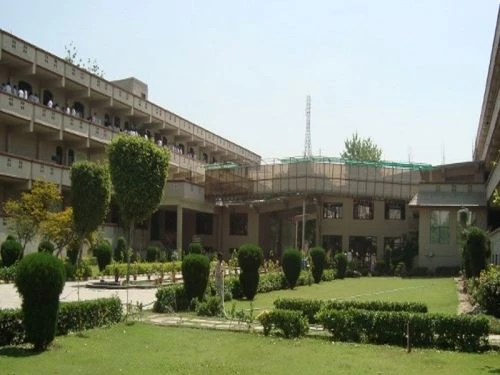
The 10-acre campus in Mohanlal Ganj is a mixed bag. On paper, it has the basics: digital classrooms, a library, labs, a canteen, medical facilities, and even guest rooms. The reality from student narratives is patchier.
Take the hostels. They're separate for boys and girls, but the quality isn't consistent. One review starkly noted the girls' hostel was "the worst as it was not fixed, but boys hostel was fixed." Rooms are non-AC but furnished with basics. The mess food, as mentioned, gets a thumbs up.
Then there's connectivity—both digital and geographic. Wi-Fi exists, but a student pointed out it's "available only near director's room." The location is 4 km from the Kanpur By Pass Road. It's not central. You'll need to travel to Mohanlalganj for things beyond the campus canteen.
Social and extracurricular life is the biggest casualty. Reviews are almost unanimous: fests and major events are rare, happening "once a year or not at all." Clubs beyond the academic prep groups seem absent. There's mention of a sports club (VAPS) and a "gaming playground," but another review flatly states "no separate sports ground." If you're looking for a vibrant, happening campus life, you'll be disappointed. The vibe is more functional and academic, leaning towards quiet.
Synthesizing the student sentiment paints a clear, two-toned picture. Let's start with the good. Faculty quality gets praised more often than not. Students mention good, experienced teachers who provide both theoretical and practical knowledge. The learning facilities and infrastructure, while sometimes "under construction," are generally considered well-maintained. The scholarship system is appreciated. And yes, the hostel food is good.
But the negatives are significant and recurring. The placement situation is the loudest complaint, with alumni advising prospective students not to rely on the college. The limited Wi-Fi coverage and criticism of the girls' hostel conditions are practical concerns. Faculty turnover is noted, with only a limited core being permanent. The lack of a social scene—no fests, rare events—makes campus life dull. The remote location doesn't help.
It's not a damning indictment of education quality, but rather a report card on everything around the education. You might get decent classroom instruction, but the support systems—placements, connectivity, student life—are where LMITM consistently falls short according to its own students.
LMITM occupies a specific, pragmatic niche. It's worth considering if your JEE/UPSEE rank is in the 50,000-600,000 range and you're determined to get an AKTU B.Tech or MBA degree without paying premium private college fees. The low tuition and available scholarships make it financially accessible. If you're a self-motivated student who views college primarily as a place to attend lectures, use a library, and prepare independently for GATE, CAT, or off-campus jobs, you can make it work. The decent faculty and functional labs are a baseline.
But you should probably look elsewhere if your priorities are strong campus placements with brand-name companies, a vibrant campus social life with frequent events, or seamless residential facilities. The student reviews are too consistent on these shortcomings to ignore. LMITM feels like a transactional choice: you pay a reasonable fee for a degree and basic academic resources, but you're largely on your own for career launch and campus experience. For some students, that trade-off is acceptable. For many, it won't be.
LMITM offers six B.Tech specializations: Mechanical (60 seats), Computer Science, IT, Civil, Electronics & Communication, and Electrical & Electronics (30 seats each). The total tuition fee for the B.Tech program ranges from INR 2.20 Lakh to 2.45 Lakh. For management, it offers a two-year MBA with specializations in Finance, HR, Marketing, and International Business, with total fees between INR 1.33 Lakh and 1.50 Lakh.
For B.Tech, LMITM accepts scores from JEE Main, JEECUP, UPTAC, and UPSEE. For the MBA program, admissions are through CUET PG, UPTAC, CAT, MAT, XAT, or CMAT scores. Selection is merit-based, followed by the respective counseling process (like UPTAC) and document verification.
Student reviews frequently contradict official claims. While the institute cites 85%+ placement assistance and an average package of INR 3.2 – 4.5 LPA, alumni report placements are "not much good," with opportunities largely limited to BPOs. Many note that multi-national companies rarely visit and advise against depending on the college's placement cell for a job.
The campus spans 10 acres with digital classrooms, well-equipped labs, and a library with over 20,000 books. Separate hostels for boys and girls are available, though student feedback on the girls' hostel has been negative. Rooms are furnished but non-AC. The mess food is generally praised as nutritious and hygienic. Wi-Fi coverage is reported to be limited.
Yes, LMITM provides several scholarship schemes. These are based on academic merit (UPSEE rank, 10+2 PCM percentage, JEE Main scores), financial need (BPL, EWS), and specific categories like being a single girl child, a sports achiever, or a ward of defense/paramilitary personnel. The scholarship amount typically ranges from INR 25,000 to INR 40,000 per year.
Share what future students should know about LMITM.
Student voices are not rewritten by colleges. We remove spam and abuse.
Wider admission question? Community PulseWhat should future students know?
Tell us which course you're considering. We'll help you work out the next step.
Get instant Partner access after mobile verification. Your public edits are reviewed before they go live.
Claim this college Auditorium
 Cafeteria
 Computer Labs
 Gym
Gym Hostel
 Medical
 Science Labs
 Sports Complex
 Study Library