Loading Admission Guardian content
Loading Admission Guardian content
Provisional score based on available data. It may change as more information is verified.
Selected ranking categories, with the recorded year beside each result. Open all records for the complete history.
6 published records · Lower numeric ranks are stronger
IIRF
Engineering · public
#682022
IIRF
B.Tech · public
#692022
Find a program, read its fee details and explore the admission requirements.
Summary of the programs shown below. Programs record different fee periods. Compare the individual amounts and their notes below.
| Course | Stream | Fees |
|---|---|---|
| Post Graduate Diploma | Engineering | 230000 |
| Bachelor of Engineering [BE] (Power Engineering) | Engineering | 500000 |
Specializations
Eligibility: B.Tech. / B.E
Specializations
All accepted exams
Eligibility: 10+2 with 75% + JEE Main
 ArcelorMittal
 Essel Mining & Industries Ltd. (EMIL) Aditya Birla
 Feedback Ventures
 ICRA
ICRA Lanco InfraTech
 LNJ Bhilwara Group
 Mytrah Energy India Ltd.
 SPML Infrastructure Ltd.
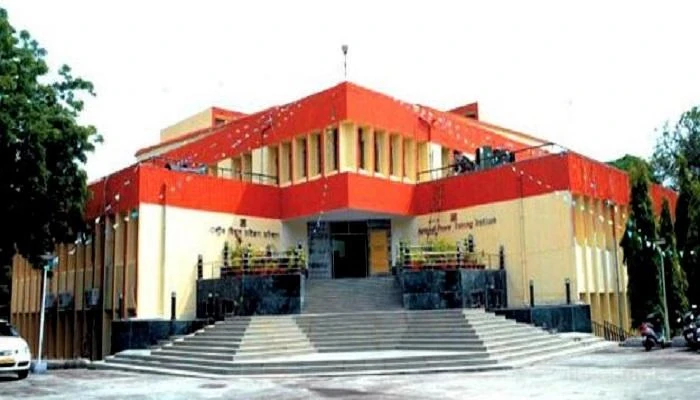
If you're looking at a career in India's power sector, the National Power Training Institute (NPTI) in Nagpur is a name that comes up with a specific kind of weight. It's not your typical engineering college. Established in 1975 under the Ministry of Power, this is a government-run training institute with a singular focus: creating operational and managerial talent for thermal plants, transmission networks, and distribution systems. That's its entire reason for being. The campus, a 17-acre plot in the heart of Nagpur, feels more like a professional training ground than a sprawling university. And that's exactly the point. The institute holds a Grade 'A' Category-I status from the Central Electricity Authority (CEA), which is the sector's top accreditation for training excellence. For a student dead-set on power engineering, this isn't just another option—it's a targeted pathway into the industry's core.
NPTI Nagpur's academic portfolio is lean, focused, and entirely built around the power sector. There's no computer science or mechanical engineering in the general sense here. The curriculum is designed to turn out engineers who understand a power plant's control room, a grid's stability, and the economics of the energy market.
The undergraduate offering is a single, focused B.E./B.Tech in Power Engineering, a four-year, AICTE-approved program. It's the foundation course, blending core engineering principles with specialized subjects like Thermal Power Plant Operations, Electrical Efficiency, and Power System Management. The institute's real strength, however, is often considered to be its suite of one-year Postgraduate Diploma (PGD) programs. These are intensive, career-launching courses for graduates. They include Power Plant Engineering, Energy Market Management, Renewable Energy & Grid Interface Technologies, Smart Grid Technologies, Power System Operation, and Transmission and Distribution Systems. The PGD in Power Plant Engineering is particularly well-regarded in the industry.
Academics here are intensely practical. The crown jewel of the infrastructure is a 210 MW simulator—a replica of a real power plant control room—where students get hands-on operational training. Labs are equipped for high-voltage testing, relay calibration, and renewable energy systems. The faculty, led by Director Mr. Shrikant P. Dharmadhikari and a team of deputy directors, are industry-seasoned professionals. You won't find a sprawling list of electives. The focus is depth, not breadth, in the power domain.
This is where NPTI's industry-centric model is supposed to pay off. The official claim is a placement rate of nearly 95%, which is a strong number. The recruiter list is a definitive who's who of the Indian power and heavy engineering space: NTPC, Tata Power, Reliance Power, Adani, JSW, BHEL, L&T Power, Siemens, Schneider Electric, POSOCO, and Thermax. Major consulting and IT firms like Deloitte, EY, PwC, Infosys, Wipro, and HCL also recruit for their energy verticals.
Package figures, however, require a careful look. The latest institute reports cite a highest package of INR 19.5 LPA and an average of INR 13 LPA. Older reports and student reviews paint a more modest picture. Reviews on platforms like Shiksha mention an average closer to ₹8.9 LPA, with older batches (like 2018) reporting averages around ₹4 LPA. A 2018 review even noted only about 40% of that batch was placed on-campus, a stark contrast to the official 95% claim. This gap between official reports and ground-level alumni feedback is notable.
The reality likely sits in the middle. Top performers in the PGD courses, especially with the simulator training, can command strong offers from core power companies, sometimes crossing the ₹15 LPA mark. The average for the broader B.Tech batch is probably in the ₹8-10 LPA range for on-campus roles. It's also important to know that NPTI does not run a formal internship program; students typically self-arrange summer training, often landing Graduate Engineer Trainee (GET) roles.
For a government institute with its niche, the fee structure is clear and relatively affordable compared to many private engineering colleges.
Hostel fees add to the cost. The most economical option is the New Boys Hostel (triple sharing) at ₹60,000 per year (including mess). Executive single rooms cost ₹90,000 annually. A rough total cost for the 4-year B.Tech, staying in the basic hostel, is approximately ₹7.4 lakhs.
The institute itself doesn't offer its own scholarships but acts as a coordinator for government schemes. Students can apply for central scholarships like the National Scholarship Portal (PM-USP) schemes or UGC postgraduate scholarships, which are based on merit and family income. The institute also mentions a fee waiver for economically disadvantaged meritorious students. Education loans are readily available from nationalized banks like the Bank of India, with the institute providing necessary documentation.
Admission routes differ for the undergraduate and postgraduate programs.
For the B.E./B.Tech in Power Engineering, it's through the state engineering entrance process. NPTI Nagpur accepts scores from MHT-CET and JEE Main. Admission is via the Maharashtra Centralized Admission Process (CAP) counselling. The latest known cutoff for JEE Main was around 50.65 percentile, and a minimum score of 100 in MHT-CET is required. It's not about sky-high ranks; it's about clearing the threshold for a specialized seat.
For the one-year Postgraduate Diploma programs, the process is more direct. Selection is primarily based on academic merit in the qualifying degree (like B.Tech in Electrical/Mechanical/Power). Some sources also indicate that NPTI's corporate office may conduct a nationwide online entrance exam followed by an interview. Applications are submitted online through the official NPTI website. Admissions for PGD courses for the 2025 cycle have commenced, so checking the site regularly for notifications is key.
Don't expect a typical, vibrant college campus with endless clubs and fests. NPTI Nagpur's 17-acre campus is functional and professional. The infrastructure is built around training: the labs, the simulator center, the library with technical journals, and the classrooms. It's clean, well-maintained, and serves its purpose.
Hostel accommodation is available and is categorized. You have the New Boys Hostel with triple-sharing rooms (₹60,000/yr all-in), PG Hostels with double rooms (₹75,000/yr), and an Executive Hostel with single occupancy (₹90,000/yr). All hostels have a common mess. The location in Gopal Nagar is a plus—it's in the city, with the airport about 8 km away and the main railway station roughly 7.5 km away. Daily commuting or weekend trips are manageable.
Student life is quieter. There are sports facilities and some student activities, but the culture is more studious and career-focused. This isn't the place for a heavy social calendar; it's for students who are serious about entering the power sector.
Scouring through alumni reviews on education portals and forums reveals a consistent, bifurcated opinion.
The positives are almost always about the niche training and industry connection. Alumni praise the 210 MW simulator, calling it an unparalleled learning tool that gives them a real edge in job interviews for plant operations. The faculty's industry experience is frequently highlighted as a major strength. Many note that the NPTI brand holds good recognition within the core power sector, opening doors that might be harder to knock on with a generic engineering degree.
The negatives often center on infrastructure beyond the labs and the placement experience. Some describe the hostels and general campus amenities as "basic" or "in need of upgrade." The most critical reviews, often from older batches, point to volatile placement statistics. While the official number is high, several alumni recount years where on-campus placement rates were significantly lower, forcing a large part of the batch to hunt for jobs independently. The lack of a structured internship program is also cited as a drawback.
The consensus? If you are self-motivated, utilize the superb technical training, and proactively network, NPTI can be a powerful launchpad. If you expect the institute to hand-hold you to a high-paying job with certainty, you might be disappointed.
NPTI Nagpur is a specialist institution, and its value depends entirely on your career goals. It is absolutely worth it for a specific type of student: the one who is certain about building a career in the core power sector—in thermal plant operations, transmission, distribution, or power system management. For that student, the focused curriculum, the legendary 210 MW simulator, the CEA Grade 'A' accreditation, and the direct pipeline to recruiters like NTPC, Tata Power, and Siemens are invaluable. The total cost of around ₹7.4 lakhs for the B.Tech is reasonable for the targeted outcome.
However, if you are unsure about specializing in power, or if your ambition lies in software, cutting-edge tech, or mainstream IT placements, look elsewhere. The campus life is subdued, the placement record has shown inconsistency, and the brand value is largely confined to the energy sector. NPTI is not a generic engineering college. It's a professional training institute for the power industry. Choose it for that purpose, and it can be an excellent choice. Choose it for anything else, and you'll likely find yourself at a disadvantage.
Placement packages at NPTI Nagpur vary. The institute's latest reports cite an average package of around INR 13 LPA, with the highest reported at INR 19.5 LPA. However, student reviews and older reports often mention a more modest average, typically in the range of INR 8-10 LPA for on-campus roles. The final package depends on the program (PG Diploma graduates often fare better), individual performance, and the recruiting company.
For the 2025-2026 academic year, the total tuition fee for the 4-year B.E./B.Tech in Power Engineering at NPTI Nagpur is ₹5,00,000. Adding hostel and mess charges (approx. ₹60,000 per year for basic triple-sharing accommodation), the estimated total cost for the complete degree is approximately ₹7.4 lakhs.
Admission to the B.Tech in Power Engineering at NPTI Nagpur is based on state-level engineering entrance exams. The institute accepts scores from MHT-CET and JEE Main. Candidates must participate in the Maharashtra Centralized Admission Process (CAP) counselling to secure a seat. The latest known JEE Main cutoff was around the 50.65 percentile.
Yes, NPTI Nagpur provides on-campus hostel accommodation. Options include the New Boys Hostel with triple-sharing rooms (₹60,000 per year including mess), PG Hostels with double rooms (₹75,000/year), and an Executive Hostel with single occupancy (₹90,000/year). All hostels have attached mess facilities.
Eligibility for the one-year Postgraduate Diploma (PGD) programs at NPTI Nagpur requires a relevant bachelor's degree (like B.Tech in Electrical, Mechanical, or Power Engineering). Selection is primarily based on academic merit in the qualifying degree. Some sources also indicate that NPTI may conduct a nationwide online entrance examination followed by an interview for final selection.
Share what future students should know about NPTI.
Student voices are not rewritten by colleges. We remove spam and abuse.
Wider admission question? Community PulseWhat should future students know?
Tell us which course you're considering. We'll help you work out the next step.
Get instant Partner access after mobile verification. Your public edits are reviewed before they go live.
Claim this college Auditorium
 Cafeteria
 Computer Labs
 Gym
Gym Hostel
 Medical
 Science Labs
 Sports Complex
 Study Library