Loading Admission Guardian content
Loading Admission Guardian content

Provisional score based on available data. It may change as more information is verified.
Find a program, read its fee details and explore the admission requirements.
Summary of the programs shown below. First-year fee. Check the note beside each amount for inclusions and exclusions.
| Course | Stream | Fees |
|---|---|---|
| Bachelor of Science [B.Sc] (Nursing) | Paramedical | 68000 |
| Master of Science [M.Sc] | Paramedical | |
| P.B.Bachelor of Science [B.Sc] (Nursing) | Paramedical |
Specializations
Eligibility: 10+2
Specializations
Eligibility: Graduation
Specializations
Eligibility: 10+2
1 exam with cutoff data available
If you're looking for a disciplined, clinically-focused nursing education in Karnataka's Hassan district, Smt. NDRK College of Nursing is a name that comes up consistently. Established in 1992 and affiliated with the Rajiv Gandhi University of Health Sciences (RGUHS), it's built a reputation for producing nurses who are ready for the ward on day one. That's largely thanks to its direct link to the on-campus NDRK Hospital. You won't find sprawling campuses or a vibrant party scene here. What you will find is a strict, structured environment where attendance is non-negotiable and clinical skills are paramount. For students who want a no-nonsense path into a nursing career—with a solid shot at jobs in Bangalore's major hospitals or even abroad—this college is a serious contender. Just know what you're signing up for.
The college offers the standard ladder of nursing qualifications, from diploma to postgraduate studies. The B.Sc Nursing program is the main draw, with an intake of 80-100 students per year. Eligibility is 10+2 with 45% in Physics, Chemistry, and Biology. For those already in the field, the Post Basic B.Sc (P.B.B.Sc) and the three-year GNM diploma provide upgrade paths.
The M.Sc Nursing program offers specializations in five key areas: Medical-Surgical, OBG, Community Health, Paediatric, and Psychiatric Nursing. With a total intake of around 60 across specializations, it's a decently sized PG operation for a regional college. The academic rhythm is dictated entirely by the RGUHS calendar, which means exams are predictable but the schedule is rigid.
Faculty strength sits around 35-40. The brief highlights a few senior professors like Dr. W. Indira (Paediatrics) and Mrs. Girija Siddu (Medical-Surgical), which suggests some depth in leadership. But the real academic story here is clinical exposure. Theory is one thing, but students get hands-on training at the parent NDRK Hospital and various government hospitals in Hassan, including the Hassan Institute of Medical Sciences (HIMS). That variety in clinical posting is a tangible strength.
Nursing placements don't work like engineering drives. There's no mass recruitment day with dozens of companies. It's more gradual, hospital-driven, and heavily dependent on the student's demonstrated skill during clinical rotations.
The college cites a placement percentage around 90%, which is plausible given the chronic demand for nurses. The average starting package for a fresher in an Indian private hospital is pegged at ₹2.4 to ₹3.6 LPA. That's a realistic, if modest, starting point for the region. The "highest package" of ₹6-8 LPA typically refers to international placements in the Gulf or UK, or experienced roles in metro city hospitals—these aren't the norm for fresh graduates straight off campus.
Top recruiters that regularly pick up graduates include major hospital chains like Apollo, Manipal, Fortis, and Narayana Health. There's also a pathway into local government hospitals through National Health Mission (NHM) contracts. The college facilitates interviews and connections, but student reviews consistently stress one point: your individual clinical performance is what ultimately lands you the job. The college opens the door, but you have to walk through it based on merit.
The fee structure has a massive split: Government Quota vs. Management Quota. For B.Sc Nursing, a government seat secured through KCET might cost ₹40,000-₹60,000 per year in tuition. A management quota seat, however, runs ₹1.25 to ₹1.75 lakhs per year just for tuition.
Add on-campus hostel and mess fees, which range from ₹60,000 to ₹85,000 annually, and the total 4-year cost for a management quota student can land between ₹6.5 to ₹8.5 lakhs. It's a significant investment. Financial aid primarily comes in the form of state government scholarships for SC/ST/OBC students, accessible through the Karnataka State Scholarship Portal (SSP). The college's official website should have the latest fee breakdowns.
For B.Sc Nursing, the primary gateway is the Karnataka Common Entrance Test (KCET). Government quota seats are allotted based on KCET rank through the Karnataka Examination Authority (KEA). The 2024 cutoff trend suggests ranks within 1,00,000 are generally needed to secure a seat. That's the affordable route.
Management quota admissions operate separately, based on 10+2 merit marks (PCB). The application window usually opens around May-June. There's also an NRI quota. For M.Sc Nursing, admission is typically based on your B.Sc marks and RGUHS guidelines, sometimes involving a PGCET score. The process isn't overly complex, but it's bureaucratic—following RGUHS and KEA timelines to the letter is crucial.
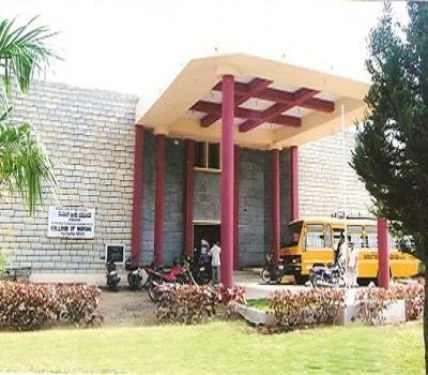
Located in the heart of Hassan city, the campus is compact and functional. Its proximity to the railway station (2-3 km) and bus stand is a practical advantage. Infrastructure is geared towards training: you'll find specialized labs for nutrition, anatomy, and maternal-child health (MCH), plus a computer lab and a library with over 4,000 titles.
The hostel experience defines student life. Separate facilities for boys and girls are on-campus, described as having a "homely atmosphere" with spacious rooms. The food gets points for hygiene and follows a buffet system, though it's predominantly South Indian cuisine. The flip side of this structured care is strict discipline. Curfew times are enforced, and outings for female students are particularly limited. This is not a campus known for its social vibrancy. Annual festivals and Nurses' Day celebrations are the main breaks in the routine. The college provides its own transport buses, which are less for joyrides and more for ferrying students to clinical postings and community health visits.
Scouring reviews from CollegeDunia, Shiksha, and forums gives you a clear, consistent picture. The teaching quality is highly rated, often around 4.5/5. Faculty are seen as supportive and knowledgeable, but also strict—especially about the mandatory 100% attendance for practical sessions.
The word "disciplined" appears repeatedly. For some, this structure provides a safe, focused environment to learn. For others, the strict hostel rules and limited social freedom feel oppressive. It's a trade-off you have to weigh.
On placements, the sentiment is pragmatic. Yes, the college has ties to good hospitals and most get jobs. But students emphasize that the fancy placement brochure numbers aren't handed to you. Your own competence during clinical postings is what gets you noticed by ward managers and recruiters. The college provides the platform and the rigorous training; you have to provide the skill and the hustle.
So, who is this college for? If you're a student from Karnataka, particularly the Malnad region, who wants a recognized, INC-approved nursing degree with strong clinical grounding, NDRK is a solid, known quantity. Its affiliation with RGUHS and direct hospital link are legitimate strengths. The placement record, while not about high-flying packages, shows a reliable pathway into the healthcare workforce. For a disciplined student focused purely on building a nursing career, the investment—especially if you secure a government seat—can pay off.
Who should look elsewhere? If you're seeking a vibrant, liberal campus life with lots of extracurriculars and social freedom, you'll likely find NDRK stifling. The environment is traditional and rules-heavy. Also, if your primary goal is a massive starting salary right out of college, nursing in general—and this college in particular—isn't that field. The rewards here are in job stability and the long-term career progression nursing offers, both in India and abroad. It's a practical choice for a practical profession.
Yes, Smt NDRK College of Nursing is officially recognized and approved by the Indian Nursing Council (INC) as well as the Karnataka Nursing Council.
For the B.Sc Nursing program under the management quota, the total fee package, which includes hostel charges, typically ranges from ₹7 Lakhs to ₹8 Lakhs for the entire 4-year duration.
Yes, the college has its own parent hospital, NDRK Hospital, which serves as the primary facility for clinical training and practical experience for its nursing students.
Admissions to the M.Sc Nursing program are generally based on the candidate's marks in their B.Sc Nursing and are conducted as per Rajiv Gandhi University of Health Sciences (RGUHS) guidelines. In some years, a PGCET rank may also be required.
The hostel provides hygienic food in a buffet system. Student feedback indicates the menu primarily features South Indian cuisine.
Share what future students should know about Smt NDRK College of Nursing.
Student voices are not rewritten by colleges. We remove spam and abuse.
Wider admission question? Community PulseWhat should future students know?
Tell us which course you're considering. We'll help you work out the next step.
Get instant Partner access after mobile verification. Your public edits are reviewed before they go live.
Claim this college Auditorium
 Cafeteria
 Computer Labs
 Medical
 Science Labs
 Sports Complex
 Study Library