Loading Admission Guardian content
Loading Admission Guardian content
Find a program, read its fee details and explore the admission requirements.
Summary of the programs shown below. Fee periods can differ by program. Check the note beside each amount before comparing costs.
| Course | Stream | Fees |
|---|---|---|
| Diploma in Engineering (Polytechnic) | Engineering | 15000 |
| Master of Business Administration [MBA] | Management | 45000 |
| Master of Technology [M.Tech] | Engineering | 57000 |
| Master of Technology [M.Tech] (Mining Engineering) | Engineering | 57000 |
| Bachelor of Technology [B.Tech] | Engineering | 65000 |
Specializations
All accepted exams
Eligibility: 10th + TS POLYCET
Specializations
All accepted exams
Eligibility: Pass in Graduation + TSICET
Specializations
All accepted exams
Eligibility: Graduation
Specializations
All accepted exams
Eligibility: Graduation
Specializations
All accepted exams
Eligibility: 10+2 with 45% + TS EAMCET
4 exams with cutoff data available - showing recent entries
 Accenture
 Aditya Birla Group
 Aliens Group
 Amazon
 Apollo Munich
 Citi Bank
 Cognizant
 Flipkart
 G4S India
 Genpact
 Google
 HCL Technologies
 HDFC Bank
 Just Dial
 Karvy Group
 Kotak Group
 Randstad India
 Reliance ADA Group
 Teleperformance
 Vodafone
 Wipro
WiproIf you're looking at engineering colleges in Telangana, particularly for a niche like Mining, AbdulKalam Institute of Technological Sciences (AKIT) in Kothagudem is a name that comes up. Established in 2007, this private college has built a specific reputation. It's not a top-tier NIRF contender, but it serves a clear purpose in an industrial region. Its permanent affiliation with Jawaharlal Nehru Technological University, Hyderabad (JNTUH) provides a standardized curriculum, and its location—smack in the middle of the Singareni coal belt—is its biggest strategic advantage for certain students. That's the core of AKIT: a practical, location-driven choice for a specific crowd.
AKIT runs a standard JNTUH syllabus across a decent spread of engineering disciplines. The total B.Tech intake is around 420 students per year, with standard seat counts of 60 for most branches like CSE, ECE, EEE, Civil, and Mechanical. They've also added newer programs in AI & ML and Data Science, each with 60 seats.
The academic story here has two parts. For most branches, it's a standard private college experience following the JNTUH calendar. You'll have mid-exams, internal marks, and the usual grind. The faculty count is reported between 124 and 187, with a mix of PhD holders, M.Tech graduates, and others pursuing higher degrees. Student reviews often mention that local faculty are approachable, which can be a plus for navigating internal assessments.
But the real differentiator is the Mining Engineering program. With an intake of 30-60 seats, it's a standout offering in the private college landscape of Telangana. The college's location is the curriculum here. Proximity to SCCL (Singareni Collieries) and other industrial units like KTPS (Kothagudem Thermal Power Station) isn't just a line in the brochure—it directly facilitates site visits, guest lectures from industry professionals, and crucially, internships. For a student serious about a career in mining, this practical access is a significant asset that colleges in Hyderabad simply can't match.
This is where you need to read between the lines of the official brochure. The placement cell is active and brings in companies. The headline number is impressive: a 17.6 LPA offer for an EEE student at Alliant Group in the 2024-25 cycle. That's a genuine high point.
But the typical student experience is different. The average package quoted is between ₹3.5 to ₹4.5 LPA. That's a realistic starting point for many regional engineering graduates. The gap between the official "placement percentage" claim of around 70% and the 30-40% figure cited in student reviews for on-campus core placements is notable. It suggests that while opportunities exist, a large number of students secure jobs through off-campus drives or by leveraging their own networks.
Top recruiters include the usual IT service giants: TCS, Wipro, Capgemini, Infosys, and HCL. For core branches, companies like Aparna Enterprises and government-sector units like TSNPDCL have recruited. The connection with SCCL also leads to placement opportunities for mining graduates. For MBA students, the path is less defined, with the college relying on the broader pool of recruiters visiting for engineering.
The takeaway? A high package is possible with a standout student profile. The median outcome is a modest IT or core sector job in the ₹4 LPA range. And for Mining students, the localized industry network is a tangible placement advantage.
The fee structure at AKIT is straightforward and sits in the mid-range for private engineering colleges in the state. For the 2024-25 academic year:
That puts the total cost for a four-year B.Tech degree, including hostel, at around ₹4.2 lakhs. It's not the cheapest, but it's far from the most expensive.
Financial aid primarily comes through the Telangana state government's Fee Reimbursement (RTF) scheme. Eligible SC, ST, BC, and EBC students can apply through the Telangana epass portal. This is a critical factor for many students choosing AKIT, as it can significantly reduce the out-of-pocket expense. Some marketing mentions "free hostel" for specific scholarship holders, but the standard rule is the ~₹40k annual fee.
Admissions are a mix of state entrance exams and management quota. For 70% of the B.Tech seats (Convener Quota), you need a valid rank in TS EAMCET. JEE Main scores are also accepted but are less commonly used here. The remaining 30% of seats are filled under the Management Quota.
The cutoffs tell you about demand. For the 2024 TS EAMCET Round 1, the closing ranks were well into the six-figure range, indicating it's an accessible option for many students. Mining had the "highest" demand with a cutoff rank of 77,201, which aligns with its niche appeal. CSE and ECE cutoffs were around the 108,000 mark, while newer branches like AI&ML had a cutoff near 150,149.
For other programs:
The process is centralized through the state counseling authorities. If your EAMCET rank is between 80,000 and 150,000, AKIT is a likely candidate on your option sheet.
Spread over 10.38 acres, the campus has the essentials. The infrastructure is functional, not flashy. The central library is consistently praised as a strength, housing over 32,130 books and digital resources. It's a serious academic resource.
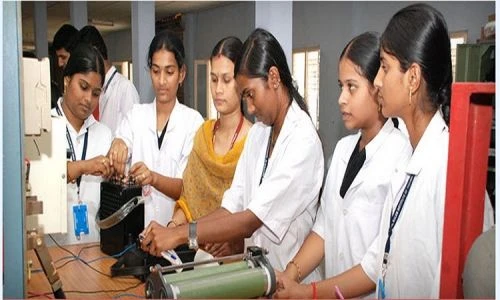
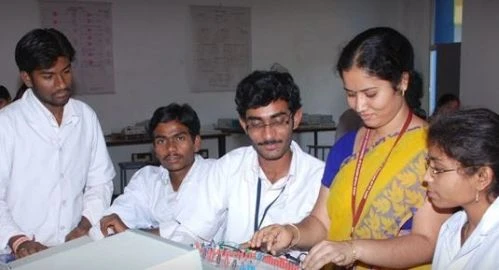
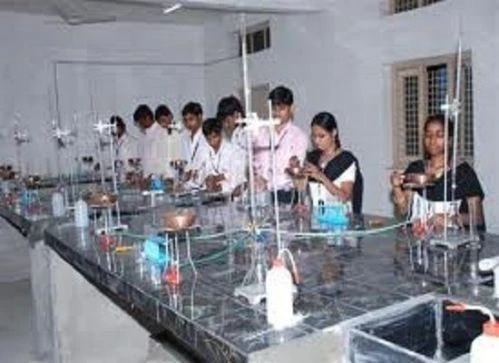
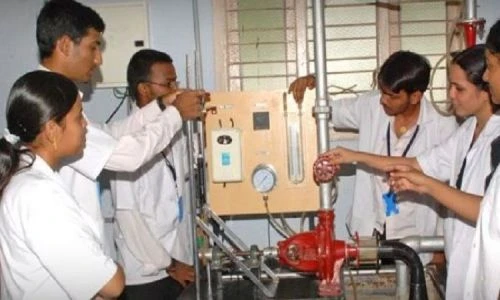
Labs are adequate, with specialized setups for mining (surveying, geology) and mechanical engineering. Computer labs have over 400 systems. Wi-Fi is present but, like many colleges, students report it can be spotty, especially in hostel rooms.
Now, the hostels. They're a mixed bag. Separate blocks for boys and girls house 300+ students. Rooms are typically shared (4 per room). The most common complaint across student reviews isn't the sharing—it's the maintenance. Older wings are described as worn out. And then there's the mess food. "Average" is a generous term from the reviews; "lack of variety" and poor quality are frequent grievances. The college runs buses from Kothagudem and Palwancha, which is necessary given the somewhat remote location.
Social life revolves around the annual fests—"INVENTUM" for technical events and the cultural annual day. It's a typical, somewhat insular campus life. Rules are reportedly strict: 75% attendance is enforced, and college gates are locked by 9:30 AM.
Talking to alumni and reading reviews online paints a consistent picture. The positives are specific. The library gets a gold star. The mining program's industry link is repeatedly called a "great choice." Faculty are seen as accessible, which helps in managing the day-to-day academic pressure.
But the negatives are just as consistent. The hostel food situation is a major pain point. Infrastructure maintenance, particularly in living quarters, is a letdown. And there's a clear-eyed view of placements: the 17.6 LPA story is celebrated but understood as an outlier. The consensus is that for CSE or ECE, you're largely on your own to crack off-campus opportunities. The college provides a platform, but the drive has to come from you.
One paraphrased student comment sums up the duality: "The library is a treasure house, but the canteen is often empty of actual food." Another gets strategic: "If you are in Mining, this is a great choice because of SCCL nearby. For CSE, you need to work on your own for big placements."
AKIT isn't for everyone. It's a very clear-cut proposition. If you are a student with a TS EAMCET rank between 80,000 and 150,000 who is specifically interested in Mining Engineering, this college is arguably one of the best private options in Telangana. The SCCL proximity is a real, curriculum-enhancing advantage that translates into internships and job prospects. For that niche, it's worth strong consideration.
For students in CSE, ECE, or other mainstream branches, it becomes a cost-benefit analysis. The fees are reasonable, especially with fee reimbursement. You'll get a JNTUH degree and a campus environment. But you must be self-motivated. The placement average is modest, and the infrastructure is just okay. You'd be choosing it for affordability and a degree, not for a transformative campus experience or guaranteed high-flying placements. If your goal is a stable, budget-conscious engineering education in the Telangana region with the understanding that you'll need to hustle for top jobs, AKIT fits. If you're seeking a vibrant, top-tier college life with robust placement hand-holding, you should probably look elsewhere.
In this preview: 5 photos · 0 videos
The annual tuition fee for the B.Tech program at AKITS Khammam is approximately ₹65,000 to ₹68,000.
In the 2024-25 placement cycle, the highest recorded package at AbdulKalam Institute of Technological Sciences was 17.6 Lakhs Per Annum (LPA).
Yes, AKITS is considered one of the preferred private colleges for Mining Engineering in Telangana, largely due to its proximity to the Singareni coal belt.
Yes, AbdulKalam Institute of Technological Sciences is permanently affiliated with JNTU Hyderabad.
While some marketing materials mention "Free Hostel" for specific scholarship students, the standard hostel fee for general students is approximately ₹40,000 per year.
Share what future students should know about AKIT.
Student voices are not rewritten by colleges. We remove spam and abuse.
Wider admission question? Community PulseWhat should future students know?
Tell us which course you're considering. We'll help you work out the next step.
Get instant Partner access after mobile verification. Your public edits are reviewed before they go live.
Claim this college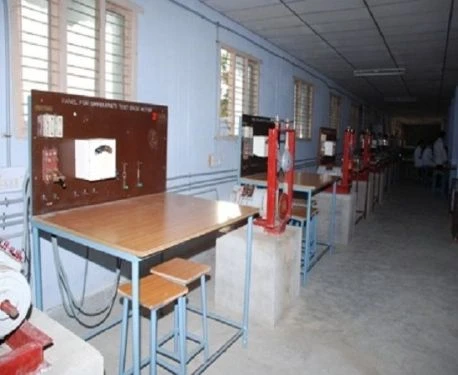
 Auditorium
 Cafeteria
 Campus Security
 Campus Shuttle
 Campus Wi-Fi
 Computer Labs
 Gym
Gym Hostel
 Medical
 Science Labs
 Smart Classrooms
 Sports Complex
 Study Library