Loading Admission Guardian content
Loading Admission Guardian content

Provisional score based on available data. It may change as more information is verified.
Find a program, read its fee details and explore the admission requirements.
Summary of the programs shown below. First-year fee. Check the note beside each amount for inclusions and exclusions.
| Course | Stream | Fees |
|---|---|---|
| Diploma in Engineering (Polytechnic) | Engineering | 25000 |
| Master of Technology [M.Tech] | Engineering | 28000 |
| Master of Business Administration [MBA] | Management | 45000 |
| Bachelor of Technology [B.Tech] | Engineering | 50000 |
Specializations
Eligibility: Pass in 10th + TS POLYCET
Specializations
All accepted exams
Eligibility: Graduation with 50%
Specializations
All accepted exams
Eligibility: Graduation with 50%
Specializations
All accepted exams
Eligibility: 10+2 with 45% + TS EAMCET
3 exams with cutoff data available - showing recent entries
 Accenture
 Google
 Hindustan Copper Limited (HCL)
 IBM
IBM Infosys
 Mahindra Satyam
 Microsoft
 S&P Capital IQ
 Tata Consulting Engineers Ltd.
 Wipro
WiproGanapathy Engineering College (GEC) in Warangal is a private institution that's been around since 2005, offering a straightforward, budget-conscious path to a JNTUH-affiliated engineering degree. With a 15-acre campus and a total of 672 seats across its programs, it's a mid-sized player in the Telangana technical education scene. The college is AICTE-approved but doesn't have an NAAC grade or NBA accreditation, which is a notable gap for a nearly 20-year-old institution. Its biggest selling point is affordability—total tuition for a B.Tech can be as low as ₹2 lakhs—and a campus life that students generally describe as friendly and peaceful. But the story gets more complicated when you talk about outcomes. Placement figures from students are all over the map, ranging from claims of 98% to sobering reports of single-digit percentages for top-tier jobs. That disconnect between cost and career launchpad is what you need to weigh carefully.
GEC offers the standard suite of engineering programs under the JNTUH curriculum. That means your syllabus, exams, and degree certificate are the same as you'd get from hundreds of other affiliated colleges across Telangana. The academic structure is conventional, not revolutionary.
The undergraduate B.Tech programs are the main draw, with Computer Science and Engineering (CSE) and Electronics and Communication Engineering (ECE) typically being the most sought-after. You've also got Electrical (EEE), Mechanical, Civil, and a newer offering in Cyber Security. Total intake across all B.Tech streams is part of the overall 672 seats. For postgraduates, there are M.Tech specializations in Computer Science, Structural Engineering, and Electrical Power Engineering. The MBA program is surprisingly large, with an intake of 180 seats, suggesting the management sees it as a growth area.
They mention a focus on activities beyond academics and list national and international collaborations, but the details are sparse. With 82 faculty members, the student-teacher ratio isn't terrible for a college of this size. Reviews consistently call the faculty "friendly" and "knowledgeable," which is a positive sign for day-to-day learning. But the lack of data on PhD holders among faculty is another one of those transparency gaps. You're getting a decent, no-frills JNTUH education here. It's not going to be academically elite, but for many students, that's enough.
This is the section where you have to read between the lines. The college's official website doesn't trumpet a specific placement percentage, which is often a tell. The data comes almost entirely from student reviews, and it paints a wildly inconsistent picture.
Let's start with the numbers students throw around. The highest packages mentioned are between 10 to 16 Lakhs Per Annum (LPA). Those are outlier offers, likely for a top coder in CSE. The average package cited repeatedly is in the ₹3 to ₹3.5 LPA range, with some saying it's ₹2-3 LPA for freshers. That's modest, even for the region.
The placement percentage claims are where things get chaotic. You'll see reviews stating "almost 85%," "75-80%," or "over 60%." Then, in the same breath, other students counter with "2% in reputed companies," "10%," or "placements are less." The most likely reality? A significant portion of the class gets some form of offer, but the quality and desirability of those roles vary massively. Many are likely from mass recruiters at the lower end of the salary band. The college's placement cell "tries hard," according to students, but the opportunities aren't considered "very good," leading many to look for jobs on their own.
The recruiter list includes familiar IT services names: Infosys, Wipro, IBM, Tech Mahindra, Accenture. They also list Google and Adobe, which almost certainly refer to a very small number of off-campus or contest-based hires, not structured campus recruitment drives. Cyient and Tata Consulting Engineers Ltd. are more plausible regular visitors.
Internships show a similar split. Some reviews claim 70-75% of students get them, while others flatly state, "College does not provide internships, students have to look on their own." The truth probably lies in the middle—some support is there, but proactive self-effort is non-negotiable.
So, what's the verdict? Don't come here expecting a guaranteed ticket to a high-flying tech job. The placement support is basic. If you're a self-motivated student, particularly in CSE, you can leverage the low fees and decent faculty to prepare for off-campus opportunities. But the college itself isn't a powerful brand that opens doors.
This is where GEC makes its most compelling argument. The fees are undeniably low for a private engineering college.
For the 2024-25 academic year, the total tuition fee for the entire four-year B.Tech program is just ₹2 lakhs. The first-year fee is around ₹53,000, which includes tuition (₹50,000), admission (₹2,000), and other charges (₹1,000). You'll need to add semester exam fees, a JNTU infrastructure fee (₹1,500), and potentially hostel costs on top of that. But even then, the total cost of attendance is a fraction of what many private colleges charge. B.Tech Lateral entry total tuition is ₹1.5 lakhs. Postgraduate courses are even cheaper: M.Tech total tuition is ₹56,000, and MBA is ₹92,000 for the whole program.
To its credit, the college has a structured scholarship program to further reduce the burden. They offer a merit-based scholarship with up to a 100% tuition fee waiver for top rankers in entrance exams. There are also sports scholarships, social category relief for SC/ST/OBC students as per govt norms, and means scholarships for those from low-income families. They specifically mention government fee reimbursement schemes (like Epass), where a student might get ₹35,000 reimbursed on a ₹40,000 fee. They also give awards for high scorers in semester exams. It's a genuine effort to keep education accessible.
Admissions follow the standard Telangana state process. For B.Tech, the primary gateway is the TS EAMCET entrance exam. The college also accepts JEE Main and BITSAT scores, but the bulk of the seats are filled through the state counseling based on TS EAMCET ranks.
The cutoff data is vague. Snippets indicate that for the 2024 round, students with ranks less than 70,000 were selected. That's not a particularly high bar, which aligns with the college's positioning. Eligibility requires passing 10+2 with at least 45% marks.
For other programs:
Management quota seats are available, offering a direct admission route outside the counseling process, typically at a higher fee.
It's crucial to track the official counseling calendars. For example, TS EAMCET exams are usually in May, with counseling over the summer. You can find the official schedules and apply via the Telangana State Council of Higher Education (TSCHE) website.
The 15-acre campus in Rangasaipet is described by students as "eco-friendly and peaceful." It's not a sprawling metropolis of a campus, but it has the essentials.
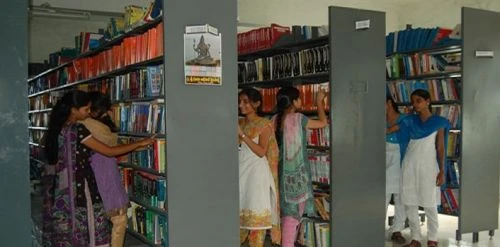
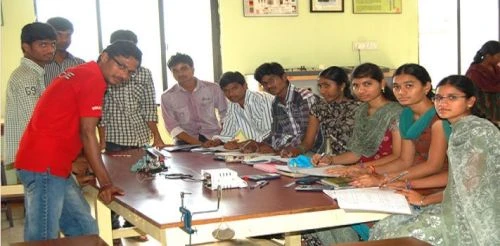
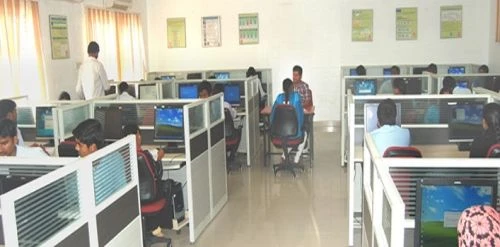
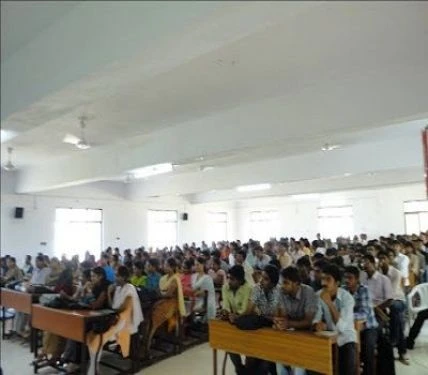
Academic infrastructure gets decent marks. Labs are called "well-equipped" and "state-of-the-art" (though treat such phrases with caution), classrooms are modern and well-ventilated, and the library is well-stocked with digital access. High-speed Wi-Fi is available across campus, which is a basic necessity these days.
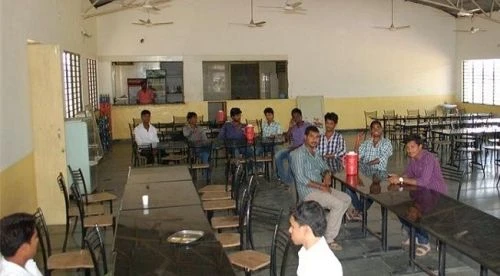
Hostels are separate for boys and girls, with both AC and non-AC options. Reviews on quality are mixed—some say they're "good" with basic amenities, while others point out "occasional maintenance issues." The canteen food is generally rated as "good" and hygienic.
Where GEC seems to punch above its weight is in sports and activities. They list a long roster of available sports: cricket, football, basketball, volleyball, kabaddi, chess, table tennis, badminton, and even yoga. They celebrate festivals, host events and national seminars, creating what students call a "lively" atmosphere and "good campus life." For a student looking for a balanced, engaging college experience beyond just academics, this is a significant plus.
Other amenities include an on-campus medical facility (a sick room/hospital) and college bus transport. They have a fleet of 10 buses, with transport charges around ₹3,000, and even offer pick and drop from the railway station.
Synthesizing the reviews from platforms like CollegeDunia and Shiksha gives you a clear, balanced picture.
The positives are heartfelt and consistent: Friendly, helpful, and knowledgeable faculty top the list. The infrastructure and facilities—classrooms, labs, library, Wi-Fi—are repeatedly called "good." Students enjoy the campus life, describing it as having a good atmosphere with plenty of sports and activities. The peaceful, green campus and the availability of scholarships are also frequently praised.
But the negatives are focused and serious. Placements are the biggest concern. The consensus is that opportunities are "less compared to other colleges," the placement cell struggles, and students often have to find jobs on their own. Internship support is weak or non-existent, according to many. While infrastructure is generally liked, some point out it's "not so good" in parts, and there are calls for better canteen food and fixes for occasional hostel maintenance issues. A few mention administrative hiccups, like technical issues during certificate submission.
The takeaway? Students seem to like being there. They feel supported by teachers and enjoy their daily life on campus. The disappointment surfaces when they look toward the finish line and the job market, feeling the college's brand and placement network don't give them a strong enough boost.
Ganapathy Engineering College is a classic case of "you get what you pay for." It's a value-for-money proposition, not a premium one.
It's worth serious consideration if: Your budget is tight, and you need the most affordable route to a valid JNTUH B.Tech degree. You're a self-driven learner, particularly in Computer Science, who plans to rely on online resources, coding platforms, and your own network to land internships and jobs. You value a friendly, supportive teaching environment and an active campus life with good sports facilities over a cut-throat, high-pressure academic brand.
You should probably look elsewhere if: Your primary goal is to be recruited by top tech companies through on-campus placements. You want the security of a college with a strong, verifiable placement record (like an NBA-accredited institution or a top-tier private college). You need hand-holding for internships and career guidance. The absence of an NAAC grade or national ranking is a red flag for you.
In short, GEC is a functional, affordable launchpad. It won't limit a truly exceptional student, but it won't elevate an average one either. Your success will depend far more on your personal effort than on the college's reputation. For many families in the region, that trade-off—low cost for a decent degree—makes perfect sense.

In this preview: 5 photos · 0 videos
To get into the B.Tech program, you need to have passed your 10+2 (or equivalent) with at least 45% marks. The main requirement is a valid rank in the TS EAMCET entrance exam. Admission is done through the state counseling process based on your EAMCET rank. They also accept JEE Main and BITSAT scores, but most seats are filled via the state exam.
The fees are very affordable. For the 2024-2025 academic year, the total tuition fee for the entire four-year B.Tech program is ₹2 lakhs, which works out to about ₹50,000 per year. The first-year payment is around ₹53,000. For the two-year M.Tech program, the total tuition fee is just ₹56,000 for the entire duration. Remember, these are tuition fees; you'll need to add semester exam fees, hostel charges, and other minor costs.
Placement outcomes vary a lot. Based on student reviews, the highest reported packages range from 10 to 16 LPA, but these are exceptional cases. The average package most students talk about is between 3 to 3.5 Lakhs Per Annum (LPA). Placement percentages are inconsistent in reviews—some claim 75-85%, while others say opportunities are limited, and many find jobs off-campus. Major IT recruiters like Infosys, Wipro, IBM, and Tech Mahindra visit the campus.
The 15-acre campus provides the essential facilities: well-equipped labs for each department, a library with digital resources, and high-speed Wi-Fi. There are separate hostels for boys and girls (AC and non-AC), a canteen serving hygienic food, and an on-campus medical facility. For sports and activities, they have grounds and courts for cricket, football, basketball, volleyball, and many indoor games. College bus transport is also available.
Yes, the college offers several scholarship options to reduce the financial burden. These include a merit-based scholarship (up to 100% tuition fee waiver for top entrance exam rankers), sports scholarships, and fee relief for SC/ST/OBC students as per government norms. They also have means-based scholarships for economically disadvantaged students. Most students also avail of government fee reimbursement schemes like Telangana Epass.
Share what future students should know about GEC.
Student voices are not rewritten by colleges. We remove spam and abuse.
Wider admission question? Community PulseWhat should future students know?
Tell us which course you're considering. We'll help you work out the next step.
Get instant Partner access after mobile verification. Your public edits are reviewed before they go live.
Claim this college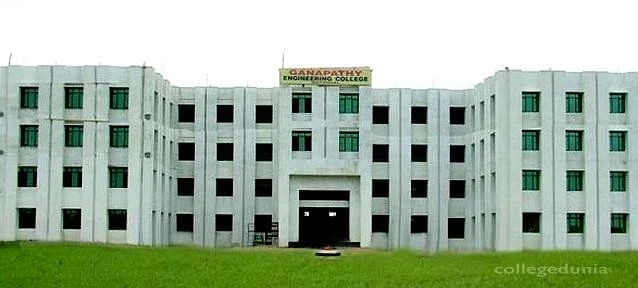
 Auditorium
 Cafeteria
 Campus Security
 Computer Labs
 Hostel
 Medical
 Science Labs
 Sports Complex
 Study Library