Loading Admission Guardian content
Loading Admission Guardian content

Provisional score based on available data. It may change as more information is verified.
Find a program, read its fee details and explore the admission requirements.
Summary of the programs shown below. First-year fee. Check the note beside each amount for inclusions and exclusions.
| Course | Stream | Fees |
|---|---|---|
| Bachelor of Technology [B.Tech] | Engineering | 120000 |
| Master of Technology [M.Tech] | Engineering | |
| Master in Management Studies [MMS] | Management | |
| Master of Business Administration [MBA] | Management |
Specializations
All accepted exams
Eligibility: 10+2
Specializations
All accepted exams
Eligibility: Graduation
Eligibility: Graduation
Specializations
Eligibility: Graduation
4 exams with cutoff data available - showing recent entries
 Accenture
 Cognizant
 Infosys
 Kirloskar Group of Companies
 TCS
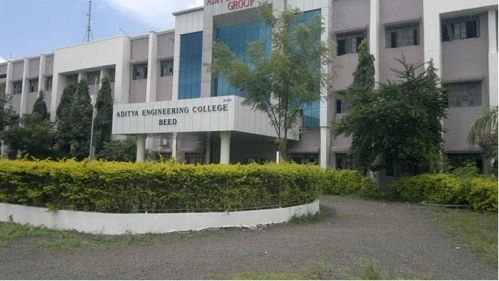
TCSAditya Engineering College in Beed, Maharashtra, is a study in regional pragmatism. Established in 2001, this private institution serves as a primary, budget-conscious engineering option for students in the Marathwada region. Don't confuse it with its larger namesake in Andhra Pradesh; this campus is a distinct, modestly-sized college focused on providing accessible technical education. Its story is one of affordability and local service, with placement outcomes and campus life that reflect its location away from major metropolitan hubs. For a student from Beed or a nearby district, it's a viable local path. For someone dreaming of high-profile tech careers from day one, the isolation and limited corporate interaction are significant trade-offs.
The academic portfolio is standard for a regional engineering college, with a clear tilt towards computer-related fields. Undergraduate B.E./B.Tech programs include Computer Science & Engineering (60-120 seats), Information Technology (60), and newer specializations like Artificial Intelligence & Machine Learning (60) and Data Science (30-60). Core branches—Civil, Mechanical, Electrical, and Electronics & Telecommunication—each have 60 seats. There's also a B.Tech in Food Technology. At the postgraduate level, M.Tech programs in Software Engineering, CAD/CAM, and Electronics have small intakes of 18 seats each. An MBA program rounds out the offerings.
Academically, the college follows the affiliating university's CGPA system. The faculty, with a student-to-faculty ratio around 1:15 to 1:20, is frequently cited in reviews as a strong point—described as supportive and accessible, which is a decent advantage for a college at this fee level. Industry tie-ups exist on paper through MoUs with local industrial units, but the practical, high-impact collaboration that defines top-tier colleges isn't a prominent feature here. The academic culture is reported to be traditional, with a firm emphasis on maintaining the required 75% attendance.
This is where expectations need the most careful calibration. The official placement claim sits between 70-80%. However, a synthesis of student reviews paints a different, more granular picture. The working number alumni and current students cite is closer to 25-40% for on-campus placements, and that success is heavily concentrated in the CSE, IT, and AI/ML branches. For core branches like Civil or Mechanical, on-campus placement rates can drop to a stark 5-10%. Most core students find jobs through off-campus efforts after graduation.
The package figures tell a similar story. The highest package for the 2024-25 batch was a verified ₹12 LPA, but that's an outlier. A more typical "high" for CSE is around ₹6 LPA. The average package ranges from ₹3.2 to ₹3.8 LPA, with a median around ₹3.5 LPA. Top recruiters are primarily IT service giants: TCS, Infosys, Wipro, and Capgemini. Core sector recruitment comes from companies like Tata Motors, Bajaj Auto, and Mahindra & Mahindra. The gap between the official brochure and student-reported reality is notable, but the ₹3.5 LPA average is a logical outcome for a regional college with these fee structures. Internship drives on campus are limited, pushing students to seek opportunities in Aurangabad or Pune independently.
Affordability is arguably AEC Beed's most compelling feature. The annual tuition fee for B.Tech programs ranges from ₹1,07,000 to ₹1,20,000, depending on the branch and student category. Add in other mandatory fees of about ₹12,000, and the annual academic cost is remarkably low. Hostel and mess fees are highly subsidized, ranging from ₹23,000 to ₹32,000 per year. That brings the total estimated cost for a four-year B.Tech to between ₹4.8 and ₹5.5 lakhs—a fraction of the cost at urban private colleges.
Financial aid is largely channeled through government schemes. Scholarships from the Government of Maharashtra for EBC, SC, ST, OBC, and VJNT categories are strictly implemented. The college also participates in the Tuition Fee Waiver Scheme (TFWS), offering full tuition waivers to top-rankers in the admission process. There's little mention of extensive private merit scholarships, which aligns with the college's role as a provider of low-cost, accessible education.
Admissions for the majority of seats are controlled by the Maharashtra state centralized process. The primary entrance exam is MHT-CET, with JEE Main scores also accepted. Cutoffs, expressed in percentiles, reflect the demand hierarchy among branches. For the 2024 session, the Computer Science and Engineering cutoff for the General category hovered between the 55-65 percentile in MHT-CET. Information Technology was slightly lower at 50-55. For core branches like Civil and Mechanical, cutoffs can be as low as the 10-30 percentile, and seats in these programs often remain vacant after the final CAP rounds.
The application window typically runs from June to August, following the DTE Maharashtra schedule. Alongside the CAP rounds, the college manages an Institutional Quota (often called Management Quota) for about 20% of seats. Admission through this quota requires a direct application to the college and is contingent on having a valid MHT-CET or JEE Main score, though the cutoff may be more flexible.
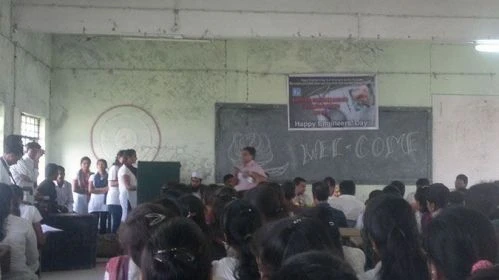
The 39.4-acre campus is noted for its greenery and peaceful, natural surroundings—a frequent positive in student feedback. Infrastructure is functional. Labs are reported as well-equipped for CSE and Mechanical, while Civil labs are considered average. The library houses over 3,000 books with digital journal access. Wi-Fi is available but confined to specific zones like the library and labs, with speeds described as moderate.
Hostel life has a unique demographic: there's capacity for 900 girls versus 120 boys, a distinctive feature of this campus. Rooms are basic but spacious. The quality of hostel food, however, is a consistent pain point in reviews, often rated 2 or 3 out of 5. Sports facilities include a large playground for cricket and football, plus courts for basketball and volleyball. The overall vibe is one of a disciplined, campus-centric life, largely due to the college's location away from a major city. Social life revolves around campus events and the quiet of Beed town.
Scouring platforms like CollegeDunia and Shiksha reveals a consistent consensus. The positives are clear: affordability, supportive faculty, and a green, peaceful campus. Many students from middle-class families in the region see it as the best local option, a place where teachers might even help with fee payment delays.
But the negatives are equally persistent. A strict disciplinary environment tops the list, with a reported ban on mobile phone usage during college hours being a major gripe. The placement gap—between hopes and the reality of mostly IT service roles at modest packages—is a source of frustration. Location is a double-edged sword; it ensures low costs but also a sense of isolation from the internship and networking opportunities in Pune or Mumbai. The hostel mess food rarely gets a positive mention.
As one paraphrased review puts it: "If you are from a middle-class family in Beed, this is the best local option, but don't expect Google to come for placements." Another notes the management's strict adherence to rules, contrasting it with the perceived "freedom" of Pune colleges. The sentiment isn't one of disillusionment, but of pragmatic acceptance of the college's regional, value-for-money proposition.
The answer depends entirely on your context and expectations. For a student from the Marathwada region, particularly from Beed or adjacent districts, with a limited budget and a family preference to stay local, AEC Beed is a sensible, financially accessible choice. Its strongest value proposition is for those targeting CSE, IT, or AI/ML, as these branches see the only meaningful on-campus placement activity. The low fee structure means the ROI on a ₹3.5 LPA package is actually reasonable.
However, if you have the financial means or academic scores to consider colleges in Pune, Mumbai, or even larger cities in Maharashtra, you should probably look elsewhere. The isolation from industry hubs, the modest placement scope, and the restrictive campus environment are significant limitations for someone seeking a dynamic, career-launching engineering education. This college is a practical solution for a specific, geographically-defined student group. It's not a hidden gem for aspirants from across the country. You can find more official details on the college website.
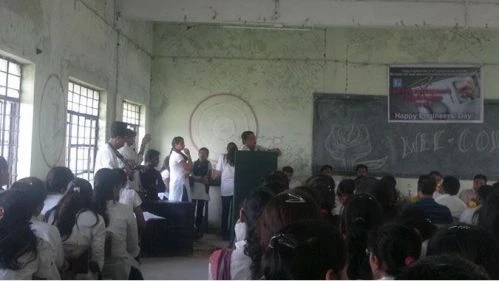
In this preview: 3 photos · 0 videos
Yes, the CSE branch is considered the best-equipped in the college and reportedly has the highest placement record, with approximately 40% of students securing jobs, making it a top choice for local students.
They are entirely different institutions. Aditya Engineering College in Beed is a regional private college, while Aditya College in Kakinada is a large autonomous university located in Andhra Pradesh.
According to recent student reviews, the college enforces a strict policy that prohibits the use of mobile phones in classrooms and corridors.
The annual hostel fee for girls is approximately ₹23,000 to ₹30,000, which typically includes mess charges.
Yes, direct admission is possible through the college's 20% Management or Institutional quota, provided the applicant has a valid MHT-CET or JEE Main score.
Share what future students should know about AEC.
Student voices are not rewritten by colleges. We remove spam and abuse.
Wider admission question? Community PulseWhat should future students know?
Tell us which course you're considering. We'll help you work out the next step.
Get instant Partner access after mobile verification. Your public edits are reviewed before they go live.
Claim this college
 Auditorium
 Cafeteria
 Computer Labs
 Gym
Gym Hostel
 Medical
 Science Labs
 Sports Complex
 Study Library