Loading Admission Guardian content
Loading Admission Guardian content

Provisional score based on available data. It may change as more information is verified.
Find a program, read its fee details and explore the admission requirements.
Summary of the programs shown below. First-year fee. Check the note beside each amount for inclusions and exclusions.
| Course | Stream | Fees |
|---|---|---|
| Bachelor of Arts [BA] | Arts | 6190 |
| Bachelor of Commerce [B.Com] | Commerce | 7190 |
| Bachelor of Science [B.Sc] | Science | 7190 |
| Master of Arts [MA] | Arts | 9190 |
| Bachelor of Education [B.Ed] | Education |
Specializations
Eligibility: 10+2
Specializations
Eligibility: 10+2
Specializations
Eligibility: 10+2
Specializations
Eligibility: Graduation
Specializations
Eligibility: Graduation with 55% + UP Bed JEE
Akhilabhagya Mahavidyalya is a government college in Gorakhpur that makes a simple promise: affordable higher education. With total program fees for a three-year BA degree under ₹20,000, it's a starkly economical option in a landscape of soaring private college costs. Established in 2005 and affiliated with Deen Dayal Upadhyay Gorakhpur University, the college serves over 2,100 students across arts, science, commerce, and education streams. But that affordability comes with clear trade-offs. Student reviews consistently point to a non-existent placement cell and a location described as remote. If you're looking for a low-cost degree from a UGC-recognized institution and are prepared to forge your own career path, Akhilabhagya Mahavidyalya is a functional choice. If campus recruitment and a bustling college brand are priorities, you'll likely need to look elsewhere.
The college offers a standard suite of 30 undergraduate and postgraduate programs, typical of many state-affiliated arts and science colleges. With a total enrollment of 2,191 students, the academic environment is likely focused on traditional classroom teaching rather than innovative pedagogy.
The BA program is the most diverse, with specializations spanning from Ancient History and Political Science to Home Science and Psychology. The B.Sc program sticks to core sciences—Botany, Chemistry, Mathematics, Physics, and Zoology. For postgraduates, MA options are available in Ancient History, Hindi, Political Science, and Sociology, while the M.Com is a general program.
The B.Ed program, with an intake of 100, is a notable offering. It requires qualification through the UP B.Ed JEE entrance exam, which adds a layer of selectivity not present in the purely merit-based admissions for other courses. The faculty strength of 56 includes PhD holders like Dr. Akhilesh Singh (Sociology) and Dr. Krishnanand Pathak (History). That's a decent ratio for a college of this size, suggesting students aren't just taught by temporary adjuncts.
What's clearly missing are industry tie-ups, MoUs, or any mention of an updated academic calendar or grading system on the official channels. The academic approach appears straightforward: cover the university syllabus, prepare for exams. You won't find cutting-edge labs or corporate seminars here, but for students seeking a no-frills path to a recognized degree, it serves the purpose.
This is where the college's profile faces its most significant challenge. There is no official data—none—on highest, average, or median packages. No list of top recruiters. No placement percentage. The research brief is blank on these metrics, and that silence is telling.
Student sentiment fills the void, and the message is consistent: the college does not have a functional placement cell. Reviews indicate that securing a job is considered the student's own responsibility, to be pursued off-campus. The management, according to these accounts, does not facilitate campus recruitment drives.
This creates a critical gap for prospective students. You are paying for an education, but the institution does not act as a bridge to employment. For programs like B.Com or B.Sc, where graduates often seek immediate entry into the job market, this is a major drawback. The B.Ed program has a clearer outcome—preparation for teaching roles—but even there, assistance with school recruitment isn't mentioned.
The verdict here is unambiguous. If your primary goal is to earn a degree at the lowest possible cost and you are confident in your ability to network and find a job independently, this limitation may be acceptable. If you expect any institutional support in launching your career, Akhilabhagya Mahavidyalya will almost certainly disappoint. Consider it a DIY degree in the truest sense.
The college's strongest selling point is its affordability. The fee structure, based on data from the 2021-2022 academic year (sometimes cited online for 2025/2026), is remarkably low for higher education in 2025.
A full three-year BA degree costs about ₹19,070 total, with a first-year fee of roughly ₹6,190. B.Sc and B.Com are slightly higher at ₹22,070 for three years, with first-year fees around ₹7,190. Two-year postgraduate degrees are in a similar range: MA totals ₹18,680 and M.Com about ₹17,332. These figures likely cover basic tuition; separate hostel, mess, and other mandatory fees (exam, library) would be additional, though specific numbers aren't published.
To put this in perspective, one semester at many private colleges can cost more than an entire degree here. It's a compelling argument for students from economically constrained backgrounds in the Gorakhpur region.
The college also administers several named scholarships, like the Shrimati Gulabi Devi Samriti Scholarship and the Shri Kalapnath Rai Samriti Scholarship. These are likely need or merit-based awards for enrolled students, though the exact eligibility criteria and award amounts aren't detailed on the public-facing website, abmahavidyalaya.org. Interested students would need to contact the administration directly for specifics.
Admission at Akhilabhagya Mahavidyalya is primarily merit-based. For most UG programs (BA, B.Sc, B.Com), eligibility hinges on your 10+2 marks. B.Sc requires a Science stream background with at least 50% aggregate, while B.Com needs Commerce subjects with the same 50% threshold. BA requires a 10+2 pass from a recognized board.
The B.Ed program is the exception, as it requires a separate entrance exam. Candidates need a Bachelor's degree with 50% aggregate and must qualify through the UP B.Ed JEE (Joint Entrance Examination).
The application process is old-school. For the 2025 cycle, forms for B.Com, BA, and MA were available from March 19 to August 05. You can download the form from the college website or collect it in person. A prescribed application fee is required, though the amount isn't specified online.
There's no available data on cutoff ranks or percentiles. In a merit-based system at a college like this, cutoffs are fluid and depend entirely on the applicant pool for that year. Your best bet is to apply as early as possible when the window opens. Details on NRI or management quotas aren't mentioned, which aligns with its government college status.
Spread over 5 acres in Ranapar, the campus provides the essential infrastructure. There are 16 classrooms, an auditorium for events, and a playground. The library, at 1800 sq. ft. with over 5,700 books and seating for 50, is a decent resource for a college of this size. For practical work, there are six departmental labs.
On the tech side, a computer center with 25 systems and Wi-Fi is noted as "excellent IT Infrastructure"—a claim that should be taken to mean functional for basic academic needs, not high-speed research computing.
Hostel life is a quiet affair. The college offers separate hostels, but capacity is very limited: 14 seats for boys and 10 for girls. One review rated the hostel a 3.0 out of 5, describing it as "comfortable." With such small numbers, it's clearly meant for a handful of students from outlying areas, not as a primary housing option. A cafeteria, medical facility, and student transport are also listed as available.
Student life is organized through councils. The Sports Council arranges competitions in football, cricket, kabaddi, and other games. The NSS (National Service Scheme) unit conducts social outreach like blood donation camps. The B.Ed Council handles cultural activities. Don't expect a vibrant, metropolitan campus culture with endless clubs and fests. The social scene is likely low-key and community-oriented, reflecting the college's location and student body.
Synthesizing available feedback paints a picture of a college that meets basic expectations but falls short on ambition. The positives are pragmatic: students generally approve of the physical infrastructure—the labs, library, and hostels are considered adequate. The faculty gets nods for being experienced and helpful, which is often the most important factor for learning.
But the negatives are significant and recurring. The most frequent complaint is the total absence of a placement cell, forcing students to be entirely self-reliant in their job search. This isn't just a minor gap; it's a fundamental part of the modern college experience that's missing.
Another common thread is the college's perceived lack of reputation and its remote location. It's not a name that opens doors on its own. The alumni network is described as weak or non-existent, which compounds the placement problem. There's a sense that once you graduate, the institution's role in your life is effectively over.
No major complaints surface about management behavior or teaching quality, which suggests the day-to-day academic experience is stable and fair. The overall sentiment isn't one of anger, but of resigned acceptance. It's a place to get a cheap, valid degree. Anything beyond that—career launchpad, transformative network, brand value—you'll have to build yourself.
Akhilabhagya Mahavidyalya is a classic example of a hyper-local, access-oriented government college. Its value proposition is singular and powerful: extreme affordability. For students in and around Gorakhpur for whom even a modest private college fee is prohibitive, this institution provides a legitimate pathway to a UGC-recognized undergraduate or postgraduate degree. The faculty is qualified, the infrastructure covers the basics, and the B.Ed program offers a regulated route into teaching.
However, its limitations are severe and non-negotiable. The complete lack of placement support means you are buying an education, not a career starter kit. The remote location and limited hostel capacity make it primarily a commuter college. There's no brand cachet to leverage later.
So, who is it for? It's for the highly self-motivated, financially constrained student who views the degree as a mandatory checkbox for government exams, further studies (like a competitive MA or M.Com elsewhere), or local employment they can secure through family and personal networks. It's a practical, no-expectations choice.
Who should look elsewhere? Any student prioritizing campus placements, a strong alumni network, a vibrant residential life, or a college name that carries weight in the corporate job market. If you have the means to explore other options, even within the state university system, you will likely find institutions with more robust student support systems. Akhilabhagya Mahavidyalya does one thing very well—keeping costs low. Everything else is up to you.
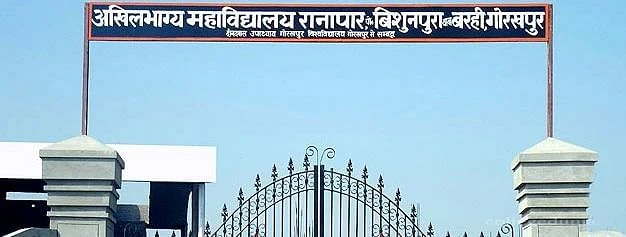
In this preview: 1 photo · 0 videos
The college offers standard undergraduate and postgraduate programs. The three-year undergraduate courses include Bachelor of Arts (BA), Bachelor of Science (B.Sc), and Bachelor of Commerce (B.Com). The two-year programs are Bachelor of Education (B.Ed), Master of Arts (MA), and Master of Commerce (M.Com).
Admission is primarily merit-based on your 10+2 or graduation marks. For the B.Ed program, a Bachelor's degree with 50% aggregate and qualification in the UP B.Ed JEE entrance exam is mandatory. Application forms are typically available from March to August; they can be downloaded from the college website or collected in person, and a prescribed fee must be paid.
Yes, the college has separate hostels for boys and girls, but the capacity is very limited. The Boys' Hostel can accommodate 14 students, and the Girls' Hostel has space for 10 students. Accommodation is described as comfortable in reviews.
Based on consistent student feedback, the college does not have an active placement cell or organized campus recruitment drives. Students report having to secure their own job opportunities off-campus. No official placement statistics for packages or recruiters are available.
The college is notable for its low fees. For a full three-year program, the approximate total fee is ₹19,070 for BA, and ₹22,070 each for B.Sc and B.Com. First-year fees are around ₹6,190 for BA and ₹7,190 for B.Sc and B.Com. These figures are based on the latest available data.
Share what future students should know about Akhilabhagya Mahavidyalya.
Student voices are not rewritten by colleges. We remove spam and abuse.
Wider admission question? Community PulseWhat should future students know?
Tell us which course you're considering. We'll help you work out the next step.
Get instant Partner access after mobile verification. Your public edits are reviewed before they go live.
Claim this college
 Auditorium
 Cafeteria
 Computer Labs
 Gym
Gym Hostel
 Medical
 Science Labs
 Sports Complex
 Study Library