Loading Admission Guardian content
Loading Admission Guardian content
Provisional score based on available data. It may change as more information is verified.
Find a program, read its fee details and explore the admission requirements.
Summary of the programs shown below. First-year fee. Check the note beside each amount for inclusions and exclusions.
| Course | Stream | Fees |
|---|---|---|
| Bachelor of Engineering [BE] | Engineering | 68770 |
| Master of Technology [M.Tech] (Instrumentation and Control Engineering) | Engineering | 68770 |
| Bachelor of Engineering [BE] {Lateral} | Engineering |
Specializations
Eligibility: 10+2 with 75% + JEE Main
Specializations
All accepted exams
Eligibility: Pass in Graduation + GATE
Specializations
Eligibility: 10+3 with 75% + JEE Main
 A2Z Group
 Areva - TD
 Aspiring Minds
 I-Flex
 IGATE
IGATE Impetus Infotech India Pvt. Ltd.
 Indian air force-IAF
 Indian Navy
 Infosys
 Polaris
 Punj Lloyd
 S&P Capital IQ
 Sapient
 Schindler Ltd.
 Wipro VLSI
Apeejay College of Engineering (ACES) doesn't really exist anymore, at least not as you might remember it. The institution, founded back in 1997, was absorbed into Apeejay Stya University (ASU) in 2010 and is now the School of Engineering & Technology (SET). That's the first thing you need to know. It’s a private university on a 29-acre green campus in Sohna, Haryana—about 30 km from Gurugram's metro hubs. The transition from a standalone college to a university school brings both flexibility and some lingering identity questions. Its NAAC 'A' grade accreditation is a solid mark of institutional quality, valid through 2028. But the real story here is about trade-offs: a peaceful, almost isolated campus versus the buzz of city life, and a unique liberal arts engineering curriculum against placement packages that alumni say require a heavy dose of reality-checking.
The School of Engineering & Technology pitches itself differently. It’s not a pure tech grind. They follow a liberal arts model, which means a B.Tech student can take electives in photography, philosophy, or management from other schools within the university. That’s a genuine draw for some. The B.Tech in CSE offers trendy specializations like AI & Data Science and Cloud Computing, the latter through a collaboration with Oracle. There’s also a B.Tech in Biotechnology, which gets consistent praise for its strength, likely bolstered by the Apeejay Group's own pharmaceutical interests. They offer BCA as well, plus M.Tech and Ph.D. programs.
The faculty pool within SET is relatively small, around 25-30 core engineering professors, but they are part of the larger Apeejay group network. A high percentage of the senior faculty hold PhDs. The smaller batch sizes mean you’re more likely to have direct access to professors, a point students frequently highlight as a positive compared to the anonymity of massive engineering colleges.
This is where you need to read carefully. The university's official communications might highlight a highest package of ₹52 LPA. That number is real for the 2024/2025 cycle, but treat it as an extreme outlier—likely an off-campus or international offer. The official average package claim sits between ₹7-10 LPA.
But talk to students and alumni, and the consensus median is very different. On platforms like Shiksha and CollegeDunia, the working number for an average CSE graduate is consistently reported between ₹3.5 to ₹5 LPA. That’s a significant gap. The placement percentage fluctuates between 70-85%, with CSE naturally faring best. Recruiters are a mix of IT service giants and some notable names: Oracle (thanks to the collaboration), Infosys, HCL, Wipro, TCS, Accenture, and companies like Siemens and Deloitte. For Biotech, pharma recruiters like Sun Pharma and Biocon show up. Mandatory internships are a plus, with students landing stints at places like BSNL and Honda.
The verdict? The placement cell is active, but the outcomes are modest. Don’t bank on the headline-grabbing numbers. Consider the ₹4-5 LPA range as a more probable outcome for planning purposes.
Let’s add it up. The annual tuition for a B.Tech program will set you back about ₹2.6 to ₹2.85 lakhs. Over four years, that’s a tuition total of ₹10.4 to ₹11.5 lakhs. Then you have to factor in living costs.
Hostel fees are substantial. A non-AC triple seater costs ₹94,500 annually, while an AC double seater goes up to ₹1,65,000. There’s also a one-time, refundable security deposit of ₹10,000. When you combine tuition and hostel, the annual outlay easily crosses ₹3.5-4.5 lakhs. Many student reviews directly call the total cost "overpriced" for the return on investment.
There are scholarships to offset this. The Foundation Years Scholarship can offer up to ₹2.4 lakhs per annum for meritorious students. More impactful is the Early Bird Discount, which promises significant waivers (up to ₹3.2 lakhs total) for the first 500 applicants. If you’re serious, applying early isn’t just advice—it’s a financial strategy.
Getting in offers multiple pathways. The university accepts scores from JEE Main or CUET (UG). If you haven't taken those, you can sit for their own entrance test, the ASU-CAT. The basic eligibility is 10+2 with Physics and Mathematics and a minimum of 50% aggregate.
The selection isn’t just about the test score. It’s a combination of merit in the entrance exam followed by a Personal Interview (PI). The application fee is ₹1,100. They don’t publish rigid, public cutoffs like state universities; the process is more holistic, weighing your entrance score and interview performance. It’s less about clearing a single high bar and more about your overall profile.
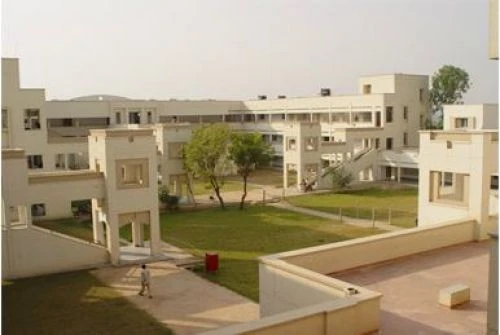
The campus is its own world. Described as "lush green" and "peaceful," it’s a stark contrast to the congestion of Gurugram or Delhi. That’s the upside. The downside is isolation. It’s located on the Sohna-Palwal highway, and social life outside the gates is minimal. You’re dependent on university shuttles to the Millennium City Centre metro (about 25-30 km away) or other points.
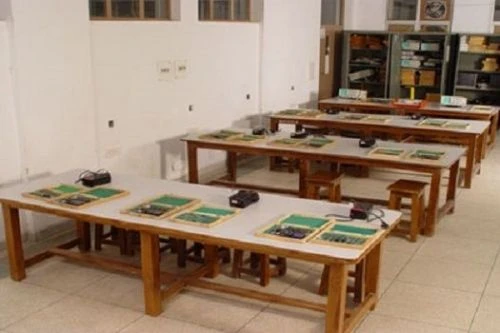
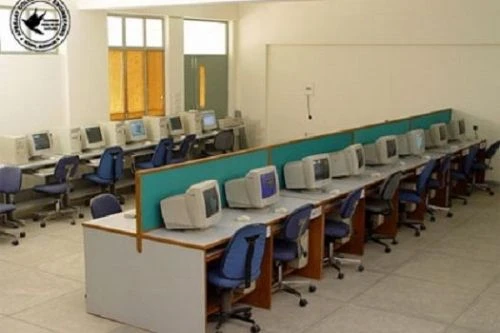
Infrastructure is decent. There are specialized labs, including an Oracle Lab and an iOS Lab. The library provides digital access, and the campus is Wi-Fi enabled. Sports facilities include a cricket ground, football field, and even a mini-golf course. The hostels (Tagore for boys, Sarojini Naidu for girls) are generally rated well (around 3.8/5) for safety and amenities, though food quality in the mess is a common gripe over time. A 24/7 medical room with a visiting doctor provides basic care.
Life here is quiet. If you’re looking for a vibrant, integrated city experience with easy access to cafes and events, you’ll be disappointed. If you want a distraction-free environment to focus on studies and campus activities, it fits the bill.
Synthesizing the chatter from Reddit, Quora, and education review sites gives a balanced, human picture.
The praise consistently highlights three things: the liberal arts flexibility (students love the diverse electives), the serene, green campus environment, and the accessibility of faculty due to smaller class sizes. Biotechnology students, in particular, feel their program has an edge due to the university's pharma connections.
The criticisms are just as consistent. The remote location is the biggest complaint—"in the middle of nowhere." There’s significant frustration with the disparity between marketed placement packages (₹52 LPA) and the ground reality (₹4-5 LPA). Strict 75% attendance rules are enforced, with students reportedly barred from exams for falling short. And overarching it all is the feeling that the total cost is high for the tangible outcomes.
One paraphrased student quote sums up the dichotomy well: "If you want a peaceful place to study and are self-motivated for coding, it's good. If you want a 'party' college life, stay away." Others note bureaucratic slowness and repetitive mess food as ongoing minor irritants.
So, who is this for? Apeejay Stya University's SET is a reasonable choice for a specific type of student. If you value a quiet, residential campus where you can focus, appreciate the idea of a liberal arts education mixed with engineering, and are proactive enough to leverage the Oracle ties and faculty access for your own skill-building, it can work. The Biotech program, backed by the group's pharma arm, stands out as a genuinely good option in the region.
But you should probably look elsewhere if your primary drivers are high placement packages, an exciting urban social life, or a degree from a highly ranked institution (it was in the 500-600 band in the NIRF 2024 University rankings). The financial investment is significant, and the median career launch outcomes are modest. It’s not a brand that will open doors on its own; you’ll have to build your own profile. Ultimately, it’s a trade-off between a unique, peaceful academic environment and the raw ROI metrics that dominate most engineering decisions. Choose based on which side of that trade-off matters more to you.
In this preview: 5 photos · 0 videos
It is considered a good option for students seeking personalized attention and a curriculum that incorporates a mix of liberal arts. However, the return on investment (ROI) is noted to be average when compared to top-tier engineering colleges in the National Capital Region (NCR).
The realistic average placement package for a Computer Science and Engineering (CSE) graduate is typically between ₹4 Lakhs Per Annum (LPA) and ₹5.5 LPA.
Yes, degrees are valid as Apeejay Stya University (ASU) is recognized by the University Grants Commission (UGC). This makes its degrees eligible for all national and international competitive exams like GATE, UPSC, and other government job applications.
The hostel facilities are safe and well-equipped. However, the location is somewhat isolated, making it better suited for students who prefer a quiet and focused academic environment over a bustling city campus.
Yes, the college provides dedicated bus transport with routes connecting the Sohna campus to various parts of Delhi, as well as to Gurugram and Faridabad.
Share what future students should know about ACES.
Student voices are not rewritten by colleges. We remove spam and abuse.
Wider admission question? Community PulseWhat should future students know?
Tell us which course you're considering. We'll help you work out the next step.
Get instant Partner access after mobile verification. Your public edits are reviewed before they go live.
Claim this college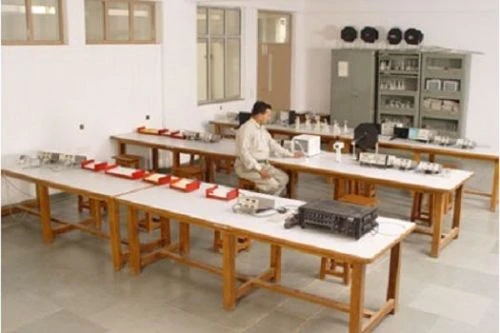
 Auditorium
 Cafeteria
 Computer Labs
 Gym
Gym Hostel
 Medical
 Science Labs
 Sports Complex
 Study Library