Loading Admission Guardian content
Loading Admission Guardian content

Find a program, read its fee details and explore the admission requirements.
Summary of the programs shown below. Fee amounts are not listed. Contact the college for its current fee schedule.
| Course | Stream | Fees |
|---|---|---|
| Post Graduate Diploma | Science |
Specializations
Eligibility: Graduation
 Share Point Frontier
 Unit Trust Of India
If you're looking for a traditional college campus with sprawling lawns and annual fests, Apeejay Svran Institute for Bioscience and Clinical Research (AIBCR) isn't it. But if you want a direct, industry-focused pipeline into India's booming clinical research and biotech sectors, this compact Gurgaon institute is a serious contender. Operating as the specialized research arm of Apeejay Stya University (ASU), AIBCR trades campus life for corporate adjacency, placing students within a short commute of major hospitals, CROs, and pharma giants. Its one-year PG Diploma programs, in particular, have a reputation for getting graduates job-ready fast, backed by tangible industry collaborations. That's the trade-off. You get a focused, professional environment in Sector 32, but you'll need to find your social life elsewhere.
AIBCR's academic model is bifurcated, and understanding this is key. Its heart lies in its intensive, one-year Postgraduate Diploma (PGD) programs designed explicitly for industry absorption. These aren't typical university degrees; they're skill accelerators. The PGD in Clinical Research & Molecular Diagnostics and the PGD in Bioinformatics are the star attractions, built around Good Clinical Practice (GCP) and computational biology, respectively.
For full degree programs—like the B.Tech in Biotechnology or M.Sc. in Clinical Research—you're technically enrolled in Apeejay Stya University's School of Biosciences. The academic resources and faculty are shared, but the primary teaching location can vary. The vibe is research-heavy from the start. Students talk about being pulled into projects early, which is a double-edged sword. It's great for your CV, but don't expect a leisurely academic pace.
The faculty roster is a strong point. Over 90% of the core faculty hold PhDs from institutes like IITs and AIIMS, and notable names like Prof. Kambadur Muralidhar (FNA, FASc) lend credibility. The industry tie-ups aren't just for show. Collaborations with firms like Martin & Harris Pvt. Ltd. and Walter Bushnell Healthcare often translate into live projects and a clearer path to internships.
Placement talk here requires a clear distinction between the official narrative and ground-level outcomes. The institute claims 100% placement for its PG Diploma students, and that's somewhat believable given the focused, short-duration nature of those programs and the mandatory 3-6 month internships. For the degree programs (B.Tech, M.Sc.), the consensus from student reviews is a more realistic 80-85% placement rate.
The highest package touted for biosciences in 2024 was ₹13 LPA. You might see a much higher figure (like ₹52 LPA) referenced from the wider university placement cell—that's almost certainly for a different school, like engineering or management. For AIBCR-specific roles, the working average is between ₹5.0 to ₹7.0 LPA, with a likely median closer to ₹4.5 LPA for entry-level positions. That's a decent starting point for the life sciences sector, where salaries are historically lower than IT or core engineering.
The recruiter list is solid and sector-specific. You'll see pharma heavyweights like Biocon, Sun Pharma, and Dr. Reddy’s, major hospital chains like Medanta and Apollo, and global CROs (Contract Research Organizations) like IQVIA, Parexel, and Syneos Health. The presence of firms like Deloitte and Accenture typically relates to their life sciences consulting arms. The key takeaway? If you want a job in clinical research or biotech analytics, AIBCR has the corporate connections. If you're dreaming of a non-sector job or a massive tech salary, you're looking at the wrong place.
Let's talk cost. The PG Diploma programs are relatively affordable for a private institute, with a total one-year cost ranging from ₹80,000 to ₹1,20,000. The degree programs are where the investment scales up. The B.Tech in Biotechnology runs about ₹2.60 to ₹2.85 lakhs per annum. Add to that hostel fees if you need accommodation—which is only available at the main ASU campus in Sohna—costing ₹1.60 to ₹1.80 lakhs per year including mess charges.
The ROI question is valid. At these fee levels for a B.Tech, the starting salaries of ₹4.5-7 LPA mean it takes a few years to break even. This is where scholarships become critical. The most notable is the Dr. Stya Paul Memorial Scholarship, which can cover up to 90% of tuition for meritorious students. There's also a Foundation Years Scholarship for alumni of Apeejay schools. If you have the academic scores, aggressively pursue these options; they change the financial calculus completely.
Admission routes differ by program. For the PG Diploma courses, it's largely merit-based. You need a minimum of 50-55% in your graduation (B.Sc. in a relevant field is typical), followed by a Personal Interview. The interview is described as a mix of technical and HR questions, and it's the main gatekeeper. There's no national entrance exam for these diplomas.
For the B.Tech in Biotechnology (a degree program under ASU), they accept scores from CUET, JEE Main, or their own ASU Entrance Test. Specific cutoffs aren't publicly declared in a rigid percentile format; selection is based on score ranking and likely includes an interview component. The application window usually opens in January and runs through July/August, with an application fee of ₹1,100. The process is standard for private universities: apply online, submit documents, and wait for the counseling call.
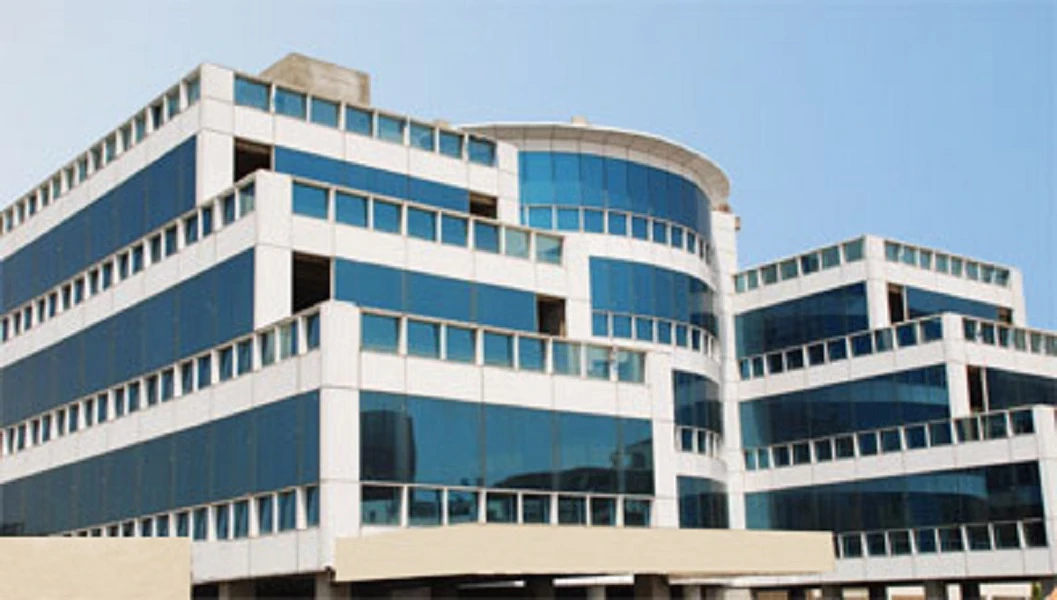
This is the biggest differentiator, and you need to be clear-eyed about it. The AIBCR facility in Sector 32, Gurgaon, is not a residential campus. It's a professional, compact building housing high-end specialized labs—think Bioinformatics workstations, molecular biology setups, and analytical chemistry equipment. The library offers digital access to major journals (ScienceDirect, PubMed) and a modest physical collection. There's a basic canteen, but students frequently head to the nearby Sector 32 market.
The "campus life" associated with hostels, sports, and major fests exists 25 km away at the main ASU campus in Sohna. If you're a degree student, you might split time between locations or be based in Sohna. PG Diploma students are almost exclusively at the Sector 32 site as day scholars. The social life is what you make of it in Gurgaon. It's urban and professional, not collegiate. This setup is perfect for some and a deal-breaker for others.
Scouring platforms like Reddit and Quora paints a consistent picture. The praise is focused and specific. Students consistently highlight the industry integration as the top benefit. "The projects with partner companies give you something real to talk about in interviews," is a common sentiment. Faculty accessibility is another plus; having PhD holders who are approachable and research-active is valued.
The location in Sector 32 is seen as a major professional advantage for networking and grabbing internships in the NCR region.
The criticisms are equally pointed. The high fees for degree programs, especially the B.Tech, are frequently questioned against the starting salaries. The lack of a traditional campus atmosphere at the Sector 32 facility is a recurring gripe for those expecting a full college experience. Some also mention administrative delays in paperwork or certificate issuance, which seems to be a common pain point in many private institutions.
The median consensus? AIBCR is viewed as a "career launchpad" for the specific niches it serves. It's highly recommended for a graduate who wants a sharp, one-year PG Diploma to enter the clinical research field. It's considered more cautiously for a 17-year-old seeking the holistic undergraduate "college life."
It depends entirely on your career goals and expectations. AIBCR is a specialist, not a generalist. If you are a B.Sc. graduate aiming for a fast-track entry into clinical research, bioinformatics, or molecular diagnostics, the institute's PG Diploma programs offer a credible, industry-connected route. The 100% internship guarantee and direct company links provide a tangible edge. For a student seeking a B.Tech in Biotechnology, the calculus is tougher. You're paying a premium private university fee for a life sciences degree, where starting salaries are modest. The value here hinges heavily on securing a major scholarship or being laser-focused on leveraging the research opportunities and Gurgaon location for a top-tier placement.
Who should go? The career-focused graduate who sees college as a professional stepping stone. Who should look elsewhere? The student who prioritizes a vibrant, residential campus life above all else. AIBCR knows what it is: a serious, urban hub for bioscience careers. If that aligns with your vision, it's a option worth a very close look. You can start that look at their official website.
Yes, AIBCR is the specialized bioscience wing located in Gurgaon's Sector 32, while Apeejay Stya University (ASU) is the full-fledged university located in Sohna. They are distinct campuses but share resources like faculty and placement cells.
Yes, the PG Diploma in Clinical Research is considered one of AIBCR's flagship programs. It has high recognition in the industry and maintains direct placement links with major hospitals like Medanta and various Clinical Research Organizations (CROs).
No, the Sector 32 campus in Gurgaon is a day-scholar facility and does not provide hostel accommodations. Students requiring hostel facilities typically stay at the main university campus in Sohna, which provides transport, or find private paying guest (PG) accommodations in nearby sectors like 31 and 32.
For entry-level roles, the average salary for a Bioinformatics graduate from AIBCR typically ranges between ₹4.5 LPA and ₹6 LPA.
For PG Diploma programs, admission is not entirely direct but is primarily based on your graduation percentage and a personal interview, provided you meet the specified eligibility criteria.
Share what future students should know about AIBCR.
Student voices are not rewritten by colleges. We remove spam and abuse.
Wider admission question? Community PulseWhat should future students know?
Tell us which course you're considering. We'll help you work out the next step.
Get instant Partner access after mobile verification. Your public edits are reviewed before they go live.
Claim this college Auditorium
 Cafeteria
 Campus Wi-Fi
 Computer Labs
 Gym
Gym Hostel
 Medical
 Science Labs
 Sports Complex
 Study Library