Loading Admission Guardian content
Loading Admission Guardian content

Selected ranking categories, with the recorded year beside each result. Open all records for the complete history.
14 published records · Lower numeric ranks are stronger
The Week
Fashion Technology · private
#22024
Indiatoday
Fashion Design
#122022
The Week
Fashion Technology
#112020
Find a program, read its fee details and explore the admission requirements.
Summary of the programs shown below. Fee periods can differ by program. Check the note beside each amount before comparing costs.
| Course | Stream | Fees |
|---|---|---|
| Bachelor of Science [B.Sc] | Design | 204025 |
Specializations
Eligibility: 10+2 + AIFD WAT
 Aditya Birla Group
 Myntra
 Puma
Puma Raymond
 Reliance
If you're looking at fashion and interior design colleges in India, the Army Institute of Fashion and Design (AIFD) in Bangalore is a name that consistently pops up for one reason: its placement record. Run by the Army Welfare Education Society (AWES), this isn't your typical sprawling campus. It's a compact, disciplined institution where the focus is squarely on getting you a job in the apparel and retail sector. With an official average package of ₹5.82 LPA and a median of ₹5.10 LPA, the return on investment is compelling, especially when you consider the fees. But it's a trade-off. The 'Army' in its name isn't just for show—it dictates a culture of strict rules, curfews, and a professional rigor that some students love and others find stifling. For wards of Army personnel, it's a premier, subsidized option. For civilians, it's a niche but potentially rewarding path into the business of fashion.
AIFD doesn't try to do everything. It focuses on two undergraduate and one postgraduate design stream, all affiliated with Bengaluru North University. The B.Sc. programs in Fashion & Apparel Design (FAD) and Interior Design & Decoration (IDD) recently shifted to a 4-year structure under the NEP 2020, with an intake of 60 students each. The M.Sc. in Fashion & Apparel Design takes in about 20.
The academic culture is where the Army influence is palpable. Attendance isn't a suggestion; it's a mandate with a strict 75% minimum, though they push for 85%+. The grading follows BNU's 10-point CGPA system. Faculty, around 15-20 core members, are often described in student reviews as accessible mentors. You'll find PhD holders like Dr. Shashikala H. leading courses, but the teaching style leans practical.
What sets the curriculum apart are the industry integrations. Students get access to the World Global Style Network (WGSN) for trend forecasting—a tool used by professionals. The annual fashion show, Dapple, is a major event where final-year collections are judged by industry leaders. It's less about abstract art and more about building a portfolio that gets you hired.
This is AIFD's strongest card, and the numbers back it up. For the 2024-25 batch, the highest package offered was ₹8.63 LPA from recruiters like Tommy Hilfiger. The official average stood at ₹5.82 LPA, with a median of ₹5.10 LPA as per the NIRF 2024 report.
The college claims near 100% placement for eligible students, and reviews largely corroborate this, especially for the FAD program. The catch? "Eligible" means maintaining a decent CGPA and having no backlogs. The placement cell is notably proactive, with training sessions that go beyond just bringing companies to campus.
Top recruiters are a who's who of retail: international brands like Zara, H&M, and Adidas; domestic giants like Reliance Trends, Madura Fashion & Lifestyle, and Myntra; and major export houses like Shahi Exports. But here's the crucial reality check alumni mention: a vast majority of these roles are in Retail Management, Visual Merchandising, and Quality Control, not high-fashion design. If you dream of being the next Sabyasachi, this might not be the direct route. If you want a stable, well-paying career managing a store for a major brand or working in apparel production, AIFD has a proven track record. Internships are mandatory, with partners including Raymond and Arvind, ensuring you graduate with some real-world experience.
The fee structure is distinctly two-tiered, offering significant savings for Army wards. For the 2024-25 academic year, the total first-year cost for an Army ward (including hostel and mess) is approximately ₹3.21 lakhs. For civilians, it's about ₹3.63 lakhs. This is a one-time security deposit of ₹25,000 and a uniform fee of ₹6,500 on top.
Over four years, you're looking at a total cost between ₹11.5 to ₹13.5 lakhs. In the context of private design colleges where fees can soar past ₹20 lakhs, AIFD's pricing is a major advantage. Financial aid primarily comes through defense channels: the Education Scholarship Scheme for Army Personnel (ESSA) and the PM Scholarship for wards of ex-servicemen. Bengaluru North University also offers some state-level merit scholarships.
Admission is centralized through AIFD's own entrance exam. Forget NIFT or NID here; you need to crack the OAT (Online Admission Test) or WAT (Written Admission Test). The exam has two parts: Part A (70 marks) tests Intelligence, Reasoning, General Awareness, and English. Part B (30 marks) is the Creative Ability/Design Aptitude test, which involves sketching and drawing.
Selection is based on merit in this entrance test, with a minimum eligibility of 35% in your 10+2. The application window typically runs from January to March, with a fee of ₹1,000.
The most critical detail is the quota system. A full 90% of seats are reserved for wards of serving and retired Army personnel. The remaining 10% are open to civilians, with a preference for those from Karnataka. This means competition for the civilian seats is extremely fierce. Your application isn't just competing on a national merit list; it's for a very small, fixed number of spots.
The campus is compact, spread over 5-8 acres in Kothanur, which is on the outskirts of Bangalore. It's not in the middle of the city's nightlife—the nearest major metro station, Baiyappanahalli, is about 8-10 km away. That's a commute. The infrastructure, however, is tailored for design. There are specialized labs for stitching (with industrial machines), CAD (using TukaCAD and Gerber), draping, and even a visual merchandising mock shop. Some students note that the computers and software in some labs could use an upgrade.
The library is linked with the British Council Library, and the sports facilities include courts for basketball and badminton, a football ground, and a gym.
Hostel life is a defining experience. The girls' hostel is consistently praised for its safety and maintenance. The boys' hostel, according to numerous reviews, has faced criticism over food hygiene and management. The mess food, in general, is described as satisfactory but repetitive. The biggest adjustment is the discipline: strict curfews (often as early as 6:30 PM for girls), mandatory roll calls, and a uniform policy that makes it feel, as one student put it, "like a school sometimes." You trade typical college freedom for a structured, secure environment.
Synthesizing feedback from platforms like CollegeDunia and Shiksha, a clear consensus emerges. The positives are powerful: "The placement cell is very proactive." "Infrastructure for fashion is better than many high-priced private colleges." "Very safe environment for female students." The value-for-money and job readiness are repeatedly highlighted.
But the negatives are just as consistent. The strict Army discipline is the biggest point of contention. "Extremely strict attendance and uniform rules." The location is seen as isolated. "Far from the 'happening' parts of Bangalore." And there's a recurring note about the need for tech upgrades in labs.
The teaching quality gets good marks, with faculty seen as supportive. The annual Dapple show is a major highlight. But the social life is quiet, governed by rules. It's a professional training ground, not a liberal arts campus.
AIFD is a highly specific proposition. It's arguably one of the best value-for-money design colleges in India if your career goal is to enter the retail, merchandising, or apparel production industry. The placement record is genuine and impressive for that sector. For wards of Army personnel, the subsidized fees make it an almost unbeatable option.
However, you must be willing to buy into its culture. The military-style discipline, strict schedules, and relatively remote location are non-negotiable parts of the package. If you're seeking a freewheeling, experimental design school experience focused on avant-garde creation, look at NIFT or private institutes. But if you want a structured, safe, and career-oriented education that almost guarantees a job with reputable brands upon graduation—and you can handle the rules—AIFD delivers on its promise. It's a pragmatic choice for pragmatic students.


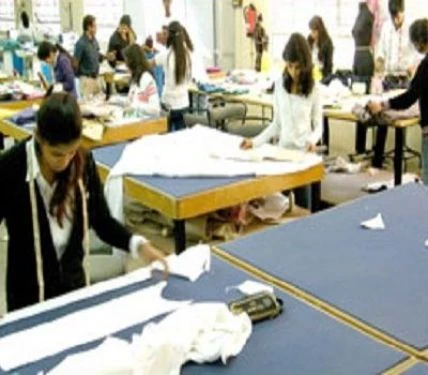


In this preview: 5 photos · 0 videos
No, the Army Institute of Fashion and Design (AIFD) is not exclusively for army children. However, a significant 90% of its seats are reserved for wards of army personnel. The remaining 10% of seats are open to civilian candidates, with a primary focus on residents of Karnataka.
AIFD offers a strong return on investment (ROI) due to its lower fees and provides excellent placement opportunities within the retail sector. In comparison, the National Institute of Fashion Technology (NIFT) holds a higher brand value nationally and offers broader exposure to the design industry.
The AIFD Online Aptitude Test (OAT) is considered moderately difficult. The exam primarily assesses general aptitude and basic sketching skills. It is notably less intensive than entrance exams like the NID, which require a demanding creative portfolio.
AIFD maintains an excellent placement record. For students who meet the college's eligibility criteria, which include maintaining good attendance and having no academic backlogs, the institute has a near-perfect placement rate in the retail and apparel industries.
Hostel rules at AIFD, particularly for female students, are very strict. The hostel curfew is typically enforced at 6:30 PM or 7:00 PM for girls, and there are mandatory roll calls to ensure compliance.
Share what future students should know about AIFD.
Student voices are not rewritten by colleges. We remove spam and abuse.
Wider admission question? Community PulseWhat should future students know?
Tell us which course you're considering. We'll help you work out the next step.
Get instant Partner access after mobile verification. Your public edits are reviewed before they go live.
Claim this college
 Cafeteria
 Computer Labs
 Hostel
 Medical
 Science Labs
 Sports Complex
 Study Library