Loading Admission Guardian content
Loading Admission Guardian content
Provisional score based on available data. It may change as more information is verified.
Find a program, read its fee details and explore the admission requirements.
Summary of the programs shown below. First-year fee. Check the note beside each amount for inclusions and exclusions.
| Course | Stream | Fees |
|---|---|---|
| Master of Business Administration [MBA] | Management | 61000 |
| Master of Technology [M.Tech] | Engineering | 69000 |
| Bachelor of Engineering [BE] | Engineering | 107000 |
| Ph.D | Engineering |
Specializations
All accepted exams
Eligibility: Graduation + MAH MBA CET
Specializations
All accepted exams
Eligibility: Pass in Graduation
Specializations
All accepted exams
Eligibility: 10+2
Specializations
Eligibility: Post Graduation
4 exams with cutoff data available
 Accenture
 Adani group
 ADP Private Limited
 Ashok Leyland
 Avesthagen Ltd
 Bosch Ltd
 Capgemini
 Cognizant
 Convergys
 Cummins India Ltd
 Dell
Dell EMCO Ltd
 Gammon India
 Hexaware Technologies
 Hindustan Copper Limited (HCL)
 HSBC Bank
 Indian air force-IAF
 Indian Army
 Infocepts
 KPIT Cummins
 L&T ECC
 L&T Infotech
 L&T Ltd.
 Maytas
 Persistent Ltd
 Ramky Group
 TATA CUMMINS
 TCS
TCS Tech Mahindra
Bapurao Deshmukh College of Engineering (BDCE) in Wardha is a private institution that’s been around since 1983, and it’s built a reputation as a solid, no-frills option for engineering in the region. Affiliated with Rashtrasant Tukadoji Maharaj Nagpur University (RTMNU), it holds an NAAC B+ grade and offers a sprawling 18-acre campus in Sevagram. The college’s placement story is a study in modest, steady growth—the highest package climbed from 8 LPA in 2023 to 12 LPA in 2025, with an average settling around 4.6 LPA. That’s a decent outcome for a state-run institution, especially when you consider the 65.7% placement rate. It’s not a top-tier brand, but for students scoring in the mid-range of MHT CET, it represents a pragmatic path to a B.E. degree without the exorbitant cost of a metro-city private college.
BDCE operates more like a multidisciplinary college than a pure-play engineering institute. Its core strength is the Bachelor of Engineering program, with an intake of 410 seats spread across five branches: Civil, Computer, Electronics & Telecommunication, Mechanical, and Electrical. Some branches even run a second shift. But the academic portfolio is broader. You’ll also find B.Sc., B.A., B.Com, Law (LL.B), and Hotel Management programs. At the postgraduate level, they offer M.Tech in specializations like Computer Science, VLSI, and Structural Engineering, plus a 60-seat MBA program.
The faculty situation is a mixed bag. The college states that over 60% of its 26 faculty members hold PhDs and have over 15 years of experience. That’s a strong claim on paper for a college of this size. But with a total student strength reported at 1,395, the student-faculty ratio is something to be aware of. Academically, they emphasize practical learning. The calendar is strict—monthly attendance reports, parent meetings each semester, and department heads monitoring syllabus coverage. They run skill programs in Python, AI, and soft skills, which is a plus. There’s an unverified mention of a curriculum tie-up with IIT Delhi, but that should be taken with a grain of salt unless confirmed directly with the college. For official course details, always check the BDCE website.
Let’s talk numbers. The placement trajectory shows incremental growth. The highest package offered was ₹8 LPA in 2023, ₹10 LPA in 2024, and ₹12 LPA in 2025. The average package for 2025 is reported at ₹4.6 LPA, with a median of ₹2.7 LPA. The most critical figure is the placement percentage: 65.7% for 2025. That means about two-thirds of the eligible batch gets an on-campus offer. It’s not stellar, but it’s a realistic baseline for colleges in this tier.
The recruiter list is lengthy and features a blend of IT service firms and core engineering companies. Names like Accenture, Tech Mahindra, Persistent, TCS, Cognizant, and Capgemini show up for IT roles. For core branches, you see L&T, Cummins, Ashok Leyland, Gammon India, and the Adani Group. The Indian Army and Air Force also recruit. It’s a credible list that provides options.
But here’s the reality check students mention: while the college provides support, securing a good internship often requires independent effort. MBA interns might get stipends of ₹5,000-6,000. The gap between the highest package and the average is significant—the ₹12 LPA is an outlier. For most students, the outcome will cluster around that ₹4-5 LPA average. It’s a placement cell that gets the job done for a majority, but don’t expect a flood of dream offers.
Fees at BDCE are a classic case of “it depends.” For the B.Tech program, annual tuition can range wildly from about ₹93,410 to over ₹4.12 lakhs. That variance typically comes down to the admission quota (CAP vs. Management) and the specific branch. Computer Engineering, for instance, is listed at ₹3.6 lakhs for 2026. The MBA program fees are between ₹70,000 and ₹91,000 annually, and M.Tech ranges from ₹69,000 to about ₹1.02 lakhs.
On top of tuition, hostel life adds a major cost. Hostel fees average between ₹60,000 to ₹80,000 per year, and that’s before you add mess charges for food. Put it all together, and the total annual cost for an out-of-town B.Tech student can easily land between ₹1.5 to ₹5 lakhs, depending on their fee structure. The college does offer scholarships for B.E./B.Tech and MBA programs, which can help offset costs for eligible students. It’s essential to factor in the full picture—tuition, hostel, mess, and miscellaneous costs—when budgeting.
Admissions here run through the standard Maharashtra channels. For the flagship B.E./B.Tech programs, you need a score from either MHT CET or JEE Main. Selection happens through the Centralized Admission Process (CAP) rounds. The cutoffs are where BDCE’s positioning becomes clear. We’re not talking about fiercely competitive ranks. For MHT CET 2023, the closing rank for Computer Engineering was 482695. For 2022, ranks for other branches ranged from 284704 (Computer) to 555891 (Mechanical). In percentile terms for 2022/2023, General-EWS category cutoffs were around 75-76, OBC-NCL 73-74, SC 51-52, and ST 37-38.
What does that mean? These are accessible scores. BDCE is a realistic target for students with mid-level MHT CET performance. For M.Tech, a valid GATE score is the ticket. MBA admissions consider MAH MBA CET, CAT, MAT, XAT, GMAT, ATMA, or CMAT scores, likely followed by GD-PI. There’s also a management quota for those seeking direct admission. Application forms are available online or at the college office for a fee. Keep an eye on the exam calendars: MHT CET typically happens in April-May, JEE Main has two sessions, and MAH MBA CET is around April.
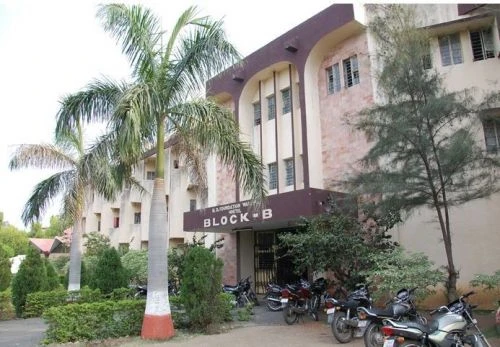
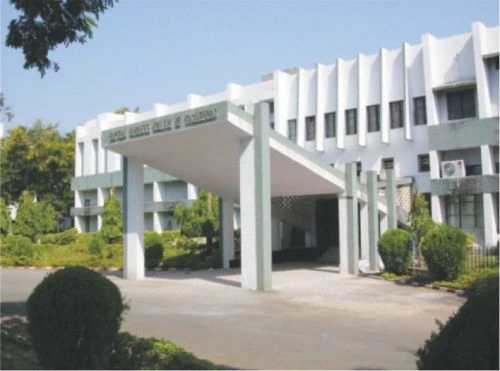
The campus is spacious at over 18 acres, and infrastructure has seen updates. Classrooms were renovated, roads improved, and a sports complex added around 2019-2020. Labs are described as well-equipped, the library is stocked with books and e-resources, and Wi-Fi covers the campus and hostels (though the speed was last updated in 2019-2020). There’s a gym, a canteen rated as “good,” and a central auditorium.
Hostels are a point of some contradiction in reviews. The official line is that there are separate hostels for boys and girls, with four buildings in total. Rooms are on a sharing basis (usually two students) and come with basic furniture. Bathrooms are separate and cleaned daily. Free Wi-Fi is a perk. However, at least one student review claims “no hostel for boys here,” so it’s worth confirming current availability directly with the college if this is a deal-breaker. The food in the mess gets a consistent rating of around 7/10. Transport services are available for commuters. It’s a self-contained campus, but Wardha is a relatively quiet town, not a bustling city.
Synthesizing student sentiment, a clear picture emerges. The most common praise is for the faculty—described as good, friendly, and helpful. That aligns with the college’s claim of experienced PhD holders. Students also appreciate the opportunities for extracurriculars and social service programs, suggesting campus life isn’t purely academic.
The criticisms aren’t explicitly detailed in the brief, but the data hints at them. The 65.7% placement rate implies not everyone gets placed on campus. The wide fee range suggests management quota costs can be high. The note about students often arranging their own internships points to a need for more proactive corporate connectivity. And the single contradictory note on boys' hostels highlights that infrastructure claims should be verified. The consensus? It’s a decent college with caring teachers and a functional system, but it’s not a powerhouse. It serves its purpose for students whose scores and budgets align with its offering.
BDCE is a practical choice for a specific student profile. If you have a mid-range MHT CET score (percentiles in the 70s for general category, lower for reserved categories) and are looking for an affordable, established B.E. program away from metro chaos, it’s a viable option. The NAAC B+ accreditation and RTMNU affiliation provide baseline credibility. The placement outcomes, while not spectacular, are honest and show year-on-year improvement, with a realistic average package around ₹4.5 LPA. The faculty receives positive marks, which is a significant plus.
However, if you’re aiming for top-tier IT packages or a vibrant urban campus life, you should probably look elsewhere. The placement percentage of 65.7% means on-campus recruitment isn’t guaranteed for all. The infrastructure is adequate but not luxurious, and Wardha is a tranquil town. Ultimately, BDCE’s value is in its accessibility and cost-effectiveness for securing a legitimate engineering degree. It’s a stepping stone, not a destination. For students who manage their expectations, engage with the skill programs, and proactively network for internships, it can serve as a perfectly sound launchpad for a career in engineering or IT.
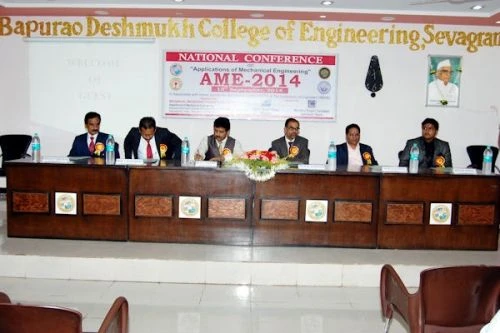
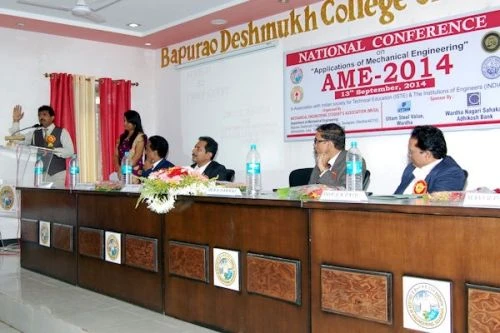
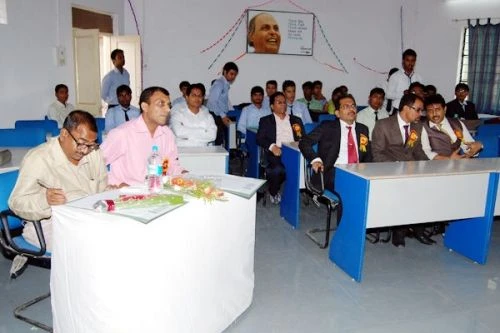
In this preview: 5 photos · 0 videos
The average placement package for the 2025 batch at BDCE Wardha was ₹4.6 Lakhs Per Annum (LPA). The highest package offered was ₹12 LPA, and the median package was ₹2.7 LPA.
The annual tuition fees for the B.Tech program at BDCE vary significantly, typically ranging from approximately ₹93,410 to ₹4.12 Lakhs. The exact fee depends on the branch of engineering and the admission quota (CAP vs. Management). Additional hostel fees average between ₹60,000 to ₹80,000 per year, excluding mess charges.
The placement percentage for the 2025 batch at Bapurao Deshmukh College of Engineering, Wardha, was 65.7%. This indicates that about two-thirds of the eligible students received job offers through the campus placement process.
Admission to the B.Tech program at BDCE is based on scores from either the Maharashtra Common Entrance Test (MHT CET) or the Joint Entrance Examination (JEE Main). Final selections are made through the state's Centralized Admission Process (CAP) rounds.
Yes, according to the college, there are separate hostel facilities for both boys and girls on campus. The hostels consist of four buildings, offer shared rooms with basic amenities, and include free Wi-Fi. However, some student reviews have contradicted this, so prospective students are advised to confirm the current availability directly with the college administration.
Share what future students should know about BDCE.
Student voices are not rewritten by colleges. We remove spam and abuse.
Wider admission question? Community PulseWhat should future students know?
Tell us which course you're considering. We'll help you work out the next step.
Get instant Partner access after mobile verification. Your public edits are reviewed before they go live.
Claim this college
 Auditorium
 Cafeteria
 Campus Shuttle
 Computer Labs
 Hostel
 Medical
 Science Labs
 Sports Complex
 Study Library