Loading Admission Guardian content
Loading Admission Guardian content
Provisional score based on available data. It may change as more information is verified.
Find a program, read its fee details and explore the admission requirements.
Summary of the programs shown below. First-year fee. Check the note beside each amount for inclusions and exclusions.
| Course | Stream | Fees |
|---|---|---|
| Master of Technology [M.Tech] | Engineering | 78150 |
| Bachelor of Technology [B.Tech] | Engineering | 80750 |
| Master of Business Administration [MBA] | Management | 80750 |
Specializations
All accepted exams
Eligibility: Pass in Graduation + GATE
Specializations
All accepted exams
Eligibility: 10+2 with 75% + JEE Main
Specializations
All accepted exams
Eligibility: Graduation with 50% + MAT
 Data 64
 Infosys
 TCS
TCSBhai Gurdas Institute of Engineering and Technology sits on a sprawling 45-acre campus along the Chandigarh-Bathinda highway, presenting a first impression that's hard to ignore. For students from Sangrur and surrounding districts in Punjab, it represents a pragmatic choice—a private engineering college with a decent local reputation, affiliated with the state's technical university, and a price tag that doesn't require a bank loan. But the story, as always, is in the details. There's a noticeable gap between the polished official narrative and the lived experience students describe online. If you're looking at BGIET, you're likely weighing affordability against placement prospects, and that's the central tension you need to understand.
BGIET offers the standard suite of B.Tech programs you'd expect, with a total intake hovering around 540-600 seats. Computer Science & Engineering is the undisputed star, taking in 150 students per batch. But the college has a genuine differentiator: its B.Tech in Food Technology. It's one of the few private institutes in Punjab with dedicated labs and a pilot plant for this niche, which can be a real draw for students interested in the state's agri-processing sector. Other branches include AI & ML, IT, ECE, Mechanical, Civil, and Electrical.
Academically, you're following the IKGPTU curriculum and credit system. The faculty count is around 110, leading to a claimed 13:1 student-teacher ratio. That's a decent number on paper. In practice, students often note that while senior professors are knowledgeable, the overall faculty quality is a mix. Some are praised for being accessible and helpful with doubts. The college highlights industry tie-ups with entities like Startup Punjab and Hoping Minds for skill modules, which is a positive step. You won't find groundbreaking research here, but for getting a degree from a recognized state university, it does the job.
This is where you need to read carefully. The college's marketing materials might mention a highest package of 50 LPA. That's almost certainly an outlier—an off-campus or international placement that gets highlighted. The on-campus reality, as echoed across student reviews on platforms like CollegeDunia and Shiksha, is far more modest.
The verified highest packages for CSE/IT typically range between 9 to 12 LPA. The average package isn't the 7.5-10 LPA sometimes advertised. The consensus from alumni puts it firmly in the ₹3.2 to ₹4.5 LPA range, with a median around ₹3.5 LPA. Placement percentages also tell two stories. Officially, it's 85-90%. Students suggest the actual on-campus placement rate is closer to 50-60% for core branches like Mechanical or Civil, and maybe 70% for CSE and IT.
Recruiters include the usual IT services names: TCS, Infosys, Wipro, Cognizant, L&T Infotech. Names like Google and Microsoft appear in college brochures, but these are often from pooled campus drives or off-campus successes, not regular, dedicated recruitment visits. For Food Tech, companies like Verka and Coca-Cola are relevant. The placement cell is active, but manage your expectations. This isn't a high-flying placement hub; it's a college that provides access to entry-level IT and engineering jobs, primarily for students from the region.
Affordability is BGIET's strong suit. The annual B.Tech tuition fee is between ₹80,000 and ₹96,000. Over four years, you're looking at a total tuition cost of roughly ₹3.2 to ₹3.8 lakhs. Add in hostel and mess fees (₹50,000 – ₹85,000 per year), along with other charges like development and exam fees, and the total 4-year cost for a hostel resident lands between ₹5.5 and ₹7.5 lakhs.
That's a fraction of the cost of a top-tier private university. Financial aid comes mainly in the form of government scholarships, particularly the Post-Matric Scholarship for SC/ST/OBC students from Punjab. The college also offers some merit-based scholarships for students with high scores in JEE Main or their 12th board exams. It's a financially low-risk option for many families in the area.
For B.Tech, admission is primarily through JEE Main scores and the subsequent IKGPTU counseling process. A full 85% of seats are reserved for Punjab residents through state counseling, with 15% for the All India quota. The cutoffs aren't fiercely competitive, which aligns with the college's positioning. For the 2024 cycle, the closing JEE Main ranks for the General Home State category were around 1,118,331 for CSE, 700,285 for Electrical, and 1,043,197 for Food Technology.
If you miss the counseling cutoff, there's usually a management quota route. Direct admission is possible based on 10+2 marks (typically requiring a minimum of 45-50% in PCM), subject to seat availability. For MBA, they accept scores from MAT, CAT, or CMAT. M.Tech admissions consider GATE scores or the university's own entrance test.
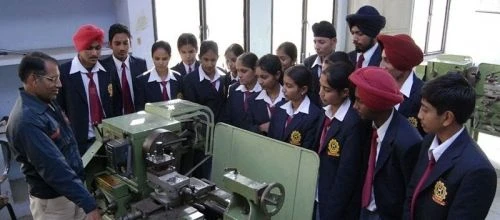
The 45-acre campus is consistently praised. It's green, spacious, and the architecture of the main buildings is often described as impressive. Infrastructure is a mixed bag. The CSE and Food Tech labs are reported to be well-equipped—the AI/ML lab and food processing pilot plant are specific highlights. Labs for core engineering branches like Mechanical and Civil are often called "average" or just "functional." The central library has a decent collection of over 35,000 books.
There are five separate hostels with a capacity for about 1,500 students. They're generally considered safe and decent, scoring a 3.5/5 in most student reviews. The mess food, however, is a common pain point—labeled as repetitive and average in taste. The college has a fleet of buses for day scholars, which is essential given its highway location. Social life is what you make of it. Older reviews mention strict rules on gender interaction and hostel timings, painting a picture of a somewhat conservative environment. There's a gym, a shopping complex, and an auditorium for events.
Synthesizing the chatter from review sites and forums gives you a balanced, human perspective.
Students appreciate the value for money. The phrase comes up a lot. For a local student who can't relocate or afford a more expensive college, BGIET is a safe, known entity. The campus beauty and approachable faculty for doubt-solving are genuine positives. The Food Tech program gets special mention for its unique focus and better-than-average industry connections in that field.
But the criticisms are consistent. The placement reality check is the biggest one. Students feel the gap between marketing claims and actual on-campus outcomes is too wide. Administrative responsiveness is another sore point—getting issues resolved can be slow. The mess food complaints are almost universal. And yes, they enforce the 75% attendance rule, with fines for those who fall short.
One paraphrased student comment sums it up: "If you want to be a software engineer and are from a middle-class family in Sangrur, this is a safe bet, but don't expect a 10 LPA job on a platter."
BGIET is a classic case of "it depends on your context." It's not a nationally ranked powerhouse, and it won't be. If you're a high-achieving student aiming for top-tier MNCs with lavish packages, you should look at more competitive options.
However, for a student from Punjab, particularly from Sangrur, Patiala, Barnala, or nearby districts, BGIET presents a logical, low-risk pathway to an engineering degree. It's best suited for those in CSE, IT, or Food Technology—the branches with relatively stronger outcomes. Its core value proposition is affordability and a decent, recognizable degree from a state university, all within a large, pleasant campus. Go in with clear, realistic expectations about placements and campus life, and it can be a sensible choice. View it through the lens of a cost-effective launchpad for a stable career, not a gateway to the corporate elite, and you'll make the right decision.
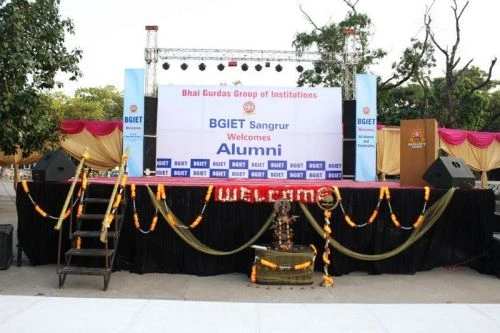
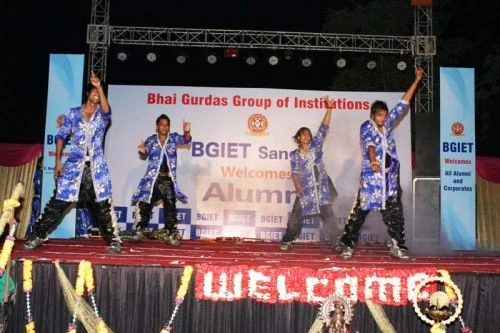
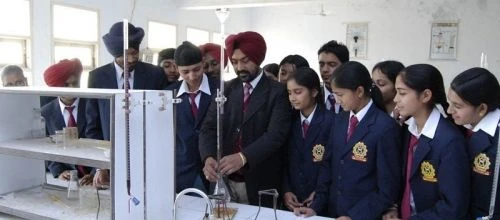
In this preview: 4 photos · 0 videos
Yes, BGIET is considered good for CSE. It is the most popular branch at the college and has the best placement record among all the programs offered, though typical placement packages for graduates generally fall in the range of 3 to 5 LPA.
The placement reality at BGIET shows a variation between claimed and median packages. While the college may advertise high packages (like 50 LPA), the median reality for most students is around 3.5 LPA. Placements are better for branches like Computer Science and Engineering (CSE) and Food Technology compared to Civil or Mechanical Engineering.
Yes, direct admission is possible at BGIET through the Management Quota. This is available if you have secured 50% or more in your 10+2 with PCM (Physics, Chemistry, Mathematics) and provided that seats remain vacant after the centralized counseling process.
The hostels at BGIET are described as decent and safe. The food provided is typical "hostel grade," meaning it is edible but can become repetitive over time.
Yes, Bhai Gurdas Institute of Engineering and Technology is affiliated with I.K. Gujral Punjab Technical University (IKGPTU), which is a state-level government technical university in Punjab.
Share what future students should know about BGIET.
Student voices are not rewritten by colleges. We remove spam and abuse.
Wider admission question? Community PulseWhat should future students know?
Tell us which course you're considering. We'll help you work out the next step.
Get instant Partner access after mobile verification. Your public edits are reviewed before they go live.
Claim this college Auditorium
 Cafeteria
 Computer Labs
 Gym
Gym Hostel
 Medical
 Science Labs
 Sports Complex
 Study Library