Loading Admission Guardian content
Loading Admission Guardian content

Provisional score based on available data. It may change as more information is verified.
Selected ranking categories, with the recorded year beside each result. Open all records for the complete history.
21 published records · Lower numeric ranks are stronger
NIRF
B.Tech
#932020
IIRF
B.Tech · private
#272022
TOI
B.Tech
#202023
TOI
B.Tech · private
#182023
Find a program, read its fee details and explore the admission requirements.
Summary of the programs shown below. First-year fee. Check the note beside each amount for inclusions and exclusions.
| Course | Stream | Fees |
|---|---|---|
| Master of Science [M.Sc] | Hotel Management | 80000 |
| Bachelor of Science [B.Sc] | Hotel Management | 110000 |
| Bachelor of Pharmacy [B.Pharma] | Pharmacy | 160000 |
| Bachelor of Technology [B.Tech] {Lateral} | Engineering | 175000 |
| Bachelor of Technology [B.Tech] | Engineering | 195000 |
Specializations
Eligibility: Graduation with 60%
Specializations
Eligibility: 10+2
Eligibility: 10+2
Specializations
All accepted exams
Eligibility: Diploma with 45%
Specializations
All accepted exams
Eligibility: 10+2 with 60%
1 exam with cutoff data available
 Accenture
 Accor Hotels
 Afixi Technology
 AMW Automobiles
 Apollo Hospitals
 BGR Energy Systems Limited
 Bosch Ltd
 Cadeploy
 Canara Bank
 Capgemini
 CEAT
CEAT CGI
CGI Cognizant
 Denso
Denso Essar Group
 Good Through Software Solutions
 HCL Technologies
 IBM
IBM ICICI Prudential
 Infosys
 ITC Hotels
 Jaypee Hotels Limited
 Jindal
 JK Paper
 JK Tyre
 JSW Steel Ltd
 JW Marriott
 L&T Infotech
 Lemon Tree
 Lowe Lintas & Partners
 Macleods Pharmaceuticals Ltd
 Mahindra Satyam
 Mind Tree Limited
 Mindfire Solutions
 Mphasis
 Oberoi Hotels and Resorts
 Persistent Ltd
 PolyBond
 Radisson
 Radisson Blu
 Robert Bosch Engineering & Business Solutions Ltd
 RSB Global Design
 Sap labs
 SEW Infrastructure
 SoCtronics Technologies Pvt. Ltd.
 Syntel
 Taj Group of Hotels
 Tata Consultancy Services
 Tata Steel
 TCS
TCS Tech Mahindra
 TVS Motors
 Voltas
 Wipro
Wipro Zensar
 Zeta
Zeta Zycus
ZycusC. V. Raman Global University (CGU) in Bhubaneswar is a story of evolution. It started as a respected engineering college in 1997 and, in 2020, got the autonomy that comes with full university status. That shift matters. It gave CGU control over its syllabus, letting it roll out new-age specializations faster than many affiliated colleges could. Today, it’s a 100-acre green campus known for a few standout things: a genuinely strong Marine Engineering program with rare ABET accreditation, a disciplined academic environment, and a placement record that shows a clear divide between its computer science and core engineering branches. It’s a solid private option in Odisha, but one with very specific strengths and some well-documented student grievances.
CGU’s academic portfolio is broad, but engineering is its heartbeat. The B.Tech program has an intake of around 1,290 students. You’ve got the traditional branches—Mechanical, Civil, Electrical, ECE—but the real energy is in the computer science specializations. They offer CSE with splinters in AI & Machine Learning, Data Science, IoT & Cyber Security, and Cloud Computing. There’s also a dedicated Robotics and AI program. That’s a decent spread for a regional university, and it shows they’re trying to keep pace with industry demand.
The Marine Engineering program is in a league of its own here. It’s not just the ABET accreditation, which is a big deal for global mobility. They have a training ship, the TS Ranjita, parked on campus. That’s a tangible advantage you won’t find at most inland colleges.
Beyond engineering, they run B.Sc Agriculture, B.Pharm, BCA, BBA, and a hotel management course. At the postgraduate level, M.Tech, MBA, and M.Sc programs are available, along with PhDs across disciplines.
The faculty strength is around 350, with about 60-70% holding PhDs. The leadership, like Vice-Chancellor Prof. Banshidhar Majhi (an NIT Rourkela alumnus), brings academic credibility. The grading is on a strict 10-point scale, and the 75% attendance rule is enforced. You’ll get an ‘XX’ on your grade sheet if you fall short, which means detained. It’s a structured system, sometimes criticized as rigid, but it sets a tone.
Industry collaborations add practical heft. The Bosch Rexroth and Google Centres of Excellence are active, and the recent tie-up with Bajaj for a BEST Centre points to a focus on skill-building. Labs, particularly for automation and robotics with Festo and Siemens gear, are consistently praised as a major strength.
This is where you need to separate the headline from the common outcome. The university rightly promotes a highest package of 45 LPA, with names like Amazon and Microsoft attached. That happens. But it’s the exception, not the rule.
The more reliable figures come from the official NIRF 2024 report. For the 4-year UG cohort, the median salary was ₹6.45 LPA, a notable jump from ₹5.2 LPA the year before. For 2-year PG courses, it was ₹4.85 LPA. The average package floats between 5.5 to 7 LPA, with CSE and IT disciplines pulling the average up.
The official placement claim is 90-100% for "eligible" students. Talking to alumni and sifting through reviews on CollegeDunia and Shiksha paints a more nuanced picture. For CSE/IT, 90-95% seems achievable. For core mechanical, civil, or electrical branches, the on-campus placement rate is often cited closer to 70-80%. The lesson? If you’re in a core branch, you might need to hustle off-campus more.
Recruiters are a familiar list of mass IT hirers and some core companies: TCS, Infosys, Wipro, Cognizant, Accenture, Capgemini, IBM, Bosch, Tata Steel, and Voltas. About 65% of offers are from the IT/Software sector, 25% from core engineering, and the rest from consulting.
So, the placement cell is active. You’ll likely get a job if you’re in the top streams. But the dream 45 LPA offer requires being in the absolute top tier of coders. The median graduate walks out with a decent, if not spectacular, starting salary.
Planning your budget here requires looking at the full picture. B.Tech tuition ranges from ₹1,75,000 to ₹2,90,000 per year. The higher end is for the in-demand CSE specializations. On top of that, you have hostel and mess.
Hostel fees are tiered:
Mess charges are about ₹48,000 for 10 months. Add a one-time admission fee (₹10k-20k), annual exam fees, and a refundable caution deposit.
A rough total 4-year cost, living on campus, falls between ₹10.5 lakhs and ₹14.5 lakhs. That’s a significant investment.
Scholarships can help. The university offers merit scholarships for the top three students in each branch. There’s also financial aid through the CVRCE Students' Welfare Trust for needy students. And you can apply for government schemes like the Post-Matric scholarship for SC/ST students, Pragati for girls, and Saksham for persons with disabilities.
For B.Tech, you have multiple entry gates. The primary one is the university’s own CGET (CV Raman Global Entrance Test). It’s generally considered less difficult than JEE Main and, notably, the application fee is often waived. They also accept JEE Main scores and the state-level OJEE (Odisha Joint Entrance Exam).
The cutoffs aren’t fiercely competitive, which reflects its position in the Odisha pecking order below KIIT and ITER. For the 2024 cycle, the OJEE closing rank for CSE (General) was in the broad range of 1,64,670 to 3,50,000. For Mechanical or Civil, ranks went much higher, up to around 11,00,000. That tells you where the demand is.
Selection is merit-based: your best valid entrance score determines your rank in the university counseling. For MBA, they accept CAT, MAT, XAT, or ATMA scores. M.Tech admissions go through GATE.
The process is fairly straightforward. Check the official university website for application windows and counseling dates. The key decision is whether to rely on your JEE/OJEE rank or take the CGET for a potential scholarship boost.
The 100-acre campus gets high marks for being green and well-maintained. Infrastructure is a genuine selling point. Beyond the marine ship, there’s a supercomputer facility, modern robotics labs, and a central library with digital access to IEEE and ScienceDirect.
Sports facilities are comprehensive: cricket ground, football field, basketball, volleyball, a swimming pool, and a gym. Wi-Fi covers the campus, though hostel speeds are described as average (30-50 Mbps). There’s a 24/7 medical center with ambulance service.
Now, the hostel life. The six hostels (separate for boys and girls) house over 2,500 students. Rooms are generally reported as clean and adequate. But the mess food is a near-universal complaint. Students call it monotonous and poor value for the money paid. It’s a persistent sore point.
The overall student life is… disciplined. The 75% attendance rule is strictly enforced. The management has a reputation for being strict about fee deadlines and rule enforcement, which some students describe as "money-oriented." It’s not a lax, free-wheeling campus. If you want a highly structured environment, it works. If you crave flexibility, you’ll chafe.
Synthesizing opinions from Reddit threads, Quora, and review sites gives you a consistent picture.
The Good:
The Not-So-Good:
The consensus? It’s a good academic institution with strong infrastructure, let down somewhat by administrative rigidity and quality-of-life issues in the mess.
CGU is a clear choice for a specific set of students. If you’re looking at Marine Engineering in Eastern India, it’s arguably the best option, full stop. The ABET accreditation and ship-in-campus are unmatched. For Computer Science (especially the specializations), it’s a strong private contender in Odisha, offering a decent ROI if you leverage its coding culture to land a median 6-7 LPA job.
However, think twice if you’re enrolling in a traditional core branch like Civil or Electrical primarily for placements. The on-campus opportunities are thinner. Also, if you value a relaxed campus life with great food and administrative flexibility, CGU’s strict, disciplined environment might feel oppressive.
It’s a university that rewards conformity and academic focus. The infrastructure is there, the industry ties are real, and the degree holds value in the region. Just go in with your eyes open about the trade-offs: top-tier labs and discipline, in exchange for strict rules and mediocre mess food. For the right student, that’s a fair deal.
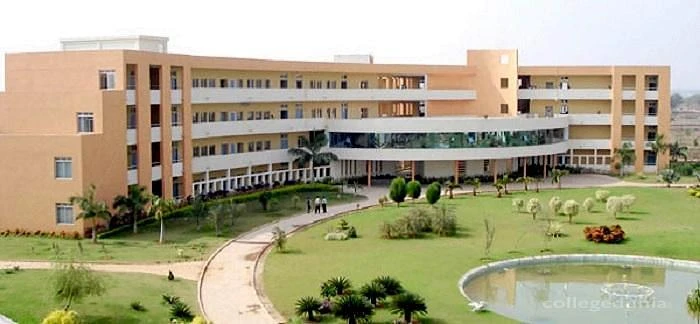
In this preview: 1 photo · 0 videos
Yes, C. V. Raman Global University (CGU) is considered one of the top private choices in Odisha for Computer Science, particularly after KIIT and ITER. It is recognized for its strong coding culture and well-equipped labs.
There is no difference; they are the same institution. The college was upgraded to a unitary university in 2020, which granted it greater autonomy over its curriculum and the ability to award its own degrees.
The Marine Engineering program is the flagship program of CGU. It is highly regarded, featuring a unique "Ship-in-Campus" for practical training and holding ABET accreditation, making it one of the best programs in Eastern India.
No, staying in the hostel is not mandatory for students. However, it is often recommended for first-year students because the campus is located slightly away from the main city center.
The CGET (C. V. Raman Global University Entrance Test) is the university's own entrance examination. It is generally considered easier than the national JEE Main and is used for both admission and scholarship allocation.
Share what future students should know about C. V. Raman Global University.
Student voices are not rewritten by colleges. We remove spam and abuse.
Wider admission question? Community PulseWhat should future students know?
Tell us which course you're considering. We'll help you work out the next step.
Get instant Partner access after mobile verification. Your public edits are reviewed before they go live.
Claim this college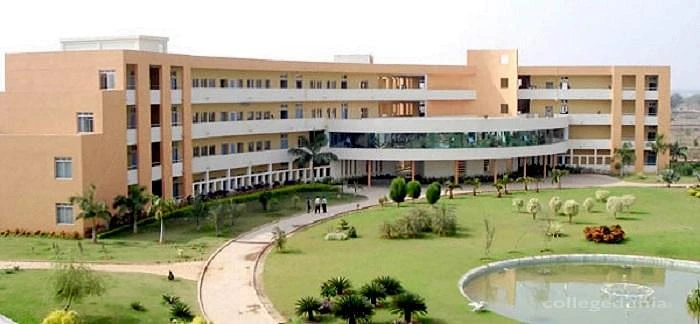
 Auditorium
 Cafeteria
 Communication Centre
 Computer Labs
 Hostel
 Medical
 Science Labs
 Study Library