Loading Admission Guardian content
Loading Admission Guardian content
Provisional score based on available data. It may change as more information is verified.
Selected ranking categories, with the recorded year beside each result. Open all records for the complete history.
41 published records · Lower numeric ranks are stronger
NIRF
B.Tech
#1392022
India Today
Engineering · private
#622023
Indiatoday
B.Tech · private
#612023
Find a program, read its fee details and explore the admission requirements.
Summary of the programs shown below. First-year fee. Check the note beside each amount for inclusions and exclusions.
| Course | Stream | Fees |
|---|---|---|
| Master of Technology [M.Tech] | Engineering | 95000 |
| Master of Computer Applications [M.C.A] | Computer Applications | 96500 |
| Bachelor of Technology [B.Tech] | Engineering | 96500 |
| Bachelor of Technology [B.Tech] {Lateral} | Engineering | 96500 |
| Master of Business Administration [MBA] | Management | 96500 |
Specializations
All accepted exams
Eligibility: Graduation
Eligibility: Graduation
Specializations
All accepted exams
Eligibility: 10+2
Specializations
All accepted exams
Eligibility: 10+3
Specializations
All accepted exams
Eligibility: Graduation
 Amazon
 American Express
 Capgemini
 Cognizant
 Dell
Dell Deloitte
 Goldman Sachs
 Google
 Microsoft
 Saint-Gobain
 TCS
TCS Walmart
 Wipro
Wipro Zycus
ZycusChandigarh Engineering College (CEC) Landran is a study in contrasts. It’s a place where you’ll see banners celebrating a ₹54.75 LPA placement offer from a top tech firm, while students in uniform grumble about a ₹500 fine for being late to class. Established in 2001 under the sprawling Chandigarh Group of Colleges (CGC) umbrella, this private institute in Mohali has built a formidable reputation as a placement powerhouse in North India. Its recent NAAC A+ grade (CGPA 3.42) in March 2024 and consistent NIRF ranking (101-150 band in Engineering for 2024) signal academic credibility. But talk to any student, and the narrative quickly splits: it’s a launchpad for a corporate career, provided you can tolerate an environment many describe as overly regimented. The college’s identity is firmly tied to its aggressive corporate outreach and its affiliation with I.K. Gujral Punjab Technical University (IKGPTU). If your primary goal is a job offer at the end of four years, CEC delivers with remarkable efficiency. If you’re looking for a liberal campus life with academic exploration, you might find the trade-off steep.
CEC’s academic portfolio is heavily skewed towards computing, reflecting market demand. The B.Tech in Computer Science and Engineering is the undisputed king, with an intake that can reach up to 900 students when you factor in its many specializations. That’s a massive cohort. Alongside standard CSE, you have dedicated programs for Information Technology (IT, ~180 seats) and Electronics & Communication (ECE, ~120 seats). Mechanical Engineering intake is smaller, typically 60-90 students.
The newer, buzzword-friendly specializations are where CEC aims to stay relevant: AI & Machine Learning, AI & Data Science, Cyber Security, and even a combined IoT & Cyber Security including Blockchain program. They sound impressive on a brochure. In practice, student feedback suggests the core teaching remains largely theoretical across the board, with the onus for practical, coding-heavy skills falling on the student. The faculty base is large (250+ for engineering) and about half hold or are pursuing PhDs—a decent ratio for a private college. The semester pattern follows the IKGPTU schedule, with internal MSTs and a final university exam. Industry MoUs with names like Infosys Campus Connect, Microsoft, and Cisco exist, and the AICTE-IDEA Lab provides a space for tinkering. But the academic culture isn’t described as innovative; it’s described as strict, with a relentless focus on attendance and discipline to keep students in line for placements.
This is the section that sells the college. And the numbers are compelling, up to a point. The highest package for the 2024-25 cycle stands at a staggering ₹54.75 LPA, reportedly from a top-tier company like Atlassian or Amazon. That’s the headline grabber. The official average package claim for CSE/IT floats between ₹7.5 and ₹10 LPA.
Here’s the reality check, echoed across student reviews on platforms like CollegeDunia and Shiksha: the working average for a typical graduate is closer to ₹4.5 LPA to ₹6 LPA, with a median around ₹5.5 LPA. The gap between the official claim and the student consensus is notable, but not unusual in engineering education marketing. What CEC undeniably excels at is volume. With a claimed placement percentage of 85-90% for eligible students, the college floods the zone with recruiters. The list is impressive: product giants like Amazon, Microsoft, Google, and Adobe visit, alongside mass recruiters that form the backbone of hiring—TCS, Wipro, Infosys, Cognizant, and Accenture. Core companies like L&T and Mahindra also recruit, but in smaller numbers.
Two critical nuances shape the placement experience. First, CEC often conducts joint placement drives with its more famous sibling, Chandigarh University. This means thousands of students compete for the same pool of interviews, which can be intense. Second, the "placement for all" mantra comes with a caveat—many offers are from mass recruiters at the lower end of the salary spectrum. The internship pipeline is active, with companies like Microsoft and Accenture offering stipends from ₹20k to ₹80k per month. The verdict? You’ll likely get a job. How good it is depends almost entirely on your own coding skills and interview prep, not the classroom teaching.
Planning your budget for CEC requires looking beyond just tuition. The annual B.Tech tuition fee for 2025-27 is estimated between ₹1.2 and ₹1.5 lakhs, depending on the specialization. Over four years, that’s a total tuition cost of roughly ₹5 to ₹6.7 lakhs.
The bigger shock for many families is the hostel cost. For a non-AC three or four-seater, you’re looking at ₹1.15 to ₹1.4 lakhs per year. Opt for AC accommodation, and it jumps to ₹1.6 to ₹1.7 lakhs annually. When you add tuition and hostel, the annual outlay easily crosses ₹2.5 lakhs, and that’s before other charges. Students frequently complain about additional fees: semester exam fees (₹4,600), a one-time uniform fee (₹5,000), and what many describe as "hidden charges" for various activities. The management is often cited as being strict about fee payments, demanding them well in advance.
Scholarship options provide some relief. These include standard post-matric scholarships for SC/ST students, merit-based awards for high scorers in JEE Main or Class 12, and a scholarship for single girl children. It’s worth digging into the exact criteria on the college website early in the application process.
Admission to CEC’s B.Tech programs runs through two parallel tracks. The primary route for 67% of the seats is through the PTU B.Tech Counseling, which uses JEE Main scores. Don’t confuse the cutoff ranks with the all-India JEE Main CRL; these are state-level PTU merit ranks. For the coveted CSE program in the general category (home state), the closing ranks in recent counseling have typically been within the top 1,500 to 2,000 on the PTU merit list. That’s a competitive bracket.
The other track is the Management Quota, which accounts for 33% of seats. This is a direct admission route, bypassing the counseling rank. The eligibility usually requires a strong academic record in Class 12 (PCM), often 70% or above, with higher thresholds (75%+) for CSE. This route is more expensive but guarantees a seat if you meet the criteria and can pay the fee. The application window generally opens in March or April for the session starting in July. Keep an eye on the IKGPTU counseling schedule and the CEC website for exact dates.
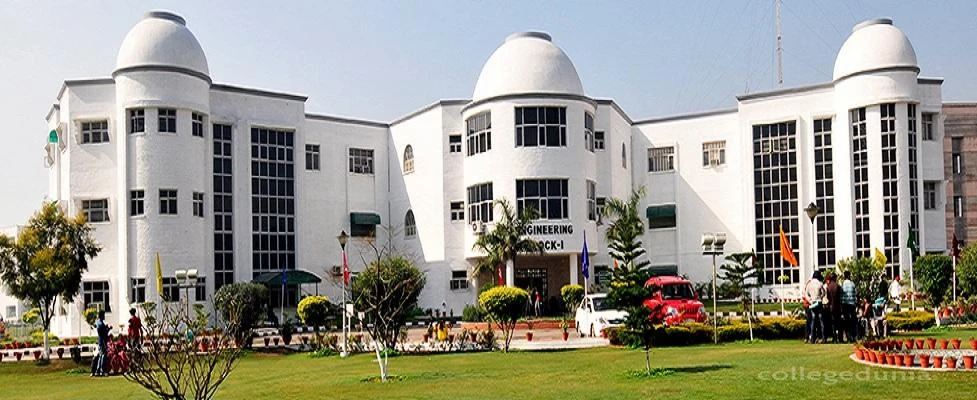
The CEC campus, spread over an estimated 25-30 acres as part of the larger CGC Landran complex, is undeniably well-kept. It’s green, the buildings are modern, and the infrastructure for its flagship programs is good. The labs for CSE and IT are well-equipped. The library is digitalized with access to major journals. Wi-Fi covers the campus, though students say it’s reliably decent only in labs and classrooms, becoming patchy in hostels.
Hostel life is a major point of contention. There are separate hostels for boys and girls, with reviews rating the quality around a 3.5 out of 5. The food in the mess is routinely described as "average but edible." The campus has multiple food outlets, including a cafe street, which helps. A medical dispensary and ambulance service are available.
But the description of "campus life" here diverges sharply from a typical college experience. The environment is frequently called "school-like." Strict rules dominate: compulsory uniform on Tuesdays, Thursdays, and for all official events; a rigid 75% attendance mandate; restricted movement during class hours; and a fine system for infractions like late entry or dress code violations. The annual fest, "Parivartan," with its celebrity performances, is a bright spot. For the rest of the year, the social vibe is more controlled than vibrant.
Synthesizing student sentiment from review platforms and forums paints a clear, dual picture. The positives are laser-focused on outcomes. Placement opportunities are the number one pro. Even an average student has a high probability of landing a job offer due to the sheer volume of companies visiting. The infrastructure and campus aesthetics are also consistently praised—it doesn’t feel like a budget institution.
The negatives are about the daily experience. The "school-like" environment tops the list. Students feel micromanaged, citing rude security guards, excessive fines, and a lack of freedom. There’s significant resentment towards management policies, perceived as greedy, with complaints about hidden costs and aggressive fee collection. Academically, the common refrain is that teaching is theoretical, and real skill-building in coding or tech is a DIY project.
The consensus verdict from alumni is pragmatic: “If you want a degree and a job in a mass recruiter, this is the place. If you want 'college life' and freedom, stay away.” Another common piece of advice: “Teaching is mostly theoretical; you have to learn coding on your own.”
CEC Landran is a transactional college, and judging its worth depends entirely on what you’re buying. If your family is investing ~₹15-20 lakhs over four years with the singular goal of securing a stable, entry-level engineering job, CEC is a remarkably safe bet. Its placement machinery works. You will likely graduate with an offer in hand, often from a brand-name IT services company. The NAAC A+ grade and decent NIRF standing add a layer of academic legitimacy that some purely commercial institutes lack.
But you are paying with more than money. The trade-off is a restrictive, disciplined environment that many find stifling. The "college experience" here is minimal. If you value intellectual curiosity, campus freedom, peer-led learning, or a balanced student life, you will probably be frustrated. The college is best for students who are self-motivated learners (especially in tech), can tolerate strict rules, and are pragmatically focused on the job market. It’s a less suitable fit for those seeking a holistic, exploratory university atmosphere. In the end, CEC is a factory that produces employable engineers efficiently. Just know what kind of factory floor you’re signing up for.
CEC Landran and Chandigarh University (CU) offer different environments. CEC is affiliated with the government-run Punjab Technical University (PTU) and is often viewed as more academically strict. In contrast, CU is a private deemed university known for providing greater exposure and campus freedom.
Yes, wearing the college uniform is mandatory on specific days and events. Students must be in uniform on Tuesdays, Thursdays, and during all official functions and placement drives.
Direct admission to the B.Tech Computer Science program is possible through the Management Quota, which reserves 33% of seats. Eligibility typically requires high marks in your 12th standard, usually 75% or above for the CSE branch.
The hostel for girls is considered safe but has very restrictive rules. Outing timings are strictly monitored, and obtaining leave often requires formal parental permission.
While the college may advertise higher figures, the realistic average placement package for a CSE student with decent skills is typically in the range of ₹5 to 6 lakhs per annum (LPA).
Share what future students should know about CEC.
Student voices are not rewritten by colleges. We remove spam and abuse.
Wider admission question? Community PulseWhat should future students know?
Tell us which course you're considering. We'll help you work out the next step.
Get instant Partner access after mobile verification. Your public edits are reviewed before they go live.
Claim this college Auditorium
 Cafeteria
 Campus Security
 Campus Shuttle
 Computer Labs
 Gym
Gym Hostel
 Medical
 Science Labs
 Sports Complex
 Study Library