Loading Admission Guardian content
Loading Admission Guardian content

Provisional score based on available data. It may change as more information is verified.
Selected ranking categories, with the recorded year beside each result. Open all records for the complete history.
5 published records · Lower numeric ranks are stronger
IIRF
Engineering · private
#482022
IIRF
B.Tech · private
#492022
Find a program, read its fee details and explore the admission requirements.
Summary of the programs shown below. Programs record different fee periods. Compare the individual amounts and their notes below.
| Course | Stream | Fees |
|---|---|---|
| Master of Business Administration [MBA] | Management | 90000 |
| Master of Technology [M.Tech] | Engineering | 128000 |
| Bachelor of Engineering [BE] | Engineering | 238000 |
| Ph.D | Science |
Specializations
All accepted exams
Eligibility: Graduation with 50% + CAT
Specializations
All accepted exams
Eligibility: Graduation with 50% + Karnataka PGCET
Specializations
All accepted exams
Eligibility: 10+2 with 45% + KEAM
Specializations
Eligibility: Post Graduation
3 exams with cutoff data available
 Hindustan Copper Limited (HCL)
 Infosys
 Kotak Mahindra Bank
 Ness Technologies
 TCS
TCSIf you're looking at engineering colleges in Karnataka with a KCET rank between 55,000 and 1,00,000, Channabasaveshwara Institute of Technology (CIT) in Gubbi, Tumkur, is a name that'll keep popping up. It's a classic Tier-3, VTU-affiliated private college with a straightforward proposition: a decent, accredited education at a relatively affordable price, especially for state quota students. The trade-off is its location—a quiet, rural 25-acre campus about 20 km from Tumkur city and 80 km from Bangalore. For some, that's a feature, not a bug. For others, it's a deal-breaker. The college's B++ NAAC grade and NBA accreditation for key departments like CSE and ECE give it a baseline of academic credibility. But the real story here is about managing expectations. It's not a brand-name institute, but for a certain student profile, it can be a pragmatic launchpad into the IT services industry.
CIT offers the standard suite of VTU B.E. programs. The intake numbers tell you where the focus is: Computer Science & Engineering (CSE) leads with 180 seats, followed by ECE at 120. Information Science & Engineering (ISE) and the newer Artificial Intelligence & Data Science (AI & DS) program have 60 seats each. The core branches—Mechanical, Civil, and Electrical—also have 60 seats apiece. At the postgraduate level, you'll find an MBA program and M.Tech in CSE and Electronics.
The academic rhythm is dictated entirely by VTU's calendar. You'll follow the Choice Based Credit System (CBCS) and be graded on a 10-point scale. Faculty-wise, the college has about 129 members. Around 15-20% of the core faculty hold PhDs, with the vast majority of others holding an M.Tech. Student reviews consistently highlight that professors are approachable and supportive, especially for project guidance. That's a significant plus in a system that can often feel impersonal.
There are some industry and international MoUs in place, like the one with the University of Alabama, Birmingham, and the National Crash Analysis Center in the USA. The college also promotes its 'CITRIS' research and innovation society. In practice, for an undergraduate, the academic experience will be defined by VTU's syllabus, the quality of your department's labs (CSE and ECE are noted as well-equipped), and your own drive to learn beyond the curriculum. It's a solid, if conventional, setup.
This is where you need to read between the lines. The official placement brochure and website will tout a 90%+ placement rate. The on-the-ground reality, pieced together from alumni reviews on platforms like CollegeDunia and Shiksha, is more nuanced and branch-dependent.
For students in CSE, ISE, and to a good extent ECE, placements are a tangible reality. If you maintain a CGPA north of 7.5, you have a very high chance of landing an offer from one of the mass IT recruiters. The top recruiters are the usual suspects: Infosys, Wipro, TCS, Capgemini, IBM, Tech Mahindra, and HCL. For the 2024-25 cycle, the highest package stood at ₹13.60 LPA (for CSE), with some reports of it touching ₹14.50 LPA recently. The average package is around ₹4.50 LPA, and the median is between ₹4.00 and ₹4.50 LPA, as per the NIRF report.
That's the good news. The gap emerges in two places. First, the overall placement percentage. While the college claims 90%, the consensus from student reviews suggests a working figure closer to 60-75% for the IT-centric branches. The second, more stark gap is for core branches like Mechanical and Civil. Placement support there is minimal, with only about 20-30% of students typically securing core engineering roles. Many end up trying for IT roles or government jobs. The placement cell is effective for the IT services sector, which constitutes about 80% of the offers, but don't expect a diverse recruiter pool for niche or core engineering fields.
The cost structure at CIT is a tale of two quotas, and it dramatically impacts the value proposition.
For students admitted through the KCET (Karnataka quota), the annual tuition fee is quite reasonable, ranging from approximately ₹96,000 to ₹1,07,000. Add to that hostel and mess fees, which run from ₹75,000 for a triple-sharing room to ₹1,25,000 for a single room (mess included). Over four years, a KCET student can expect a total cost of ₹7.5 to ₹8.5 lakhs, all-inclusive. That's a decent deal.
For COMEDK or Management quota students, the equation changes. Annual tuition jumps to between ₹2.30 lakhs and ₹3.50 lakhs, with CSE and ISE at the higher end. The total 4-year cost for a management seat student can balloon to ₹14 to ₹18 lakhs. At that price point, you're entering a different competitive set of colleges, and the ROI calculation needs sharper scrutiny.
The college does facilitate government scholarships. Students can apply through the State Scholarship Portal (SSP), National Scholarship Portal (NSP), and the Vidyasiri scheme. Fee concessions for SC/ST/OBC students are also provided as per government norms.
Admission to the B.E. programs is primarily through the Karnataka Common Entrance Test (KCET). COMEDK UGET and JEE Main scores are also accepted, mainly for filling the All India/Management quota seats.
The KCET cutoff ranks give you the clearest picture of demand. For the 2024 General Merit round:
Selection happens through the centralized counseling conducted by the Karnataka Examination Authority (KEA) for KCET seats. For COMEDK seats, it's through the COMEDK counseling process. Management quota admissions require a direct application to the college, and seats are filled based on eligibility and availability—often at a premium. You can find all official admission notifications on their website: CIT Tumkur.
Life at CIT is defined by its semi-rural setting. The 25.5-acre campus is green and peaceful—a fact students either love or lament. If you're looking for a focused, distraction-free environment to study, it works. If you envision a vibrant, city-like college life with easy access to cafes, events, and internships, you'll find it lacking.
The infrastructure is adequate. Hostels are separate for boys and girls, with a total capacity of around 1000. Reviews rate them a 3.5 out of 5—clean and functional, but not luxurious. The campus has a central library with a decent collection and digital journal access via VTU. A notable feature for a college of its size is the KSCA-approved cricket ground. There are also facilities for volleyball, basketball, and a basic gym.
Wi-Fi is available in hostels and certain zones, but students report speeds as just "average" (10-20 Mbps). The canteen food gets a middling 3/5 rating, with South Indian meals being the staple. The college organizes annual fests like "Flair" and "Advaitha," but students often describe them as average compared to the large-scale fests in Bangalore colleges.
And then there's the rule. The college is notoriously strict about enforcing VTU's 85% attendance mandate. Students frequently complain about being fined or even debarred from exams for falling short. It creates a disciplined, almost school-like atmosphere that some appreciate and others find stifling.
Synthesizing feedback from CollegeDunia, Shiksha, and forums like Reddit paints a consistent picture.
The positives are clear: value for money for KCET students, a supportive faculty, and reliable IT placements for those in the right branches with good grades. One alumni on CollegeDunia put it simply: "Placements for CSE are solid. I got into Wipro with a 4.5 LPA package without much extra effort." The quiet campus is often seen as conducive to studying.
The negatives are just as consistent. The strict 85% attendance policy is the single biggest grievance. A Reddit user on r/Indian_Academia called it "a nightmare." The remote location limits off-campus opportunities and weekend social life. There's also a sentiment that the administration can be rigid. As one Shiksha review summarized: "It's a good place to study if you want zero distractions, but don't expect a 'movie-style' college life here." Students from Mechanical and Civil branches feel particularly sidelined during placement season.
The answer depends entirely on your entrance rank, budget, and branch.
CIT is a sensible, pragmatic choice for a Karnataka student with a KCET rank between 55,000 and 1,00,000 who is admitted to CSE, ISE, or ECE through the state quota. At a total cost of ~₹8 lakhs, the ROI is defensible given the high probability of landing a ₹4-5 LPA IT job. You're paying for a functional education and a placement ticket, not a brand or a cosmopolitan experience. You need to be self-motivated, okay with a strict, rural campus, and clear that your job prospects are tied to the IT services sector.
You should probably look elsewhere if: You're paying the management quota premium (₹14-18 lakhs), as better-known options exist in that price range. You're joining Mechanical or Civil engineering with dreams of core placements—the support here is minimal. Or, if an active, independent campus life with easy city access is a non-negotiable part of your college experience. CIT is a workmanlike institute that serves a specific need in the Karnataka engineering ecosystem. It's not glamorous, but for the right student, it gets the job done.
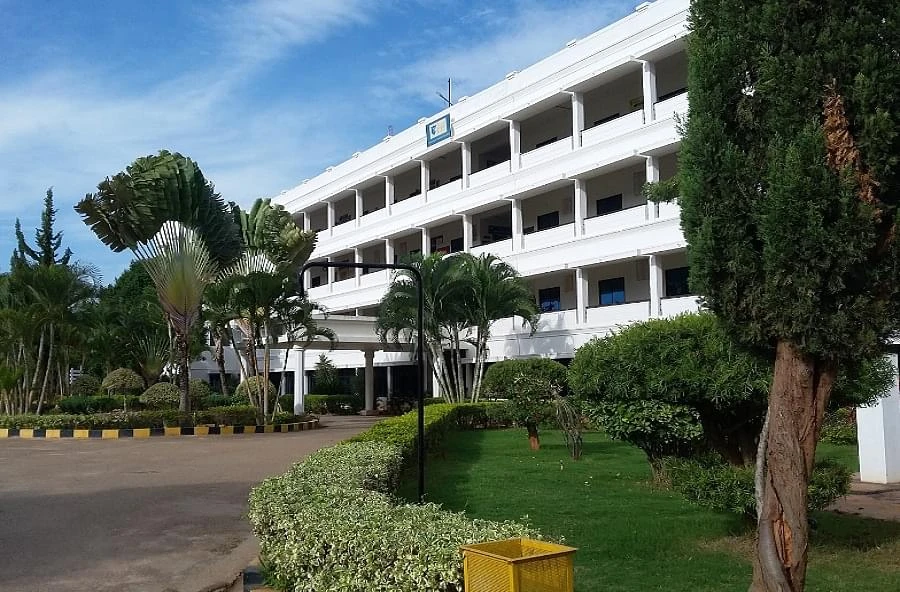
In this preview: 1 photo · 0 videos
No. SIT (Siddaganga Institute of Technology) is a Tier-1/2 college in Karnataka with much higher rankings and placements. CIT is a Tier-3 college, suitable for those with higher KCET ranks.
Yes, the college is very strict about the VTU 85% rule and often enforces it with fines or exam debarment.
Placements in core companies are rare. Most students from these branches end up in IT mass recruiters or pursue government jobs.
No, it is in Gubbi, which is about 20 minutes away from Tumkur city.
Yes, management seats are available, but they are in high demand and usually require a "donation" or higher fee structure.
Share what future students should know about CIT.
Student voices are not rewritten by colleges. We remove spam and abuse.
Wider admission question? Community PulseWhat should future students know?
Tell us which course you're considering. We'll help you work out the next step.
Get instant Partner access after mobile verification. Your public edits are reviewed before they go live.
Claim this college
 Auditorium
 Cafeteria
 Campus Shuttle
 Computer Labs
 Gym
Gym Hostel
 Sports Complex
 Study Library