Loading Admission Guardian content
Loading Admission Guardian content
Provisional score based on available data. It may change as more information is verified.
Selected ranking categories, with the recorded year beside each result. Open all records for the complete history.
2 published records · Lower numeric ranks are stronger
IIRF
B.Tech · public
#382023
Find a program, read its fee details and explore the admission requirements.
Summary of the programs shown below. Total course fee. Check the note beside each amount for inclusions and exclusions.
| Course | Stream | Fees |
|---|---|---|
| Post Graduate Diploma in Plastics Processing and Testing | Engineering | 42250 |
| Master of Technology [M.Tech] (Plastic Engineering / Technology) | Engineering | 50000 |
| Diploma in Engineering (Polytechnic) | Engineering | 90750 |
| Bachelor of Technology [B.Tech] | Engineering | 200000 |
| Bachelor of Technology [B.Tech] {Lateral} | Engineering |
Specializations
Specializations
All accepted exams
Eligibility: Pass in Graduation + GATE
Specializations
Specializations
All accepted exams
Eligibility: 10+2 with 75% + UPTAC
Specializations
All accepted exams
Eligibility: 10+2 + UPTAC
3 exams with cutoff data available
If you're looking at a B.Tech in Lucknow and the thought of another generic CSE program makes you yawn, CIPET: Institute of Petrochemicals Technology (IPT) is a different beast entirely. This isn't your typical engineering college. It's a government-run specialist institute that's been quietly funneling graduates into India's core manufacturing sector since the late 80s. Forget coding bootcamps; here, the curriculum is built around injection moulding machines, polymer blends, and CNC tooling. The placement numbers tell a clear story: for a specific kind of student—one genuinely interested in the tangible world of plastics, automotive components, and packaging—this place offers a near-guaranteed job at a cost that's almost unbelievably low. But you trade the classic 'campus life' for it. The 6.5-acre campus in an industrial zone feels more like a high-stakes technical training center than a university. That's the trade-off. It's a niche, and for the right person, it's a very smart one.
This is a vertically integrated institute. It runs the full stack, from diplomas to PhDs, all laser-focused on polymers and manufacturing. The undergraduate flagship is the B.Tech in Plastics Engineering (60 seats), with a sibling program in B.Tech Manufacturing Technology (60 seats). The academic calendar follows AKTU's schedule, and the grading is a standard 10-point CGPA system.
But the real volume is in the skill-oriented diploma courses. The Diploma in Plastics Technology (DPT) and Diploma in Plastics Mould Technology (DPMT) each take in 120 students annually. There's a key difference: DPT leans into materials and processing, while DPMT is for the tooling and machining side. For postgraduates, there's an M.Tech in Plastics Engineering (18 seats) and a practical Post Graduate Diploma in Plastics Processing & Testing (PGD-PPT).
The academic culture is intensely practical. You'll spend a lot of hours in the labs, which are universally praised as the institute's crown jewel. They're filled with industry-standard injection moulding, blow moulding, and extrusion machines, plus a full CAD/CAM suite. The faculty is a mix of core technical officers, like Joint Director Mr. Vivek Kumar, and a roster of guest lecturers from industry. Some student reviews on forums point out occasional faculty shortages, leading to reliance on junior technical staff for some sessions. It's a trade-off for the hands-on focus.
This is where the institute's niche focus pays off. The official placement claim hovers around 90%+, but talking to alumni paints a more nuanced picture. For B.Tech in Plastics Engineering, a 70-80% placement rate for on-campus offers is the working number students cite. For Manufacturing Technology, it's a bit lower, maybe 50-60%. The surprising stars are the diploma holders (DPT/DPMT)—their placement is nearly 100% because there's ferocious demand for skilled shop-floor technicians.
Packages are honest, not eye-watering. The highest package for 2023-24 was officially ₹15 LPA from Reliance Industries, but the realistic peak students talk about for 2024 is closer to ₹12.5 LPA. The average for B.Tech grads spreads from ₹3.5 LPA to ₹6 LPA, with a median around ₹3 LPA. For diploma holders, starting salaries are typically in the ₹2.2 LPA to ₹3.5 LPA range.
The recruiter list is a who's who of Indian manufacturing: Reliance Industries, Tata Motors, Maruti Suzuki, Motherson Sumi, L&T, Supreme Industries, and JK Tyres. About 60% of roles are in core plastics/polymer manufacturing, 20% in automotive, and the rest split between packaging and ancillary sectors. You won't see mass IT recruiters here. That's the point.
The affordability is a major draw, especially for a government institute with its level of specialized equipment. For the 2025-27 cycle, the annual tuition fee for the B.Tech programs is estimated between ₹61,250 and ₹65,000. Over four years, you're looking at a total tuition cost of roughly ₹2.45 to ₹2.60 lakhs.
Add to that hostel fees, which range from ₹10,000 to ₹21,000 per year (without food). Mess charges run about ₹2,500 to ₹3,500 per month. There are the usual semester exam fees (approx. ₹2,500) and small one-time deposits. Even with everything, the total annual cost for a B.Tech student in the hostel is remarkably low compared to private colleges.
Scholarship support includes standard UP State scholarships for SC/ST/OBC/EWS students. There's also the Plast India Foundation Scholarship, which offers up to ₹12,000 for meritorious students in the field.
Admission routes depend on the program. For the B.Tech courses, you need a valid JEE Main score and must go through UPTAC state counseling. The cutoffs aren't for the faint-hearted rank-chasers; they go deep. In 2024, the closing rank for the General All India quota in B.Tech Plastics Engineering was 7,25,988. For Manufacturing Technology, it was 10,69,603. That's a wide-open door for students with moderate JEE scores but a clear interest in the field.
For the M.Tech program, you need a GATE score or must appear for CUET-PG. Admission to all Diploma and PG Diploma programs is through the institute's own CIPET JEE (Joint Entrance Exam). The application window typically opens in February, with counseling stretching through July and August.
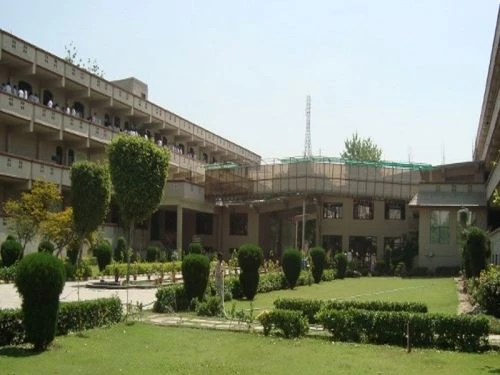
Let's be direct: if you're dreaming of a vibrant, leafy campus with endless fests, look elsewhere. CIPET IPT Lucknow is situated in the Amausi Industrial Area. It's functional. The 6.5-acre campus is clean and has the essentials, but the vibe is that of a serious training center. The location is a double-edged sword—incredibly convenient for industry visits and close to the airport and metro, but isolated from the cultural and social hubs of Lucknow.
The hostels (separate for boys and girls) offer basic, hygienic 3-seater rooms. Reviews rate them around 3.5/5. The common complaint, almost a universal chorus, is about the mess food—rated 2.5/5 for being bland and repetitive.
Where the infrastructure truly shines is in the labs and workshops. The NABL-accredited testing labs, the rows of processing machines, and the modern CAD/CAM lab with software like CATIA and Pro-E are what you're really paying for with your time here. The library is highly specialized, with over 50,000 volumes on polymer science. There's a small playground and basic indoor sports facilities. Wi-Fi is decent in academic blocks but can be spotty in hostels.
The student sentiment online forms a clear consensus. On the plus side, the phrase "best ROI college in UP for core manufacturing" comes up constantly. The practical, hands-on curriculum is highly valued. Students feel they graduate with real, marketable skills on specific machinery, which makes them job-ready from day one. The low fee is a constant source of relief compared to peers in private engineering colleges.
The negatives are just as consistent. Social life is minimal. The institute doesn't have a typical college atmosphere; it's more disciplined and routine-driven. The 75% attendance rule is strictly enforced. Many reviews on Quora and Reddit mention a somewhat "bureaucratic" administration and confirm the occasional faculty shortage, leading to inconsistent lecture quality in some theory subjects. It's a place for heads-down learning, not for campus exploration.
CIPET IPT Lucknow is a specialist tool, not a Swiss Army knife. It is unequivocally worth it for a specific student: someone who is genuinely interested in the plastics, polymer, or core manufacturing industries and wants a near-guaranteed, affordable path into it. If you have a moderate JEE rank, want to avoid the crushing competition of IT placements, and don't mind a no-frills, workmanlike academic environment, this institute is a brilliant choice. The ROI is exceptional.
However, you should probably look elsewhere if you're unsure about your specialization, crave a vibrant campus life with big fests, or are aiming for a high-paying software job. This college doesn't pretend to offer those things. It offers a direct pipeline into the heart of Indian manufacturing. For the right candidate, that's more than enough. You can find the latest official information on the CIPET Lucknow website and verify its standing through the NIRF Rankings portal.
Yes, CIPET Lucknow is a good choice for a B.Tech if your primary interest is in core manufacturing and plastics technology. However, it may not be ideal if you are seeking a high-paying career in IT or a campus with a vibrant social and extracurricular life.
The DPT (Diploma in Plastics Technology) program focuses on plastics processing and materials science. In contrast, the DPMT (Diploma in Plastics Mould Technology) program concentrates on mould design, tool engineering, and CNC machining.
Yes, admission is possible with a low JEE Main rank. For the All India quota, the cutoff ranks for programs can often extend beyond 7 to 8 lakhs, making it accessible to many students.
No, staying in the hostel is not mandatory. However, it is often recommended, especially for diploma students, due to the practical schedule which can include early morning laboratory shifts.
Placements are available for Manufacturing Technology specializations, but the placement rate is typically lower, around 50–60%, compared to the higher 90% placement rate often seen for Plastics Engineering streams.
Share what future students should know about IPT.
Student voices are not rewritten by colleges. We remove spam and abuse.
Wider admission question? Community PulseWhat should future students know?
Tell us which course you're considering. We'll help you work out the next step.
Get instant Partner access after mobile verification. Your public edits are reviewed before they go live.
Claim this college
 Auditorium
 Cafeteria
 Computer Labs
 Hostel
 Science Labs
 Sports Complex
 Study Library