Loading Admission Guardian content
Loading Admission Guardian content

Provisional score based on available data. It may change as more information is verified.
Find a program, read its fee details and explore the admission requirements.
Summary of the programs shown below. First-year fee. Check the note beside each amount for inclusions and exclusions.
| Course | Stream | Fees |
|---|---|---|
| Bachelor of Homeopathic Medicine & Surgery [BHMS] | Medical | 49000 |
All accepted exams
Eligibility: 10+2
1 exam with cutoff data available
If you're looking at homeopathy colleges in Gujarat, CN Kothari Homoeopathic Medical College & Research Centre in Surat is a name that comes up. Established in 2001, it's a private institution that has built a solid, if somewhat quiet, reputation over two decades. It’s affiliated with Vir Narmad South Gujarat University and, crucially, is approved by the Central Council of Homoeopathy (CCH), now under the National Commission for Homoeopathy (NCH). That approval is the baseline for any legitimate BHMS program. The college received a 'C' grade from the NCH in 2024, which is a decent standing for a private institution in this niche field. What stands out from student chatter isn't groundbreaking research or sky-high rankings—it's the consistent praise for the teaching quality and, surprisingly, the mess food. This is a college that seems to focus on the fundamentals of homeopathic education within a 4.1-acre campus, preparing students for a career path that is almost entirely self-driven after graduation.
The academic offering here is focused. The sole undergraduate program is the Bachelor of Homoeopathic Medicine & Surgery (BHMS), with an annual intake of 100 students. It's a full-time, 5.5-year commitment—typically 4.5 years of academic work followed by that mandatory one-year internship. Don't come here looking for a buffet of PG options; the college itself doesn't explicitly offer postgraduate degrees. However, its affiliating university, VNSGU, does offer PhD programs for those looking to advance further.
The curriculum is comprehensive, covering all the expected departments: from Homoeopathic Pharmacy and Materia Medica to Organon of Medicine, Surgery, and Community Medicine. Practical exposure is integrated through the attached hospital's OPD, surgical camps, and community outreach in nearby villages. The college also mentions a "Graded Degree" course for external candidates, which is a bit of a unique feature.
Faculty strength is listed at 39 members. Student reviews on platforms like Shiksha are overwhelmingly positive on this front, with an average faculty rating of 4.5/5. They're described as well-qualified, experienced, and helpful. That said, you’ll find the occasional dissenting voice—one review pointedly stated that "full-time teaching faculty members are not satisfactory." It’s a reminder that experiences can vary. Academically, the college claims a 100% pass rate every year, but students note the exams are tough, with a 50% passing threshold.
Let's be direct: this college does not have a placement cell in the conventional engineering or B-school sense. Student reviews confirm this unanimously. One put it plainly: "Students don't get any placement from college."
The career pathway is built into the program structure. After the academic portion, you complete a one-year compulsory internship, often at the college's own hospital or an affiliated facility. After that, you're on your own. Graduates typically register as medical officers and either join an existing homeopathic practice, start their own clinic, or seek positions in other hospitals. There are no published highest, average, or median packages because there’s no corporate recruitment process to generate them.
This isn't necessarily a flaw—it's the nature of the field. Your "placement" is your license to practice and your entrepreneurial drive. The college facilitates the internship, which is considered good due to the attached hospital, but it doesn't broker job offers. Your prospects hinge on building a reputation during your internship and developing a patient base afterward.
The fee structure is clearly laid out on the college's official website and follows a predictable annual increase. For the BHMS program, there are two main channels: Government Quota seats and Management Quota seats.
For the 2026-27 academic year, the annual tuition is ₹1,48,000 for Government Quota and ₹2,31,000 for Management Quota. Over the 5.5-year duration, that translates to a total tuition cost of approximately ₹8.14 lakhs (Govt. Quota) or ₹12.7 lakhs (Management Quota). These figures are for tuition only; you'll need to factor in additional costs for hostel, mess, and other developmental fees, which aren't explicitly detailed in the available data.
On financial aid, the college does offer scholarships based on merit and categories like reserved quotas. They also assist students in applying for state government schemes (like Gujarat's Mukhyamantri Yuva Swavalamban Yojana) and central government scholarships. It's worth inquiring directly with the admission office about eligibility and application procedures.
Admission to the BHMS program is strictly through the National Eligibility cum Entrance Test (NEET-UG). There's no other way in. Your NEET-UG score is the sole academic criterion.
The selection process is centralized. After NEET results are declared, you must participate in the state-level counseling conducted by the Gujarat authorities. This involves application submission, document verification, and online seat allotment. The application window usually aligns with this counseling schedule, typically opening around June-July.
The brief mentions that the "highest cutoff for admission remains around 200 maximum every year." This likely refers to the state merit rank, but it's a vague figure. For accurate, year-specific cutoff ranks, you must refer to the official seat allotment lists published by the state counseling authority. The college does have a management quota, which typically has a separate, often lower, cutoff rank but a significantly higher fee.
The campus spans 4.1 acres in Vyara, which is a quieter setting compared to central Surat. Infrastructure includes an auditorium, seminar halls, a herbarium garden, and well-ventilated classrooms that students appreciate. The library is noted to be well-stocked with homeopathic texts and journals.
Hostels are separate for men and women, with the girls' hostel having a capacity of 225 beds. Reviews on the hostels are mixed. Some call the rooms "excellent," while others advise, "Hostel infrastructure is good enough but not admirable. If you have no other option, then you can choose the hostel. Otherwise, go for a different option." The mess, however, is a universal highlight. Multiple students rave about it, with one claiming the "quality and quantity of food are the best... anywhere in Gujarat."
There are contradictions in the data you should be aware of. While some sources list a "Wi-Fi Campus," a student review explicitly states, "There is no Wi-Fi for students neither on campus nor in the hostel." Similarly, a cafeteria is listed as a facility, but a student says there is "no canteen." It's best to confirm these amenities during a campus visit.
On the plus side, medical facilities are robust with an attached hospital offering OPD and surgical services. Sports get attention too, with a sports complex, gym, and annual sports festivals featuring kabaddi, cricket, volleyball, and indoor games. The college also organizes annual fests and seminars, though some students felt extracurriculars could get more focus.
Synthesizing feedback from Shiksha and CollegeDunia (with an overall rating hovering around 4.2/5), a clear picture emerges.
The Good: The faculty is the star. They're repeatedly praised for being qualified, approachable, and effective. The academic environment is taken seriously. The mess food is legendary among students. The campus is considered pleasant and the attached hospital provides essential practical training. Annual fests and sports events break the routine.
The Not-So-Good: The lack of a placement cell is the most frequent critique. You are signing up for a self-employed career path. The inconsistencies in infrastructure—specifically the disputed Wi-Fi and canteen availability—are points of frustration. While hostel rooms are generally okay, they don't inspire rave reviews. A few students felt the full-time faculty could be better, and that extracurriculars were sidelined.
The student sentiment suggests this is a college for those who are self-motivated. You'll get a solid homeopathic education from good teachers and eat well. But you won't be handed a job, and you might have to manage your own internet connection.
CN Kothari Homoeopathic Medical College is a straightforward proposition. It's best for a student who has clearly chosen homeopathy as a career, has a moderate NEET-UG rank (likely within a few hundred in the state merit list), and is seeking a reputable, established private college in Gujarat. If your priority is learning from good teachers in a disciplined environment and you understand that building a practice is your responsibility post-internship, this college delivers on its core promise. The fee for government quota seats is reasonable for a private medical college.
You should probably look elsewhere if you expect campus placements, crave a bustling urban social life, or demand flawless, modern amenities like reliable student Wi-Fi. The remote Vyara location is also a factor—it's peaceful but isolated. Ultimately, it's a pragmatic choice for a pragmatic career. It provides the accredited degree and clinical training you need. The rest—your success as a homeopathic practitioner—is up to you.
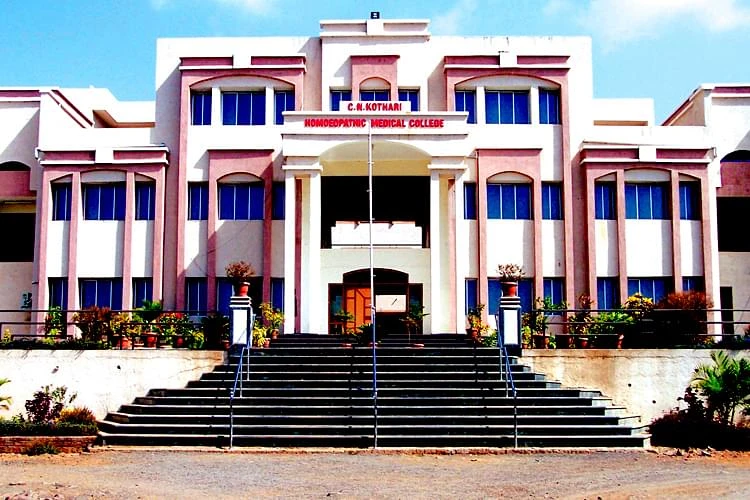
In this preview: 1 photo · 0 videos
The fee structure for the BHMS program at CN Kothari Homoeopathic Medical College & Research Centre for the 2025-2027 academic session is a key detail for prospective students. It is essential to contact the college administration directly or check the official college website for the most accurate and up-to-date fee information, as costs can vary by year and category.
Admission to the BHMS program at CN Kothari Homoeopathic Medical College & Research Centre is based on NEET-UG scores. The specific admission criteria and the annual NEET-UG cutoff ranks are determined by the college and relevant state counseling authorities. Candidates should refer to the official college notifications or state counseling websites for the exact cutoff scores for their admission year.
CN Kothari Homoeopathic Medical College & Research Centre offers placement assistance and career guidance to its BHMS graduates. Career prospects for BHMS graduates include opportunities in private practice, government and private hospitals, research, teaching, and the pharmaceutical industry. The college's support aims to help students navigate these diverse professional pathways.
CN Kothari Homoeopathic Medical College & Research Centre provides hostel accommodation for its students. The facilities typically include essential amenities for comfortable living. The quality and variety of food served in the hostel mess are important aspects of campus life that the college manages to meet student needs.
Yes, CN Kothari Homoeopathic Medical College & Research Centre provides Wi-Fi internet access for students across the academic campus and within the hostel premises. This facility supports students in their academic research, coursework, and general connectivity needs.
Share what future students should know about CN Kothari Homoeopathic Medical College & Research Centre.
Student voices are not rewritten by colleges. We remove spam and abuse.
Wider admission question? Community PulseWhat should future students know?
Tell us which course you're considering. We'll help you work out the next step.
Get instant Partner access after mobile verification. Your public edits are reviewed before they go live.
Claim this college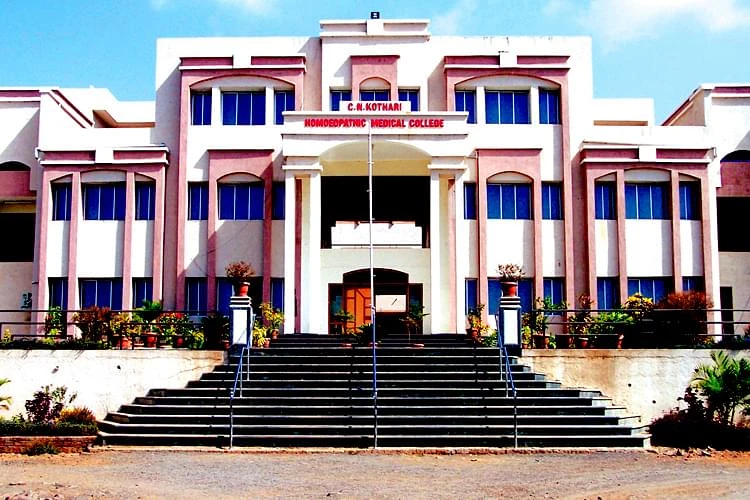
 Auditorium
 Cafeteria
 Computer Labs
 Medical
 Study Library