Loading Admission Guardian content
Loading Admission Guardian content

Find a program, read its fee details and explore the admission requirements.
Summary of the programs shown below. Fee periods can differ by program. Check the note beside each amount before comparing costs.
| Course | Stream | Fees |
|---|---|---|
| Bachelor of Technology [B.Tech] | Engineering | 29130 |
Specializations
All accepted exams
Eligibility: 10+2
2 exams with cutoff data available
If you're looking for a government engineering college in Bihar where the fees won't break the bank, Darbhanga College of Engineering (DCE) is a name that comes up. Established in 2008 and run by the state's Department of Science and Technology, it's a practical choice for students with mid-range JEE Main ranks. The campus is spread over 42 acres on the city's outskirts, and the college has recently shifted its affiliation to Bihar Engineering University (BEU). It's a place with clear trade-offs: extremely affordable tuition but a placement scene that requires serious student hustle. The college is trying to modernize, adding programs in Cyber Security and Fire Technology, and even setting up a 3D printing lab with CDAC. But the real story, as always, is in the student experience—a mix of supportive faculty, basic infrastructure, and the constant challenge of securing a good job from a location that isn't a corporate hotspot.
DCE offers a standard set of engineering programs with a couple of newer additions that hint at an attempt to stay current. The total B.Tech intake is 360 students across six branches. Civil Engineering is the largest with 90 seats, followed by CSE, EEE, and Mechanical with 60 each. The newer, niche programs are B.Tech in Cyber Security and Fire Technology & Safety, each with 60 and 30 seats respectively. At the postgraduate level, there's an M.Tech in Power System Engineering with 30 seats.
Academically, it follows the affiliating university's semester system. Exams—mid-semester and end-semester—are generally held on schedule, though delays happened during the COVID years. The faculty mix is what you'd expect at a young government college: most hold M.Tech degrees, with some PhD holders among them. Student reviews consistently mention that the faculty is supportive and knowledgeable, which is a significant plus. However, the teaching quality can be inconsistent; some professors are deeply invested, while others are less engaged.
A notable academic feature is the college's role as a nodal center for a MeitY-funded Finishing School on 3D Printing and Additive Manufacturing, set up in collaboration with CDAC Kolkata. It's a specific, hands-on initiative that stands out. Beyond that, the academic collaborations seem limited. The curriculum is the standard one prescribed by the affiliating university, which means it's theoretically sound but may not always feel cutting-edge.
This is the section where you need to read between the lines. The official placement data and student anecdotes paint a picture of significant challenge mixed with occasional bright spots.
Let's start with the numbers, but treat them as a range, not a guarantee. The highest package touted is an impressive INR 43 LPA (year unspecified), mentioned in some student reviews. A more verifiable high from the 2019-23 batch is INR 17.39 LPA, with companies like Cisco reportedly offering up to 15-16 LPA. The average package, however, tells a different story. For the 2019-23 batch, the average was INR 3.36 LPA. Other reports cite figures between INR 4 LPA and INR 7 LPA for 2025. The median package for the 2022 B.Tech cohort was INR 3.84 LPA. That's a decent outcome for a state-run institution in the region, but it's not going to compete with national-level colleges.
The real friction point is the placement percentage. You'll see claims everywhere from 8% to 85%. The consensus from student reviews on platforms like CollegeDunia and Shiksha suggests the working figure for on-campus placements is likely between 50-70%, with CSE students faring better (maybe 80%). The gap between the official claim and what alumni say on Reddit is notable. Many students report that company visits are limited, and a significant number have to rely on off-campus opportunities or attend placement drives at the university level.
Top recruiters who have visited include major IT services firms: TCS, Infosys, Wipro, Cognizant, HCL, and Capgemini. Tech names like Cisco and Microsoft also appear on the list, alongside core companies like Tata Motors. The sectors are predominantly IT and some core engineering.
Internships follow a similar pattern. There are conflicting reports. Some say only 20-30% of students get them, while the college highlights that over 40% got internships at Cisco and 80% at centers like CDAC Patna. The reality for many seems to be that on-campus internship opportunities are scarce, often unpaid, and finding a good one requires off-campus hustle. Some students do secure paid internships at companies like Microsoft, but they are the exception, not the rule.
This is where DCE's government status shines. The cost of education is remarkably low.
For the B.Tech program, the annual tuition fee is just INR 29,250. Over four years, the total tuition adds up to INR 1,17,000. On top of this, you have other mandatory fees: a one-time registration fee (around INR 2,100), an annual development fee (INR 2,500), and semester exam fees (approximately INR 3,260 per semester). All in, the total academic cost for four years, excluding hostel, is in the range of INR 1.2 to 1.5 lakhs. That's exceptionally affordable.
Hostel fees, however, are a separate and more variable cost. The college has published a detailed fee structure for hostels, which includes mess charges. Prices range from about INR 55,000 per year for a non-AC four-seater to INR 1.25 lakhs for an AC single seater. There's a caution deposit of INR 5,000. But note: several student reviews mention much lower figures (e.g., INR 6,000 per semester for hostel, INR 2,500/month for mess), and there are reports that hostels do not accommodate first-year students. You should verify the current, exact hostel charges directly with the college at www.dcedarbhanga.org.
Financial aid is a strong point. Being a government college in Bihar, it facilitates several state scholarships, including the post-matric scholarship (approx. INR 14,000/year) for eligible SC/ST/OBC and minority students. The Bihar Student Credit Card Scheme offers educational loans up to INR 4 lakhs at minimal interest. There are also AICTE scholarships for girls and differently-abled students, and a state government incentive that provides girls with INR 50,000 upon graduation.
Admission to the B.Tech programs is centralized through the state counseling process. You need a valid score in either JEE Main or the state's BCECE exam. Your score then makes you eligible to participate in the Bihar Undergraduate Engineering Admission Counseling (UGEAC).
The cutoffs give you a clear idea of the competition level. For the 2024 JEE Main counseling round (General Category), the closing ranks were:
For M.Tech (Power System), admission is based on a valid GATE score.
The process is straightforward but requires you to be proactive with counseling dates. Typically, the Bihar UGEAC registration window opens in mid-May (e.g., May 15, 2025) and runs through June. You must register online, fill your choices, and lock your preferences based on your rank. There is no management or NRI quota—seats are filled purely through this merit-based counseling.
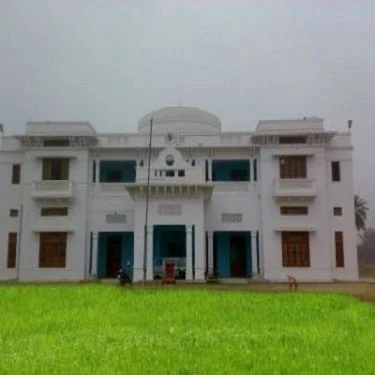
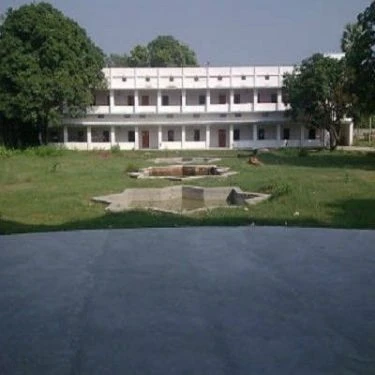
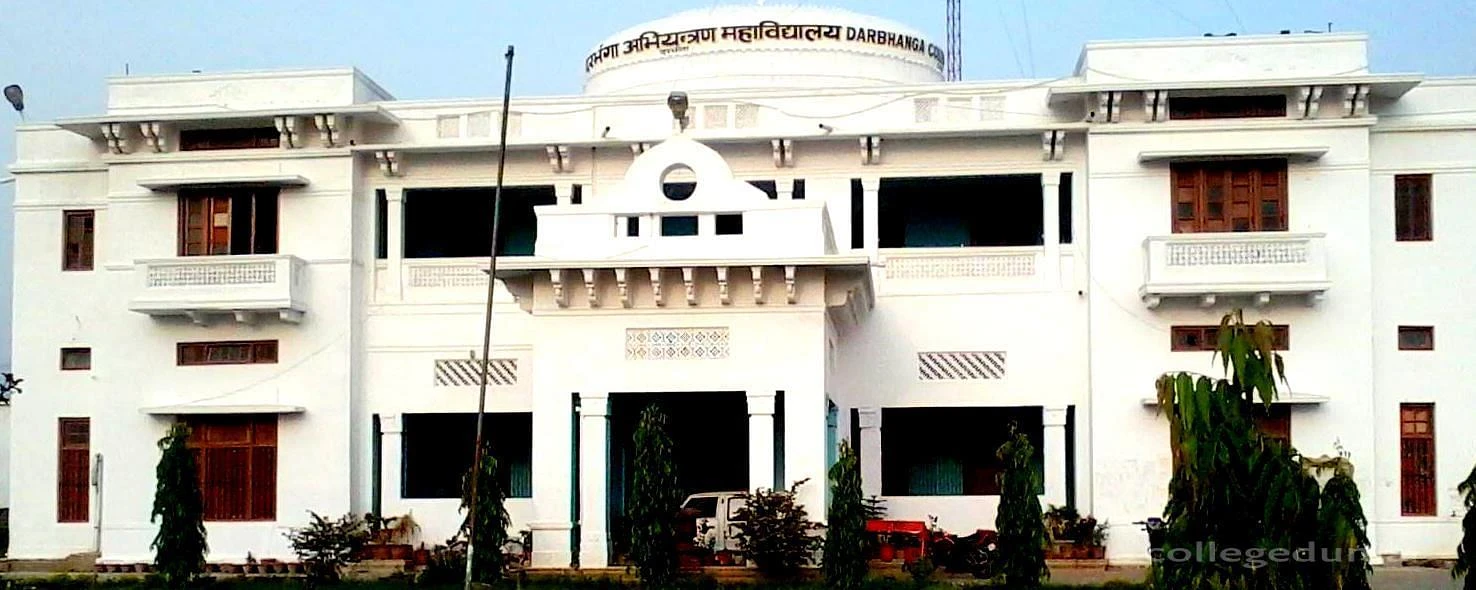
The 42-acre campus is described by students as green and peaceful, located away from the city's hustle. The main academic building has a unique history—it was originally built in 1935 and designed to be earthquake-resistant after the great Bihar-Nepal quake.
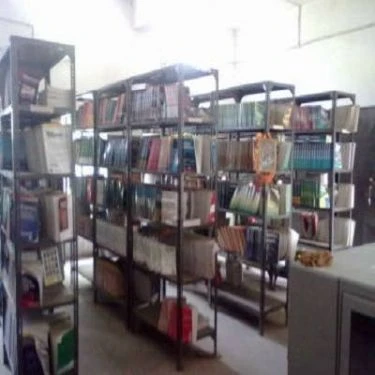
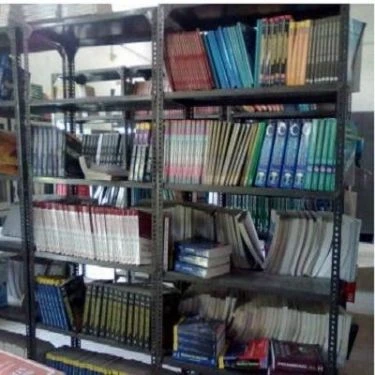
Infrastructure is a mix of adequate and needing improvement. Labs are generally well-equipped for core practical work, and the new CDAC robotics and 3D printing lab is a positive addition. The library has a collection of over 10,000 books, though some students complain about access or borrowing issues. Wi-Fi is a major point of contention. While the college claims campus-wide coverage with 95 access points, student reviews are all over the map: from "high-speed in every room" to "only works in specific spots" to "you will not get it." Assume the connectivity is unreliable.
Hostels are separate for boys and girls. Capacity is limited (approx. 300 boys, 150 girls), and first-year students might not get a seat. Reviews on quality are mixed—some say they're good and secure, others complain about distance from the academic block or average maintenance. The mess food gets similarly mixed reviews, from "hygienic and nutritious" to "not of good quality." A common complaint is the lack of a proper canteen; often, only a Sudha dairy counter is available.
On the positive side, sports facilities are decent with a large playground, and the cricket culture is particularly active. The college environment is reported to be ragging-free. There's a basic medical facility and ATM on campus. But social life is quiet. It's a typical government engineering campus where you make your own fun, and the location on the outskirts doesn't offer much in terms of nearby hangouts.
Synthesizing the chatter from review sites and forums, a clear consensus emerges.
The Good:
The Not-So-Good:
The overall sentiment is pragmatic. Students who are self-starters, not overly reliant on the college for placements, and seeking an affordable degree appreciate DCE. Those expecting a high-flying campus recruitment drive often end up disappointed.
Darbhanga College of Engineering is a classic case of "you get what you pay for." And what you're paying is very little.
It's worth serious consideration if: Your JEE Main rank is between 500 and 7000 (General), you have a tight budget, and your primary goal is to secure a reputable government B.Tech degree without a financial burden. It's a solid choice for students who are disciplined, willing to study independently, and proactive about seeking internships and placements off-campus. The supportive faculty and scholarship options make the academic journey manageable.
You should probably look elsewhere if: Your top priority is robust campus placements, high average packages, and a bustling college life with top-notch infrastructure. If you have a rank that can get you into an NIT, IIIT, or a well-known private college with a stronger industry connect, that investment will likely yield better career returns.
In short, DCE is a practical, no-frills launchpad for a career in engineering. It won't hand you opportunities on a platter, but it provides a stable, affordable platform from which a determined student can build their future. Just don't expect the campus to do the heavy lifting for your career.
In this preview: 5 photos · 0 videos
The average placement package at DCE varies by source and batch. For the 2019-23 batch, the reported average was around INR 3.36 LPA. Other reports and reviews mention figures ranging from INR 4 LPA to INR 7 LPA for recent years. The median package for the 2022 B.Tech program was INR 3.84 LPA. It's important to note that placement percentages are inconsistent, and many students secure jobs through off-campus efforts.
The B.Tech fee structure at DCE is very affordable due to its government status. The annual tuition fee is approximately INR 29,250. Over four years, total tuition sums to about INR 1,17,000. Additional mandatory fees (registration, development, exam fees) bring the total academic cost for the degree to roughly INR 1.2 - 1.5 lakhs. Hostel and mess fees are separate and can range from around INR 55,000 to over INR 1.2 lakhs per year depending on the room type (AC/non-AC, sharing).
For the General category in the 2024 admission cycle, the JEE Main closing ranks for B.Tech in Computer Science and Engineering at DCE ranged from 528 to 896. This means the last seat in the CSE branch was allotted to a candidate with a rank of 896. Cutoffs fluctuate slightly each year based on applicant pool and seat availability.
Yes, DCE has separate hostel facilities for boys and girls. However, capacity is limited (approx. 300 for boys, 150 for girls), and there are reports that first-year students may not always get accommodation. Hostel fees vary by accommodation type, from around INR 55,000/year for a non-AC four-seater to INR 1.25 lakhs/year for an AC single seater for girls. Student reviews on hostel quality and distance from the academic block are mixed.
Placements at DCE are challenging but improving in some areas. The college sees recruiters like TCS, Infosys, Wipro, Cisco, and HCL. The highest package reported for a recent batch is INR 17.39 LPA, with an average around INR 3.36-7 LPA. Placement percentages are widely reported, with a realistic on-campus placement rate likely between 50-70%, higher for CSE. A significant number of students rely on off-campus opportunities or university-level drives. The placement cell's effectiveness is a common point of feedback in student reviews.
Share what future students should know about DCE.
Student voices are not rewritten by colleges. We remove spam and abuse.
Wider admission question? Community PulseWhat should future students know?
Tell us which course you're considering. We'll help you work out the next step.
Get instant Partner access after mobile verification. Your public edits are reviewed before they go live.
Claim this college
 Cafeteria
 Computer Labs
 Science Labs
 Study Library