Loading Admission Guardian content
Loading Admission Guardian content
Provisional score based on available data. It may change as more information is verified.
Find a program, read its fee details and explore the admission requirements.
Summary of the programs shown below. Fee amounts are not listed. Contact the college for its current fee schedule.
| Course | Stream | Fees |
|---|---|---|
| Bachelor of Physiotherapy [BPT] | Medical | |
| Master of Physiotherapy [MPT] | Medical |
Eligibility: 10+2
If you're looking for a physiotherapy college in Punjab where clinical training isn't an afterthought, Dasmesh College of Physiotherapy (DCOP) in Faridkot makes a compelling case. Established in 2011 under the older Sangat Sahib Bhai Pheru Sikh Educational Society, its defining feature is the 100-bed Dasmesh Super-Specialty Hospital attached directly to the campus. That's the real draw. You won't find corporate placement drives here—this is a training ground for clinicians, where the focus is on hands-on patient care from the early years. It's a disciplined, no-frills environment affiliated with Baba Farid University of Health Sciences (BFUHS), and it serves a specific student looking for practical rigor over a vibrant campus social scene.
The academic portfolio is focused, built around the core Bachelor of Physiotherapy (BPT) program. It's a 4.5-year course, which includes a mandatory 6-month rotatory internship. The intake is 50 students per batch. The curriculum is standard for BFUHS-affiliated colleges, covering Anatomy, Physiology, Biomechanics, Exercise Therapy, and Electrotherapy. But the delivery is where DCOP tries to differentiate itself.
Clinical postings start early, and they happen in the attached hospital. That's a significant advantage over colleges that bus students to distant facilities. For postgraduates, the college offers a Master of Physiotherapy (MPT) program, with Orthopaedics being the confirmed specialization (4 seats). Mentions of Sports and Cardiopulmonary specializations exist in some materials, but they aren't explicitly verified on the primary university portal—prospective MPT students should confirm this directly with the college or BFUHS.
Faculty strength is modest, with around 7-10 core members. The principal, Dr. Pushpdeep Singh (MPT Ortho, Ph.D.), along with other senior faculty like Dr. Neha Chopra (Neurology), provide the academic leadership. The teaching quality, per student consensus, is rated highly. The small batch size relative to the hospital's patient load is what makes the clinical model work.
You need to reset your expectations here. This isn't an engineering college where Amazon and Microsoft show up. Placement in the corporate LPA-sense doesn't really happen. The college's model is built on ensuring 100% of students complete their compulsory internship, primarily within its own hospital network or through arranged postings.
The real "placement" is the skill set you build for a career in healthcare. Top paths for graduates include securing positions in government hospitals through state health department exams, joining private hospital chains like Fortis, Max, or Apollo, or setting up private practice. A notable number of alumni also pursue opportunities overseas in Canada, Australia, or the USA, after clearing the requisite licensing exams like the DPT or NPTE.
For fresher salaries in the Indian private sector, the consensus from student reviews points to a range of ₹2.4 to ₹4 Lakhs Per Annum. That's a realistic starting point for a fresh BPT in this region. The value proposition isn't a high starting package; it's the volume of hands-on clinical exposure you get, which arguably makes you more practice-ready.
The fee structure is often cited as a positive—it's relatively affordable for a private physiotherapy college in Punjab. For the 2024-25 academic year, the annual tuition fee for the BPT program is approximately ₹51,250. Over four years, that's roughly ₹2.1 lakhs in tuition alone.
You have to add other costs. The annual exam fee is around ₹4,050, and there are one-time or annual university charges of ₹6,000-₹10,000. A refundable security deposit of ₹5,000 is also required.
Hostel fees are a major additional component. A double-sharing room with mess charges runs about ₹95,000 per year. A single AC room jumps to around ₹1,40,000 annually. So, the total annual cost for an out-of-town student in a shared hostel can easily approach ₹1.5-1.6 lakhs.
Financial aid is available through government schemes. The Post-Matric Scholarship for SC/ST/BC students (Punjab Govt. rules) is applicable. Given the Sikh educational society background, minority scholarships are also offered, with Sikh community students potentially receiving up to ₹30,000.
Admission is centralized through the affiliating university. For the BPT program, eligibility requires 10+2 with Physics, Chemistry, Biology, and English, with a minimum of 50% aggregate for General category students and 40% for SC/ST.
Selection is primarily based on merit in the qualifying exam or the score from the PPMET (Punjab Para Medical Entrance Test), conducted by BFUHS. There's no separate college-level entrance. Allotment of seats happens through the BFUHS centralized counseling process. The application window typically opens in May-June for the autumn session.
For the MPT program, you need a recognized BPT degree with at least 50% marks. Admission is again subject to BFUHS counseling norms and seat availability in the specialization.
The campus is compact, about 2 acres as part of the larger Dasmesh Institutes. The infrastructure is functional and built around the hospital. You have specialized labs for Anatomy, Physiology, Electrotherapy, and Exercise Therapy, and a well-stocked library with medical journals and digital access.
The hostels, separate for boys and girls, are generally rated well by students—around a 4 out of 5. They are secure and offer options from double-sharing to single AC rooms. The mess provides four meals a day, and the food quality is typically described as "good." For students from neighboring towns like Kotkapura or Muktsar, a college bus facility is available.
But let's talk about life. Faridkot is a quiet, traditional Punjabi town. It's not a bustling metro. Entertainment options outside campus are limited. The college compounds this with a notably strict disciplinary environment. Think uniforms mandatory every day, and a widely-discussed policy where students must submit their mobile phones during college hours. The annual social events are pretty much the Freshers' and Farewell parties. Sports facilities exist for badminton, volleyball, and indoor games, with an annual sports meet.
The student sentiment paints a very clear, consistent picture. The overwhelming positive is the clinical exposure. Reviews constantly highlight that students get to handle real, varied patient cases from their early years, thanks to the on-site hospital. This practical edge is considered the college's greatest strength. The faculty also gets high marks for being knowledgeable, experienced, and supportive in both academic and personal matters.
The negatives are just as consistent and revolve around discipline and location. The "school-like" atmosphere is a frequent complaint. The phone submission rule is a particular pain point for many. The strict dress code and overall rigid environment can feel stifling. And then there's Faridkot itself—many students from larger cities find it a "backward area" with little to do socially, leading to a campus life that feels heavily academic and confined.
Dasmesh College of Physiotherapy is a trade-off. It's not a holistic university experience. It's a vocational training institute with a sharp focus. If your primary goal is to become a skilled, confident physiotherapist with extensive hands-on patient contact during your degree, DCOP delivers that effectively through its hospital. The fees are reasonable for a private college, and the teaching is sound.
However, if you value a vibrant campus life, personal freedom, and a location with urban amenities, you'll likely find Faridkot and DCOP's strict rules frustrating. It's best for students who are self-motivated, academically focused, and see the discipline as a structure for learning rather than a constraint. For them, the clinical training can provide a solid foundation for a career in hospitals or overseas practice. For others, the environment might feel too restrictive. Always cross-check the latest MPT specializations and fees directly with the college or BFUHS before applying.
In this preview: 1 photo · 0 videos
Dasmesh College of Physiotherapy is a private, un-aided institution. It is affiliated with a government university, specifically Baba Farid University of Health Sciences (BFUHS).
The total tuition fee for the 4-year Bachelor of Physiotherapy (BPT) program is approximately ₹2.1 Lakhs. This amount does not include additional costs such as hostel fees or university charges.
Yes, the college has its own attached Super Specialty Hospital located on campus. This hospital has a capacity of 100 beds, providing students with direct access to clinical practice and training.
Admission to the BPT program is typically conducted through the BFUHS counseling process. Selection is usually based on 10+2 academic merit or performance in the PPMET entrance examination.
The college provides secure hostel facilities with separate blocks for girls. Students have options for both AC and Non-AC rooms. The food quality is generally rated as good, with four meals provided per day.
Share what future students should know about Dasmesh College of Physiotherapy.
Student voices are not rewritten by colleges. We remove spam and abuse.
Wider admission question? Community PulseWhat should future students know?
Tell us which course you're considering. We'll help you work out the next step.
Get instant Partner access after mobile verification. Your public edits are reviewed before they go live.
Claim this college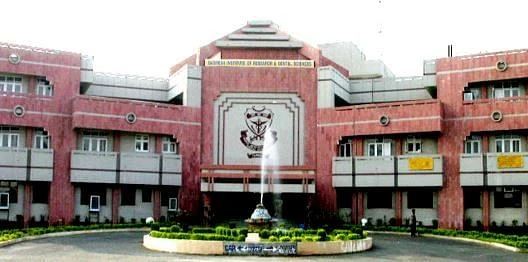
 Auditorium
 Cafeteria
 Computer Labs
 Hostel
 Medical
 Science Labs
 Sports Complex
 Study Library