Loading Admission Guardian content
Loading Admission Guardian content
Provisional score based on available data. It may change as more information is verified.
Find a program, read its fee details and explore the admission requirements.
Summary of the programs shown below. First-year fee. Check the note beside each amount for inclusions and exclusions.
| Course | Stream | Fees |
|---|---|---|
| Diploma in Engineering (Polytechnic) | Engineering | 45000 |
| Bachelor of Technology [B.Tech] | Engineering | 52000 |
| Bachelor of Technology [B.Tech] {Lateral} | Engineering | 52000 |
| Bachelor of Business Administration [BBA] | Management | 60000 |
| Master of Technology [M.Tech] | Engineering | 85000 |
Specializations
Specializations
All accepted exams
Eligibility: 10+2 with 75% + JEE Main
Specializations
All accepted exams
Eligibility: 10+3 with 75% + JEE Main
Specializations
Eligibility: 10+2
Specializations
All accepted exams
Eligibility: Pass in Graduation + GATE
2 exams with cutoff data available - showing recent entries
 Airtel
 Mahindra & Mahindra
 Sony India
 Whirlpool
If you're looking at engineering colleges in the Delhi-NCR region and your JEE Main rank is in the 500,000 to 1,000,000 range, Delhi Institute of Technology Management and Research (DITMR) in Faridabad is a name you'll likely encounter. Established in the late 2000s and affiliated with Maharshi Dayanand University (MDU), Rohtak, it's a private institute that pitches itself as a budget-friendly option. The reality, pieced together from official claims and a chorus of student reviews, is a study in contrasts. The fees are genuinely low, but the placement stories you'll hear are mixed at best. It's the kind of place where your experience will be almost entirely what you make of it, with the institute providing a basic, AICTE-approved platform and not much more.
DITMR offers a fairly standard spread of programs you'd expect from a technical and management institute in the region. The undergraduate lineup includes B.Tech in Computer Science, Mechanical, Civil, Electrical, and Electronics & Communication Engineering. They also run BBA, BCA, and a five-year B.Arch program. For postgraduates, there are M.Tech specializations in CSE, Mechanical, and Civil, alongside MBA and MCA programs. The MBA program allows for dual specializations in areas like Marketing, Finance, HR, International Business, and Operations.
Where it gets more vocational is at the diploma level. They offer Polytechnic (Diploma in Engineering) programs after 10th grade in Mechanical, Civil, Computer Science, and Automobile Engineering, plus a Diploma in Medical Laboratory Technology (DMLT). The intake for the Diploma in Computer Science Engineering is 60 seats, which is a decent size for that stream.
Academically, it's an MDU-affiliated college, so the curriculum and exams follow that university's pattern. The faculty list includes about 108 members, with some senior professors like Mr. M.S. Chopra (Head, Applied Sciences) and Mr. Ravinder Kuma (Civil Engineering) noted. You'll find Ph.D. holders like Mr. Gulshan Gupta in Mathematics. The teaching quality, according to the consensus from student forums, is a mixed bag—heavily dependent on the individual professor you get. The institute mentions industry tie-ups and a Training & Placement Cell to facilitate practical exposure, but the depth of these collaborations isn't detailed.
This is where you need to read between the lines. The official figure floated is an average package of ₹4.9 LPA and a highest package of ₹8 LPA. The list of recruiters sounds good on paper: HCL, Infosys, TCS, Wipro, Tech Mahindra, IBM, Hero, Mahindra & Mahindra, and others.
But the numbers from student reviews tell a different, more grounded story. Alumni on platforms like CollegeDunia and Shiksha frequently cite average packages in the range of ₹1.5 LPA to ₹4 LPA. One source even mentions an average of ₹1 LPA. That's a massive gap, and it's the first red flag. The placement percentage is equally fuzzy. Official claims vary wildly from 10% to 70%, while a common figure from reviews sits around 30%. For B.Tech Computer Science, the chances are better, but for core branches like Mechanical or Civil, on-campus opportunities are scant.
The process seems to involve internships, especially for CSE students in their 7th semester, lasting 30-45 days. The top sectors hiring are IT and software services, with some roles in core engineering, marketing, and quality analysis.
Here's the honest assessment: If you're in CSE and you network aggressively, you might land an offer from a mass recruiter like TCS or Infosys, likely at the lower end of the salary spectrum. Planning for off-campus drives and building your own skills from day one isn't just advice here—it's a necessity.
The most unambiguous positive for DITMR is its cost. It's affordable, especially compared to many private engineering colleges in NCR.
For a full B.Tech degree, the total tuition is approximately ₹2.44 Lakhs for four years. That's strikingly low. The B.Tech Lateral entry (3-year) fee is about ₹1.83 Lakhs. Other programs are similarly priced: BBA is around ₹1.8 Lakhs for three years, M.Tech is ₹1.7 Lakhs for two years, and the Diploma in Engineering is about ₹1.35 Lakhs. The B.Arch program, at five years, is the most expensive at roughly ₹3.05 Lakhs in tuition.
Hostel fees add to the cost. The standard figure is ₹60,000 per year, though for some diploma courses, it's quoted as ₹72,000 for an ordinary room and ₹30,000 per year for an AC room. There's confusion about the mess; some reviews say it's not available, while others mention included meals. Budget for additional mandatory fees like examination charges and a one-time admission fee (around ₹1,500 for some courses).
A rough total 4-year cost for a B.Tech student staying in hostel would be: ₹2.44 Lakhs (tuition) + ₹2.4 Lakhs (hostel @ ₹60k/year) = ₹4.84 Lakhs, plus mess and other fees. That's still very manageable.
Scholarships are available. The institute offers them for meritorious students (75% and above in 10th/12th) and for those from SC, ST, OBC categories. They also mention special scholarships for out-of-state students that can cover nearly 100% of tuition, along with standard university rank-based scholarships.
Admissions are entrance-exam based, and the cutoffs reflect the institute's position in the market.
For B.Tech, you need a JEE Main score or HSTES (Haryana State Technical Entrance Exam) rank. The cutoffs are not demanding. For the 2024 cycle under the Haryana State quota (JEE Main Round 2), the overall cutoff range was between rank 119,823 and 1,123,920. For B.Tech in Electrical Engineering, the General category closing rank was 567,364. For the 2025 HSTES Round 2, the range was 532,042 to 1,175,103, with Mechanical Engineering closing at 532,042 for General category.
What does this mean? If your JEE Main rank is above 500,000, getting a seat in a branch like Mechanical or Civil is possible. For CSE, you'd need a relatively better rank within that broad range. For B.Tech Lateral Entry, admission is through HSTES.
For MBA, they accept CAT, MAT, and XAT scores. For M.Tech, a GATE score is required. The selection process typically involves counseling based on these entrance exam ranks.
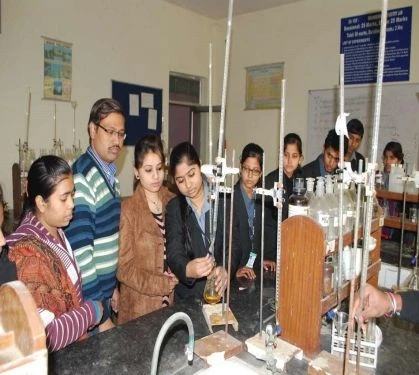
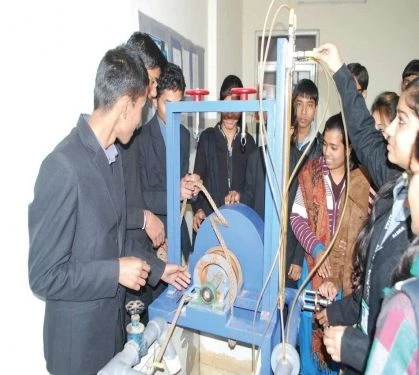
The campus is spread over a reported 12-16 acres in Faridabad's Sector 43, about 7 km from the city center. It's a functional campus, not a sprawling, lush one. Infrastructure includes the standard fare: labs, workshops, a library, and classrooms. Don't expect cutting-edge facilities, but the basics for academic work are reportedly in place.
Hostel accommodation is available, though the quality is described as average in reviews. The mess situation appears inconsistent—some sources say it's there, others say it isn't. This is something to verify directly with the institute if you plan to stay on campus. For commuters, the institute provides an AC bus service between Delhi and Faridabad, which is a practical plus given the location.
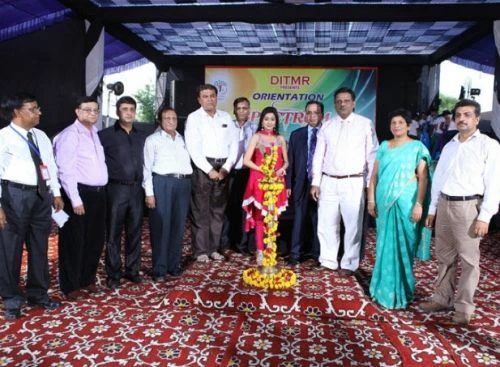
Social and extracurricular life is what students create. There's no mention of a vibrant festival culture or highly active clubs. It's a commuter-heavy campus with a focus on getting the degree. Sports facilities exist but aren't highlighted as a major draw. The location in the NCR does offer access to the broader region, but the immediate campus surroundings aren't exactly buzzing with student life.
Synthesizing feedback from CollegeDunia, Shiksha, and other forums paints a clear, if stark, picture.
The Positives:
The Negatives:
The overall sentiment is pragmatic: DITMR is a low-cost option where you can earn an AICTE/MDU degree. Success is heavily dependent on self-study, seeking out external internships, and preparing for off-campus placements. The college provides the platform, but you have to build the show yourself.
DITMR is a classic "you get what you pay for" proposition. It's worth serious consideration for a specific type of student: someone with a JEE Main rank in the higher lakhs who needs an AICTE-approved B.Tech degree at the absolute lowest possible cost, and who is confident, disciplined, and proactive enough to drive their own career preparation entirely.
If your primary goal is to minimize educational debt while getting a valid engineering credential, and you're willing to treat college as a place to attend lectures and use the library while you build skills online, network off-campus, and grind for jobs independently, then DITMR's fee structure makes sense. This might also apply to students looking at their diploma programs as a stepping stone.
However, if you are looking for a vibrant campus life, strong institutional support for placements, modern infrastructure, or a learning environment that pushes you, you will likely be disappointed. The gap between official placement claims and student-reported outcomes is too wide to ignore. Students from core branches (Mechanical, Civil, Electrical) should be especially cautious, as their on-campus opportunities are particularly limited.
In short, DITMR is a budget airline, not a full-service carrier. It'll get you to the destination (a degree) cheaply, but don't expect frills, great in-flight service, or a guaranteed connection to your next job. For the right, self-motivated passenger, that's a viable trade-off. For others, it might be a frustrating journey.
In this preview: 5 photos · 0 videos
The official average placement package claimed by DITMR is ₹4.9 LPA. However, student reviews and alumni reports consistently indicate a lower reality, with average packages frequently mentioned in the range of ₹1.5 LPA to ₹4 LPA. The placement percentage also varies widely in reports, from 10% to 70%, with a common figure from student feedback being around 30%. Success is highest for Computer Science students with mass recruiters like TCS and Infosys.
The total tuition fee for the four-year B.Tech program at Delhi Institute of Technology Management and Research is approximately ₹2.44 Lakhs. Hostel fees are an additional ₹60,000 per year (approx.). Therefore, the estimated total cost for a B.Tech student staying in the hostel is around ₹4.84 Lakhs over four years, excluding mess and other mandatory charges. The low fee structure is one of the institute's most highlighted features.
The JEE Main cutoff ranks for DITMR are not highly competitive. For the 2024 admission cycle under the Haryana State quota (Round 2), the overall cutoff range was between rank 119,823 and 1,123,920. For a specific branch like B.Tech in Electrical Engineering, the closing rank for the General category was 567,364. Candidates with ranks above 500,000 have a realistic chance of securing admission in various branches.
Yes, Delhi Institute of Technology Management and Research (DITMR) is approved by the All India Council for Technical Education (AICTE). It is also affiliated with Maharshi Dayanand University (MDU), Rohtak, which confers the degrees for its programs, including B.Tech, MBA, and M.Tech.
According to the institute, the top recruiters that visit the DITMR campus for placements include major IT and engineering firms such as HCL, Infosys, TCS, Wipro, Tech Mahindra, and IBM. Core sector companies like Hero Honda, Bajaj, VE Commercial Vehicles Ltd, Mahindra & Mahindra, Sony India, and Whirlpool are also listed. It's important to note that student reviews suggest the frequency and number of offers from these companies can vary significantly year to year.
Share what future students should know about DITMR.
Student voices are not rewritten by colleges. We remove spam and abuse.
Wider admission question? Community PulseWhat should future students know?
Tell us which course you're considering. We'll help you work out the next step.
Get instant Partner access after mobile verification. Your public edits are reviewed before they go live.
Claim this college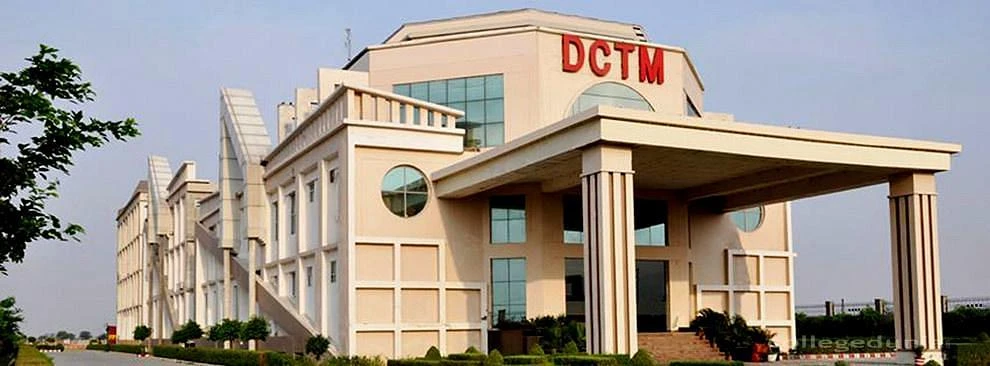
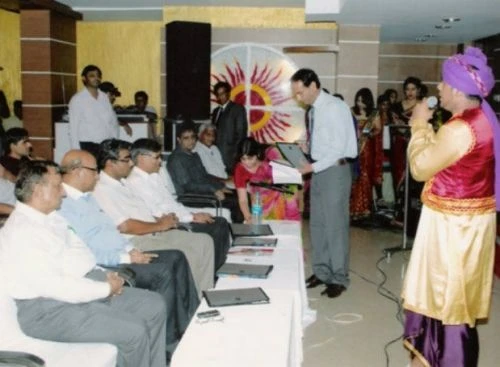
 Auditorium
 Cafeteria
 Campus Shuttle
 Campus Wi-Fi
 Computer Labs
 Gym
Gym Hostel
 Medical
 Science Labs
 Sports Complex
 Study Library