Loading Admission Guardian content
Loading Admission Guardian content

Provisional score based on available data. It may change as more information is verified.
Find a program, read its fee details and explore the admission requirements.
Summary of the programs shown below. First-year fee. Check the note beside each amount for inclusions and exclusions.
| Course | Stream | Fees |
|---|---|---|
| Bachelor of Unani Medicine & Surgery | Medical | 204000 |
| Doctorate of Medicine [MD] | Medical | 600000 |
| Master of Surgery [MS] | Medical | 850000 |
Eligibility: 10+2
Specializations
Eligibility: Post Graduation
Specializations
Eligibility: Graduation
1 exam with cutoff data available
If you're looking at Unani medicine colleges in Uttar Pradesh, Deoband Unani Medical College (DUMC) is a name that consistently comes up. Established back in 1991, it's one of the older private institutions dedicated to the Unani system in the state. It’s a place with a clear, singular focus: training Hakims. You won't find the sprawling campus or buzzing social scene of a large university here. Instead, you get a disciplined, academically intense environment built around a functional 150-bed teaching hospital. For students committed to Unani medicine who may have a moderate NEET-UG score, DUMC represents a practical, if no-frills, pathway into the profession. Its affiliation has shifted over the years, most recently to Mahayogi Guru Gorakhnath AYUSH University in Gorakhpur, but its core identity as a minority institution emphasizing traditional Hikmat (wisdom) alongside modern diagnostics has remained.
This is not a multi-disciplinary campus. The academic engine is the BUMS program, a 5.5-year course (4.5 years academic + 1-year internship) that takes in 60 students per batch. The curriculum is standard, covering over 16 subjects from anatomy and physiology to traditional Unani pharmacology (Ilmul Advia). The college also runs postgraduate MD/MS programs in specializations like Moalajat (Medicine), Kulliyat (Basic Principles), and Jarahat (Surgery). Intake here is small, typically 2–5 seats per specialization, filled through the AIAPGET entrance exam.
A separate nursing department offers GNM and ANM diplomas. The faculty, around 43 members, includes senior professors like Principal Prof. Dr. Mohd. Aslam. Student feedback consistently highlights that professors are approachable and knowledgeable. The academic culture is described as strict and disciplined, which aligns with the professional rigor expected in medical training.
Let's be clear: you don't get "placements" here in the conventional engineering-college sense. Graduation leads to a licensed profession, not a campus recruitment drive. The career path is well-established but self-driven. After completing the mandatory one-year internship at the college's hospital, most graduates either set up private practice, appear for government AYUSH Medical Officer exams, or pursue higher studies (MD/MS).
The internship itself is a point of discussion. While the college confirms a stipend is provided, the amount and consistency are where student reviews add crucial context. Some alumni on platforms like CollegeDunia have noted the stipend can be on the lower side or less predictable compared to government college internships. It's a practical consideration for budgeting that five-and-a-half-year journey.
Top sectors for alumni include government AYUSH departments, private Unani clinics and hospitals, research institutes like the Central Council for Research in Unani Medicine (CCRUM), and Unani pharmaceutical firms such as Hamdard.
The financial commitment is substantial. For the BUMS program, the annual tuition fee for 2024-25 is about ₹2,04,000. Over the 4.5 academic years, that totals roughly ₹9,18,000 before the internship year.
Hostel fees add a significant layer. They range from ₹55,000 annually for a four-seater non-AC room to ₹1,25,000 for a single-seater AC room for girls. When you factor in caution money, exam fees, and living costs, the total outlay for the entire 5.5-year BUMS program can easily land between ₹12 to 14 lakhs. Postgraduate MD/MS fees are higher, ranging from ₹6 to 8 lakhs per annum. The college website doesn't prominently detail institutional scholarships, so financial planning should rely primarily on external state or national aid schemes for which students may be eligible.
Admission is centrally controlled. For the BUMS program, qualifying NEET-UG is non-negotiable. Eligibility also requires a 10+2 with Physics, Chemistry, Biology and a 50% aggregate. There's a specific language requirement: Urdu must have been a subject up to Class 10 or an equivalent level.
Selection happens through counseling. For the 60 seats, you'll go through UP AYUSH Counseling for the state quota or the AACCC (All India Ayush Counseling Committee) for All India Quota seats. The cutoffs give the college its accessible profile. For the private quota, the required NEET score often sits in the 150-200 range. In past state counseling rounds, closing ranks for General category candidates have been as high as 8-12 lakhs. That's a key data point for students with moderate scores. For MD/MS, the gateway is the AIAPGET exam.
The campus spans about 5 acres. It's compact. Infrastructure is functional and geared towards its core mission. The 150-bed hospital is the heart of it, providing OPD and IPD services and, crucially, the clinical exposure students need. There's a library with around 2,000 books, a herbal garden for pharmacognosy, and well-maintained labs for subjects like pathology.
Hostels are rated around 3.5/5 by students—decent, with basic furniture. They're separated by gender, with a girls' hostel capacity of about 74 beds. The mess food is generally described as average but affordable. Don't come expecting a vibrant campus life. There are no major fests or a plethora of clubs. The atmosphere is academic, disciplined, and leans conservative, reflecting its location and minority status. Social life is very limited.
Synthesizing feedback from CollegeDunia, Shiksha, and other forums paints a consistent picture. The biggest praise is for the clinical exposure and faculty. Students feel the attached hospital gives them solid hands-on experience with patients, which is the ultimate goal. They also find the teaching staff to be supportive and accessible.
But the critiques are just as consistent. The management and administration are often described as slow or inefficient. The small campus size and limited library collection are noted. The internship stipend issue pops up repeatedly in discussions. And almost everyone agrees the social and extracurricular scene is minimal to non-existent. It’s a trade-off. You get focused training in a strict environment, but you sacrifice the broader "college experience."
Deoband Unani Medical College is a specific solution for a specific student. It's worth serious consideration if: you are genuinely committed to building a career in Unani medicine, you have a NEET-UG score in the 150-200 range (or a rank up to ~12 lakhs in UP counseling), and you prioritize clinical training and a disciplined academic atmosphere over campus life and modern infrastructure. The fee, while high, is somewhat standard for private AYUSH colleges. However, if you crave a vibrant student community, extensive facilities, or are unsure about dedicating yourself to the Unani system, this isn't the place for you. DUMC is a pragmatic choice for becoming a Hakim, not a holistic university experience. Do your due diligence: visit the official website for the most current notices, and if possible, talk to current students to gauge if the environment aligns with your expectations for the next five and a half years.
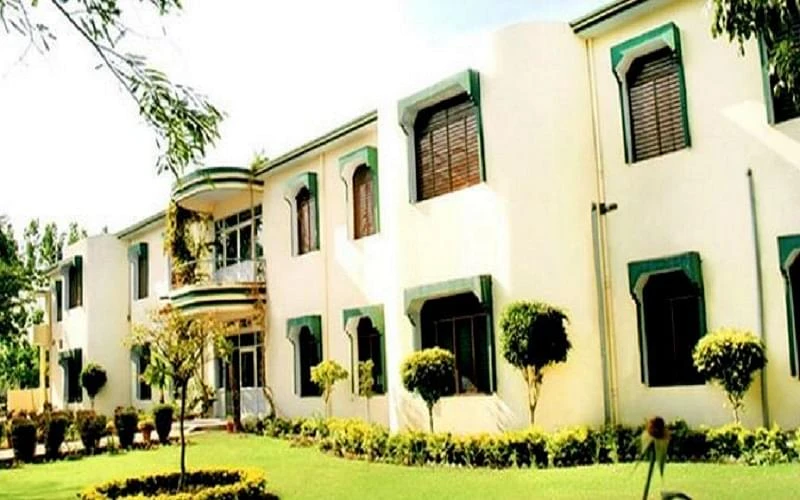
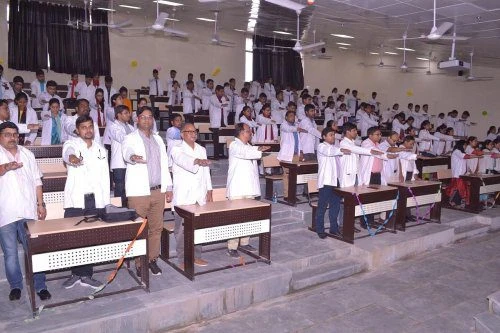
In this preview: 1 photo · 0 videos
Yes, qualifying the NEET-UG examination is mandatory for admission to all Bachelor of Unani Medicine and Surgery (BUMS) seats at Deoband Unani Medical College.
The total approximate cost for the 5.5-year BUMS program, including hostel expenses, is between ₹12 and ₹14 Lakhs.
No, Deoband Unani Medical College does not offer MBBS or BAMS. It specifically offers the BUMS (Bachelor of Unani Medicine and Surgery) degree and Nursing programs (GNM/ANM).
Yes, the college provides a separate and secure on-campus girls' hostel with a capacity of approximately 74 beds.
The college has a 150-bed hospital with a functional Outpatient Department (OPD), offering moderate to good patient inflow for practical clinical training.
Share what future students should know about Deoband Unani Medical College.
Student voices are not rewritten by colleges. We remove spam and abuse.
Wider admission question? Community PulseWhat should future students know?
Tell us which course you're considering. We'll help you work out the next step.
Get instant Partner access after mobile verification. Your public edits are reviewed before they go live.
Claim this college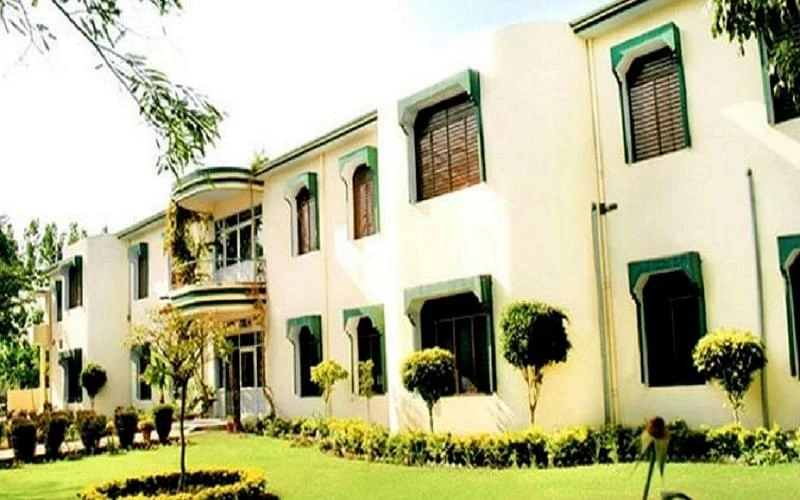
 Cafeteria
 Campus Shuttle
 Computer Labs
 Hostel
 Medical
 Science Labs
 Study Library