Loading Admission Guardian content
Loading Admission Guardian content

Provisional score based on available data. It may change as more information is verified.
Find a program, read its fee details and explore the admission requirements.
Summary of the programs shown below. Fee amounts are not listed. Contact the college for its current fee schedule.
| Course | Stream | Fees |
|---|---|---|
| Bachelor of Science [B.Sc] (Agriculture) | Agriculture | |
| Bachelor of Technology [B.Tech] | Engineering | |
| Master of Technology [M.Tech] | Engineering | |
| Diploma in Engineering (Polytechnic) | Science |
Eligibility: 10+2
Specializations
Eligibility: 10+2 with 75% + JEE Main
Specializations
All accepted exams
Eligibility: Pass in Graduation + GATE
Specializations
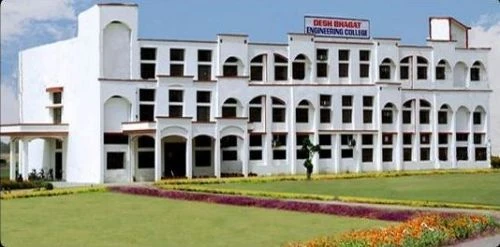
Desh Bhagat University, which absorbed the former Desh Bhagat Engineering College (DBEC), presents a classic case of a private university trying to bridge the gap between affordability and industry relevance. With an NAAC A+ grade—a significant accreditation milestone—and tuition fees that are surprisingly low for a private institution, it's a place that attracts students who want a degree without a crushing financial burden. But the story here is defined by that trade-off: you get a decent campus and supportive faculty, but the placement outcomes, especially for core engineering branches, remain a challenge that students often have to navigate on their own. The university's own NIRF 2024 data shows a median UG package of ₹3.75 LPA, a number that tells you more about the realistic starting point here than any headline-grabbing crore-plus package ever could.
Under the Faculty of Engineering and Technology, DBU offers a pretty standard set of B.Tech programs. You've got the usual suspects: Computer Science, Mechanical, Civil, Electronics & Communication, and Electrical. The newer additions like AI & ML and Data Science show an attempt to keep up with market trends. They also run M.Tech programs in areas like Structural Engineering and Transportation Engineering, plus diploma courses.
The academic approach, as described, is industry-oriented. That's a phrase you hear everywhere, but here it seems to translate to a curriculum that's regularly updated and includes early introductory courses for each major. Faculty get consistently good reviews from students—they're called supportive, knowledgeable, and focused on practical, project-based learning. Exams happen every six months with monthly tests, and the pass rate hovers around 70-80%. It's a structured, no-surprises kind of system.
This is where you need to read between the lines. The university highlights an overall highest package of INR 2.36 Crore per annum. That's an outlier, likely from a non-engineering program or a very specific case. For the average engineering graduate, the picture is more grounded.
The official average for B.Tech is pegged at 3.5-4.5 LPA. The more reliable figure comes from the NIRF 2024 report, which lists the median package for UG 4-year programs at ₹3.75 LPA for the 2023 placement cycle. For PG 2-year programs, it was ₹4.2 LPA. That's a solid, data-backed benchmark.
Placement percentages are a bit fuzzy. Some sources say 75-80%, others indicate 50-60% for on-campus offers, with students noting that skilled individuals have a better shot. Top recruiters are the familiar IT services giants: TCS, Wipro, Infosys, Tech Mahindra, HCL. You'll also see banks like HDFC and ICICI. For core engineering roles, especially in Mechanical or Civil, opportunities are thinner, with more grads landing in IT firms.
The consensus from student reviews is telling. "Almost 50 percent of people get placed easily here as placement coordinators are very helpful," says one. But another counters: "The job placements in this course aren't great... We have to apply for jobs ourselves. The salary package is usually between 20 to 30 thousand per month." That gap between official support and personal hustle is the reality for many.
This is arguably DBU's strongest card. The total course fee for a B.Tech is around ₹3.66 lakhs. Broken down annually, tuition ranges from just ₹60,000 to ₹1,00,000. Compared to many private engineering colleges, that's exceptionally affordable.
Hostel and mess fees are an additional ₹85,000 per year. So, a rough total 4-year cost for a B.Tech student staying on campus is in the ballpark of ₹7 lakhs (tuition + hostel). That's a figure that makes higher education accessible.
The university also mentions scholarships for deserving students, with up to 100% fee waivers possible. It's worth digging into the specifics on their official website during the application process.
For B.Tech, you need 10+2 with Physics and Mathematics, plus one of Chemistry/Biology/Biotech/Computer Science, with at least 45% marks (40% for reserved categories).
The primary entrance exam accepted is JEE Main. They also accept CUET scores. The cutoffs are described as "moderate," which in this context means they aren't fiercely competitive. If you have a decent board percentage and a moderate JEE Main score, you're likely in the running.
The selection is merit-based, followed by counseling. The application fee is ₹1,000. For the 2026 intake, admissions were slated to open in July 2026, but always check the current cycle dates directly.
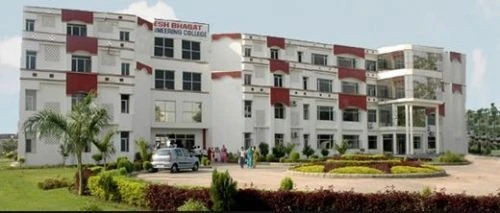
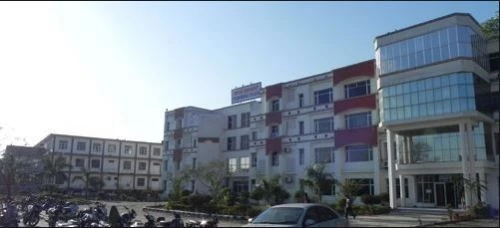
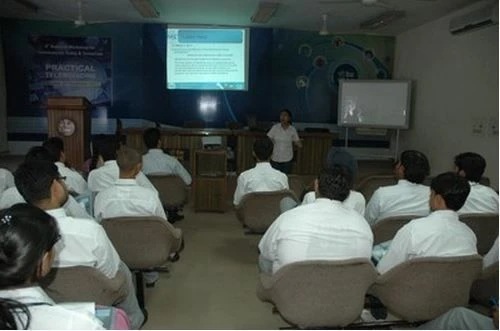
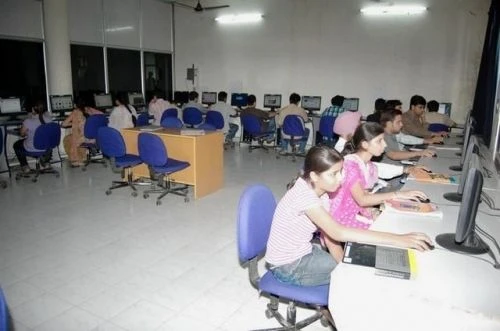
The 16-acre campus gets positive marks. It's described as lush green, with modern classrooms, digitally equipped labs, and a fully Wi-Fi-enabled environment. The central library is air-conditioned and has a decent collection of over 50,000 e-resources.
Hostels are a highlight. There are seven of them (four for girls, three for boys), housing up to 1380 students. Rooms are furnished, available in AC and non-AC options, and come with unlimited Wi-Fi. Student reviews specifically praise the clean rooms and attached bathrooms. The mess food is called hygienic and satisfactory, offering multiple cuisines.
For amenities, there are multiple canteens, a mini supermarket, sports grounds, two gyms, and 24/7 medical assistance (though one review disputed this, calling it a potential point of inconsistency). Bus transport is provided. The social life includes cultural fests and technical events, creating a reasonably vibrant atmosphere.
Synthesizing the sentiment, a clear pattern emerges.
The Good:
The Not-So-Good:
Desh Bhagat University is a pragmatic choice, not a dream destination. It's best suited for a specific type of student: someone who is cost-conscious, self-motivated, and views the degree as a foundational platform rather than a guaranteed ticket to a high-paying job.
If your priority is to get a recognized B.Tech degree from an NAAC A+ accredited university without taking on massive debt, and you're willing to proactively build your skills and hunt for opportunities, DBU makes sense. The supportive faculty and decent campus life are genuine benefits.
But if you're aiming for top-tier campus placements with high packages in core engineering fields, or if you want the brand name of a highly ranked engineering college, you'll likely be disappointed. The median salary data doesn't lie. Here, your starting point will be modest, and your trajectory will depend heavily on your own drive. For the right student with realistic expectations, it's a viable, low-risk path to an engineering credential.
In this preview: 5 photos · 0 videos
The total course fee for a B.Tech program at Desh Bhagat University is approximately ₹3.66 Lakhs for the entire duration. Annual tuition fees typically range between INR 60,000 to INR 1,00,000, depending on the specialization. Students opting for hostel accommodation must budget an additional INR 85,000 per year for lodging and mess charges.
Placement outcomes vary. The university reports a highest package of INR 2.36 Crore (an overall figure). For a more realistic benchmark, the NIRF 2024 data indicates a median package of INR 3.75 LPA for UG 4-year engineering graduates (2023 placements). The average B.Tech package is often cited between 3.5-4.5 LPA. Major recruiters include TCS, Infosys, Wipro, and Tech Mahindra, though students note that proactive effort is often required to secure these roles.
Admission to B.Tech requires passing 10+2 with Physics and Mathematics as compulsory subjects, along with one of Chemistry/Biology/Biotechnology/Computer Science, securing a minimum of 45% aggregate (40% for reserved categories). The university primarily accepts scores from national entrance exams like JEE Main and CUET. Selection is merit-based, followed by a counseling process.
The university provides separate, well-furnished hostels for boys and girls with a total capacity of 1380. Rooms are available in AC and non-AC variants, furnished with a bed, table, chair, and almirah. Facilities include 24/7 electricity and unlimited Wi-Fi. The hostel mess serves hygienic, nutritious meals with multiple cuisine options, which students generally rate as satisfactory to good.
Yes, Desh Bhagat University holds significant accreditations. It is accredited by the National Assessment and Accreditation Council (NAAC) with an A+ grade, a mark of institutional quality. It is also approved by the University Grants Commission (UGC) and the All India Council for Technical Education (AICTE). Notably, it was the first privately managed university in Punjab to achieve both UGC's 12B status and NAAC accreditation.
Share what future students should know about DBEC.
Student voices are not rewritten by colleges. We remove spam and abuse.
Wider admission question? Community PulseWhat should future students know?
Tell us which course you're considering. We'll help you work out the next step.
Get instant Partner access after mobile verification. Your public edits are reviewed before they go live.
Claim this college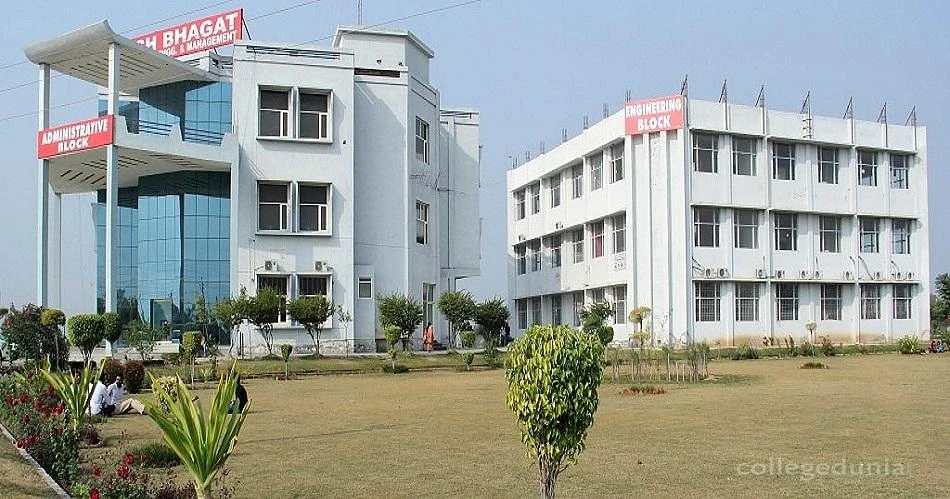
 Auditorium
 Cafeteria
 Computer Labs
 Gym
Gym Hostel
 Medical
 Science Labs
 Sports Complex
 Study Library