Loading Admission Guardian content
Loading Admission Guardian content

Provisional score based on available data. It may change as more information is verified.
Find a program, read its fee details and explore the admission requirements.
Summary of the programs shown below. Fee amounts are not listed. Contact the college for its current fee schedule.
| Course | Stream | Fees |
|---|---|---|
| Master of Arts [MA] | Arts | |
| Bachelor of Commerce [B.Com] | Commerce | |
| Bachelor of Education [B.Ed] | Education | |
| Bachelor of Science [B.Sc] | Science | |
| Master of Science [M.Sc] | Science |
Specializations
Eligibility: Graduation
Specializations
Eligibility: 10+2
Specializations
Eligibility: Graduation with 55% + UP Bed JEE
Specializations
Eligibility: 10+2
Specializations
Eligibility: Graduation
Devta Mahavidyalaya isn't trying to be a national brand. It's a local institution with a clear, practical purpose: providing an affordable, disciplined, and academically sound education to students in and around Bijnor, Uttar Pradesh. Established in 2000, it's grown into a sprawling campus on the Noorpur-Dhampur Road, offering a wide range of undergraduate and postgraduate programs. Its affiliation with Mahatma Jyotiba Phule (M.J.P.) Rohilkhand University in Bareilly gives its degrees solid standing for government job applications, which is a primary goal for a significant portion of its student body. The college is NAAC accredited, a mark of basic quality assurance, and holds the distinction of being the first self-finance institute in the Bijnor district. For students from nearby villages and towns looking for a no-frills path to a bachelor's degree, especially with an eye on teaching or civil service exams, Devta Mahavidyalaya is a known quantity.
This is a large college by intake numbers, built to serve a local population. They offer roughly 46 courses, with a heavy tilt towards traditional arts and sciences. The B.A. program alone has an intake of over 2,000 students, which tells you about the scale and the demand in the region. B.Sc. is split into the PCM (Physics, Chemistry, Maths) and ZBC (Zoology, Botany, Chemistry) streams, with a combined intake of around 2,000 seats. B.Com. adds another 1,040. The professional programs—B.Ed., B.B.A., and B.C.A.—have smaller, more focused batches. For postgraduates, M.A. and M.Sc. degrees are available in standard specializations like Hindi, English, Economics, Sociology, Chemistry, and Mathematics. They also offer an MSW (Master of Social Work).
The academic culture is described as disciplined and supportive, with a strong emphasis on classroom teaching. A notable strength is the faculty profile in core departments. You'll find a high percentage of PhD holders, particularly in subjects like Hindi, English, and Geography. Names like Dr. Nirdesh Chauhan (Hindi) and Dr. Sunil Kumar (English) are cited as experienced educators. It's not a research-intensive environment, but for undergraduate grounding and exam preparation, the teaching staff is considered a significant asset.
This is where you need to separate marketing from ground reality. Some education portals might flash an unverified "12.5 LPA" figure, but that's wildly inaccurate for this tier and location of college. Talking to students and alumni paints a different, more honest picture.
The realistic highest package reported in recent years is around 4.0 LPA. The average package for those who get placed on-campus sits between ₹1.7 and ₹2.2 LPA. The placement percentage is a point of contention. The college may claim 85%, but student reviews consistently suggest a working figure closer to 60%, and that's heavily skewed towards science graduates and B.Ed. students. For B.A. and B.Com. students, on-campus corporate placement is virtually non-existent.
Top recruiters are a mix of local and national names with a regional presence: TATA, Sahara, and Uber's local operations. The most consistent placement pathway is into the education sector. Local schools and inter-colleges recruit B.Ed. graduates. It's crucial to understand that for many students here, the "placement" is actually clearing the TET or CTET exam to become a government teacher. The college environment supports that goal more than it attracts high-flying corporate recruiters.
The fee structure is arguably the college's biggest draw. It's exceptionally affordable, governed by the norms of MJP Rohilkhand University. For a three-year B.A. degree, the total tuition can be as low as ₹18,000 to ₹21,000. B.Sc. fees range from ₹8,000 to ₹10,000 per year. The B.Ed. program, being a professional course, costs more: approximately ₹51,250 for the first year and ₹30,000 for the second.
Hostel fees, primarily for the girls' hostel, are estimated between ₹30,000 and ₹45,000 per annum, including mess charges. Financial aid is a strong point. The college administration is reportedly helpful in processing applications for the UP Government Scholarship (Saksham). Students from SC, ST, OBC, and EWS categories frequently benefit from full or partial fee reimbursements, making an already low-cost education accessible to many.
Admissions are straightforward and mostly merit-based. For the vast majority of programs—B.A., B.Sc., B.Com., and their postgraduate counterparts—selection is based on your marks in the qualifying exam (10+2 for UG, graduation for PG). There's no complex entrance exam for these.
The key exception is the B.Ed. program. Admission here requires a valid score in the UP B.Ed. Joint Entrance Exam (JEE). It's a mandatory state-level test.
The application window typically opens in May and runs through July. The process is centralized through the MJP Rohilkhand University portal. You register there, and based on your merit, you'll be included in the college's merit list. The final step is document verification at the college itself. Cutoffs aren't published in a classic "percentile" sense; they vary yearly based on applicant pool and seat availability.
The campus is spacious, covering over 9.5 acres with a built-up area of 31,000 sq. meters. Infrastructure is functional. The library holds over 14,000 books and subscribes to journals and newspapers, with e-library facilities recently added. Labs for the science and geography departments are present and maintained, though some student reviews call them "basic" or dated.
Hostel accommodation is a specific point. Official records highlight a dedicated Girls' Hostel with a 50-seat capacity, primarily for OBC students. A dedicated boys' hostel isn't explicitly mentioned, so most male students arrange for private PG accommodations in the nearby towns of Noorpur or Dhampur, which are 7 km and 13 km away, respectively.
Student life is quiet and focused. There's a large playground and facilities for sports like Kabaddi, Kho-Kho, and Badminton. However, don't expect a vibrant festival calendar or bustling social scene. The environment is disciplined and ragging-free, which parents appreciate. Wi-Fi is available but seems limited to the Administrative and Science blocks. The rural location means limited access to city amenities, which can feel isolating for some.
The consensus from student forums like CollegeDunia and Shiksha is clear: this is a value-for-money, academically oriented college for local goals. The praise is consistent for faculty quality and support, the strict, ragging-free discipline, and the extremely low fees. Many note the administration is helpful with government scholarship paperwork, which is a big deal for the student demographic.
The criticisms are just as consistent. The placement claims are taken with a large grain of salt; most understand that a corporate career will require looking beyond campus. The rural location is seen as a double-edged sword—peaceful but limiting for exposure and internships. Some feel the infrastructure, while large, needs modernization, particularly in the labs. Social life is described as minimal, with very few cultural events or fests to break the routine.
Devta Mahavidyalaya serves a specific niche very well. It's an excellent, affordable choice for a student from Bijnor or the surrounding districts who wants a recognized degree from an MJP Rohilkhand University-affiliated college without a huge financial burden. It's particularly strong for those aiming to become teachers, thanks to its B.Ed. program and exam-focused culture. If your goal is to graduate with minimal debt, prepare seriously for government exams like TET/UPSC/POLICE, and you're comfortable in a disciplined, rural campus setting, this college makes a lot of sense.
However, if you're seeking a vibrant campus life, high-profile corporate placements, cutting-edge infrastructure, or the networking opportunities of a city college, you'll be disappointed. This isn't that kind of institution. The gap between the official placement narrative and the student-reported reality is notable. It's best viewed as a solid academic launchpad for local career paths, not a corporate career springboard. For the right student with aligned expectations, it represents genuine value. For others, the isolation and limited opportunities would be a significant drawback.
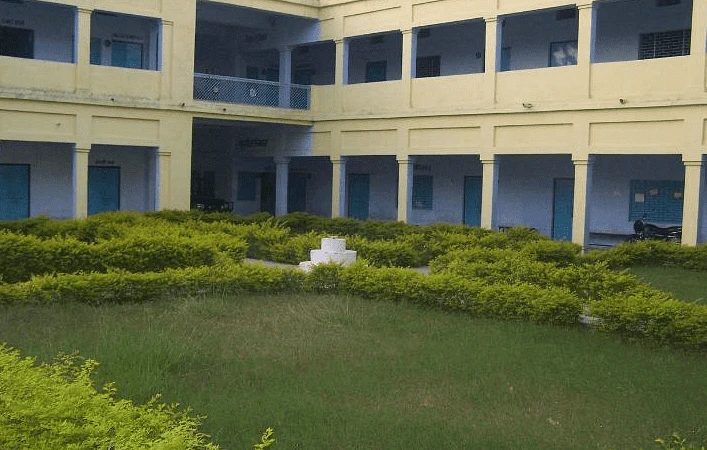
In this preview: 1 photo · 0 videos
Yes, Devta Mahavidyalaya is considered a popular and good choice for a B.Ed in Bijnor. It is approved by the NCTE and has a focus on preparing students for competitive teaching exams like TET and CTET.
The annual fee for the B.Sc program at Devta Mahavidyalaya is approximately ₹8,000 to ₹10,000. The exact amount can vary depending on the specific subject combination chosen by the student.
Official records indicate the college provides a 50-seat Girls' Hostel, primarily for OBC category students. There is no mentioned hostel facility for boys on campus; male students typically arrange accommodation in nearby towns.
Yes, a degree from Devta Mahavidyalaya is valid for government jobs. The college is affiliated with Mahatma Jyotiba Phule Rohilkhand University (MJPRU) Bareilly, a State Government University, and is recognized by the University Grants Commission (UGC).
Placement opportunities for BCA and BBA programs at Devta Mahavidyalaya are modest. Students are generally advised to seek off-campus job opportunities or pursue higher studies like an MBA or MCA for better career prospects.
Share what future students should know about Devta Mahavidyalaya.
Student voices are not rewritten by colleges. We remove spam and abuse.
Wider admission question? Community PulseWhat should future students know?
Tell us which course you're considering. We'll help you work out the next step.
Get instant Partner access after mobile verification. Your public edits are reviewed before they go live.
Claim this college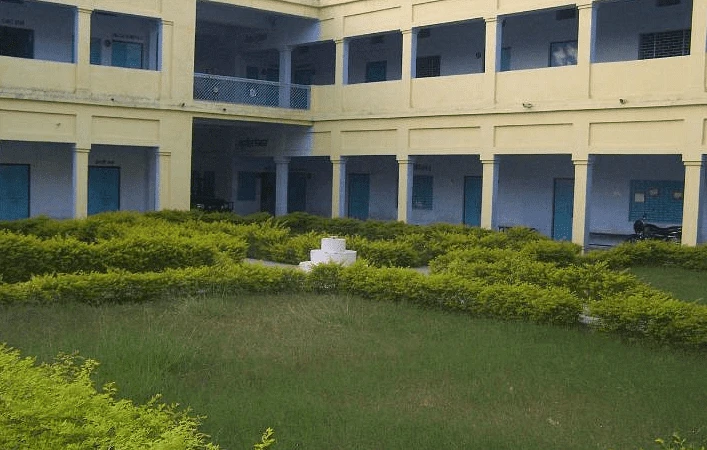
 Auditorium
 Cafeteria
 Computer Labs
 Hostel
 Medical
 Science Labs
 Study Library