Loading Admission Guardian content
Loading Admission Guardian content

Provisional score based on available data. It may change as more information is verified.
Find a program, read its fee details and explore the admission requirements.
Summary of the programs shown below. First-year fee. Check the note beside each amount for inclusions and exclusions.
| Course | Stream | Fees |
|---|---|---|
| Bachelor of Arts [BA] | Arts | 2205 |
| Bachelor of Science [B.Sc] | Science | 3105 |
| Master of Arts [MA] | Arts | 6750 |
| Master of Science [M.Sc] | Science | 22980 |
| Bachelor of Education [B.Ed] (Computer Education) | Education |
Specializations
Eligibility: 10+2
Specializations
Eligibility: 10+2
Specializations
Eligibility: Graduation
Specializations
Eligibility: Graduation
Specializations
Eligibility: Graduation
Dhanaji Nana Mahavidyalaya in Faizpur, Jalgaon, is an institution defined by its contradictions. It’s a sprawling 37-acre campus with a solid NAAC 'A' grade, yet it sits in a small municipal place between the Satpuda ranges and the Tapi River. It boasts a long history and a vast array of courses, but student reviews paint a starkly different picture of campus life and career support. For students in the Yawal and Raver talukas seeking an affordable, accredited degree, it’s a local pillar. For anyone expecting a dynamic, placement-driven urban college experience, it’s likely a mismatch. The real story here isn't in the brochure; it's in the gap between the institution's formal credentials and the day-to-day reality described by the students who walk its halls.
This is where the college casts its widest net. With an annual intake pushing 2,700 students across 32 to 37 courses, Dhanaji Nana Mahavidyalaya functions as a comprehensive arts, science, and commerce hub for the region. The undergraduate slate is extensive: B.A. with specializations from Marathi to Psychology, B.Sc. in subjects like Biotechnology and Computer Science, alongside B.Com, BBA, and BCA. They’ve even added vocational B.Voc programs in Green House Management and E-Accounting. At the postgraduate level, M.A., M.Sc., and M.Com programs are available, followed by Ph.D. research in a dozen disciplines.
The academic structure follows the university-mandated CBCS pattern. That means a 60+40 split for exams—60 marks from the university, 40 from internal college assessment. It’s a standard system for affiliated colleges. Where the college tries to differentiate is through add-ons. The Late Damodar Nana Chaudhari Potential Development Academy runs soft skill and spoken English programs. They organize guest lectures and workshops. There’s an online feedback system for teachers that’s been in place since 2014-15, which is a decent, if basic, attempt at accountability.
Faculty strength is listed at around 50, with 30 of the permanent staff holding Ph.D.s. Student reviews consistently highlight teaching quality as a major positive, with phrases like "teachers are very supportive" and "all teachers teach very well" appearing verbatim. That’s a significant credit in an institution of this type. The academic experience seems to be traditional, regular, and focused on classroom instruction—a "chalk and talk" model that gets the job done for degree completion.
Let’s be direct: there is a profound disconnect between any official narrative and student-reported outcomes. The research brief shows no available data on highest, average, or median packages. No top recruiters are listed. A generic note mentions "handsome salary packages" from a recent drive, but provides zero figures.
The student sentiment tells the real story. On review platforms, the placement rating is a stark 1 out of 5. One review flatly states, "0% of students will receive internships." Another simply says "Placements 1/5." This is the single most consistent and negative theme across all student feedback.
What does this mean? For courses like B.A., B.Com, and general B.Sc. programs, organized, on-campus placement drives with corporate recruiters are virtually non-existent. That’s the norm for many non-engineering, non-metro colleges in India. Students typically pursue government exams, teaching roles, or seek employment through personal networks after graduation. The college’s future plan mentions academic collaborations, but current industry tie-ups via MoUs seem focused more on training and visits than on direct recruitment pipelines. If your primary goal is a guaranteed job offer at the end of your degree, this is not your college. You’ll be largely on your own.
Affordability is arguably the college’s strongest selling point. The latest available benchmark suggests an annual tuition fee around INR 30,000. Looking at older, program-specific totals gives a clearer picture of just how low the cost is: a full B.Com degree was about ₹6,290, a B.A. between ₹6,020 and ₹6,770. Even M.Sc. fees ranged from ₹34,000 to ₹45,750 for the entire program. These are pre-2021 figures, so they’ve likely increased, but they establish a baseline of exceptional affordability.
The college supports this with a wide array of scholarships. They offer merit-based awards, government scholarships (Eklavya, Post Matric, etc.), and even claim to provide up to 100% scholarships to eligible candidates. There’s also an "Earn and Learn Scheme" for economically backward students. This financial ecosystem makes higher education accessible for a large segment of the local population, which aligns perfectly with the institution’s founding socio-economic mission. You’re getting a UGC-recognized, NAAC 'A' grade degree at a fraction of the cost of private city colleges.
The process is straightforward and merit-based for most programs, governed by its affiliation with KBCNMU. For all undergraduate courses—BA, B.Sc., B.Com, BBA, BCA—admission is based on your Class 12 marks. There’s no mention of high cutoffs or competitive ranks; eligibility is the primary gate.
For postgraduate science courses (M.Sc.), the university takes over through a centralized admission procedure. You’ll need to watch for notifications on the KBCNMU website. For M.A. and M.Com programs, it’s back to merit, based on your relevant bachelor’s degree scores. Ph.D. admissions involve entrance tests and interviews.
Applications can be picked up from the college office or downloaded from their official website. They’ve enabled online registration and fee payment, which is a helpful modernization. The process is uncomplicated, reflecting the college’s role as an accessible local institution.
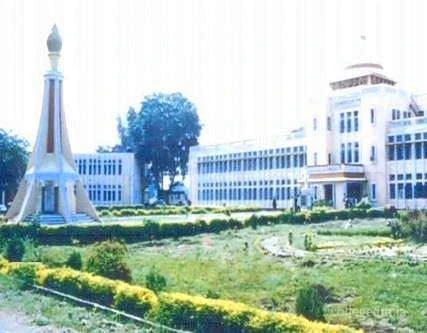
The 37-acre campus, dubbed "Nehru Vidya Nagar," is described as green, pollution-free, and impressively built. It houses notable structures like the Inspiration Tower. Infrastructure for academics is adequate: a library with over 70,000 books, 11 well-equipped laboratories, and a conference hall. Where things get mixed is in the living experience and amenities.
Hostels exist—one for boys (80 capacity), two for girls (combined capacity around 180). But a student review explicitly states, "No quality is available in mess," which is a specific and damning complaint about food. The college claims to be a "Wi-Fi Campus," but another student counters, "No Wi-Fi will be available." This suggests access is either non-existent, highly restricted, or frustratingly unreliable.
Where the college arguably shines is in sports. The facilities are extensive for a college of this type: an 8-lane 400m track, large playing fields, an indoor badminton hall, a gym, and dedicated halls for weightlifting. They’ve secured UGC funds for upgrades and host intercollegiate events. If you’re athletically inclined, this is a legitimate draw.
Social life is described as "vibrant" by the college, but a student says "No other activities are available." The truth likely lies in the middle—traditional cultural events, youth festivals (the college has hosted the university festival multiple times), and NSS/NCC activities exist. But if you’re expecting a continuous buzz of clubs and events, you might find it lacking.
Synthesizing the feedback is crucial. The consensus isn’t monolithic; it’s a split decision.
The Good: Praise is heavily concentrated on two things: teachers and value. Reviews repeatedly call teaching quality "the best," with supportive, hardworking faculty. On cost, they say, "The college gives more facilities in less fees which is the best part to highlight." The physical infrastructure also gets nods for being "fabulous" with "no lack of facilities."
The Bad: The criticisms are just as specific and repeated. Placements are rated 1/5. Internships are seen as non-existent. The mess food quality is panned. The promised Wi-Fi is reported as unavailable. There’s a feeling of stagnation, summed up in the quote: "No development in college."
One telling review captures the dichotomy perfectly: "No Wi-Fi will be available. A CCTV camera will be in every class. No quality is available in mess. No cheating will be allowed in college. And there is no development in college. The campus is decent." It’s a portrait of an institution strong on basic discipline and infrastructure, but weak on modern amenities, career support, and perceived progress.
It depends entirely on what you’re looking for. Dhanaji Nana Mahavidyalaya is not a generic "good" or "bad" college. It serves a specific purpose exceptionally well, and falls short on other, equally important metrics.
Consider this college if: You are a student from Jalgaon or surrounding talukas seeking an affordable, accredited, and respected local degree. Your primary goal is to get a solid foundational education with good teachers, minimize debt, and use the degree as a stepping stone for government exams, teaching, or further studies (like an M.Sc. or B.Ed.). The low fees and scholarship support make it a financially prudent choice. The sports facilities are a genuine bonus for athletes.
Look elsewhere if: Your top priority is campus placements, corporate internships, or a bustling, connected urban campus life. The student reviews on placements are too consistently negative to ignore. If you need reliable Wi-Fi, great hostel food, and a wide array of extracurricular clubs, you will likely be disappointed.
In essence, it’s a classic regional college that fulfills its core educational mandate reliably and cheaply. It’s a practical choice, not an aspirational one. You go here for the degree and the teaching, not for the placement brochure or the Instagram-friendly campus life. For thousands of students in the region, that’s exactly what they need.
In this preview: 1 photo · 0 videos
Prospective students often consider Dhanaji Nana Mahavidyalaya for its B.Sc. programs. The college provides a foundation in science education, and its suitability depends on factors like the specific B.Sc. specialization, faculty expertise, and available laboratory facilities. It is advisable to review the curriculum and campus resources related to your chosen science stream.
The fee structure for the B.A. program at Dhanaji Nana Mahavidyalaya is designed to be affordable, aligning with its status as a constituent college. Exact tuition and other charges can vary by academic year and specific subjects or combinations chosen within the Arts faculty. For the most accurate and current fee details, candidates should consult the official college prospectus or contact the administration directly.
Admission to the M.Sc. programs at Dhanaji Nana Mahavidyalaya typically follows the guidelines set by its affiliated university. The process generally requires candidates to have completed a relevant B.Sc. degree and may involve merit-based selection calculated from undergraduate marks. Some departments might conduct entrance tests or interviews. The exact procedure and important dates are announced on the college's official notice board and website.
Placement opportunities at Dhanaji Nana Mahavidyalaya are a common consideration for students. As a college focused on undergraduate and postgraduate degrees in Arts and Sciences, it provides placement support and career guidance. The placement record can vary annually and across different departments. Students are encouraged to connect with the college's training and placement cell for specific information regarding recruiting companies and average packages.
Dhanaji Nana Mahavidyalaya offers hostel accommodations for its students, which is a key facility for those coming from outside the local area. The hostels provide basic amenities necessary for student living. For detailed information on room types, fees, mess facilities, rules, and the application process, interested students should reach out to the college hostel office or warden.
Share what future students should know about Dhanaji Nana Mahavidyalaya.
Student voices are not rewritten by colleges. We remove spam and abuse.
Wider admission question? Community PulseWhat should future students know?
Tell us which course you're considering. We'll help you work out the next step.
Get instant Partner access after mobile verification. Your public edits are reviewed before they go live.
Claim this college
 Cafeteria
 Hostel
 Science Labs
 Sports Complex
 Study Library